The Montague Gardens brief, plain and direct
The client was a label converter in Montague Gardens, serving packaging work that shifts between short digital runs and repeat production. Their line was already doing the job, but registration drift, uneven web tension and waste handling were making the finishing side harder than it needed to be. They wanted better control on printed rolls with varied substrates, adhesive stock and varnish coverage, plus a cleaner path from unwind to finished rewind.
The brief asked for practical improvements rather than a full change of process. The team wanted registration marks read more consistently, the tension path to hold steady through lamination and die-cutting, and the waste matrix to strip without snagging or folding back on itself. They also needed operators to work with more confidence on narrower labels, longer repeat lengths and mixed roll sizes, because the same line had to handle more than one product family.
- Converter site in Montague Gardens, Cape Town
- Digital label finishing line with print-to-finish workflow
- Problem areas: registration sensing, web tension and matrix stripping
- Production mix: short runs, repeat label sets and mixed roll formats
What the line needed to do better
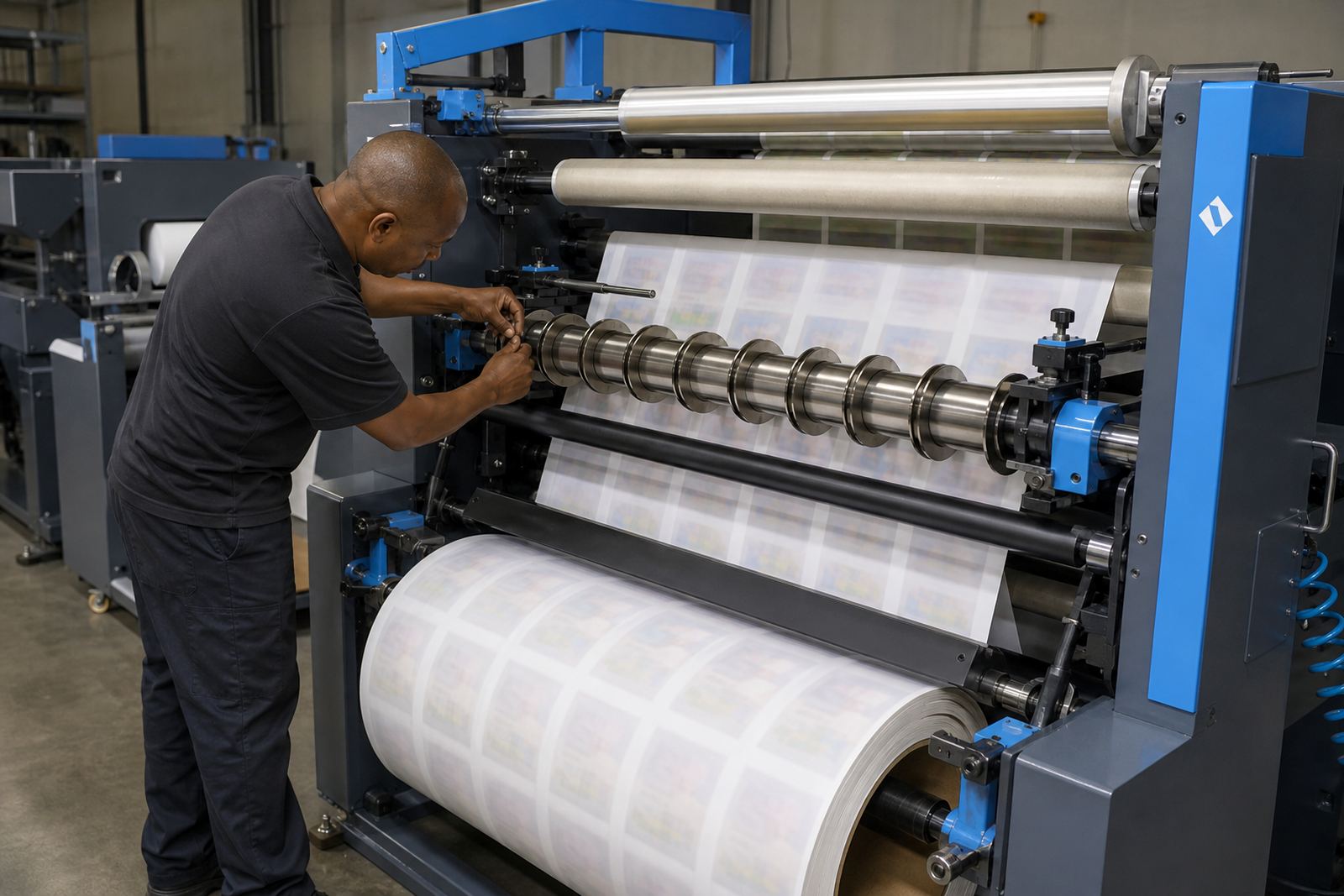
The core challenge was not speed alone, it was control. Once the web moved through lamination and the cutting section, small changes in tension were showing up in cut depth, edge quality and rewind shape. That kind of drift can waste stock quickly on pressure-sensitive label work, especially where the print image has to sit in a fixed position against a die line or laser path. The plant also needed cleaner slitting so finished rolls would land at a usable width without telescoping or edge curl.
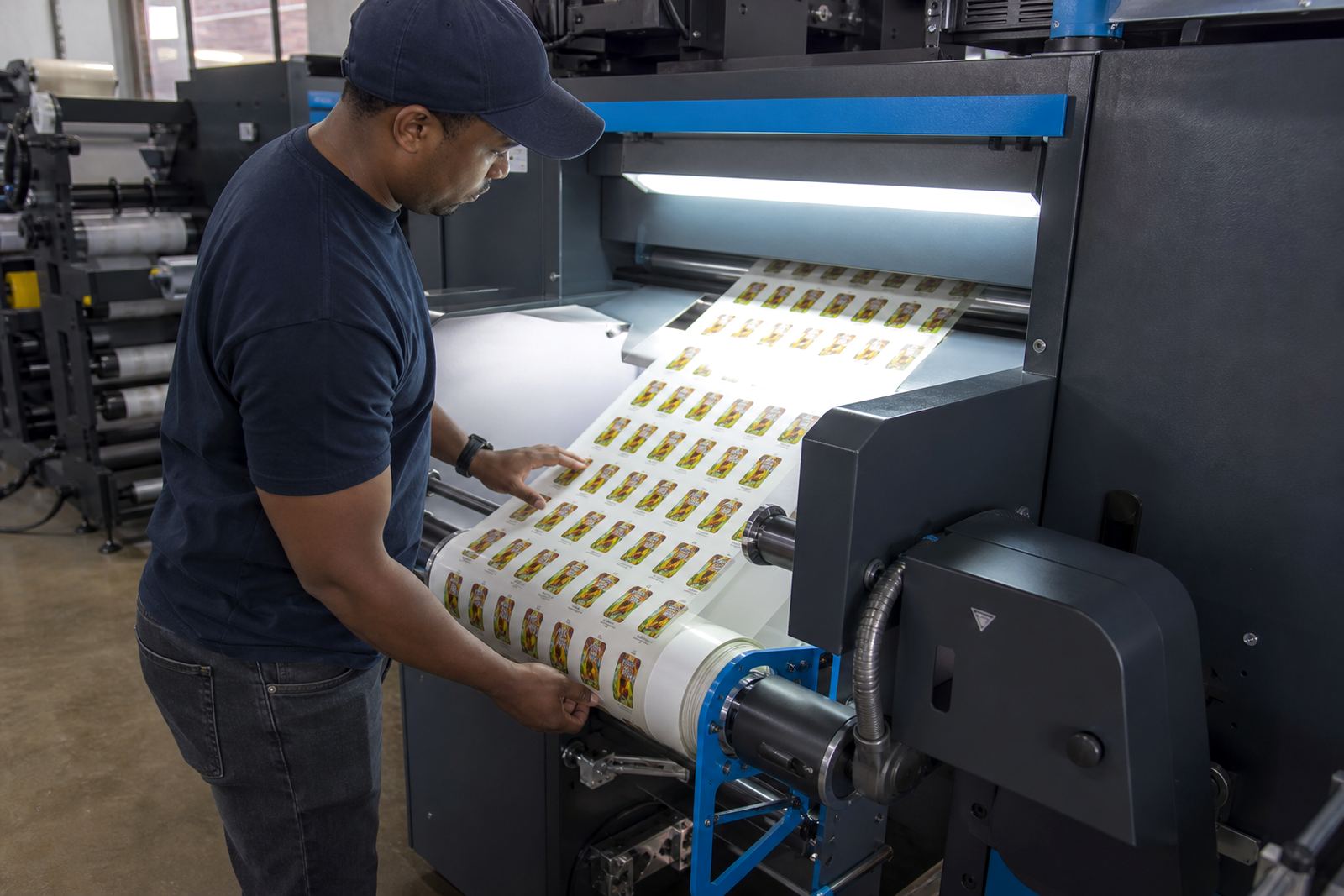
We reviewed the production flow with the operators and looked at where registration sensing was losing confidence on shiny faces, lighter stocks and darker prints. The tension path needed more even handling from unwind through to rewind, with less pull variation at the points where the material changes direction. There was also a practical floor issue in that the finishing area had to stay manageable for the team on shift, so the setup had to suit the space they already had.
- Registration marks had to be picked up more reliably on mixed print finishes
- Web tension needed to stay stable through the full finishing path
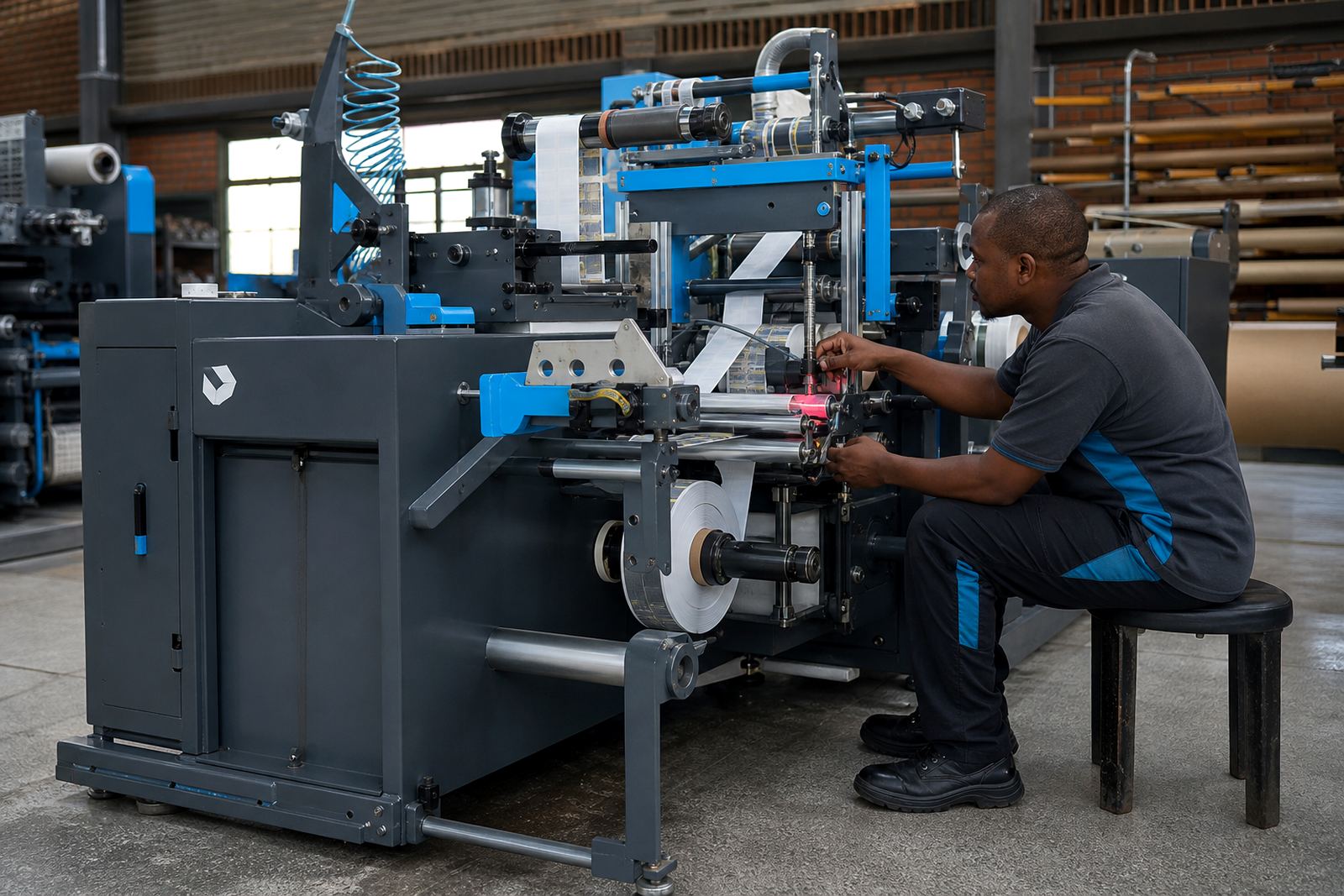
- Matrix waste had to strip cleanly without tearing or backing up
- Slitting and rewind had to produce tidy, sale-ready rolls
Equipment and setup we put in place
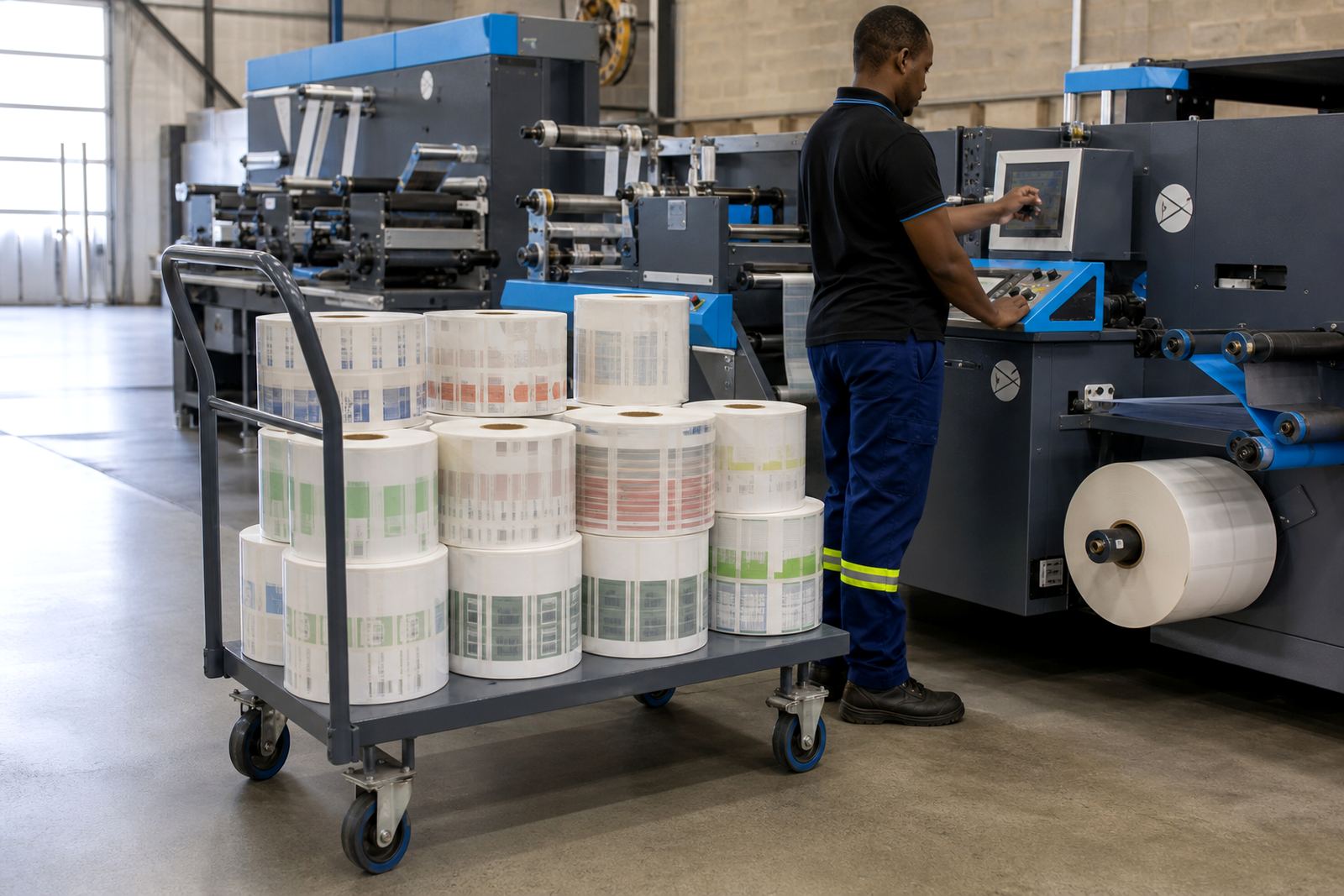
We supplied a digital label finishing configuration built around controlled unwind, registration sensing, lamination, die-cutting, matrix stripping, slitting and rewind. The setup was matched to the client's web widths and roll diameters, with enough adjustment to deal with different stock thicknesses and label formats. Where needed, we worked on both the mechanical path and the control settings so the line could hold the web more evenly under load and keep the cut aligned to the print.
The registration side was set up to read printed marks with better consistency, including work where the contrast was not ideal. On the finishing side, the tension handling was tuned so the web stayed flatter through the machine, which helped the cut stay cleaner and reduced the tendency for the material to wander at the edges. The lamination section was also checked for even laydown, because poor film pull can add curl and make rewinding harder later on.
We also covered flexible die setup where that workflow was used, plus practical guidance for changing between jobs without losing the cut position. That included the small things that matter on real production, such as roll loading, guide alignment and making sure waste paths stayed open. One operator said the change felt less fussy, which is usually the point on a line like this.
- Registration sensing adjusted for varied print contrast
- Tension control tuned for steadier web travel
- Lamination and rewind checked for curl and edge shape
- Flexible die setup supported where the job called for it
How the work ran across the weeks
The project moved in a measured sequence over three weeks. The first week was spent on site review, line mapping and the practical set-out of the finishing section. In week two, the equipment was installed, aligned and commissioned, with calibration work on registration and tension handling. The final week was used for operator training, production tests and small adjustments once the team started running actual label orders through the line.
That final stage mattered. A line can look correct on paper and still need small changes once it meets adhesive stock, variable print density and the actual habits of the operating team. We worked through a few job types, from narrower labels to wider repeat rolls, and checked the results at each stage of the finish. The aim was a line that could be used without guesswork, not a setup that only behaved on one test roll.
The client also wanted servicing covered in a sensible way, so the handover included maintenance points, wear items and how to keep the web path clean. Nothing dramatic, just the type of checks that stop minor faults from turning into stoppages. For a converter working in a coastal part of Cape Town, keeping dust, adhesive build-up and film residue under control is part of normal shopfloor discipline.
What changed once production settled
Once the line was tuned, the team had a steadier path through the finishing stages and fewer interruptions around registration drift. Cut position held better against the printed image, the matrix stripped more cleanly, and the rewind formed neater rolls with less edge movement. That made it easier to move finished stock to packing without reopening rolls or sorting out loose edges. A small change in control can save a lot of handling later.
Operators found the line easier to keep in the correct working window, especially on jobs where the print and finish had to stay locked together through the full roll. The slitting stage also became more predictable, which helped when the plant had to produce multiple finished widths from the same parent roll. In practice, that meant less rework, fewer do-overs and a calmer shift when the jobs changed fast.
- Better registration alignment on printed labels
- Cleaner matrix removal through the waste path
- More even rewinds on finished rolls
- Less handling after slitting and finishing
What we would redo on a similar Cape Town line
On a similar job, we would again start with the print-to-finish path instead of looking at one machine section in isolation. Registration sensing, tension handling and rewind behaviour are linked, so fixing only one point often leaves the next problem sitting a metre down the line. That sequence is what usually makes the difference on label finishing work, especially where the converter is dealing with mixed stock, tighter schedules and frequent format changes.
We would also keep the operator training tied to live production examples. A team learns faster when the settings are linked to the jobs they already run, rather than a generic demo roll. For a Montague Gardens converter, the useful details were the handling of roll size, web tracking and the way the line behaves when the print changes from matt to gloss or from simple text to denser graphics. Those are the points that show up in day-to-day work.
For converters in Cape Town, Johannesburg, Pretoria, Durban or Gqeberha, the same approach holds: start with the material, then the web path, then the controls. The order matters. When those pieces are lined up properly, the machine does its work without making the operator fight it.
Key facts
| Project | Montague Gardens Upgrade |
|---|---|
| Client type | Label converter |
| Town | Montague Gardens, Cape Town |
| Timeline | 3 weeks |
| Core functions | Unwind, lamination, registration sensing, die-cutting, matrix stripping, slitting and rewind |
| Scope | Installation, line commissioning, operator training and servicing handover |