Kempton Park Brief: Less Die Dependence, More Changeover Control
The converter is suited to pressure-sensitive labels for packaging customers with frequent artwork swaps, small release batches and standing orders that move quickly through the shop. Their older method relied too heavily on separate tooling for each shape, which made short runs awkward and tied up too much floor space during changeovers.
The brief was to reduce die dependency, keep cut quality consistent on varied label shapes and hold tighter control over finished rolls. The team also wanted a setup that could handle kiss cutting and full cut work on selected jobs, with clean matrix stripping and reliable rewind on the back end.
- Converter type: digital label producer in Kempton Park
- Label work: short and medium runs with frequent artwork changes
- Main need: laser cutting for variable shapes and reduced tooling dependence
- Support needed: installation, training and production setup help
Pressures On The Line: Roll Build, Accuracy And Waste Control
The site had to keep running on mixed label stocks, including papers and films that behave differently under heat and tension. Some jobs needed lamination before cutting, while others needed a varnish layer or a cleaner slit edge for narrow rolls. The line also had to cope with registration marks that shift slightly from job to job, so the cutting path could stay aligned to print.
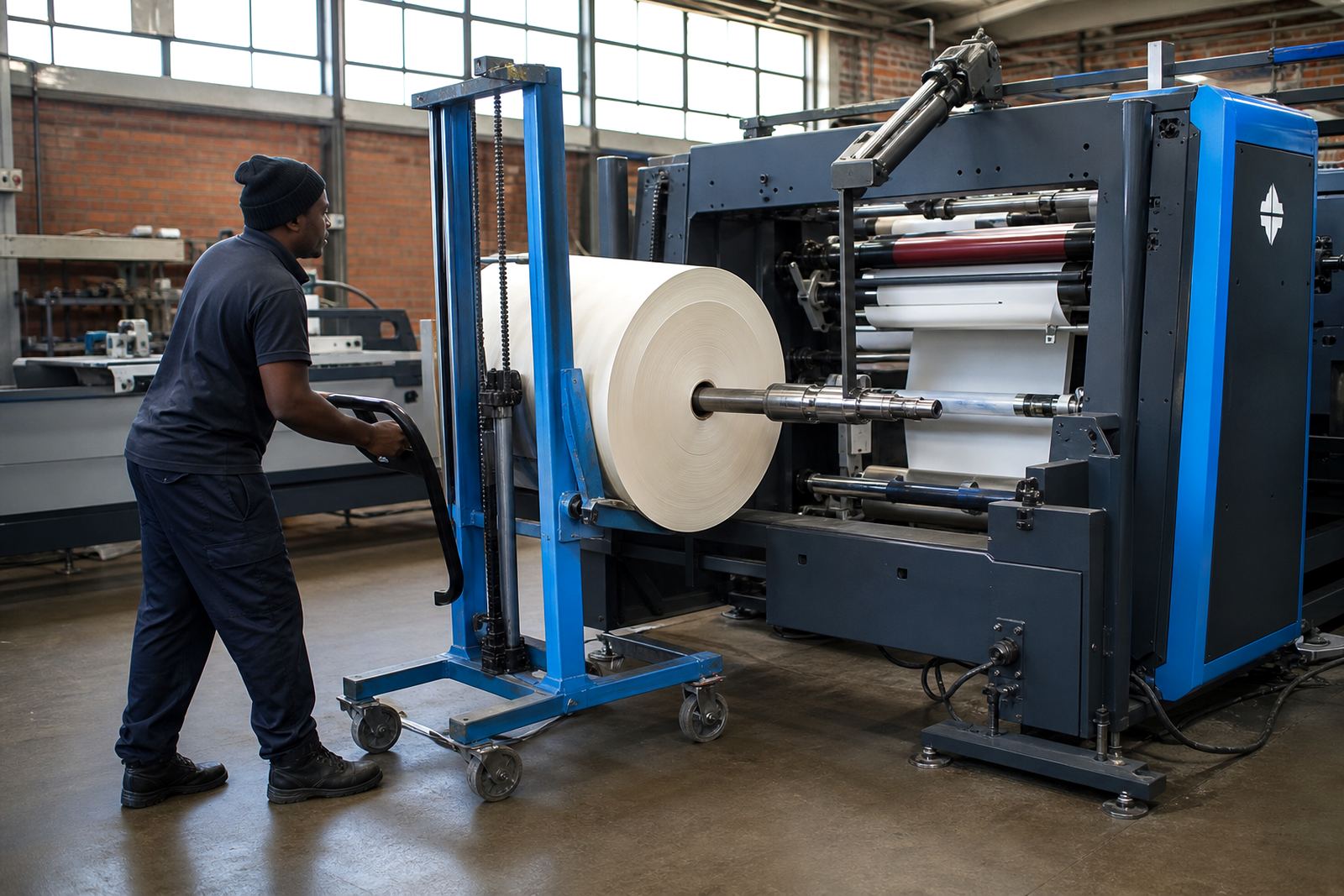
Another constraint was finished roll handling. The team needed a machine that could unwind cleanly, strip waste without tearing web edges and rewind finished rolls with steady tension. In packaging work, a neat roll is not cosmetic fluff, it protects downstream packing and keeps set-up on the next process calm.
- Materials covered: paper labels, film labels and laminated stock
- Functions required: unwind, cut, strip waste, slit and rewind
- Alignment control: registration mark reading for printed rolls
- Output target: tidy finished rolls with controlled tension
What We Supplied For The Laser Cutting Cell
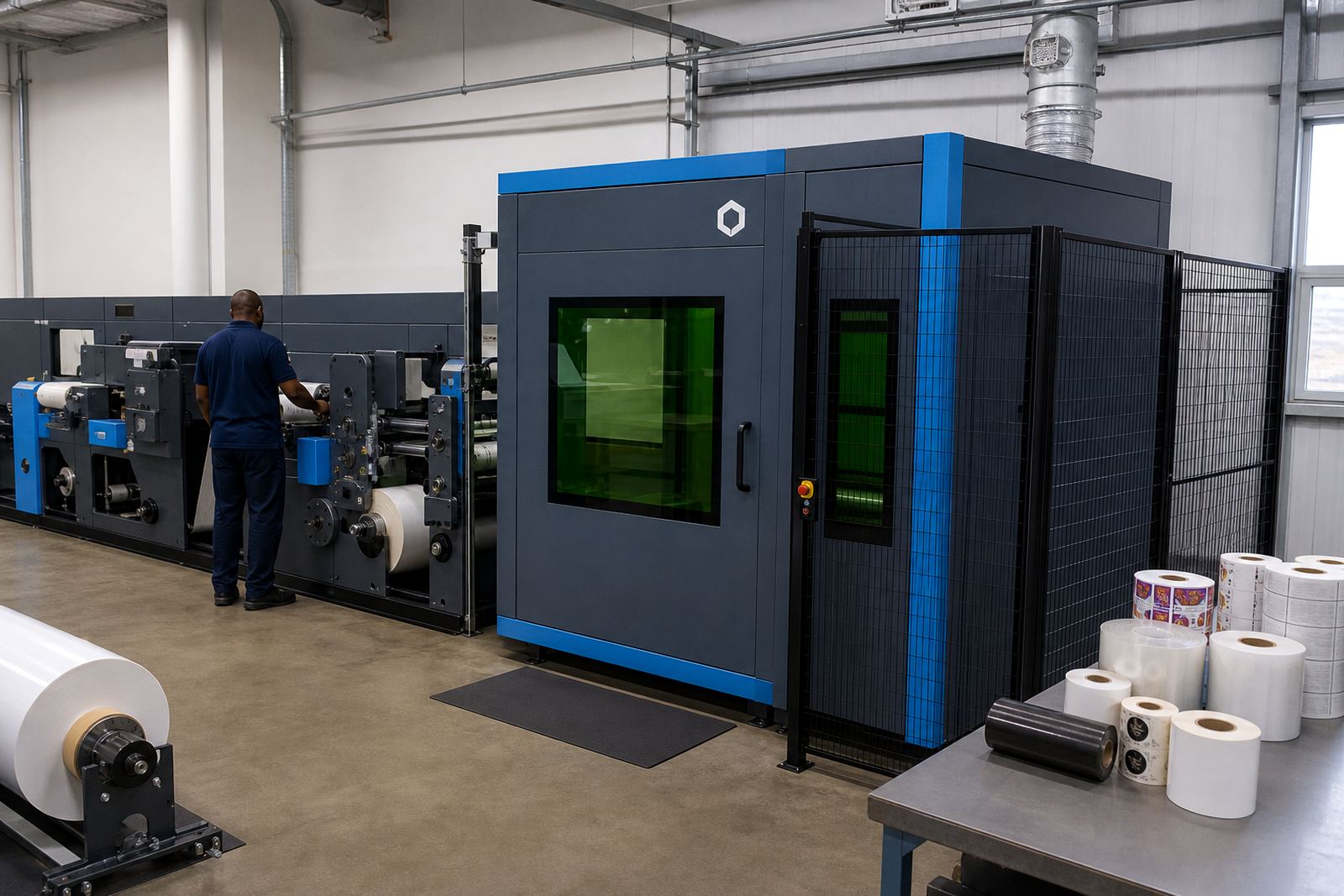
We supplied a digital laser label cutting line arranged around the client’s current print workflow, with the finishing steps set in the order that suited their daily work. The setup included web handling for unwind and rewind, laser cutting for variable shapes, matrix removal where required, and slitting for narrower roll formats. The machine was also set up to work with laminate and varnish through the cut path, so the team could keep one process flow instead of splitting work across too many hand steps.
We also handled the practical setup around job changeovers. That meant checking artwork registration, confirming the cut path against printed marks and tuning the tension across different substrates. The aim was not a flashy setup, just one that could run repeated jobs without the team fighting the machine on every change.
- Core functions: laser cutting, unwind, rewind, slitting and waste stripping
- Print control: registration mark reading and alignment checks
- Job range: label shapes that change often from one brief to the next
- Finishing support: lamination and varnish through the web path where used
Installation And Training Over Three Working Weeks
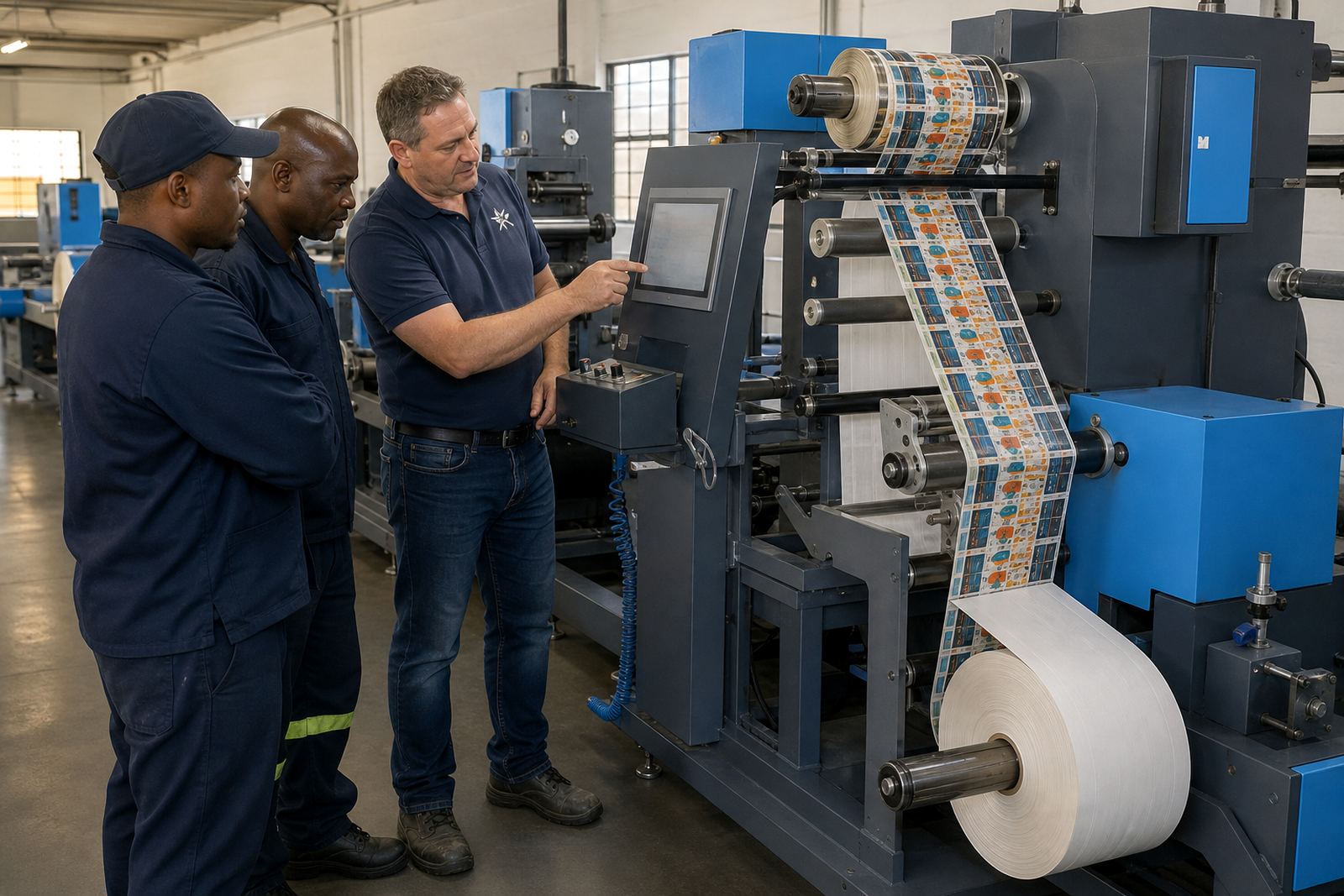
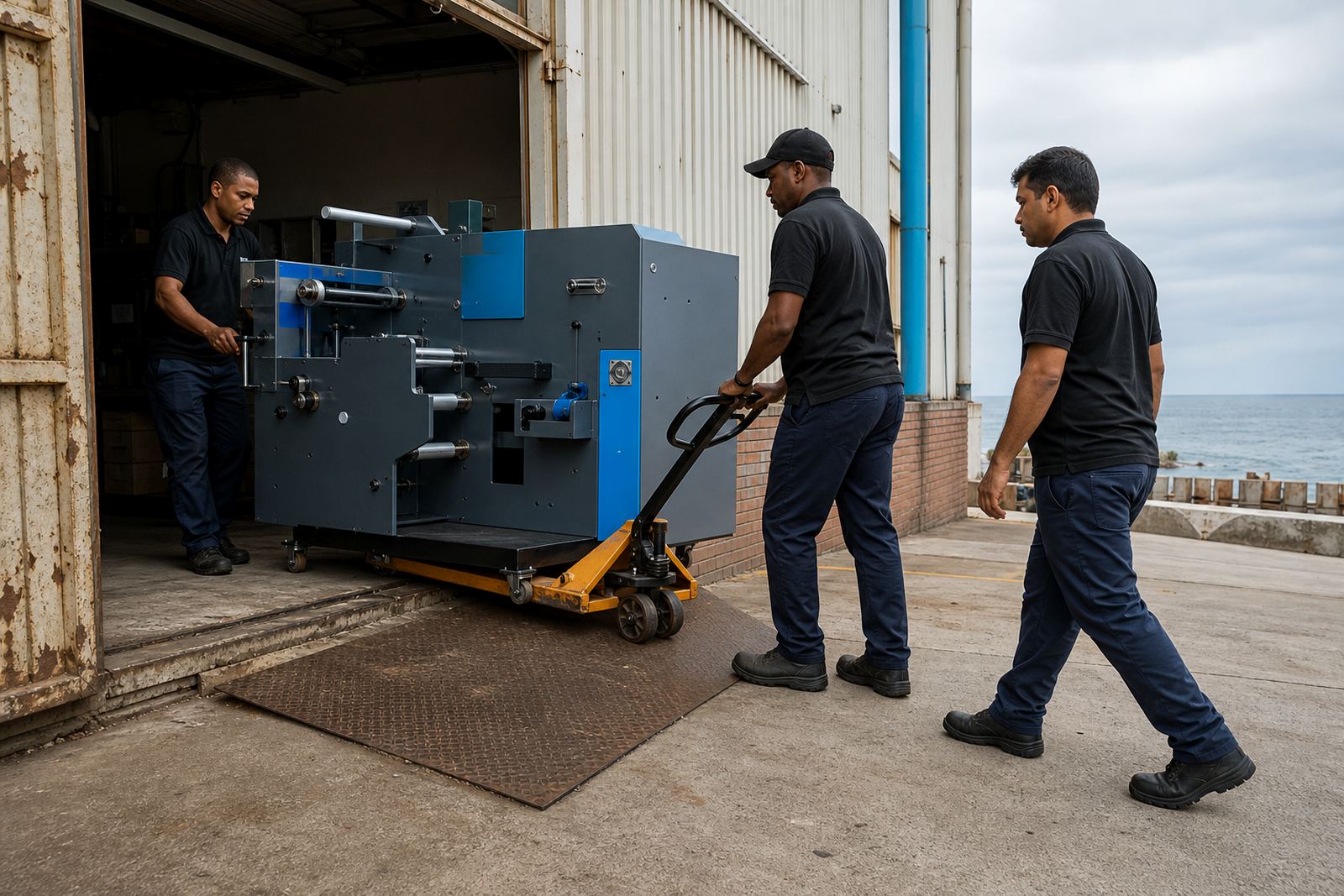
The installation and commissioning ran over three weeks, with the first week used for delivery, positioning and basic mechanical setup. In the second week we moved into calibration, test webs and registration work on live print samples. The final week focused on operator training, fault checks and repeated runs so the team could work through common label formats without guesswork.
Musa worked through setup discipline with the operators, while Pieter handled the technical side of registration and cut accuracy. That split helped the team understand both the daily run and the service side of the line. The client did not need theory for its own sake, they needed people on the floor who could see how tension, mark sensing and cut depth affected the finished reel.
- Week 1: delivery, positioning and mechanical installation
- Week 2: commissioning, calibration and print mark alignment
- Week 3: operator training and repeated production runs
- Focus areas: cut path, waste removal, rewinding and slitting
What Changed On The Shop Floor After Commissioning
Once the line was in production, the converter had a cleaner path for jobs that used to sit on physical dies or needed awkward manual finishing. The team could move through design changes with less delay from tooling setup, and the finished rolls came off with more consistent edges and better control of waste. That mattered on the smaller label sets, where a few minutes lost on each changeover adds up across a week.
The laser route also gave the client more freedom on shape variation. Rounded corners, internal cut-outs and more detailed label profiles were no longer tied to a separate die for every version. The team still keeps an eye on substrate choice and print registration, because good results on label finishing always depend on the basics being right.
- Reduced dependence on separate physical dies
- More practical handling of frequent design changes
- Cleaner finished rolls for downstream packing and application
- Better control on detailed shapes and internal cut work
The Same Job Would Use The Same Checks Again
If we handled a similar Kempton Park project again, we would keep the same sequence: sample review, substrate checks, registration setup and operator training before the machine is pushed into daily use. The key is to match the finishing method to the print work rather than forcing every job through the same cut settings. That approach keeps the line steadier and makes the service notes more useful when the client moves from one label family to another.
We would also spend time on rewind setup and slitting widths from the start, because those details affect how the rolls behave later in packing or on the next process. In label finishing, the last metre of the reel matters as much as the first.
- Keep registration checks tied to live printed samples
- Set rewind tension for the actual roll width and stock type
- Test matrix stripping on the label shapes being used
- Confirm slitting widths before production starts
Key facts
| Project | Kempton Park laser label cutting installation |
|---|---|
| Client type | Digital label converter |
| Town | Kempton Park, Gauteng |
| Main process | Laser die cutting with unwind and rewind |
| Finishing functions | Slitting, matrix stripping, lamination, varnish and registration calibration |
| Timeline | 3 weeks from installation to operator handover |