A Cape Town brief built around coated labels
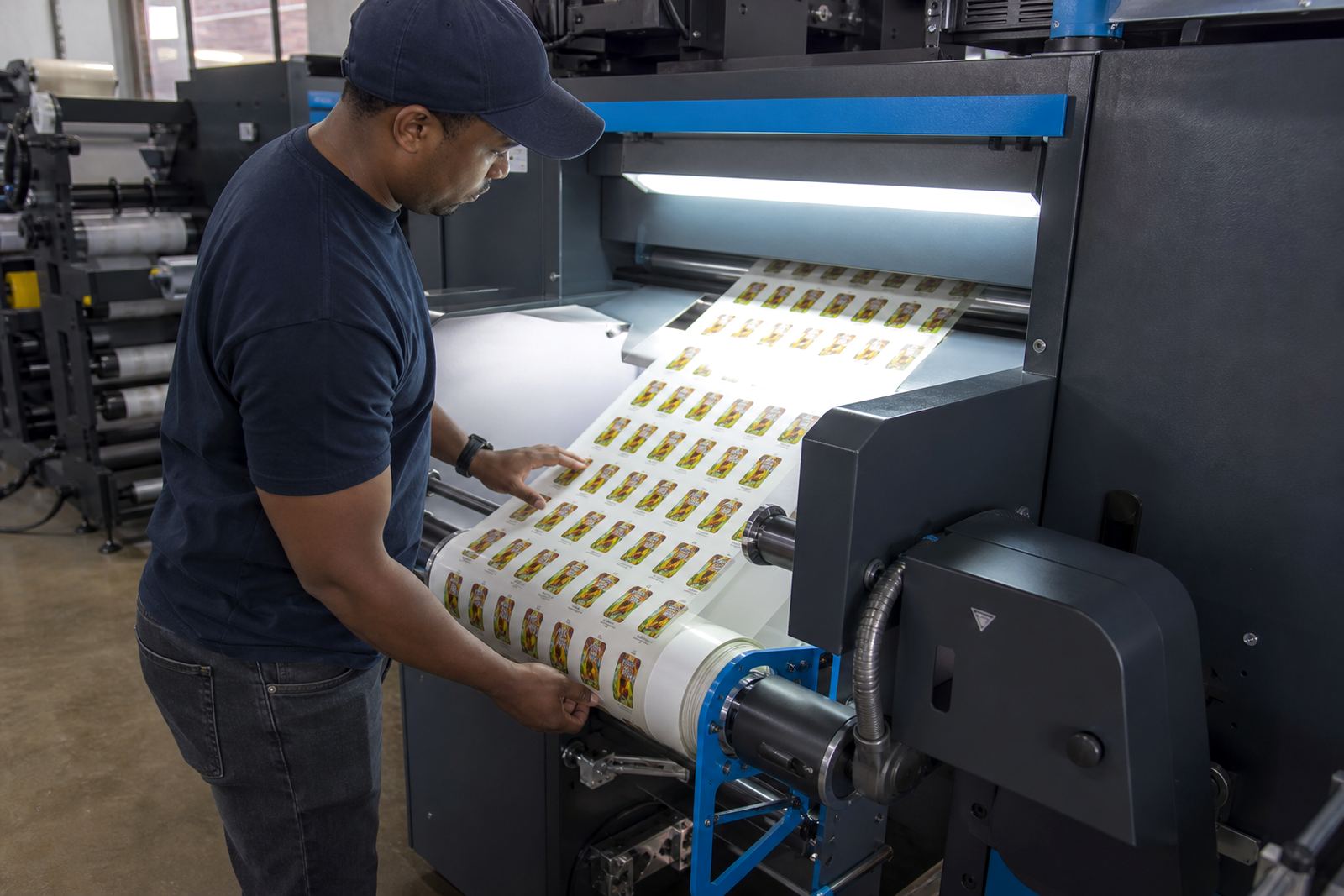
The client was a Cape Town label operation producing work for food, beverage and general packaging runs, mostly on digitally printed rolls that needed varnish, laminate and clean finishing before dispatch. Their old process handled short runs, but the changing mix of labels, adhesives and substrate widths made it hard to keep the roll stable once finishing started.
The brief was direct: add varnish and laminate capability, keep the line ready for die-cutting, and allow rewind control without adding too much handling between stages. Coastal humidity was part of the discussion too, because label stock in Cape Town can move a little once it has sat in the room for a while.
- Client type: label printer with packaging work
- Town: Cape Town
- Main need: varnish and laminate before die-cutting
- Secondary need: rewind control and cleaner roll finish
Pressures on the room and the roll path
The biggest constraint was the mix of jobs. Some carried fine type and small barcodes, while others needed a heavier protective layer for handling and transport. That meant registration had to stay true from unwind through to rewinding, and the line had to cope with different roll diameters without constant stoppages.
Space was another issue. The client did not want a long production path with unnecessary handovers, so the workflow had to stay compact and practical. We also looked at static control, matrix removal and slit position because those small details are what keep waste from wrapping back onto the web, or pulling the finished label edge off line.
- Variable label sizes and repeat lengths
- Coated and uncoated facestocks in the same schedule
- Registration marks that had to stay readable through finishing
- Compact layout with limited floor space
What we supplied for varnish, lamination and cut control
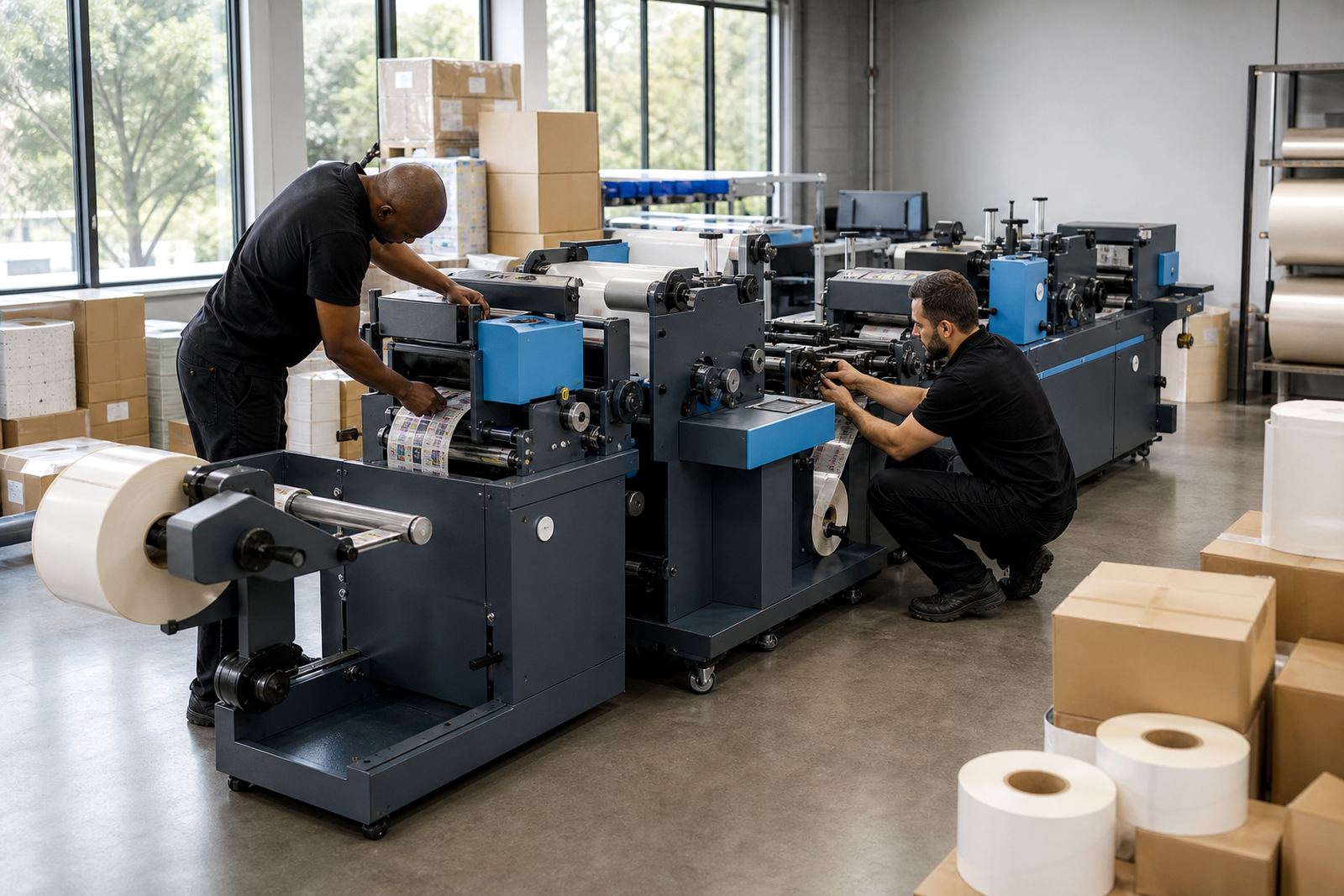
We supplied a finishing setup built for digital label work, with unwind, lamination, varnish handling, die-cutting, matrix stripping, slitting and rewind control arranged in one operating path. The machine arrangement supported semi-rotary die-cutting with flexible dies, and it could also be set for laser finishing where a job needed that method instead.
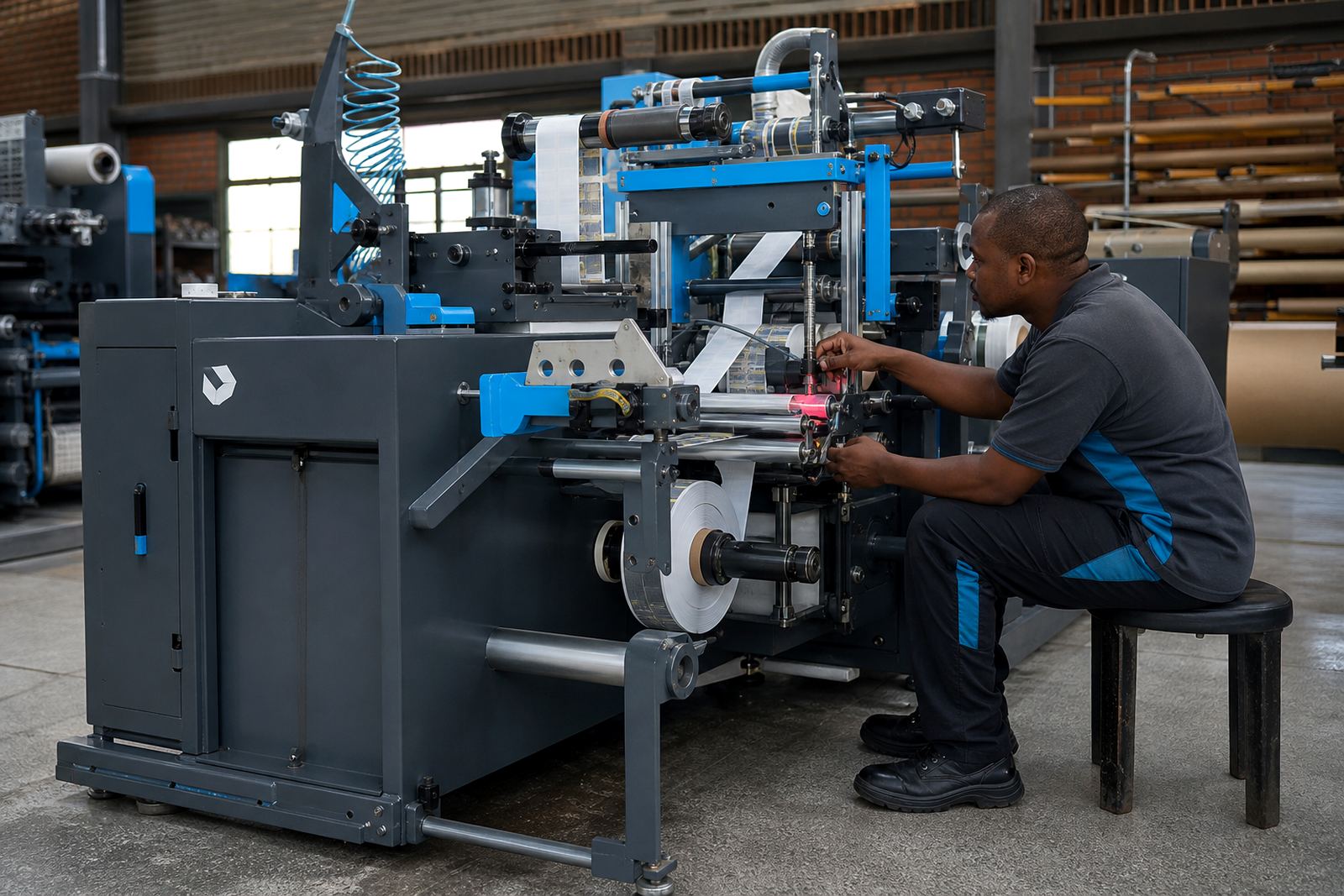
The finishing path was set to suit common label roll widths, from narrow promotional rolls through to wider packaging formats, with enough control to keep the web tracking steady at each stage. Registration calibration was part of the setup, so printed marks could be picked up cleanly and the die line stayed in step with the artwork. The team also worked through a few sticky labels on the set-up bench, literally and otherwise, before the line settled.
- Unwind, laminate, varnish and rewind sections
- Semi-rotary die-cutting with flexible dies
- Laser finishing option for selected job types
- Matrix stripping and slitting stations
- Registration mark calibration for printed rolls
Installation week and operator handover
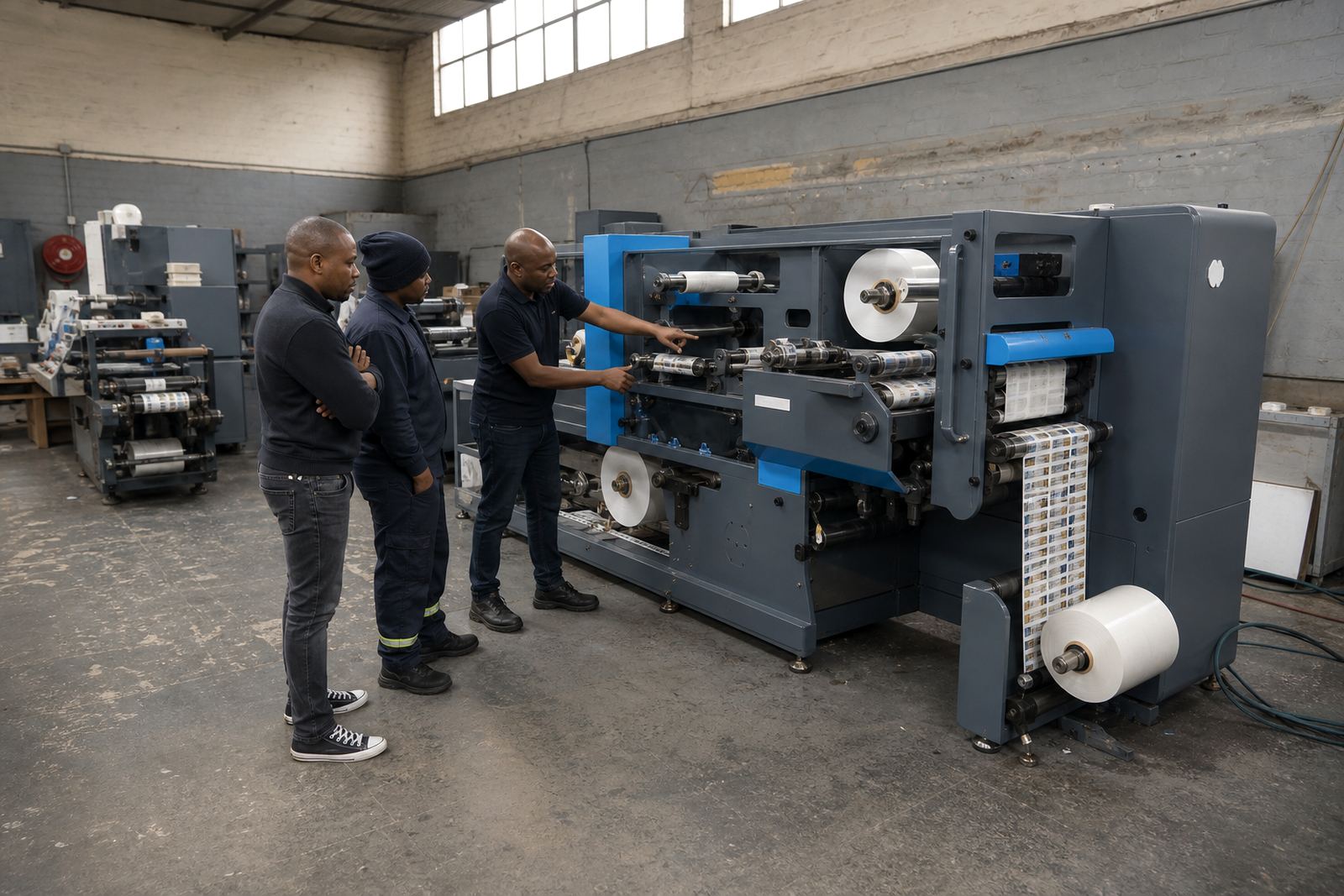
The installation ran over three weeks. Week one covered delivery planning, floor positioning and alignment of the web path. Week two covered machine installation, registration checks and live set-up with sample rolls. Week three focused on operator training, die setup help and a few test runs using the client’s own varnish and laminate stock.
Our technical team worked through the details that usually make or break a finishing room, including rewind tension, slit edge quality and how the matrix should leave the web once the waste is stripped. The operators also got practice on routine cleaning, guide setting and when to stop a job before a wrinkle became a longer problem.
- Week 1: delivery planning and position set-out
- Week 2: machine installation and live calibration
- Week 3: operator training and production trials
- Covered die setup, rewind setup and slitting setup
What changed once the line was in use
The client was able to move varnish and lamination into the same finishing sequence, which reduced handling and kept more of the work inside one controlled path. Clean matrix stripping gave a better look to the finished roll, and the rewind was more orderly, so finished labels stacked with less edge damage and less chasing of loose tails.
There was also a visible shift in production confidence. Teams could run shorter label orders without treating each one like a special event, and the line was easier to plan around because the settings were now repeatable. A few jobs that once needed extra passes were now handled in a single flow, which saved time on press changeover and on the finishing side too.
- Cleaner rolls after varnish and laminate work
- Better slit edges and neater rewind packs
- Less rehandling between finishing stages
- More repeatable setup for short and mixed runs
What we would redo on a similar Cape Town job
On a similar Cape Town project, we would again start with the printed stock mix and the real roll sizes, not just the brochure spec. That helps with registration calibration, unwind stability and the way the matrix behaves once the line reaches full working tension.
We would also keep operator training close to the actual jobs the room prints, because a good finishing line still needs people who can read the web and spot trouble early. For a coastal site, we would pay the same attention to storage, stock movement and the first few test rolls after setup, since paper and film both behave a bit differently when the air changes.
- Start with the actual roll mix and repeat lengths
- Check registration marks against real artwork files
- Set rewind and slit positions for the main job types
- Train operators on the jobs they will run first