A Pretoria finishing floor that had outgrown hand work
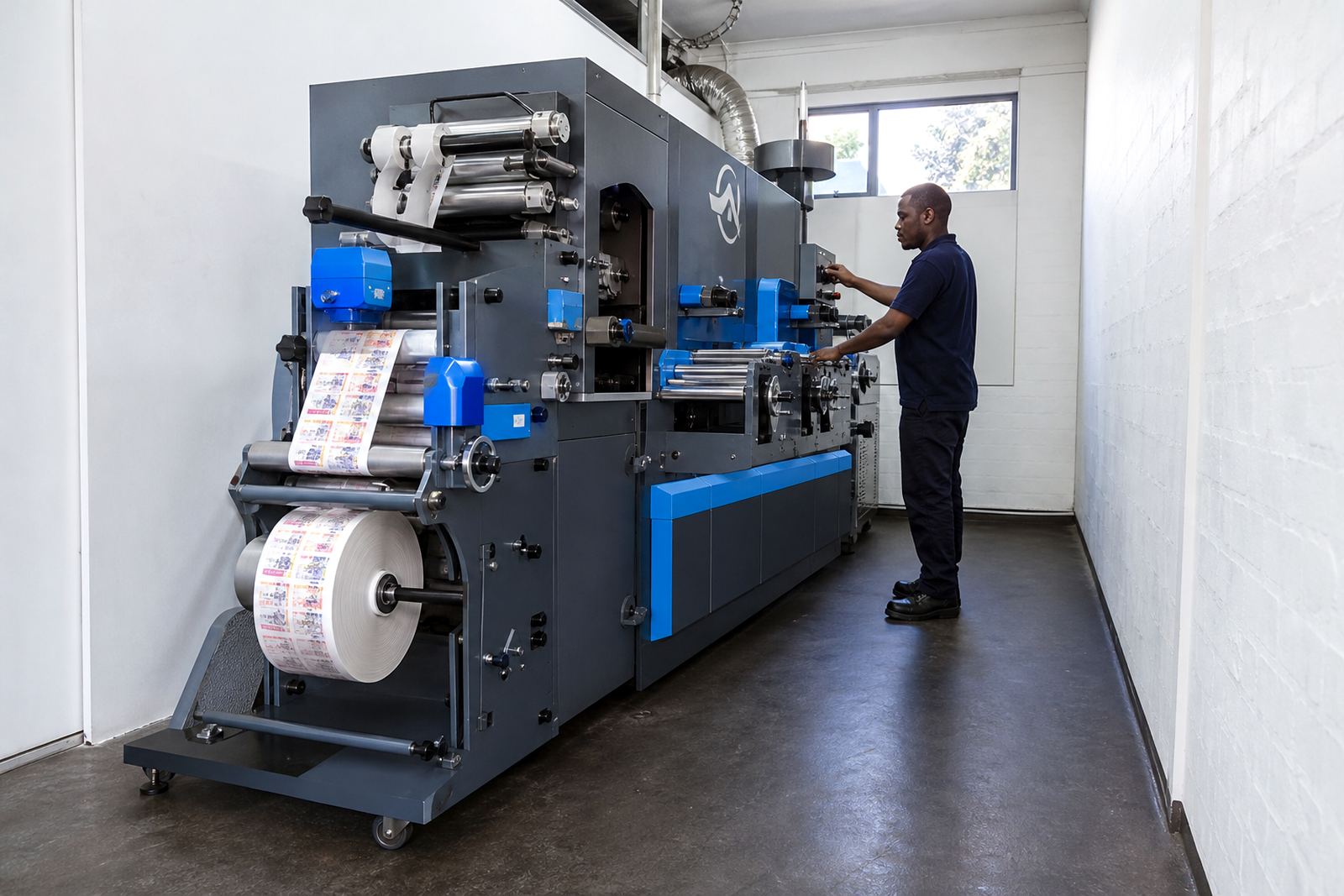
The client was a mid-sized label converter in Pretoria handling self-adhesive labels for food packs, household goods and trade packaging. Manual stripping, hand cutting and reel-to-reel tidying had become the slow point in the room, especially on repeat jobs with several SKUs and narrow web sizes. The brief was to lift finishing into a controlled line, cut waste at the press side and produce rolls that could move straight to packing with less touch-up.
The operation had a mix of short runs and medium batches, so the new line had to manage variable artwork without turning every setup into a long exercise. Registration marks had to read cleanly, slit positions had to stay true, and the rewind needed to build neat rolls on common core sizes. There was also a real floor constraint: the room was tight, with limited space for wide service access and no appetite for a machine that demanded constant repositioning.
- Town: Pretoria
- Client type: label converter
- Move away from manual finishing
- Short runs, mixed SKUs and tight roll control
What the brief asked the line to do
The line had to support semi-rotary die-cutting for flexible tooling, plus lamination for protective overprint jobs and varnish-ready finishing where the artwork needed a tougher surface. Matrix stripping needed to pull waste cleanly on lighter facestocks, while slitting and rewinding had to leave tidy edges and consistent tension across the web. The client also wanted sensible handling for common roll widths and changed artwork, not a machine that looked impressive but took too long to set.
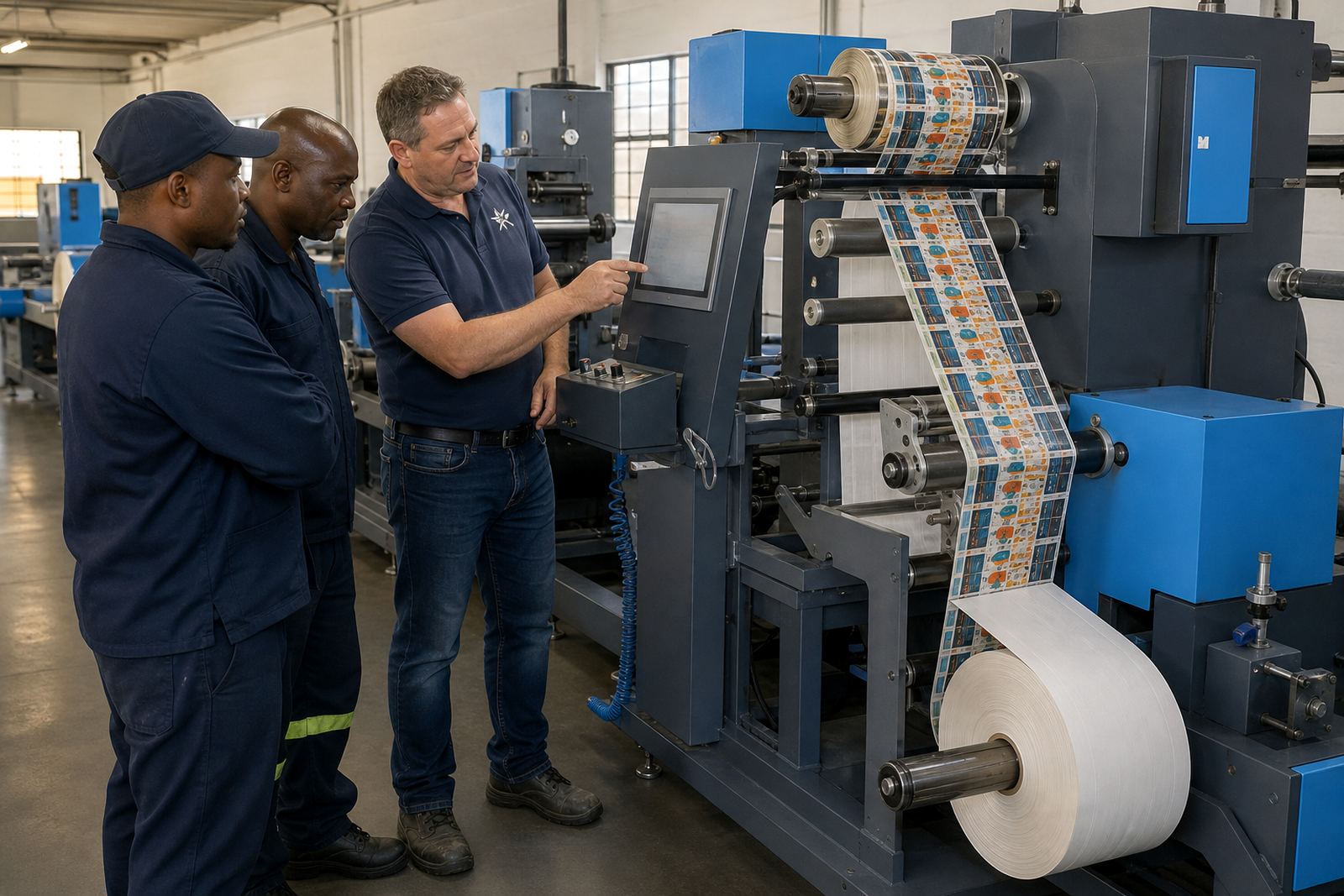
There was a second requirement around staff confidence. The team needed clear training on web pathing, die pressure, backing paper handling and how to watch registration marks during startup. In practical terms, that meant setting the machine up so the operator could see what was happening at each station without leaning over moving web, which helps a great deal on a busy production floor.
- Semi-rotary die-cutting with flexible dies
- Lamination station for pressure-sensitive labels
- Matrix stripping for waste removal
- Slitting and rewind control for neat finished rolls
Floor plan, access and the installation sequence
Before installation, the machine footprint was checked against the existing finishing space so the line would fit without trapping operators around the back of the unit. The Pretoria room had enough width for the core stations, but the service side needed careful thought for safe access during maintenance and die changes. That matters more than people admit, because a line that is awkward to reach often becomes a line that is awkward to run.
Delivery, positioning and line commissioning were completed in stages over three weeks. The first stage covered siting, levelling and power-up checks. The second stage dealt with web path alignment, registration calibration and the first test rolls. The third stage focused on repeatability: lamination pressure, strip tension, slit tracking and rewind build. Each pass tightened the setup until the machine could hold steady output on similar jobs without drifting across the run.
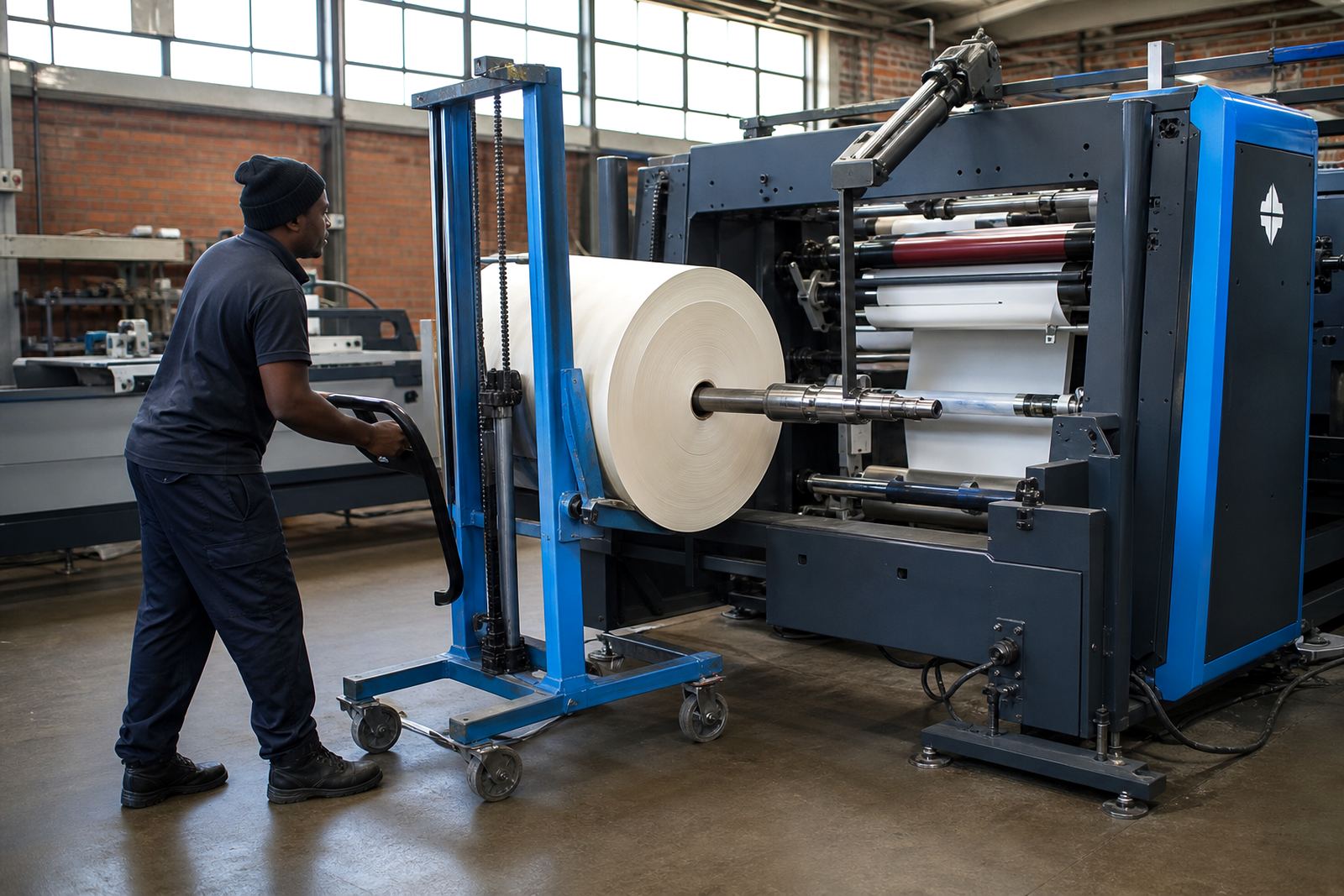
There were a few early adjustments around substrate stretch and the way some lighter rolls behaved at speed. Those were handled by changing tension points and refining the operator sequence, not by forcing the stock into one setting. That is often the difference between a machine that works on paper and one that works on a real label floor.
Training that matched the way the team actually works
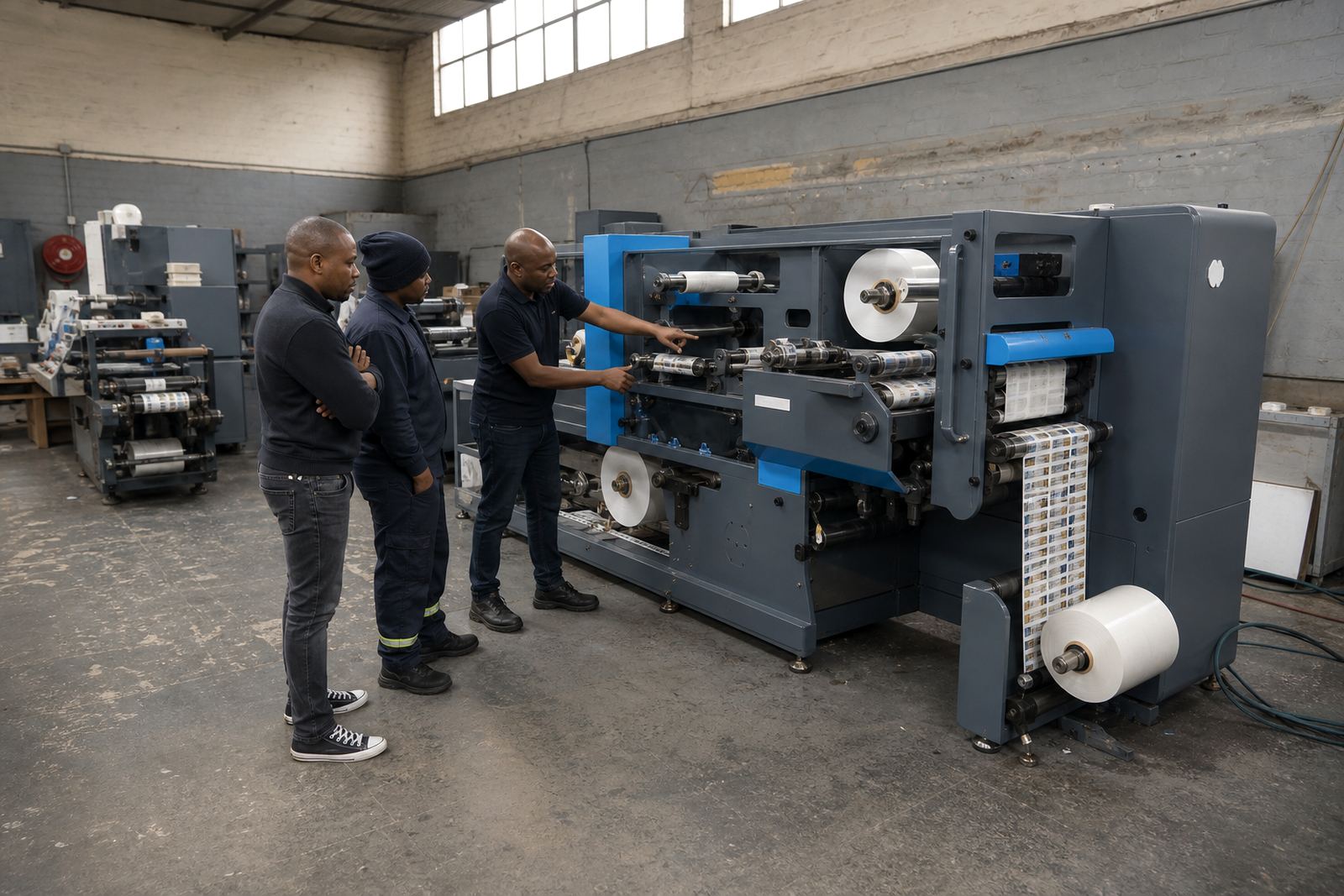
Operator training was kept close to the job bag, not delivered as a generic demonstration. The team worked through real artwork layouts, including jobs with registration marks near the edge and labels that needed careful matrix stripping to stop tearing at the liner. The training also covered die setup help, rewind setup and slitting setup so the operators could move between job types without losing their footing on the controls.
The applications session included practical checks on flexographic overprint variation, film laminate behaviour and how to spot web wander before it turns into wasted rolls. That support was important because a label line is only as useful as the people loading it. If a changeover takes too many guesses, the machine spends more time waiting than finishing.
- Web threading and first-roll setup
- Reading registration marks during start-up
- Die pressure and strip tension control
- Roll build, slit tracking and core handling
What the Pretoria line now handles cleanly
After commissioning, the line gave the client a more controlled finishing path for both short and medium production batches. Semi-rotary die-cutting brought cleaner edges on repeat jobs, while matrix stripping reduced the amount of hand-clearing needed at the end of each roll. Rewind quality improved as well, with tighter roll build and fewer crushed edges on finished reels. That made packing easier and gave the production team more confidence when the job moved to dispatch.
The client also gained better use of substrate. Because the line was set for proper registration and sensible tension, there was less scrap from miscut labels and less waste from unstable start-up rolls. On mixed-SKU work, that change is easy to see in the room even when nobody puts a number to it. The floor feels calmer, the benches stay clearer, and the operator spends more time running the machine than correcting it.
For a converter serving Pretoria and wider Gauteng, the bigger gain was flexibility. Jobs that used to wait for manual finishing now move through a proper digital finishing sequence, including lamination where needed and slitting to match downstream packing formats.
Service cover, parts and the small habits that keep a line steady
Ongoing support included preventive maintenance planning, spare parts supply and breakdown repairs when needed, with remote support available for setup questions and line checks. The technical side was also handled with practical attention to wear points such as cutting stations, rewind tension parts and strip paths. Those are the places where a finishing line usually tells the truth about how it is being used.
What would be repeated on a similar project is the staged commissioning approach, followed by hands-on training on the actual jobs the client prints every week. That sequence keeps the machine relevant to the floor rather than idealised for a brochure. It also leaves the client team with a better sense of how to maintain registration, protect roll quality and manage changeovers without making the line feel precious.
- Preventive maintenance scheduling
- Spare parts and wear item support
- Breakdown repairs for finishing stations
- Remote support for setup and troubleshooting
Key facts
| Project location | Pretoria |
|---|---|
| Client type | Label converter |
| Upgrade path | Manual finishing to semi-rotary die-cutting line |
| Core functions | Lamination, die-cutting, matrix stripping, slitting, rewinding |
| Timeline | 3 weeks |
| Key setup detail | Registration calibration for mixed artwork and repeat label runs |