A Centurion line that needed two finished rolls from one pass
The site produced pressure-sensitive labels for local packaging work and the end of each run was slowing dispatch. Finished rolls were arriving in single output, so staff were rehandling material, splitting batches by hand and losing time on the packing floor.
The brief was direct: keep the print quality intact, add dual rewind output, and make the change fit the way the team already moved stock. The press output was regular enough for repeat work, but the finishing side had to deal with mixed label lengths, different core sizes and repeat registration marks that were not always perfect on every job.
- Client type: label printer serving packaging work
- Location: Centurion
- Main goal: dual rewind output for batch control
- Typical work: short and medium label runs
The finishing problem sitting behind dispatch delays
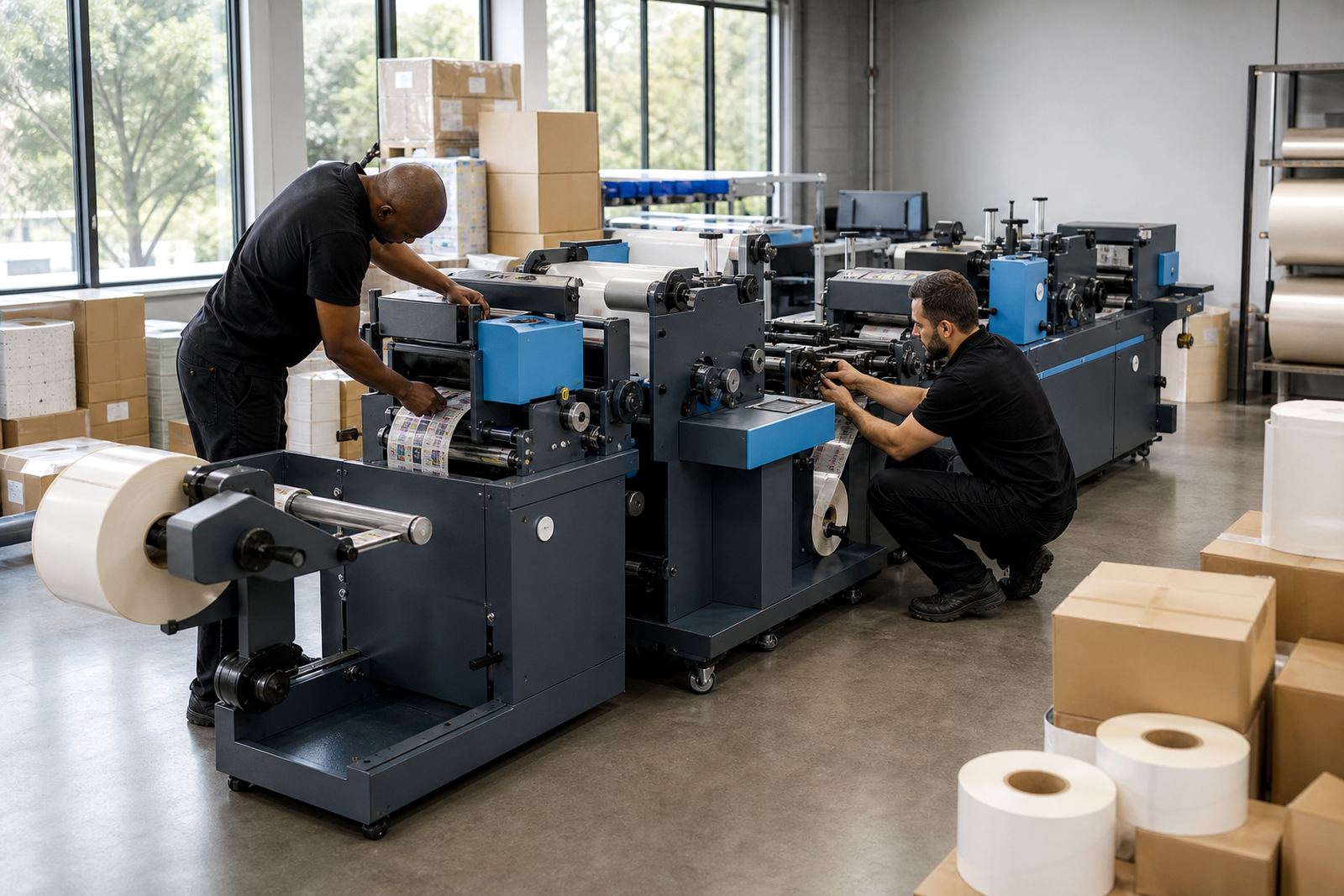
The bottleneck was not printing alone. The line needed unwind, lamination where required, die-cutting, matrix stripping, slitting and rewinding to happen in a sequence that left clean rolls for packing. When the crew had to make extra passes or split rolls manually, the day drifted and the finished stack no longer matched the packing list.
Humidity was not the issue here, but the team did need a setup that stayed steady on different substrates and roll widths. A few labels carried varnish, others needed lamination, and some jobs were better suited to semi-rotary die-cutting while others were simpler with flexible dies. The machine choice had to handle that mix without fuss.
- Mixed materials and coatings on the same shift
- Need for consistent web tension through finishing
- Clean rewind packs for dispatch and palletising
What we supplied and installed on site
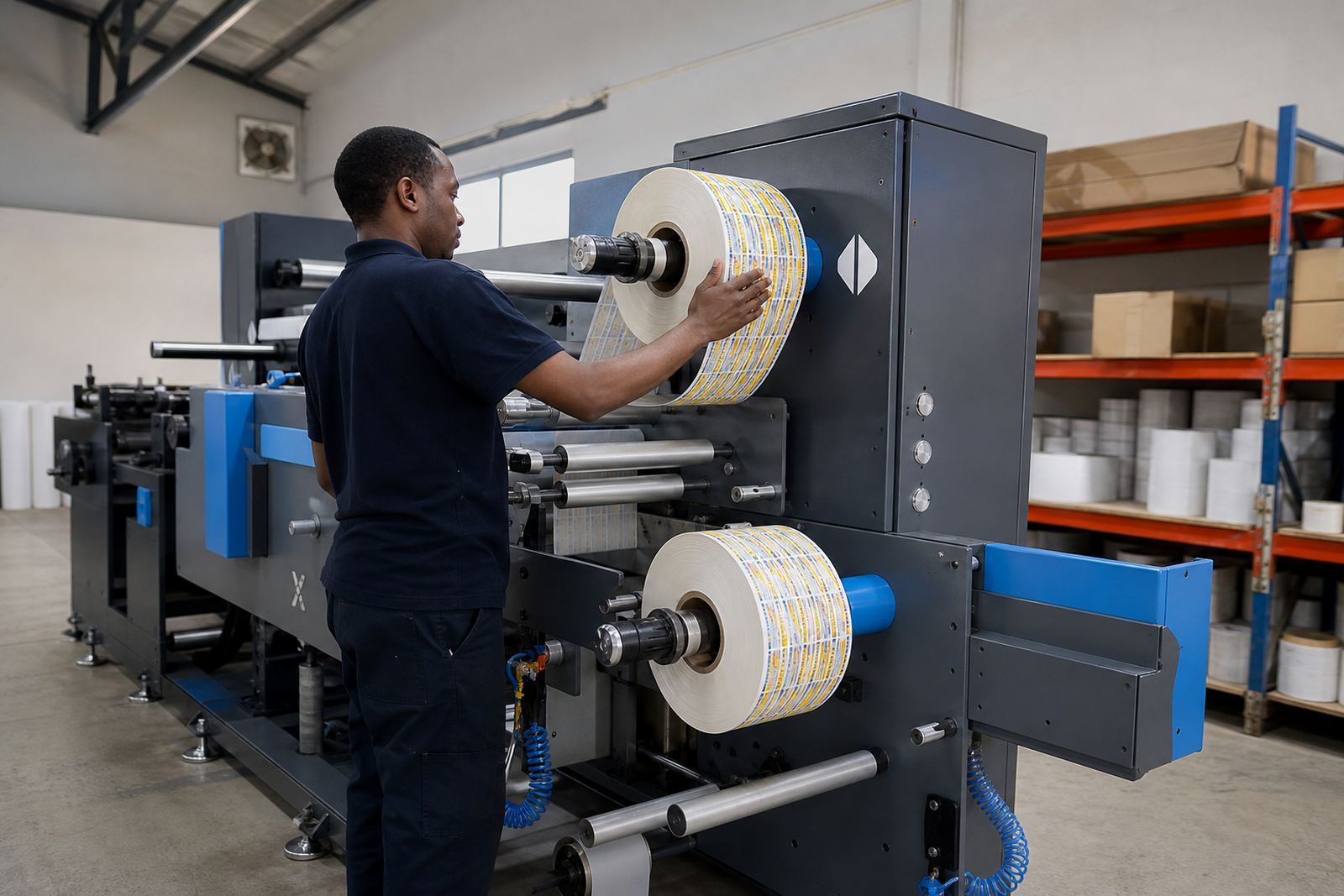
We supplied a digital finishing line configured for dual rewind output, with slitting, waste removal and registration calibration built into the job plan. The setup allowed the operator to split one printed web into two usable finished rolls, which is useful when one order needs to be packed in separate quantities or sent to different customers.
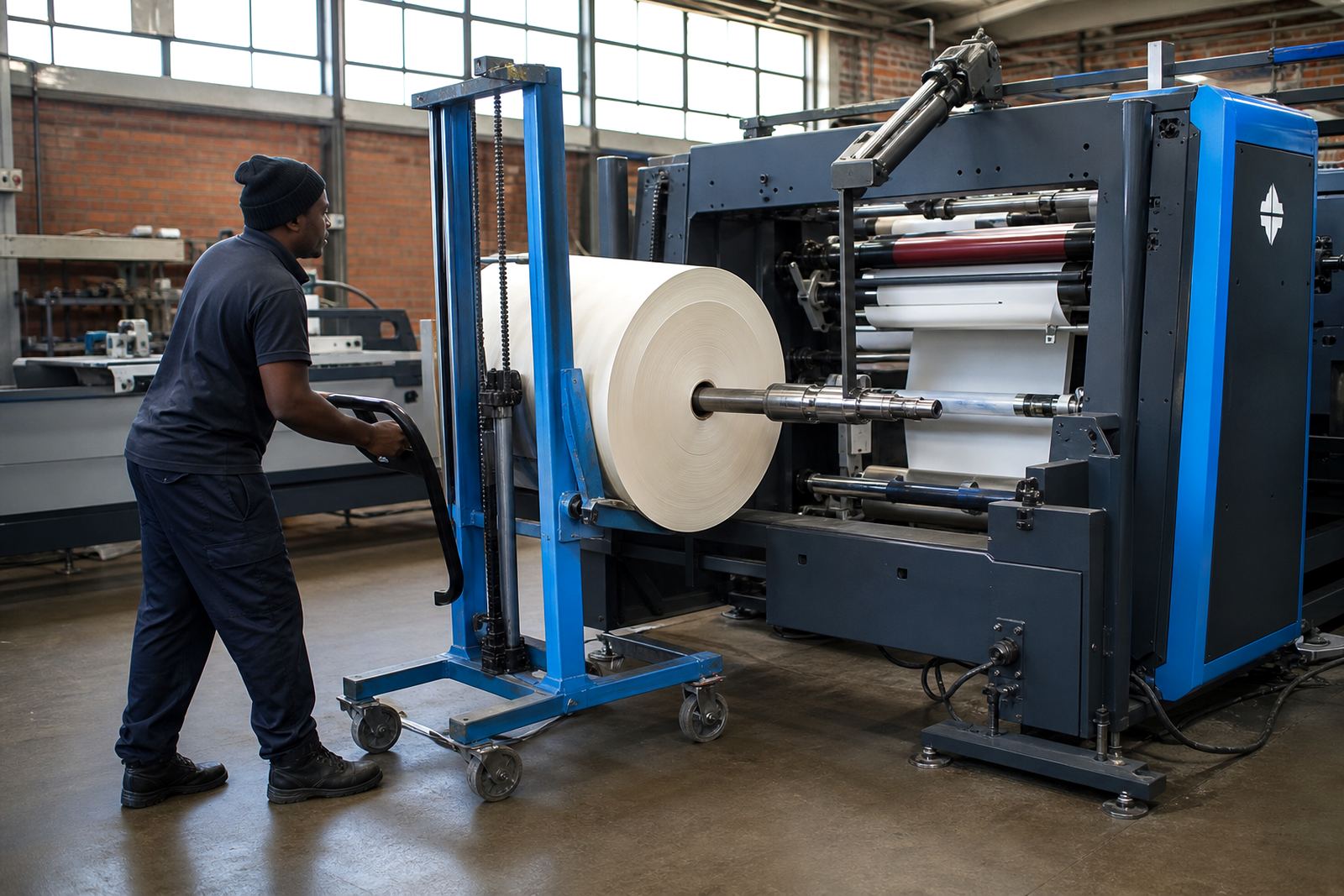
The line was set for label work with registration marks tracked through the finish, so cut position stayed aligned on repeat runs. We also set up rewind tension and web guidance to suit the roll sizes the site used most often. The operators were shown how to balance speed against cut quality, especially on lighter facestocks and coated liners.
- Dual rewind arrangement for two finished rolls
- Slitting and matrix stripping for tidy output
- Registration calibration for repeat label positions
- Rewind setup matched to the site’s common roll sizes
Four weeks on the floor, with commissioning built into the plan
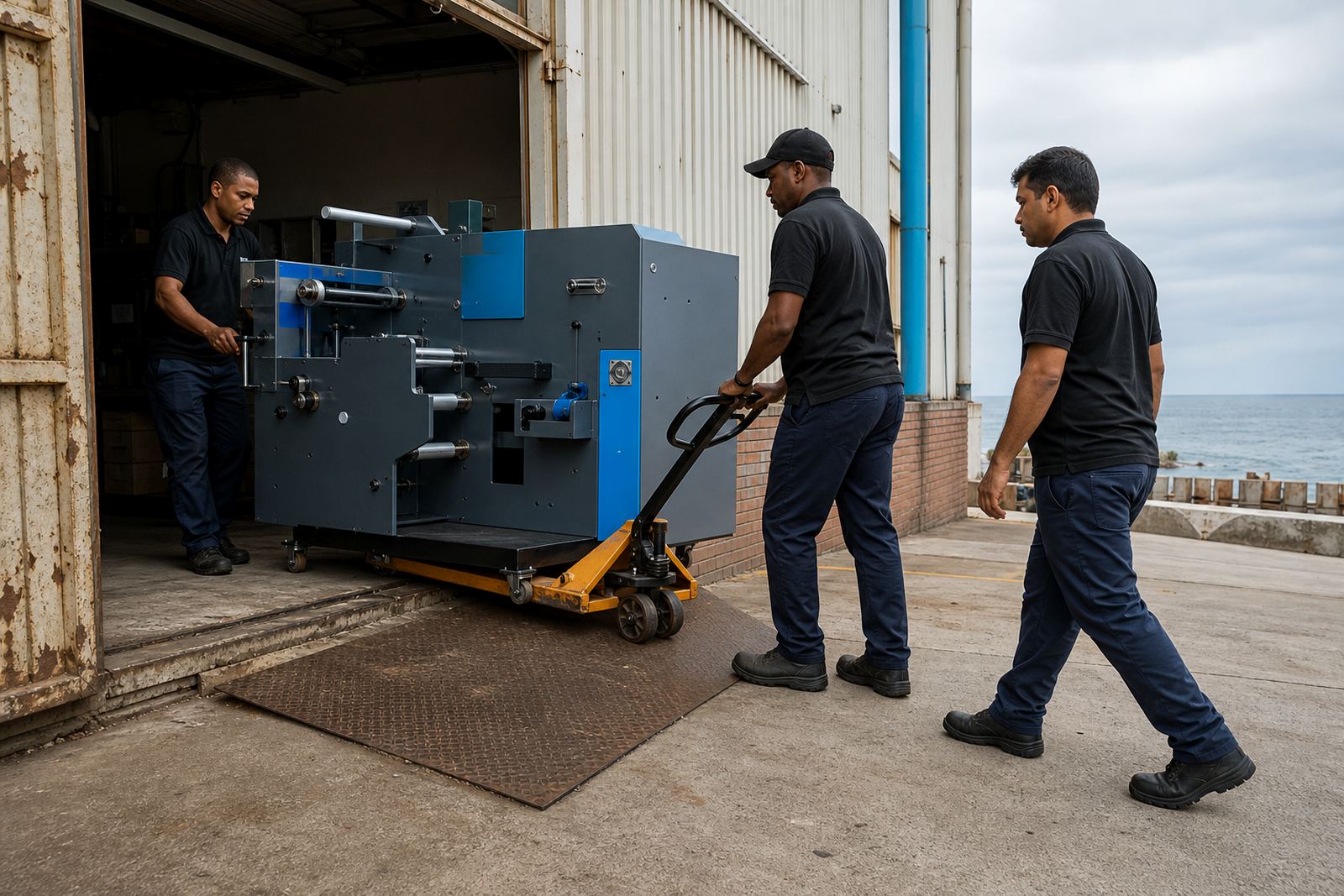
The project ran across four weeks from site assessment to handover. The first week was spent measuring the line space, checking the existing print output and confirming how the dual rewind would fit into the current workflow. In the second week we prepared the machine layout and matched the finishing sequence to the client’s usual label formats.
Commissioning took place in the third week, with line checks on tension, slitting positions and waste strip path. In the final week we worked through operator training and production runs, including a few awkward jobs with narrow webs and lighter stocks. That is where the settings mattered, because the machine had to keep the cut straight and the rewind neat without constant correction.
- Week 1: site review and process mapping
- Week 2: machine layout and line matching
- Week 3: commissioning and calibration
- Week 4: operator training and production sign-off
What changed in the packing area after handover
The immediate change was in batching. Finished labels could be split into two rewinds at the machine, so the packing team no longer had to cut and separate rolls by hand. That reduced handling and gave dispatch cleaner roll counts for mixed orders.
There was also less waste around the finishing table. With the slitting path set properly and the matrix stripping under control, the crew spent less time sorting loose liner and offcuts. On repeat jobs the setup held its position better, so the operator was not chasing the same adjustments all day.
- Cleaner batching for dispatch and stock control
- Less manual splitting of finished rolls
- Better consistency on repeat label runs
- More usable floor time around packing and check-out
Servicing notes for the months after installation
The site also wanted practical support after commissioning, not just a handover sheet. We set up preventive maintenance planning around the moving parts that matter most on finishing equipment, including rollers, guides, slitting components and rewind assemblies. Where a roll starts wandering or a cut begins to drift, those are usually the parts that need checking first.
Remote support was included for setup questions on future jobs, while spare parts supply and breakdown repairs stayed part of the support plan. The operator team also kept a note of which jobs used lamination, which used varnish and which went straight through the die-cut stage, because that record helps when the next batch lands on the table.
- Preventive maintenance for rollers, guides and rewind units
- Support for slitting, registration and setup changes
- Parts and repair planning for ongoing production use
What we would redo on a similar Centurion job
On a similar site we would still start with the output pattern, not the machine name. The dual rewind only works properly when the finishing sequence matches the way the customer packs and dispatches labels. If the rolls leave the line in the right order, the rest of the job becomes a lot easier to manage.
We would also keep the operator training close to the production floor. The best settings mean very little if the team has to guess how the web behaves on a narrow label, a coated stock or a heavier liner. A short practical run with real jobs tells you more than a neat drawing ever will.
- Match the rewind plan to dispatch habits first
- Train on live jobs rather than sample-only runs
- Set registration and slitting against the real label range
Key facts
| Project | Centurion Dual Rewind |
|---|---|
| Location | Centurion, Gauteng |
| Machine type | Digital label finishing with dual rewind output |
| Functions | Unwind, lamination, die-cutting, matrix stripping, slitting, rewinding |
| Control points | Registration marks, rewind tension, slit position |
| Project duration | 4 weeks |