The roll handling brief in East London
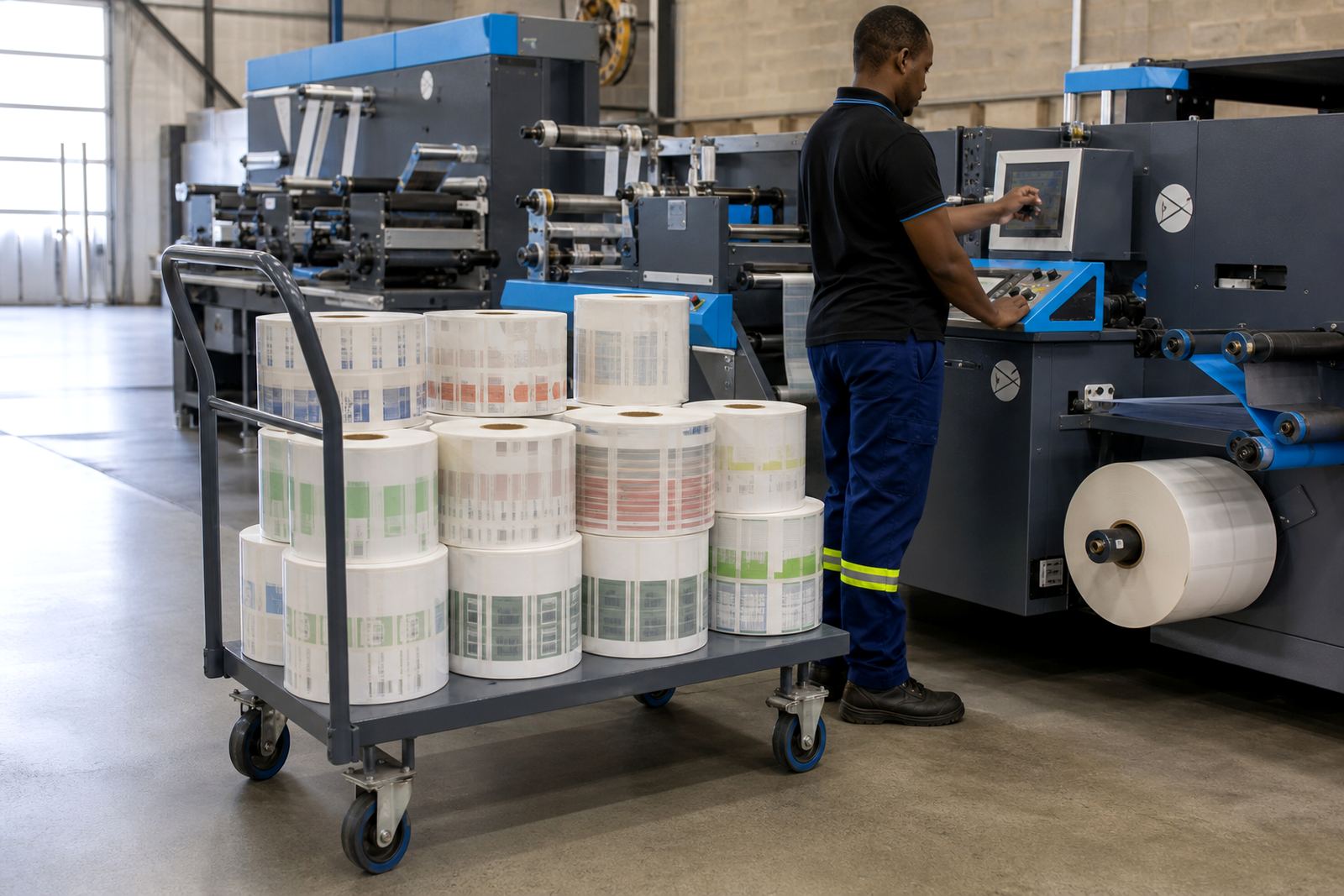
The job came from a label printer serving food and general packaging work in East London. Their existing process was handling shorter runs well enough, but the bigger master rolls were awkward to move, slow to mount and too easy to nick at the web edge when the unwind was not set up properly.
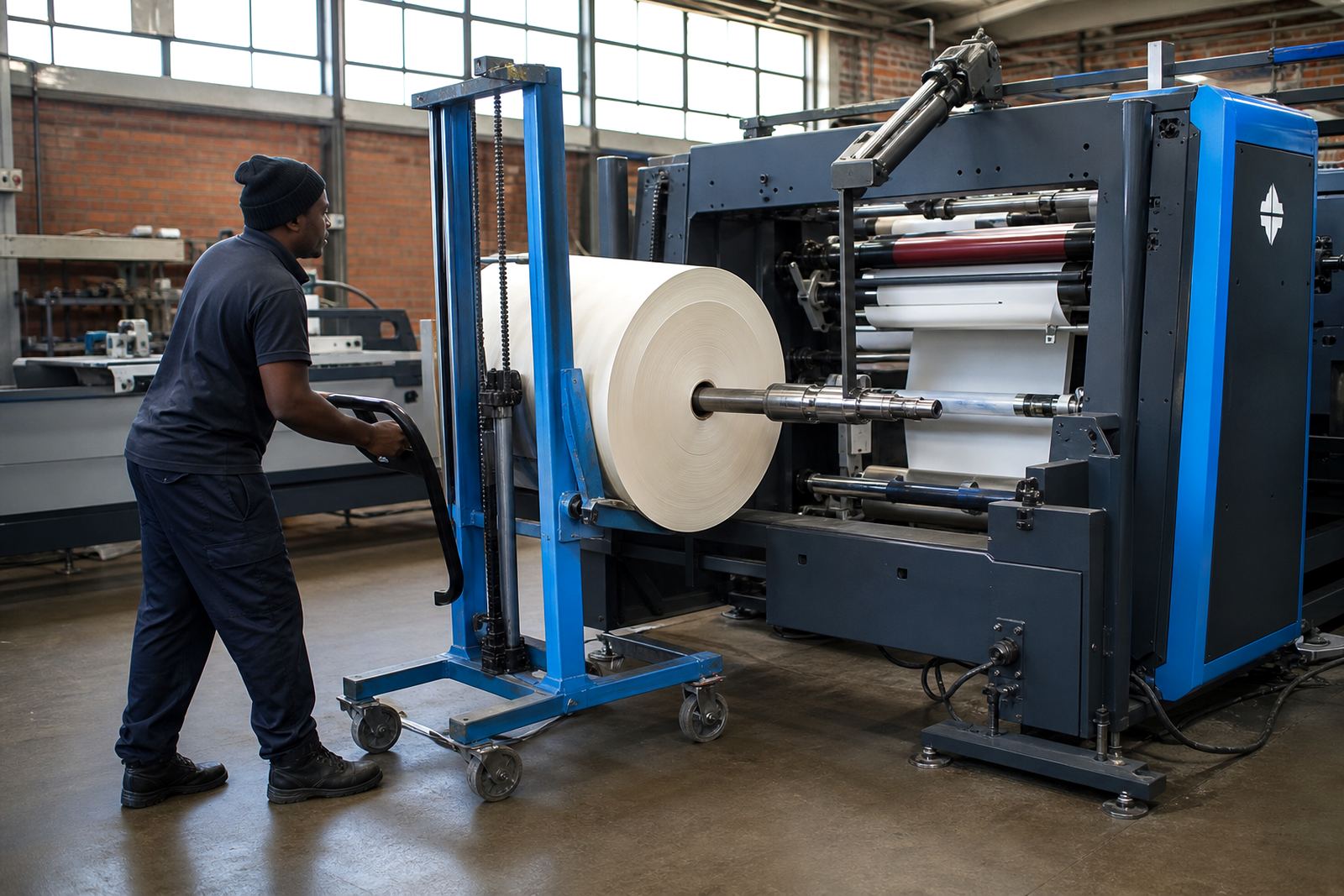
The brief was to improve the way rolls were lifted, loaded and fed into the finishing line. That meant planning for heavier reels, cleaner roll edges, steadier unwind tension and a setup that would suit both coated paper and film based label stock. The team also wanted the operators to work with less manual strain and fewer stops while changing rolls.
- Roll handling for master rolls up to 1 000 mm outer diameter
- Core sizes from 76 mm with adaptors for mixed stock
- Web widths from 100 mm to 330 mm
- Consistent unwind control for print ready label stock
Constraints on the floor and on the reels
The line had limited space between incoming roll staging, the unwind point and the rest of the finishing path. That meant the lifting method had to suit a tighter layout, not a wide open floor. Wet weather off the coast also mattered because exposed roll stock can start to curl or lift at the edge if it sits too long before loading.
We also had to keep the machine path practical for the operators already on site. The line needed proper registration support, but not at the cost of long, fiddly changeovers. A roll that is loaded crooked can throw the rest of the run out, so the mounting position, brake setting and guide alignment all had to be checked together.
- Restricted floor space around the unwind zone
- Mixed paper and film label materials
- Need for better roll edge protection during loading
- Operator movement had to stay clear and orderly
What we supplied and set up
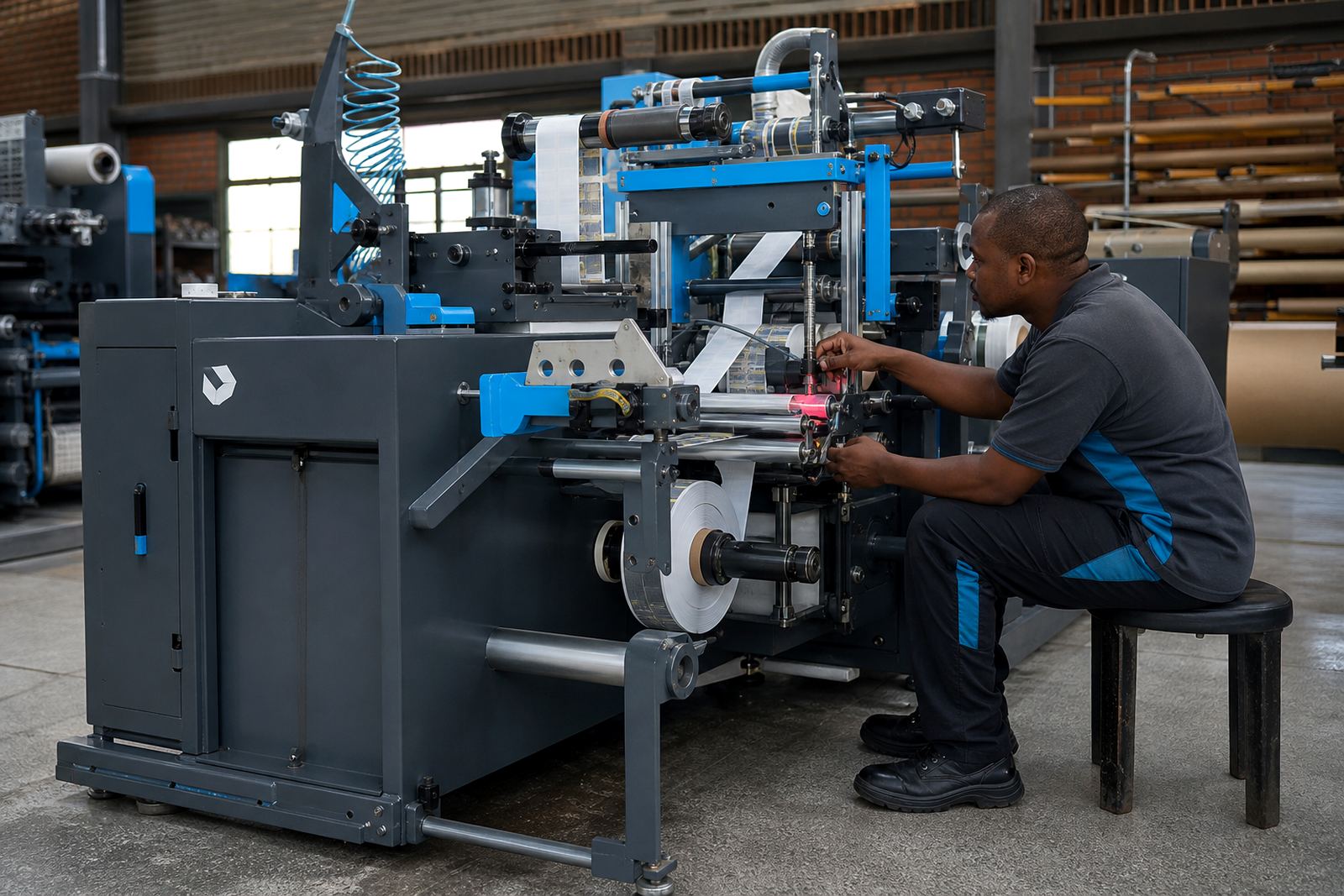
We supplied the roll handling support around the unwind point, then set the line so the master rolls could be presented squarely and released under control. The unwind path was adjusted to suit the stock widths used on the job, with attention to brake feel, web tracking and splice readiness where needed. We also checked the machine interfaces that affect downstream die-cutting and rewinding, because a poor unwind will show up later as waste, uneven tension or edge wander.
The setup work included alignment, basic registration calibration and operator familiarisation on loading, braking and roll change routines. For the stock types used on the East London line, the team needed a repeatable routine rather than a clever one-off fix. The aim was steady feed, less damage at the core and fewer interruptions when a fresh reel went on the machine.
- Unwind support matched to larger master rolls
- Roll lift and positioning guidance for safer loading
- Registration calibration check before production
- Training on unwind start-up and roll change sequence
Project timing and site work
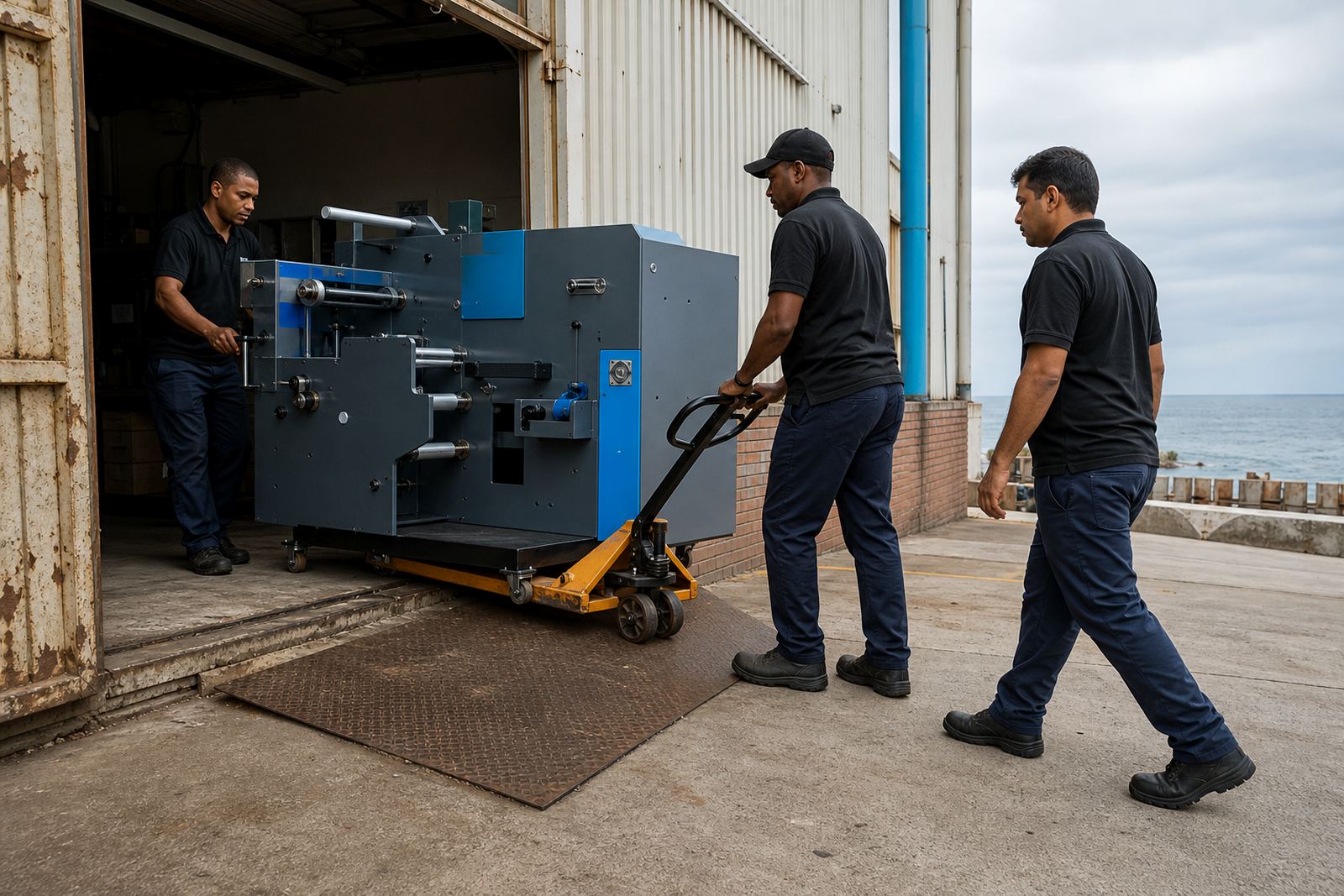
The job was planned over three weeks. The first week went into site checks, measurement of the roll path and review of the stock sizes in use. The second week covered supply, installation and mechanical set-up. The third week was for operator training, fine adjustments and short production runs with the actual label stock they used on customer work.
That order mattered because roll handling problems often hide in small details. A machine can look fine when empty, then start drifting once a heavy roll is on the unwind and the web is under tension. By working through the load sequence in stages, we could see where the line needed support and where a small correction would save a lot of waste later.
- Week 1: measurements, stock review and layout planning
- Week 2: installation and mechanical setup
- Week 3: training, calibration and live run checks
What changed once the line was running
Once the unwind support was in place, the operators had a steadier start to each reel and less wrestling with heavy stock. The roll loading process became more predictable, and the crew could keep the web square without constant correction. That helped the downstream finishing stages too, because a calm unwind makes slitting, stripping and rewinding easier to manage.
The client was mainly looking for control, not drama, and that is what the line gained. Fewer damaged roll edges meant less wasted material. Better unwind behaviour meant the operators could focus on the job in front of them instead of fighting the reel every few minutes. It also gave the plant a better base for future label runs that use larger diameters or more demanding substrates.
- Cleaner roll starts and fewer edge marks
- Less manual strain during reel changes
- Better web stability into the finishing path
- Reduced waste from damaged stock edges
The details we would carry into the next East London job
If we were setting up a similar line again, we would still begin with the reel sizes, the core format and the actual path from storage to unwind. Those details decide how hard the crew has to work and how much tension control is needed. We would also keep a close eye on registration marks, because poor mark detection and a sloppy unwind often show up together.
For East London and similar coastal plants, the practical answer is to match roll handling to the material mix, the floor layout and the real operator routine. That means keeping lift access sensible, leaving enough clearance for loading and making sure the unwind can take the stock without forcing the crew into awkward moves. The outcome is not flashy, just better handled reels and a line that behaves more like a working plant should.
- Confirm reel size, core size and stock weight first
- Keep the unwind path short and square
- Set training around the exact loading routine
- Check registration with the actual label stock in use
Key facts
| Project | East London Roll Handling |
|---|---|
| Town | East London |
| Application | Label printer roll handling and unwind support |
| Stock size range | 100 mm to 330 mm web width |
| Master roll size | Up to 1 000 mm outer diameter |
| Core size | 76 mm standard with adaptors |