The floor condition in Deal Party
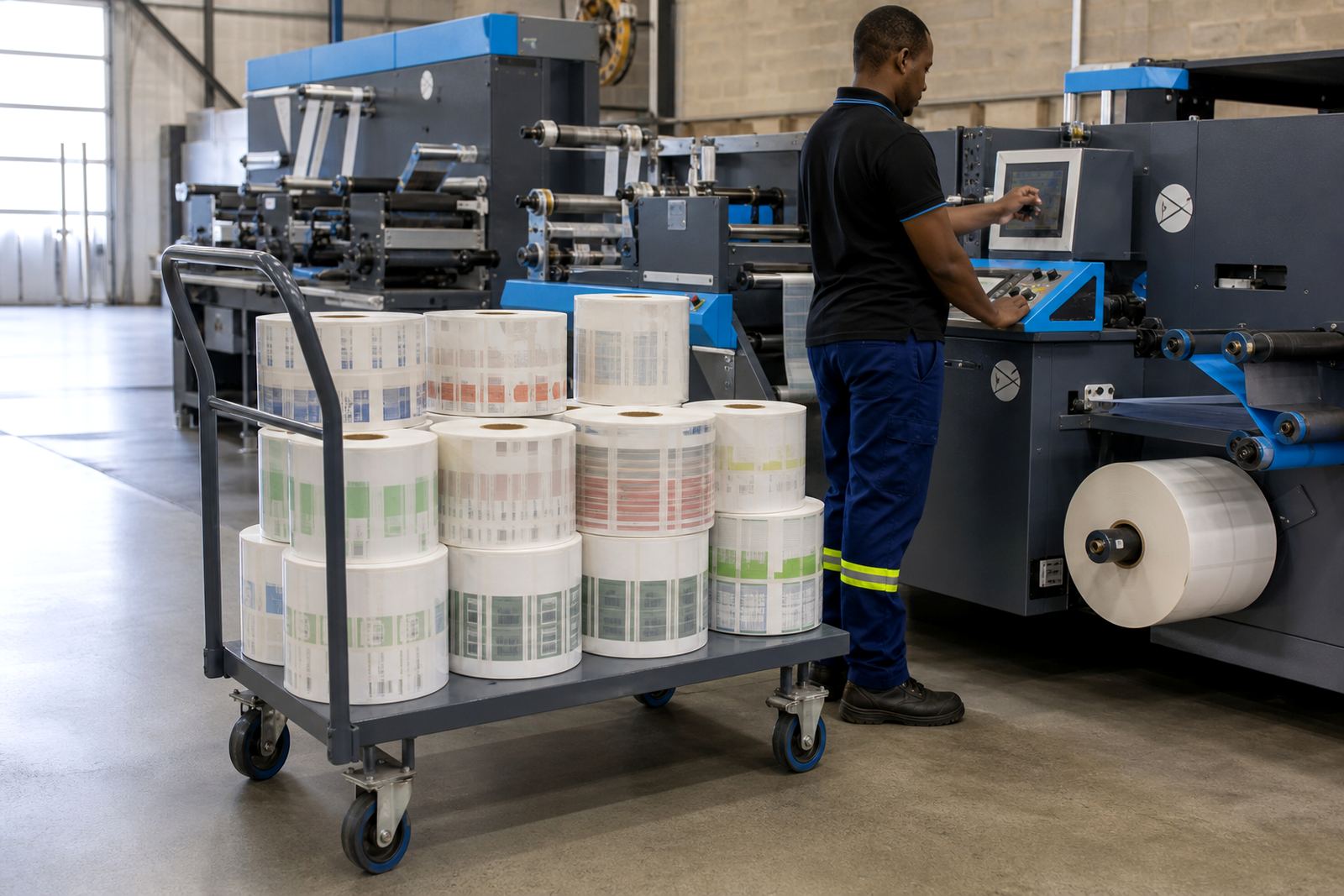
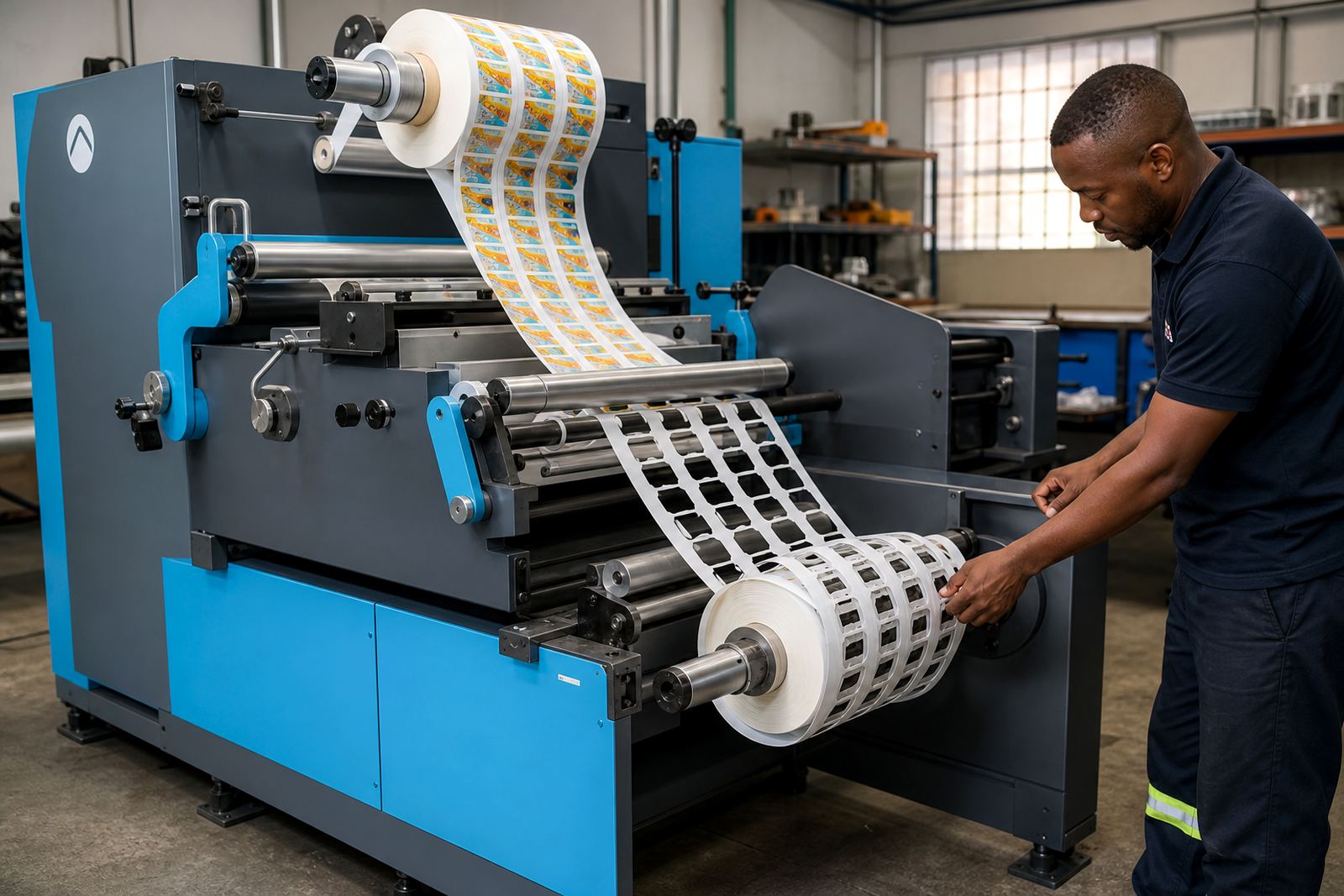
The site was running mixed label work for cartons, pouches and outer packs, with short and medium runs changing over through the day. Waste matrix was being pulled away by hand at the end of each shift, and trim offcuts were collecting near the finishing area, which made housekeeping harder and slowed the next roll change.
The client wanted a finish that would leave cleaner rolls ready for packing, without adding a complicated process that the operators would have to nurse all day. They also wanted the line to cope with pressure-sensitive stocks, laminated material and varnished webs without tearing the face stock or leaving jagged edges on the slit rolls.
- Client type: packaging producer
- Town: Deal Party, Gqeberha
- Work type: digital label finishing and waste handling
- Main issue: matrix waste and trim build-up
What the brief asked us to solve
The brief centred on matrix stripping, trim extraction and neater rewound rolls for dispatch. The line also had to manage registration marks accurately enough for die-cutting and slitting, because the house style changed across several label formats and the operators could not afford drifting cuts on short runs.
We looked at the web path from unwind through lamination and finishing to the final rewind, then worked out where the machine needed better control. That included the tension set-up, the stripping path, the slit positions and the winding direction for different roll widths. The job called for a practical setup, not a crowded machine footprint, because the production area had limited spare space around the finishing line.
- Matrix stripping for adhesive waste removal
- Trim extraction for edge clean-up
- Slitting for multiple roll widths
- Rewind setup for neat finished rolls
The machine line we put in place
We supplied a digital label finishing configuration with unwind, lamination, die-cutting, stripping, slitting and rewind sections arranged for steady production flow. The die-cutting set-up allowed for both flexible dies and semi-rotary work, while the registration system was tuned to hold marks properly on repeat jobs and patterned labels. Where needed, the line could also handle varnish-covered webs after the print stage without chewing into the surface.
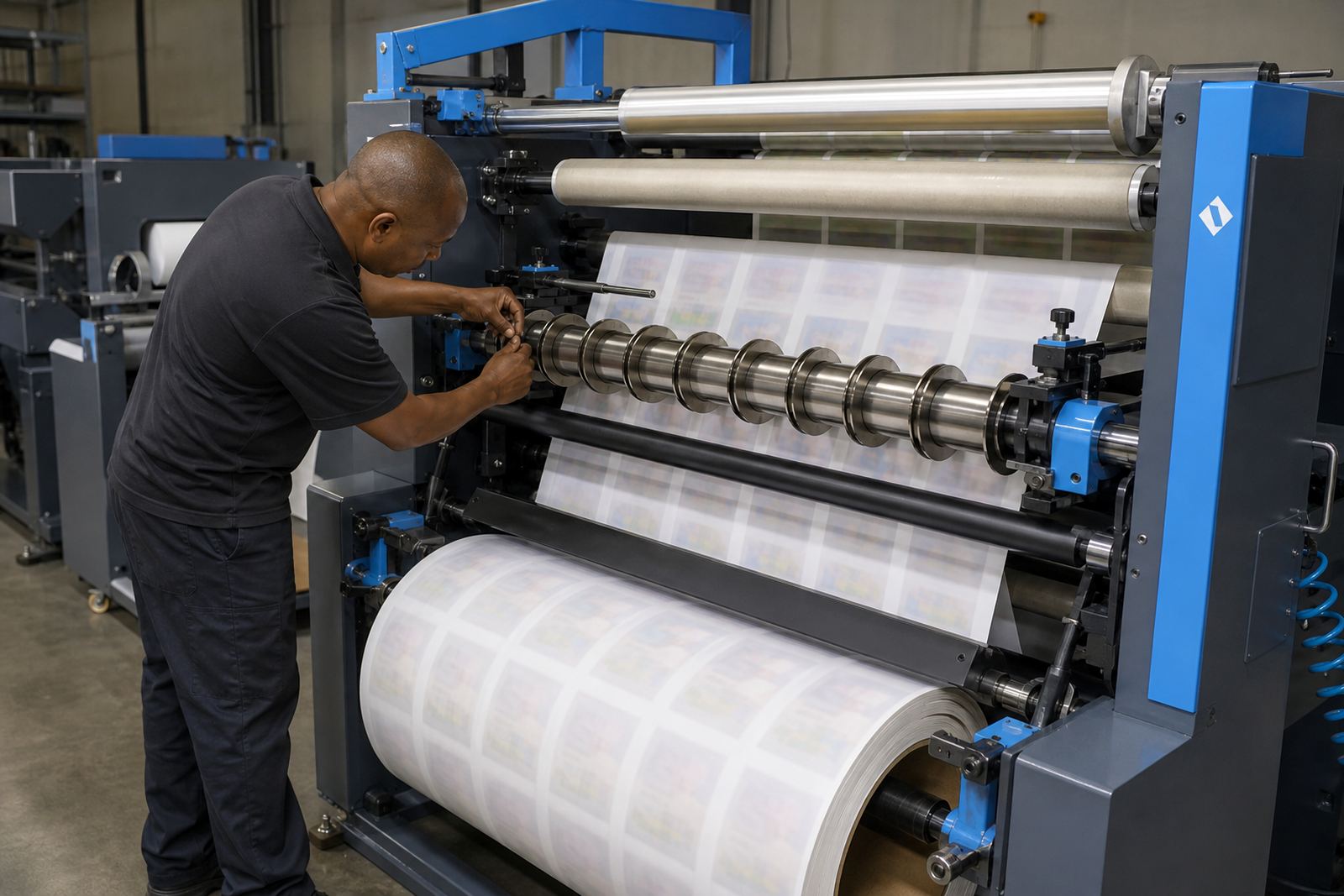
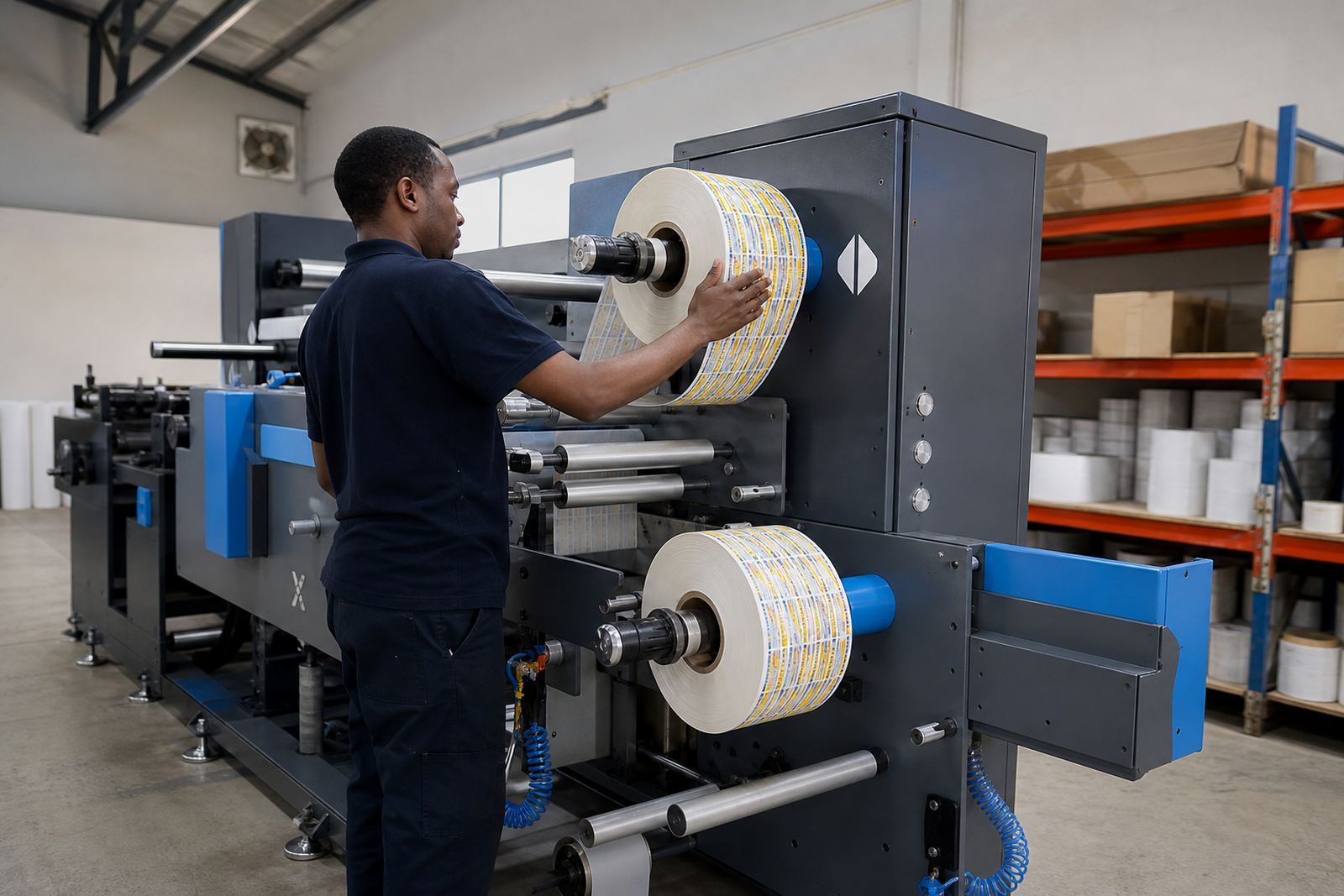
Our technical team aligned the waste paths so the matrix could be separated cleanly from the face stock and guided away before the final rewind. Slit widths were checked against the client's usual roll formats, and the rewind torque was adjusted for tighter finished rolls that would stay tidy in packing and transport. The operator controls were kept straightforward, with practical settings that could be repeated across similar jobs.
- Digital die-cutting with accurate registration control
- Matrix stripping path set for clean waste removal
- Trim extraction fitted for side edge waste
- Slitting and rewinding aligned to common roll widths
Installation, training and the first production run
The installation and commissioning were carried out over two weeks, with the first stage focused on machine placement, electrical checks and web threading. The second stage covered operator training, make-ready routines and the finer points of registration calibration. We spent time on die setup, slit position checks and rewind tension because those settings carry through the whole shift when production pressure picks up.
Training also covered what to watch for on laminated stock, thin paper labels and heavier film-based webs. The team worked through a few live changeovers so the operators could see how the line behaves when a job moves from narrow rolls to wider ones. There was a small amount of rework on the waste path during start-up, nothing unusual on a line with this kind of finishing, and it was corrected before the site moved into full production.
- Installation and line commissioning: 2 weeks
- Operator training on live jobs and changeovers
- Registration calibration for repeat label work
- Die setup help for short-run and mixed-format jobs
What changed after the setup settled
Once the line was running properly, the biggest change was on the finishing table and around the rewind area. Matrix waste stopped piling up in the same way, trim extraction kept the edges cleaner and the finished rolls left the machine in better shape for packing. The operators were also spending less time correcting misalignment at the slit stage, which helped keep the work moving through the day.
The client gained a neater end product for dispatch to downstream converters and packers, with fewer damaged roll edges and less manual sorting at the back end. On repeat label formats, the registration held better through the run and the changeover notes became easier to follow for different stock thicknesses. That gave the team a steadier routine around production planning, especially when several jobs had to share the same finishing line.
- Cleaner rolls with less manual waste removal
- Better slit edges and tidier rewind packs
- More stable repeat work on registered labels
- Less stoppage for waste clearing during runs
What we would redo on a similar job
On a similar project, we would again start with the waste path before chasing fine adjustments anywhere else. That part matters because matrix stripping, trim extraction and rewinding all pull on the web in different ways, and if the waste path is not right the rest of the line starts to drift. We would also keep the first live runs close to the actual production formats, not the easiest sample rolls, because the real job shows up the weak points fast.
For packaging producers working with label printers, the strongest result usually comes from matching the die-cutting method to the stock mix, then setting the slitting and rewind sections around the final roll size requirements. That approach held true in Deal Party, and it is the part we would keep in place on the next similar installation. The machinery can do the job, but the web path and registration still need a careful hand at start-up.
- Start with the waste path, then set the rest
- Test on real production rolls, not only samples
- Match slit widths to the actual dispatch spec
- Keep registration marks under close check during changeover
Key facts from the Deal Party project
The project involved a packaging producer in Deal Party, Gqeberha and focused on digital label finishing for cleaner output. The setup covered matrix stripping, trim extraction, lamination, die-cutting, slitting and rewind control, with the machine line configured for pressure-sensitive label work and mixed roll sizes. The final arrangement was built to suit daily production, not a showroom run, so the operator controls and waste handling were kept practical.
For the client, the value sat in the finishing stage. Once the waste and roll handling were under control, the labels moved off the line in a more usable form, with fewer messy edges and less hand sorting before packing. That was the main ask from the beginning, and it is the part that shaped the whole job.
- Town: Deal Party, Gqeberha
- Project type: digital label die-cutting and finishing
- Primary focus: matrix stripping and trim extraction
- Support included: installation, training and servicing setup
Key facts
| Client type | Packaging producer |
|---|---|
| Location | Deal Party, Gqeberha |
| Core process | Digital label finishing with matrix stripping and trim extraction |
| Machine functions | Unwind, lamination, die-cut, strip waste, slit and rewind |
| Registration | Calibration for marked web repeat work |
| Project duration | 2 weeks for installation, commissioning and training |