The brief from a busy Pinetown finishing floor
The job came from a label printer in Pinetown that was running a mixed bag of narrow roll labels for food, hygiene and general packaging work. The print side was steady, but the finishing stage was holding back output when jobs needed more than one slit lane and tidy rewind rolls for dispatch.
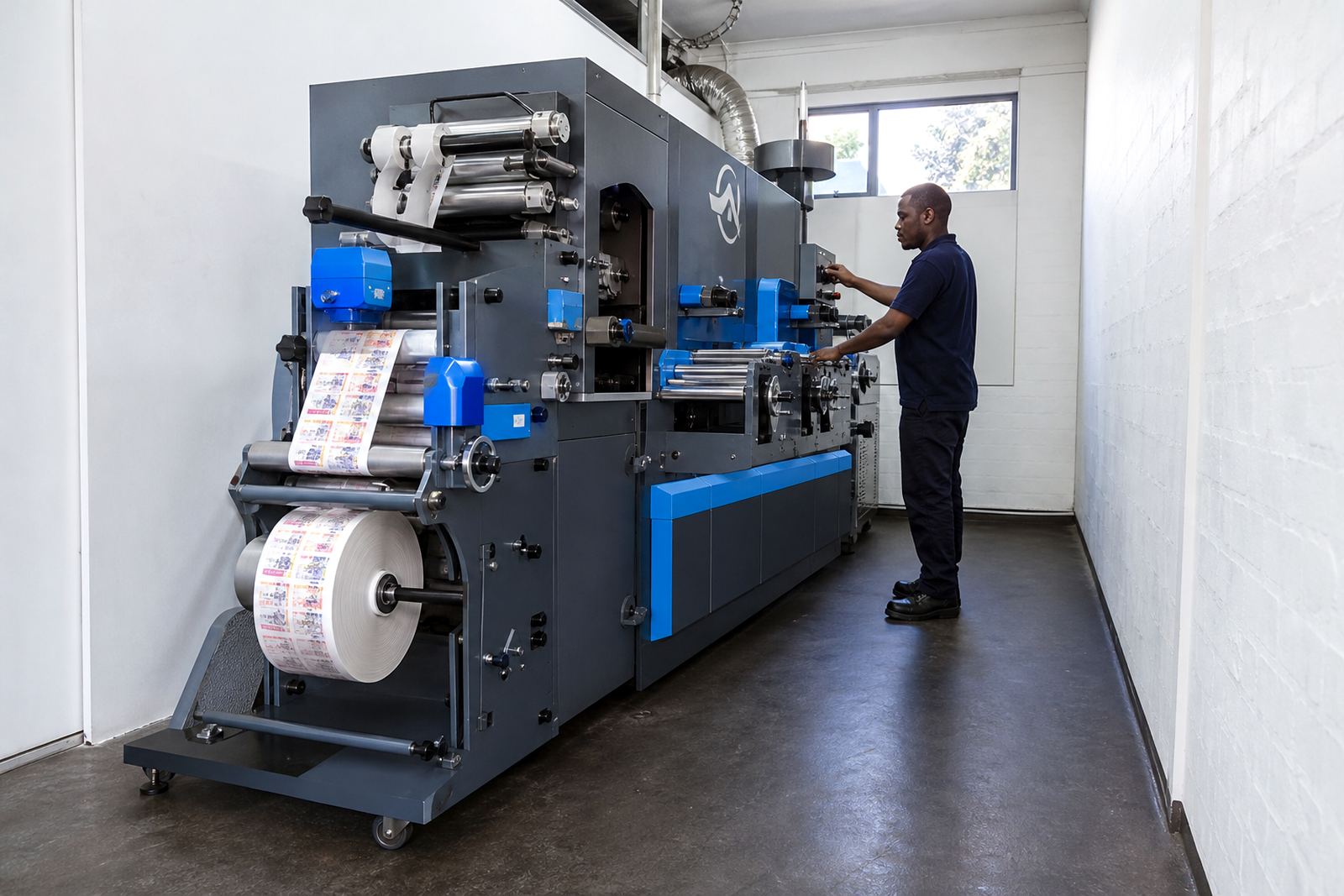
The brief was straightforward in theory and fussy in practice. The team needed a finishing setup that could take printed web, keep registration under control through slitting and rewinding, and leave enough flexibility for different core sizes and roll widths. The printer also wanted a layout that suited a smaller floor area, with service access left open around the machine and enough room for operator movement.
- Multi-lane slitting for narrow label webs
- Clean rewind tension across different roll widths
- Registration mark control for printed stock
- Room for routine operator checks and knife changes
What the line had to handle without fuss
The production mix included self-adhesive label stock with printed register marks, plus short and mid-length runs that changed from one job to the next. Some jobs carried laminate, others needed a varnished surface, and a few had a slightly more slippery face stock that can wander if the rewind tension is not managed properly. The finishing line needed to cope with all of that without creating crushed edges or wandering slit lanes.
We also had to work around the fact that narrow roll jobs are unforgiving. If the web path is not set cleanly, or if the slitting knives are not aligned with enough care, the result shows up immediately on the rewind. In Pinetown, where humidity shifts through the year, that extra attention matters even more on thinner label stock and laminated webs.
- Printed rolls with registration marks
- Laminated and varnished label webs
- Short runs with frequent job changes
- Narrow rolls needing stable edge control
The finishing setup we supplied and set in place
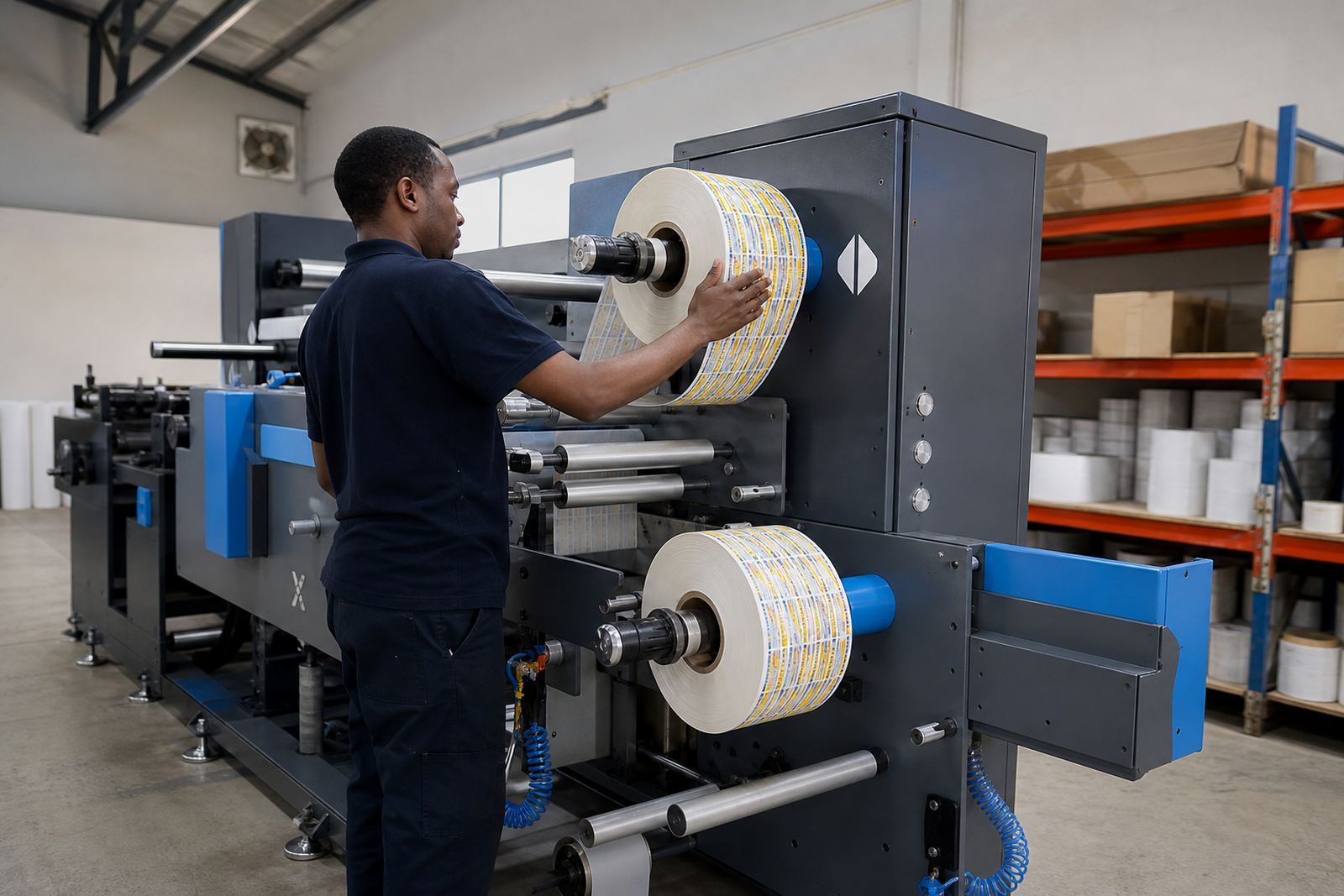
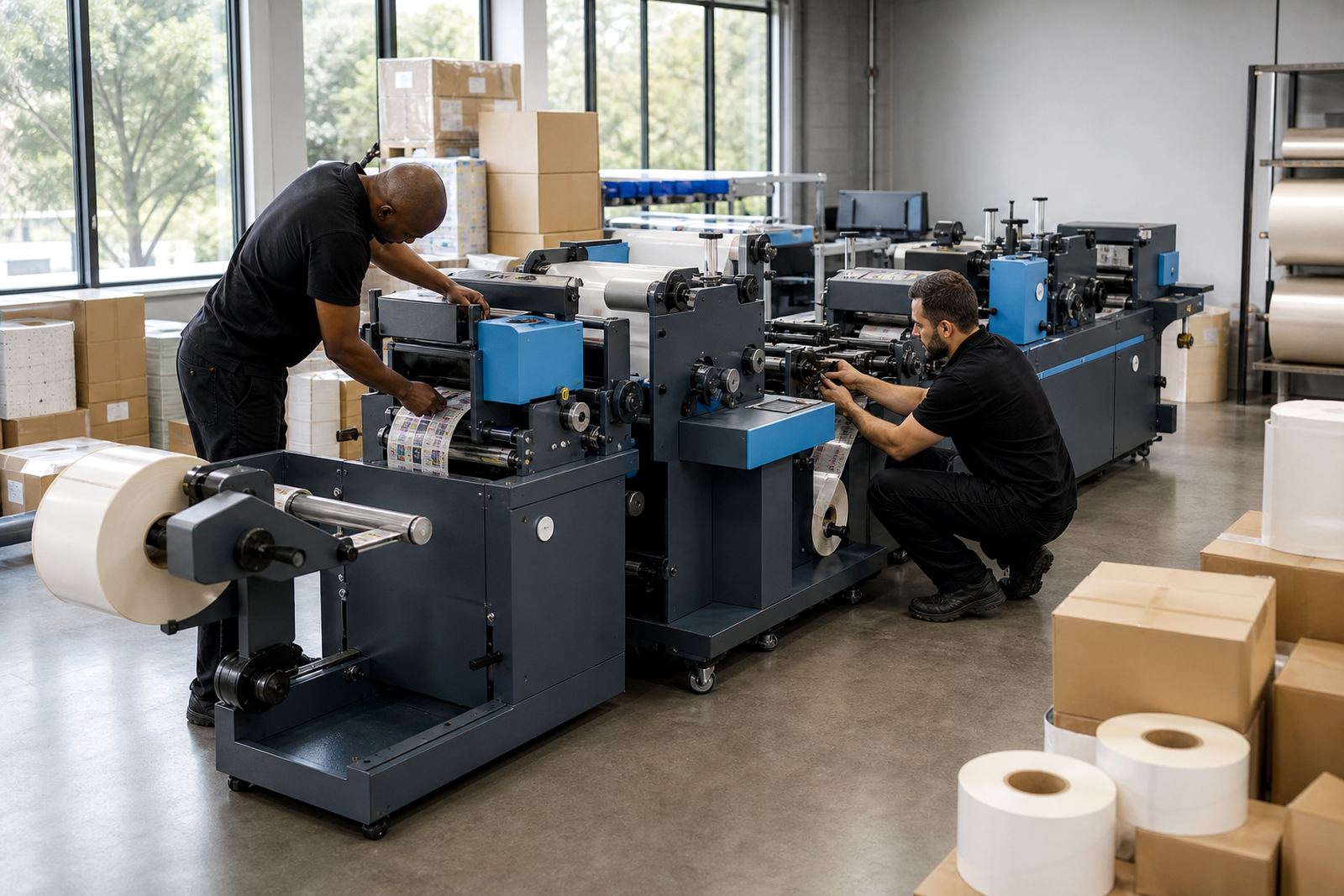
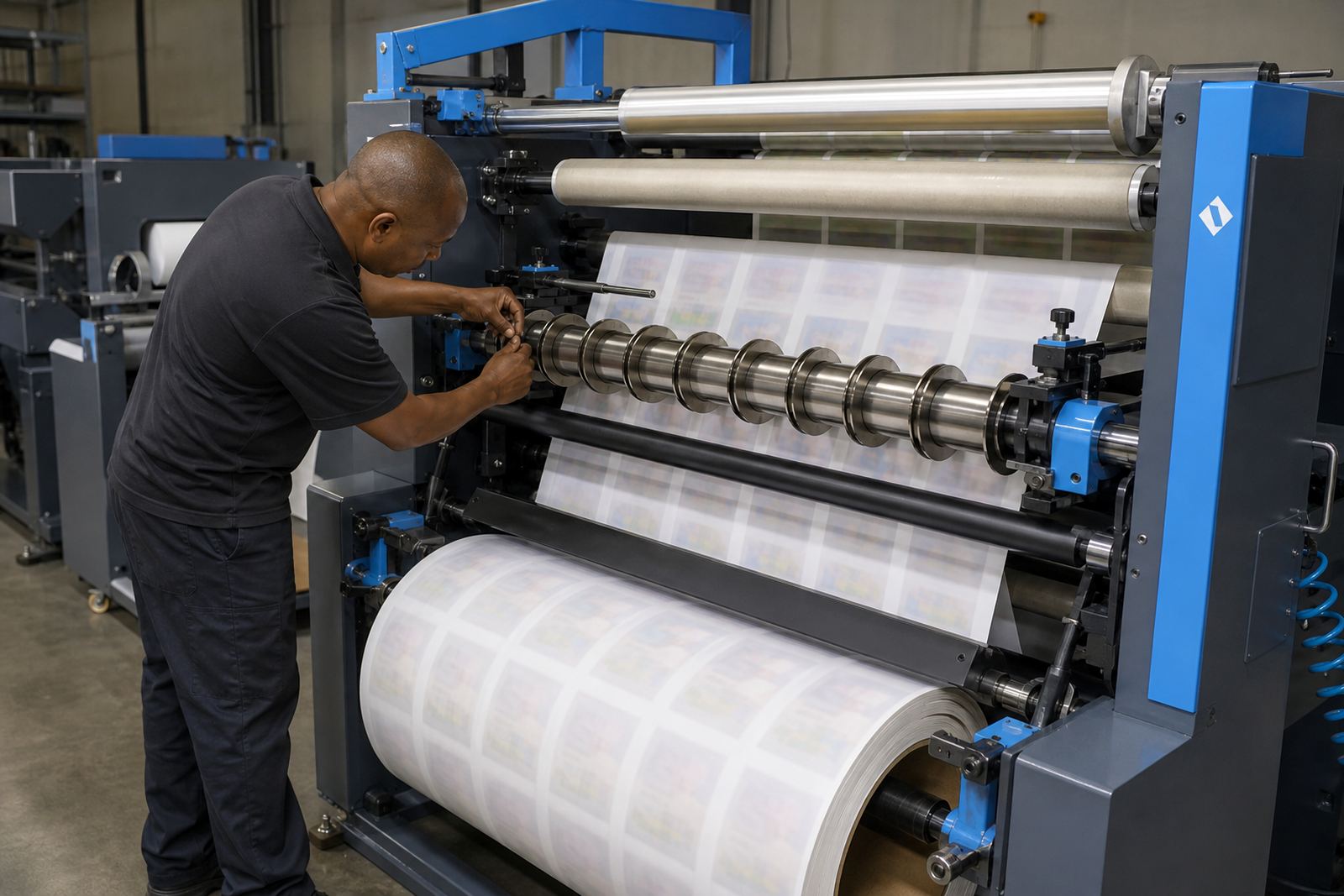
We supplied a digital label finishing line configured for unwind, web control, slitting and rewind work, with the option to manage matrix stripping where the job called for it. The setup was arranged for multi-lane output, so the printer could split wider printed webs into narrower finished rolls without sending material through a second manual process.
The machine set-up included register calibration for printed stock, practical rewind tuning for different core and roll sizes, and operator controls that made changeovers less awkward. For jobs needing a cleaner surface finish, the line also allowed lamination or varnish handling ahead of the slit stage, depending on the job spec and the print method used.
- Unwind section with web guiding and tension control
- Slitting station for multi-lane narrow roll work
- Rewind section with adjustable roll build-up
- Registration calibration for printed labels
Three weeks on site, set around production hours
Week one was used for delivery planning, floor positioning and checking the print room flow so the machine landed in the right spot. The line was then installed, levelled and checked against the incoming web path, with the operator team present for the first setup runs.
Week two focused on commissioning and hands-on training. We worked through register marks, slit widths, rewind tension and the practical side of job changeovers, including how to deal with edge dust and uneven roll build-up. By week three, the printer was running repeat jobs with a steadier rhythm and less hand-finishing between stages.
- Week 1: delivery, positioning and installation
- Week 2: commissioning and operator training
- Week 3: repeat production checks and fine tuning
What changed on the Pinetown side
The most visible change was output consistency. Narrow roll jobs that used to take extra attention at the slitting stage started moving through with cleaner edges and better rewind shape. The team could also separate wider parent webs into useful finished roll counts without dragging the job back for manual correction.
There was also a useful gain in floor discipline. Once the line was dialled in, the operators had a clearer method for setup, inspection and final roll check before dispatch. That mattered on mixed label work where a small error in tension or register can spoil a batch. The finishing area felt more predictable and the job handover between print and pack became tighter.
- Cleaner slit edges on narrow roll work
- More stable rewinds for dispatch rolls
- Less manual rework between print and finishing
- Better handling of mixed job sizes
What we would change again on a similar job
We would set the web path early and spend time on rewind behaviour before the machine goes into regular use. That is where many label finishing jobs gain or lose control. On a plant like this, it also helps to build in space for spare knives, core stock and basic service access, because the line works best when the operators can move around it without squeezing past other equipment.
We would also keep the register setup practical rather than overcomplicated. Pinetown jobs can shift quickly between formats, so the finishing line has to suit short-run label work and longer production periods without forcing the team into a long reset each time. For this printer, the useful result came from a steady installation, proper training and a finishing method that matched the work on the floor.
- Set the web path before high-volume running
- Allow room for service access and knife changes
- Keep register setup clear for repeat jobs
- Match rewind settings to the actual roll format
Key facts
| Project location | Pinetown, KwaZulu-Natal |
|---|---|
| Client type | Label printer |
| Application | Multi-lane slitting for narrow roll labels |
| Machine functions | Unwind, slit, rewind, registration calibration |
| Timeline | 3 weeks from installation to stable production |
| Outcome | Cleaner slit edges, steadier rewinds and less rework |