Roll Presentation Was Getting In The Way
The site was turning out printed rolls for labels and short packaging runs, but the finished reels were not landing in a shape that suited packing, counting, or later use on applicators. The brief was about control more than speed. Roll edges had to sit cleaner, the wind needed to stay even across repeat jobs, and the line had to handle mixed web widths without constant rework.
The team wanted a finishing setup that could take printed stock, pass it through inspection friendly rewind control, and leave a neater reel with reliable counts. There was also pressure on consistency when jobs changed from narrow label webs to wider rolls with more surface area and tighter register demands.
- Printed roll stock with mixed job lengths and widths
- Dual rewind control for more even finished reels
- Counting support for dispatch and stock verification
The Finishing Line We Put In Place
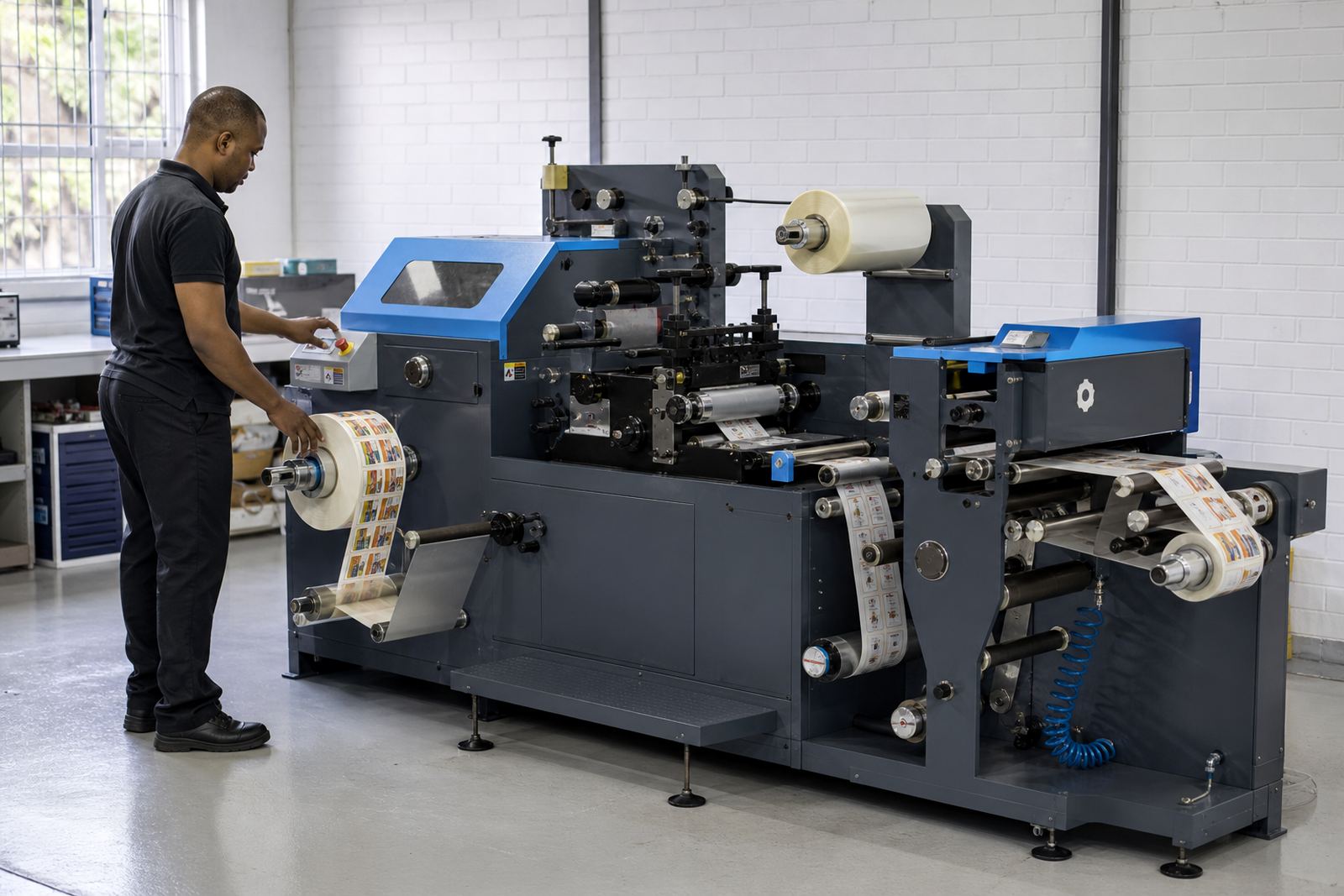
We supplied and installed a rewind focused finishing line with dual rewind control, count monitoring, and setup support for clean roll build. The line was arranged to keep tension stable through the web path, because poor tension shows up quickly on a narrow label roll. We also checked that the rewind section could cope with frequent changeovers without rough edges or collapsed cores.
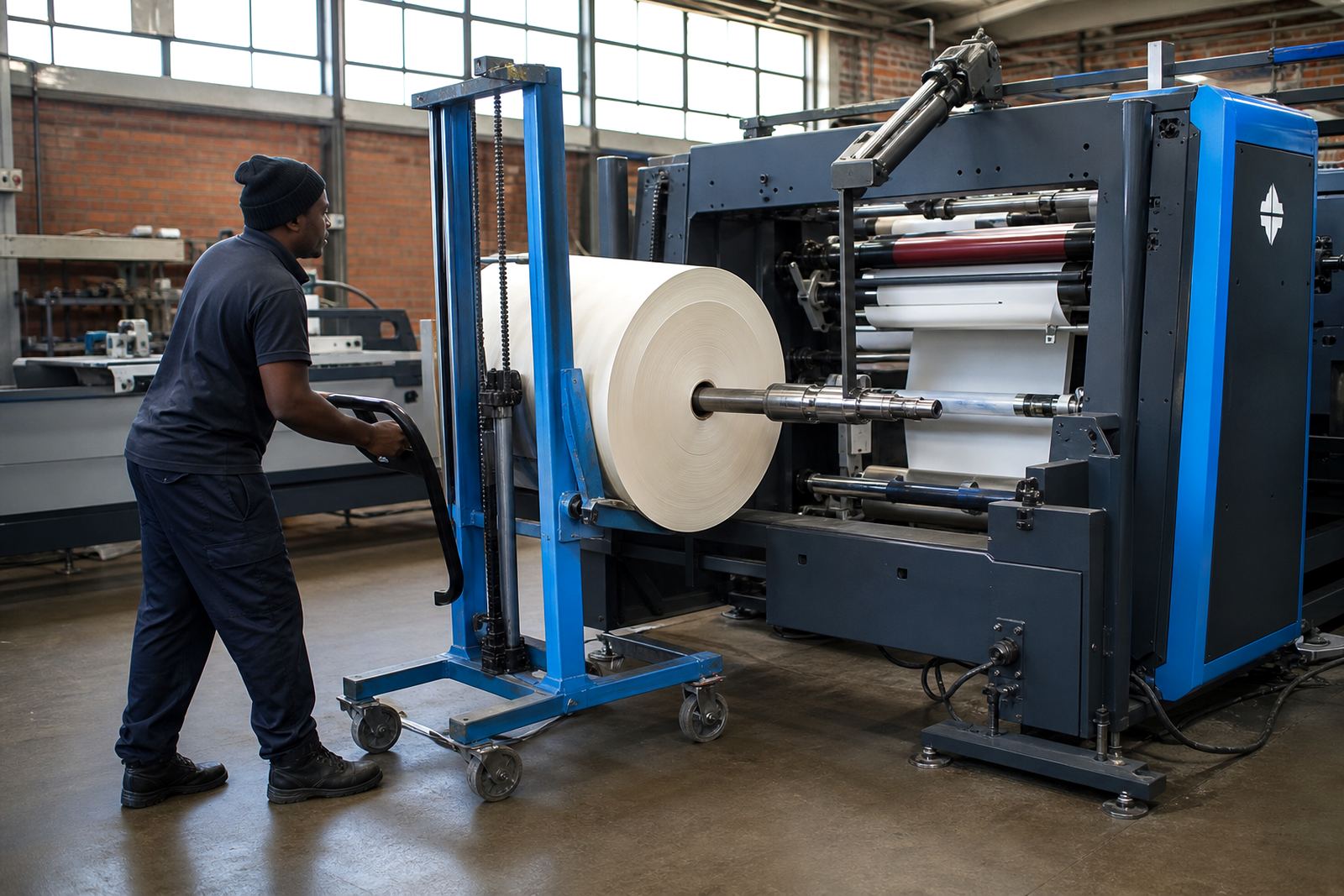
The equipment package included unwind handling, guided web travel, count control, and rewind adjustment for finished roll size. We also set the line up so the operators could work with registration marks already on the printed web, keeping the repeat positions in line with the rewind and any later slit positions.
- Dual rewind stations for controlled finished roll build
- Web handling set for printed label stock
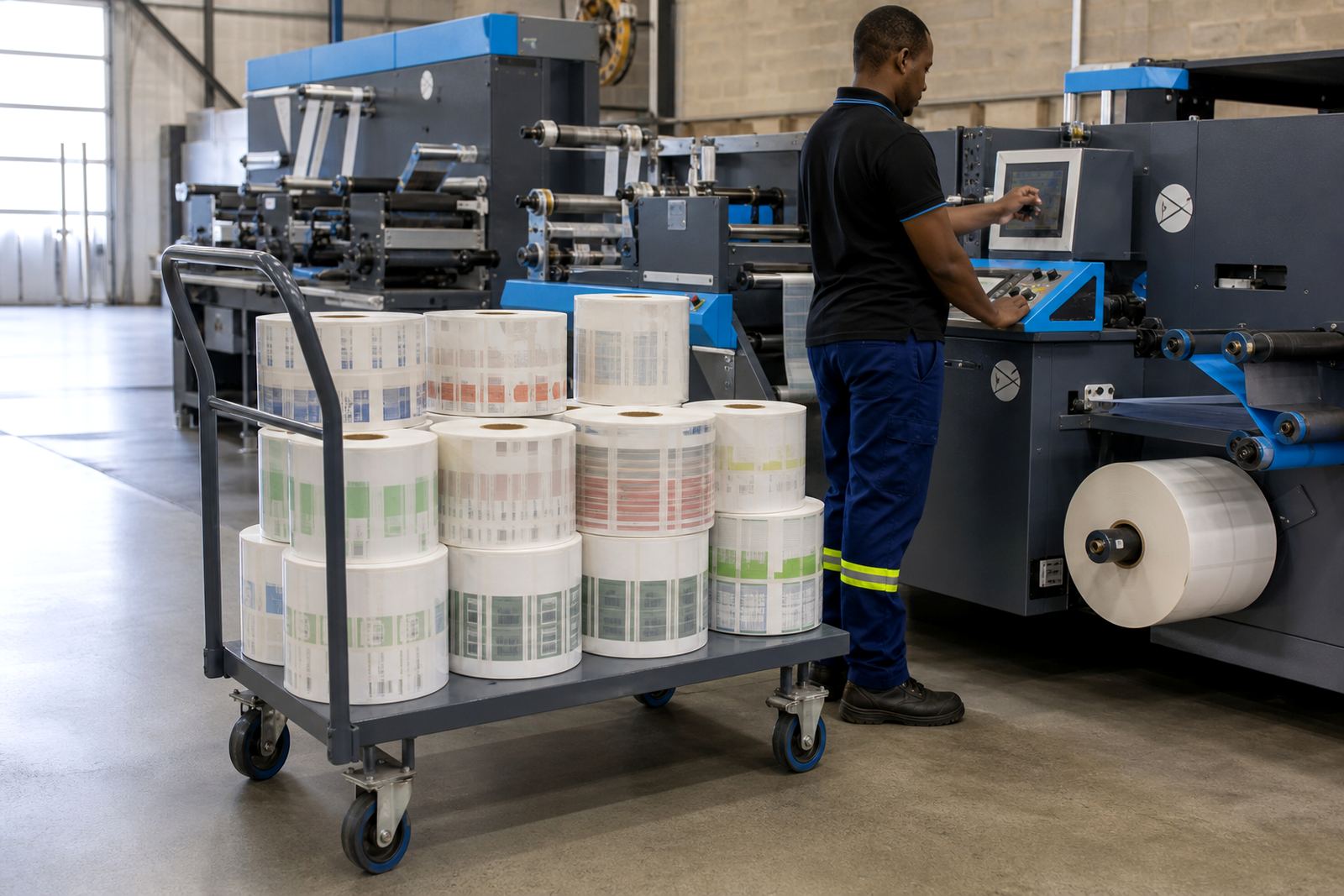
- Count control aligned to job tickets and pack totals
- Registration mark reading for repeat accuracy
What Had To Be Managed On Site
The room had enough floor space for the line, but the workflow needed careful planning. Incoming rolls had to feed without scuffing, and the finished reels needed a clear route for packing and checking. Because the site runs a mix of label work and packaging jobs, the machine layout had to stay practical for operators moving between small jobs and longer production runs.
We also had to balance the rewind setup against the material mix. Some substrates carried a light coat or varnish, while others were more sensitive to pressure and surface marks. That meant tension, guide settings, and core alignment all needed attention during commissioning. On a line like this, one small adjustment can change the edge build and the roll face quality.
- Space planning for feed, rewind and packing movement
- Handling of coated and uncoated label materials
- Core alignment for stable roll build
- Tension tuning for mixed web behaviour
Commissioning Across Three Working Phases
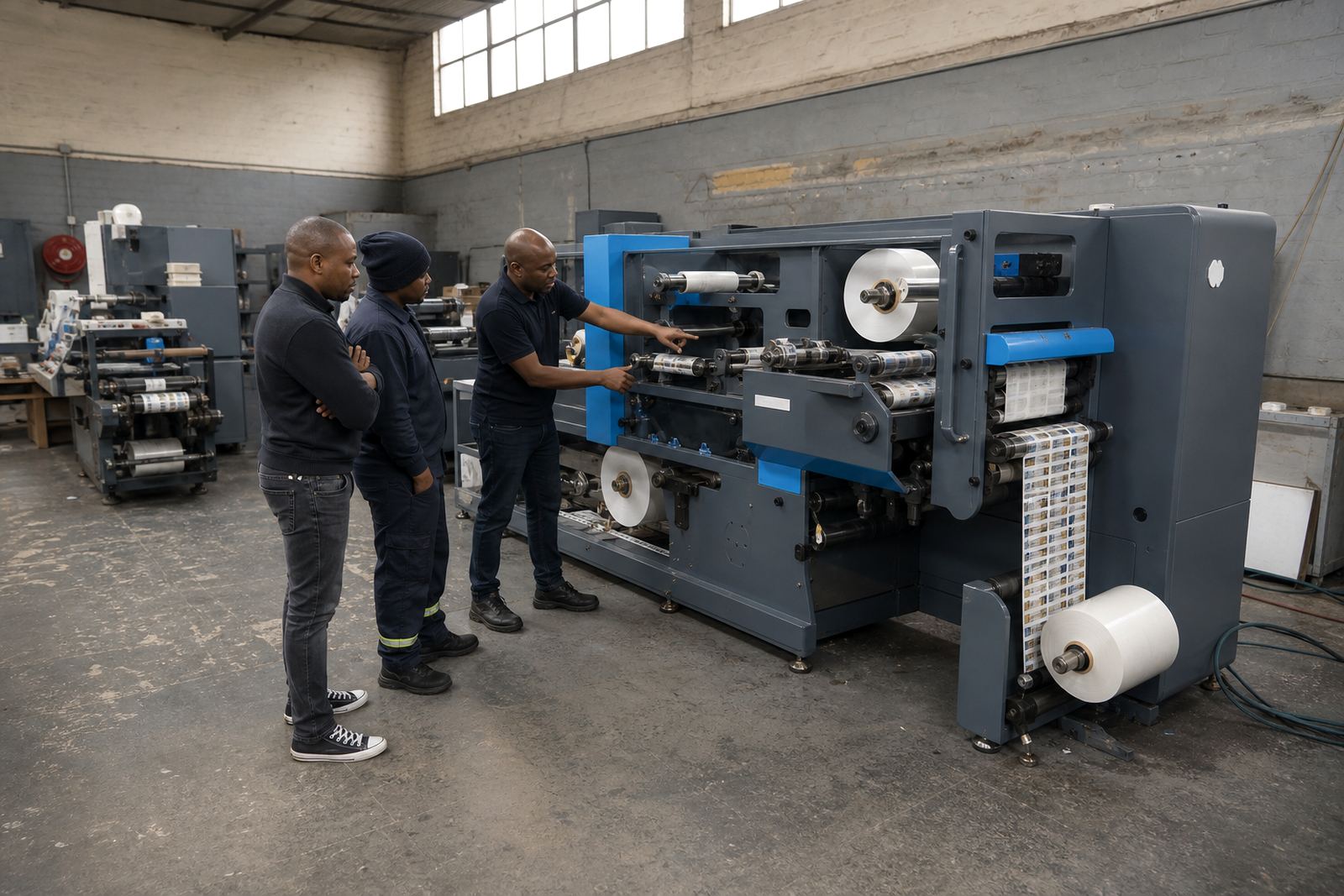
The project ran in three clear stages over four weeks. First came site checks and machine positioning. Then we completed the mechanical and electrical installation, with web path setting and count calibration. The final stage covered operator training, test reels and fine adjustments on real material. That approach kept the line changes manageable and gave the team time to see how the machine behaved on the stock they use every week.
During the run-up to handover, we checked rewind direction, roll tightness, edge alignment and count consistency. The operator team also worked through changeover steps for different reel widths. That matters on label finishing because a line that behaves on one job can shift slightly when a thinner or more slippery stock is loaded.
- Week 1: site checks, positioning and preparation
- Week 2: installation and web path setup
- Week 3: calibration, count checking and test runs
- Week 4: operator training and production fine tuning
What Changed In The Finished Rolls
The clearest change was the look and handling of the finished reels. Rolls left the line with cleaner edges, more even build, and less drift in the wind. Counts were easier to match to job sheets, which helped the packing side and reduced awkward double checking at the bench. The team also found the line easier to reset between narrow label runs and wider jobs.
There was also a practical gain in day to day use. When a rewind line holds tension better, the operator spends less time correcting edge wander or reshaping the roll face. That leaves more time for the actual production work, and it gives dispatch a neater reel to move through the rest of the process.
- Cleaner finished reel edges
- Better count control for packing checks
- Less correction on repeat rewind jobs
- More consistent presentation for dispatch
The Finishing Steps Worth Repeating
If we were doing a similar rewind installation on another Gqeberha site, we would keep the same focus on tension mapping, count calibration and operator practice on real stock. Those three items change the result more than people expect. A rewind machine can be mechanically sound and still produce poor reels if the web path or set points are rushed.
We would also keep the handover tied to actual production widths rather than only running a neat sample. That gave the team a better sense of how the line behaves with different roll sizes, coated stock and repeated starts. For a label finishing line, that practical testing makes the changeover feel more grounded and less like a one off setup.
- Tension settings checked on real production stock
- Count calibration matched to dispatch needs
- Operator practice done on the widths used every week
Key facts
| Project | Gqeberha rewind install |
|---|---|
| Site type | Label printing and packaging finishing operation |
| Machine functions | Dual rewind, count control, web handling, registration calibration |
| Roll material | Printed label stock with mixed widths and coated surfaces |
| Timeline | 4 weeks from site checks to handover |
| Coverage | Gqeberha, with support across South Africa |