The Paarl brief, shaped around repeat label work
The producer in Paarl was running a steady mix of label sizes for packaged goods, with several repeat jobs that needed the same outline every time. The main concern was not just cutting the shape, but holding registration, keeping waste under control, and making the finishing line less fussy when the same job returned a few weeks later.
They also needed a setup that could cope with coated stocks and clear film, with the usual pressure points that come with label work in the Boland. Roll handling had to stay neat, matrix stripping had to stay reliable, and the operator needed a process that was practical for daily production rather than something that only looked good on paper.
- Client type: label producer serving repeat production work
- Town: Paarl
- Main need: flexible die cutting for recurring label sizes
- Secondary need: better control over matrix stripping and rewind handling
What had to line up before the machine choice
The brief asked for a finishing line that could take printed rolls, guide them through lamination where needed, and then cut cleanly without drifting off register. The jobs were not all the same material, so the set-up had to handle paper labels, film labels and varnish-coated stock without forcing constant rework. Flexible dies were the better fit for the repeat shapes they were producing.
There were also space limits on the production floor. The team needed a line that could be installed without turning the room into a bottleneck, and the unwind and rewind sections had to suit the roll sizes they were already using. For this reason we worked with the existing workflow rather than asking them to rebuild the whole line around one machine.
- Printed roll format with registration marks for repeat accuracy
- Mixed stock types, including paper and film
- Need for lamination and optional varnish-friendly handling
- Controlled slitting and tidy rewinding after cutting
The finishing line we set up in the plant
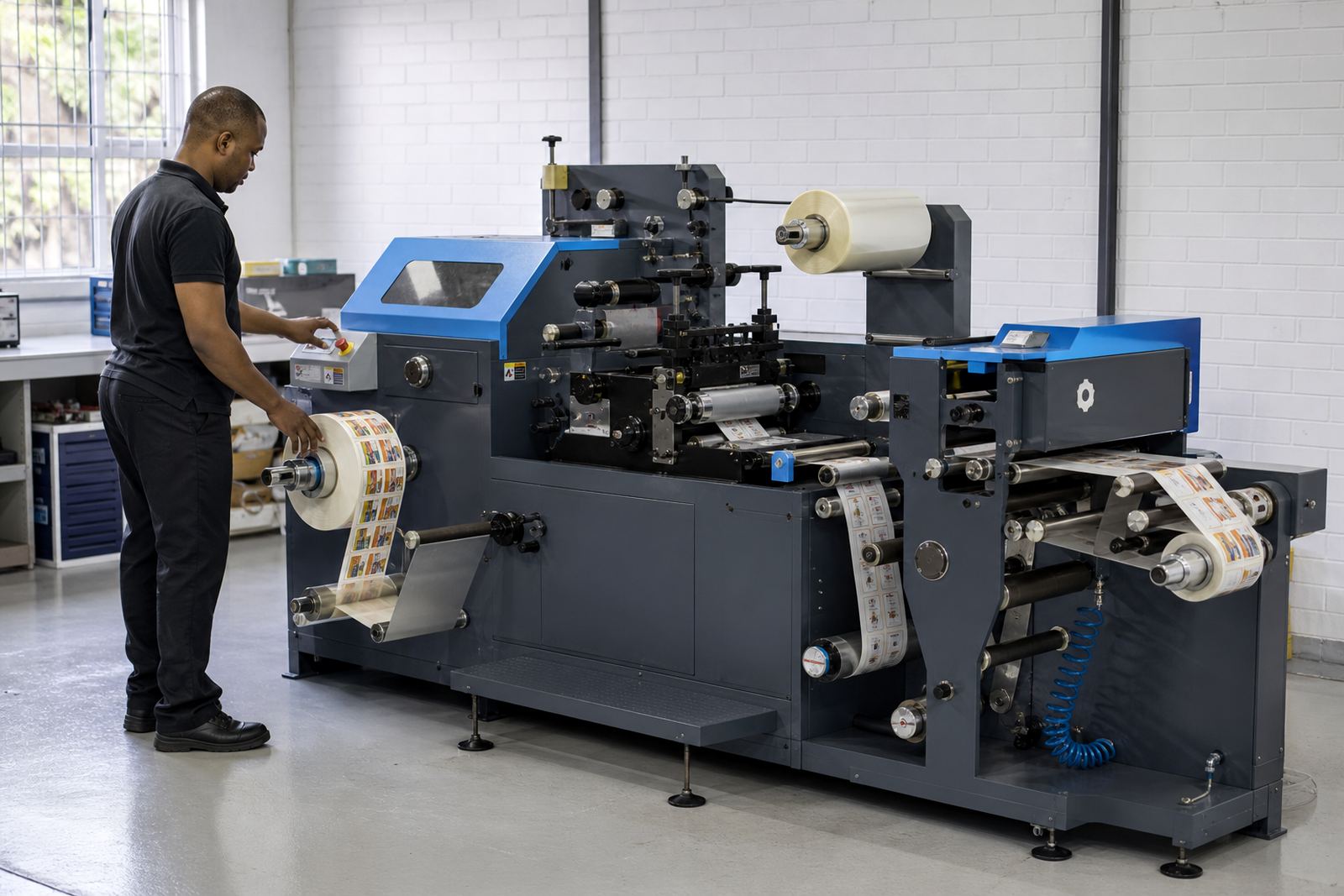
We supplied a digital label finishing arrangement built around flexible die cutting for recurring outlines, with the supporting stages arranged in the sequence that suits label production. The line covered unwind, lamination where required, registration calibration, die setup help, matrix stripping, slitting and rewinding. That combination gave the operator one path from printed roll to finished roll, instead of moving material between separate stations.
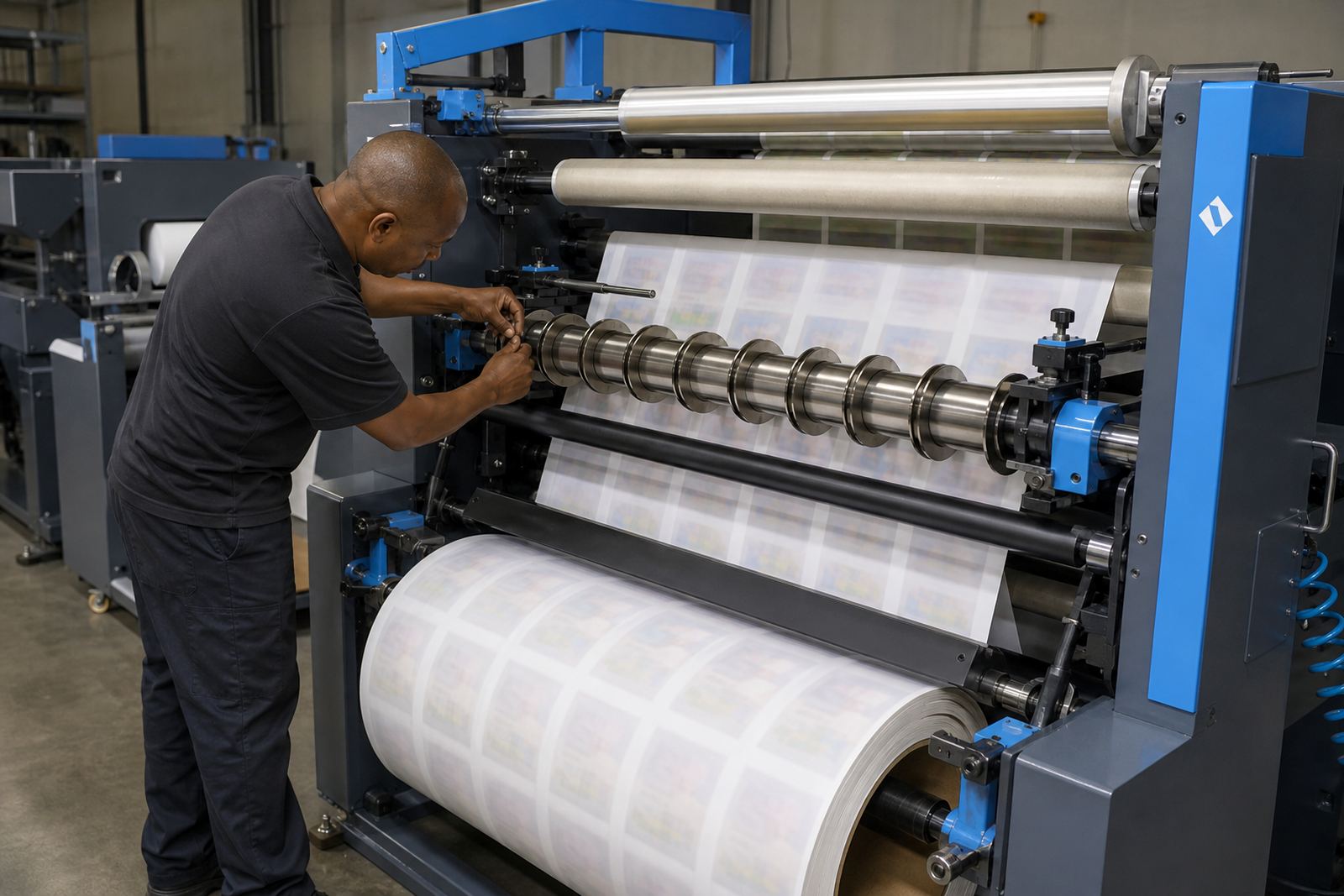
Our team handled installation and line commissioning on site, then stayed on for operator training so the people running the line could set up the repeat jobs without guesswork. We also covered rewind setup and slitting setup, because those two stages can make or break the finished roll when the labels are narrow or the liner is thin. A clean rewind matters when the next stage is packing or dispatch.
- Flexible die cutting for repeat label outlines
- Registration calibration for print and cut alignment
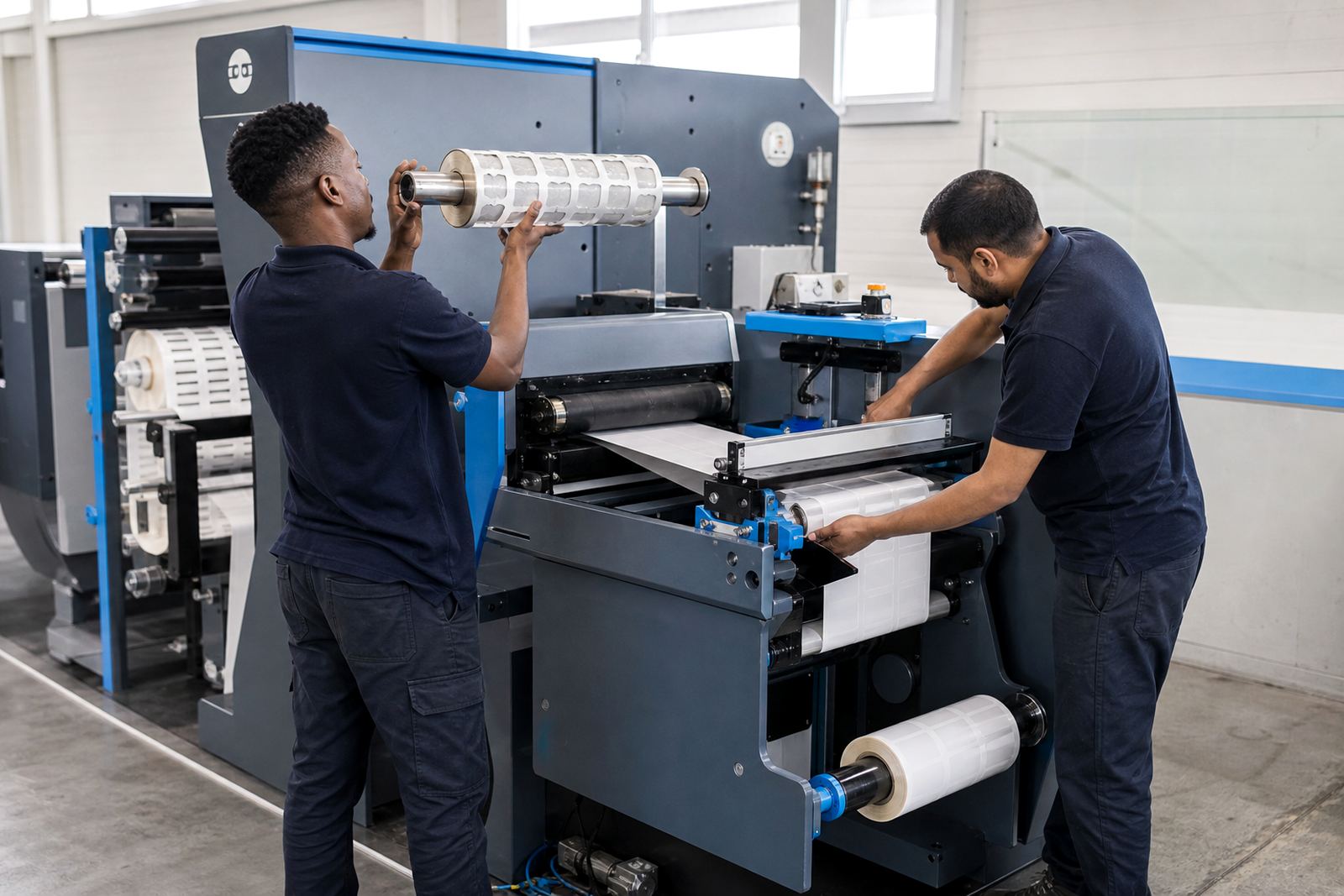
- Matrix stripping for cleaner waste removal
- Slitting and rewind setup for finished roll control
Installation and training over the first two weeks
The project ran over two weeks from delivery to the first production handover. The first stage focused on positioning, alignment and commissioning, with checks on unwind tension, web tracking and cut consistency. Once the machine was settled, we moved to job preparation and the small adjustments that matter when a repeat label order has to look the same on the next run.
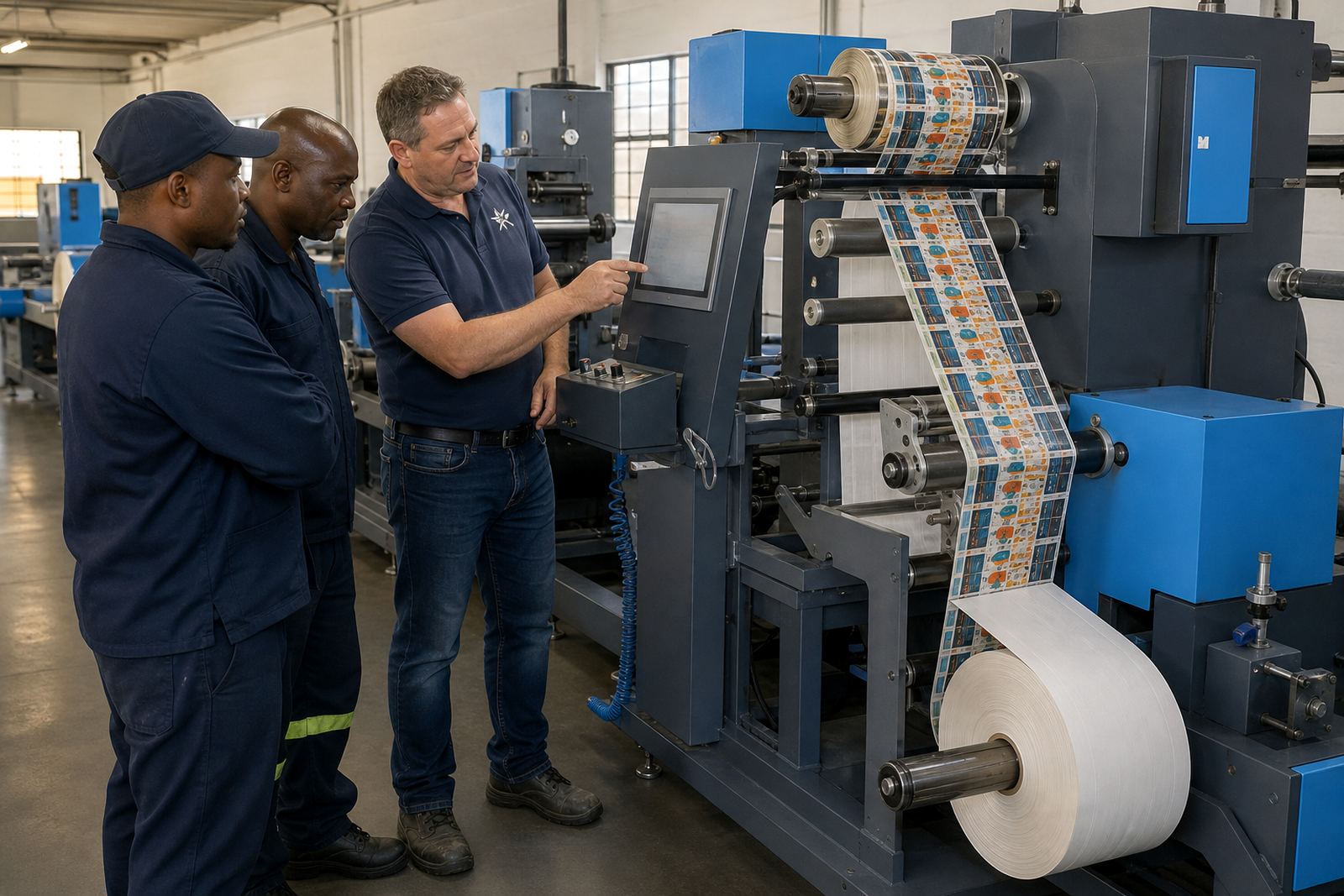
Operator training covered setup changes, die handling, registration marks, waste stripping and routine cleaning. We also worked through preventive maintenance points, because label finishing machines do better when the team knows which checks matter before a long shift starts. By the end of the training period the crew had a clearer process for repeat work and less time lost to trial and error.
- Week 1: delivery, positioning and commissioning
- Week 2: operator training and repeat-job setup
- Support covered practical maintenance checks
- Production trials confirmed stable registration on the core jobs
What changed on the floor after the changeover
The biggest difference was consistency on repeat jobs. Once the flexible die was set and the registration points were locked in, the team could move through recurring label sizes with fewer adjustments between runs. That made the workflow easier for the operators and helped reduce the little stops that usually build up on a busy week.
Waste handling also improved. The matrix stripped more cleanly, the rewind stayed neater and the slitting stage produced rolls that were easier to store and move. In a label plant, those details matter because a tidy finished roll saves time later, especially when a customer wants the same job repeated with the same trim and the same roll width. The Paarl team also had a clearer path for maintenance, parts planning and breakdown support when needed.
- Cleaner repeatability on recurring label sizes
- Less waste build-up at the stripping stage
- Neater finished rolls for packing and dispatch
- More predictable setup for future re-runs
What we would carry into a similar Paarl job
On a similar project, we would keep the same focus on registration marks, roll handling and the cut-to-rewind sequence. Those points are the ones that usually decide whether a finishing line feels manageable or troublesome once daily production starts. We would also spend proper time on the operator side of the job, because a clean machine install means little if the crew has to fight the settings every time a repeat order arrives.
For producers working with regular sizes and recurring customer demand, flexible die cutting is often the practical answer. It suits jobs where the shape comes back often and the finished roll needs to look the same from one run to the next. In this Paarl case, that was the real gain: a finishing line that matched the work on the floor, rather than a line that asked the floor to adapt around it.
- Keep the setup close to the printed roll format
- Check registration early before production starts
- Match slitting width to the finished pack plan
- Train operators on the repeat jobs first
Key facts
| Project | Paarl Flexible Die |
|---|---|
| Client type | Label producer |
| Town | Paarl |
| Core process | Flexible die cutting with registration control |
| Line stages | Unwind, lamination, matrix stripping, slitting, rewinding |
| Project duration | 2 weeks |