The brief from a busy coastal print room
The client in Umhlanga needed a finishing line that could handle sample rolls, quick promotional labels and short production runs without tying up the main press room. The space was tight, the work mixed between paper and film stocks, and the finished rolls had to leave the room ready for packing or the next converting step.
The main ask was practical. Keep the setup compact, keep changeovers sensible, and make sure registration marks could be tracked properly on short runs where every metre counts. The team also wanted a line that could manage lamination, varnish work, die-cutting, matrix stripping, slitting and rewinding without pushing operators into a complicated setup routine.
- Town: Umhlanga, KwaZulu-Natal
- Job type: sample line for label finishing
- Run profile: short promotional batches and test rolls
- Stock mix: self-adhesive label stocks and film facestocks
Space limits, humidity and roll handling
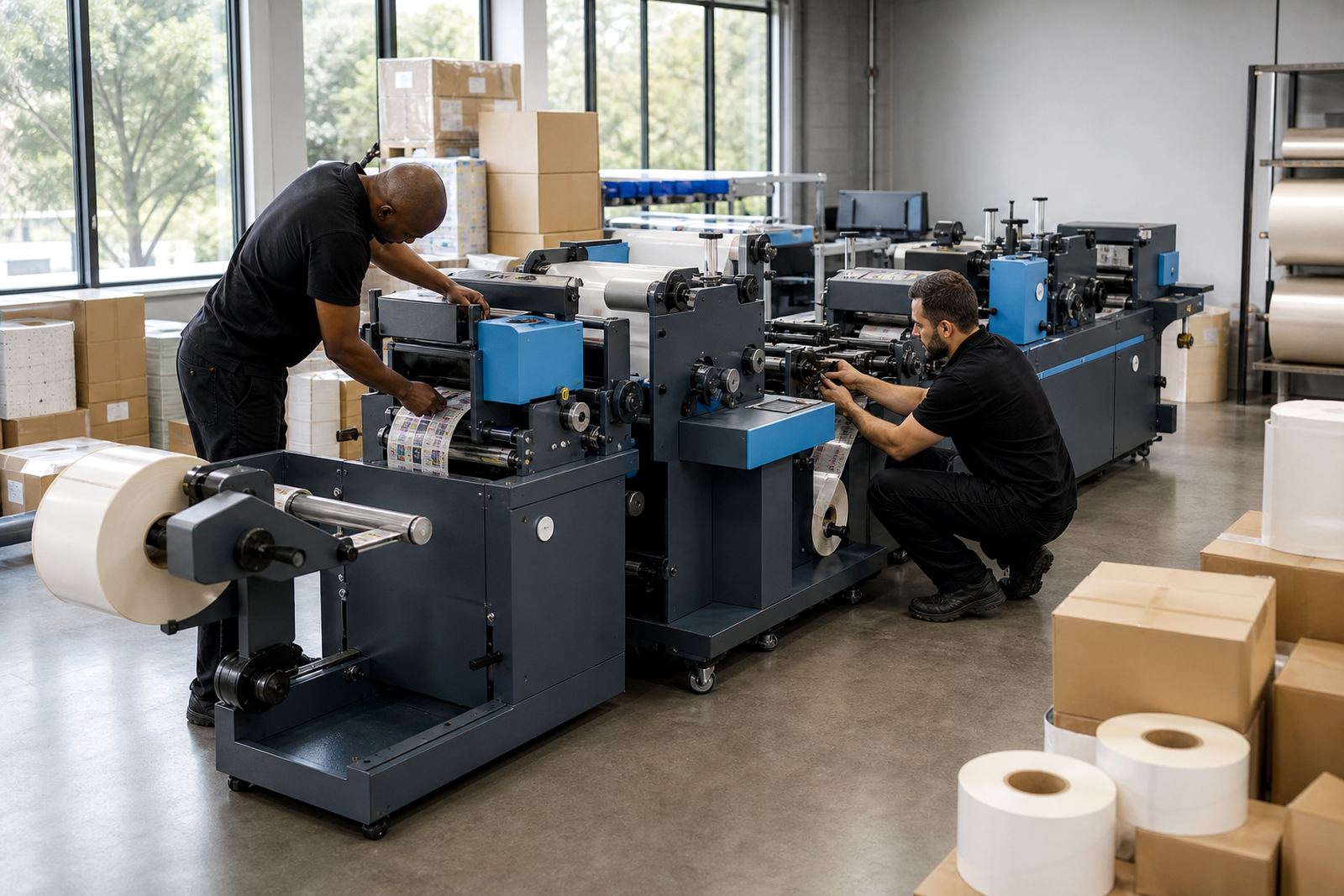
Coastal humidity matters in Umhlanga, especially when label stock sits in a room that moves between stored reels and active production. We planned the layout around sensible feed paths and enough clearance for loading, trimming and collection, so operators would not fight the machine during changeovers.
The line had to deal with narrow and wider rolls, not a single fixed format. That meant unwind control, accurate web tracking and a rewind section that could build neat output rolls without telescoping or loose edges. The room itself was not large, so each station had to earn its place and the sequence had to stay direct.
We also allowed for work where the printed web carried registration marks that needed stable reading through die-cutting and slitting. On sample work, the printer often wants to check artwork, shape, adhesive cut and waste removal in one pass, then move straight into packing or client approval.
- Compact footprint for a smaller production room
- Controlled unwind and rewind sections
- Support for variable roll widths
- Attention to registration marks and cut position
What the line included on site
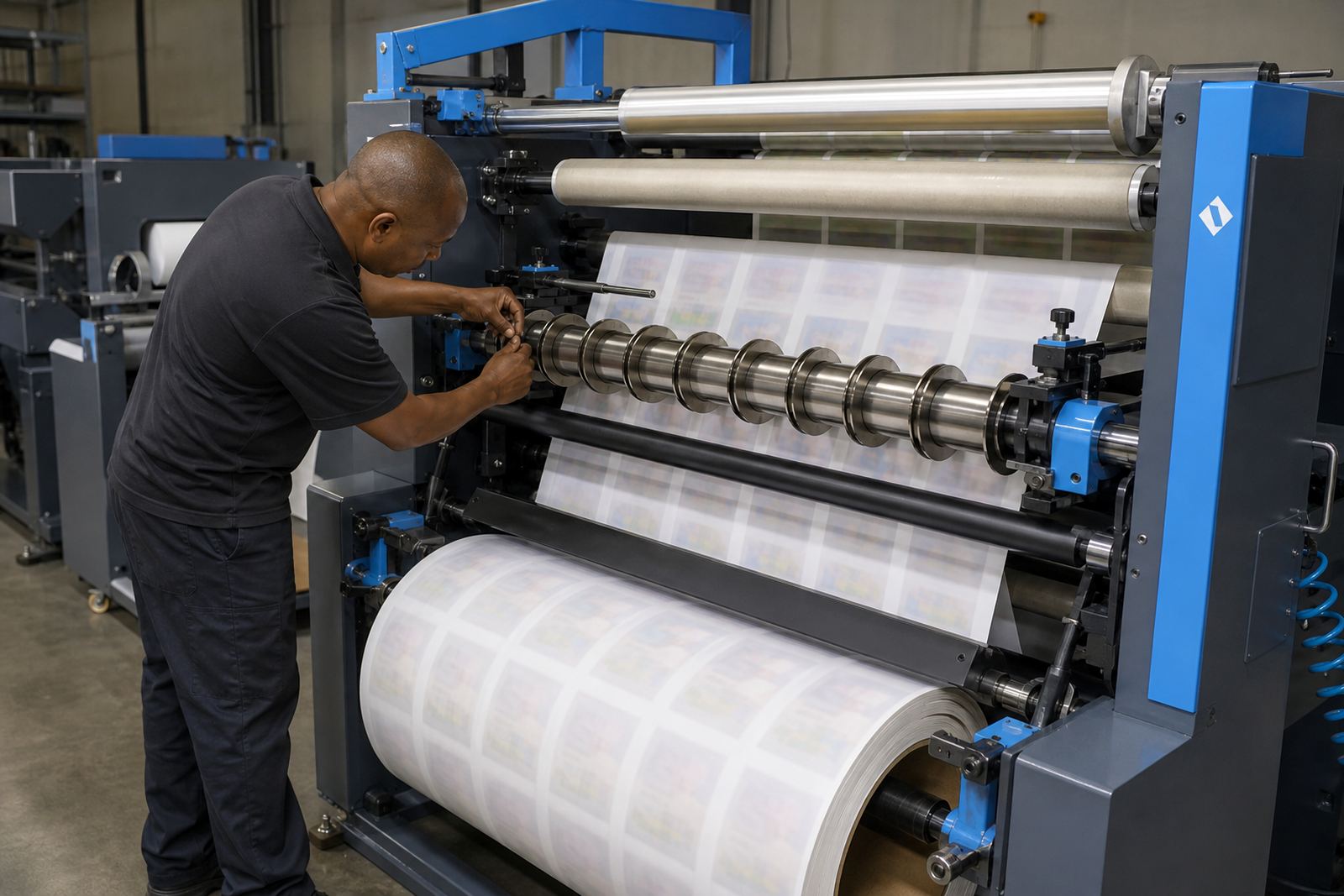
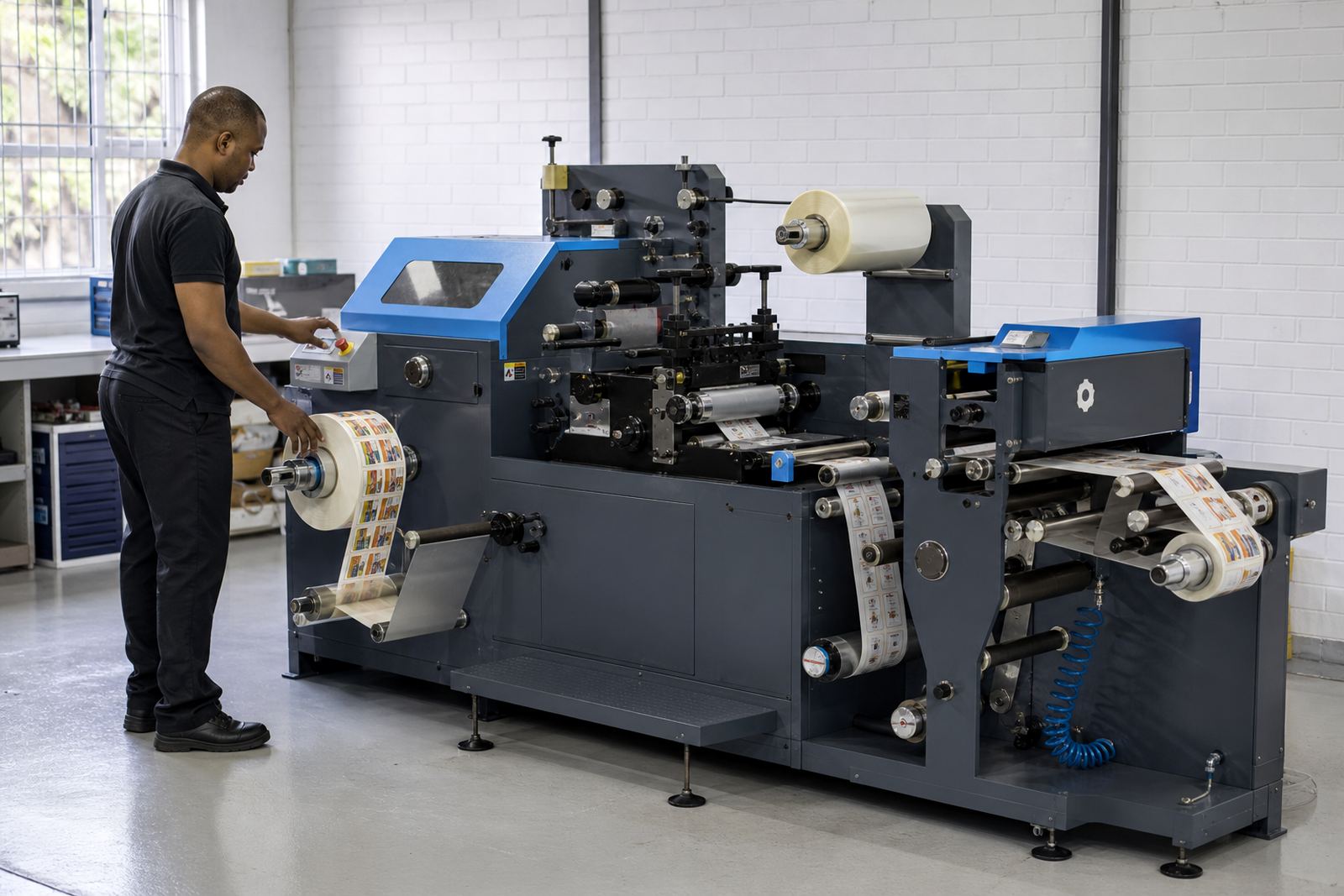
The finishing setup centred on digital die-cutting, with options that suit both laser and semi-rotary work depending on the job sequence. Flexible dies were included for repeat shapes, while the finishing flow covered lamination, varnish application, matrix stripping, slitting and rewinding in one controlled path.
We set up the machine so the operator could move from print to finish with fewer interruptions. For sample runs, that means the web stays readable, the waste matrix clears cleanly, and the output rolls stay consistent enough for presentation to a buyer or for a smaller packing job. The aim was not a showpiece, just a line that behaves properly when the work gets fiddly.
Registration calibration formed part of the setup because short runs punish poor alignment. When the mark is off by even a little, the first few metres can be lost to rework. We set the cut position, checked waste strip paths and adjusted rewind tension so the rolls would land neatly at the end of the pass.
- Digital label finishing line for short-run work
- Laser and semi-rotary die-cutting capability
- Flexible die support for recurring shapes
- Lamination, varnish, stripping, slitting and rewinding
- Registration calibration for printed marks
Installation, training and the first production week
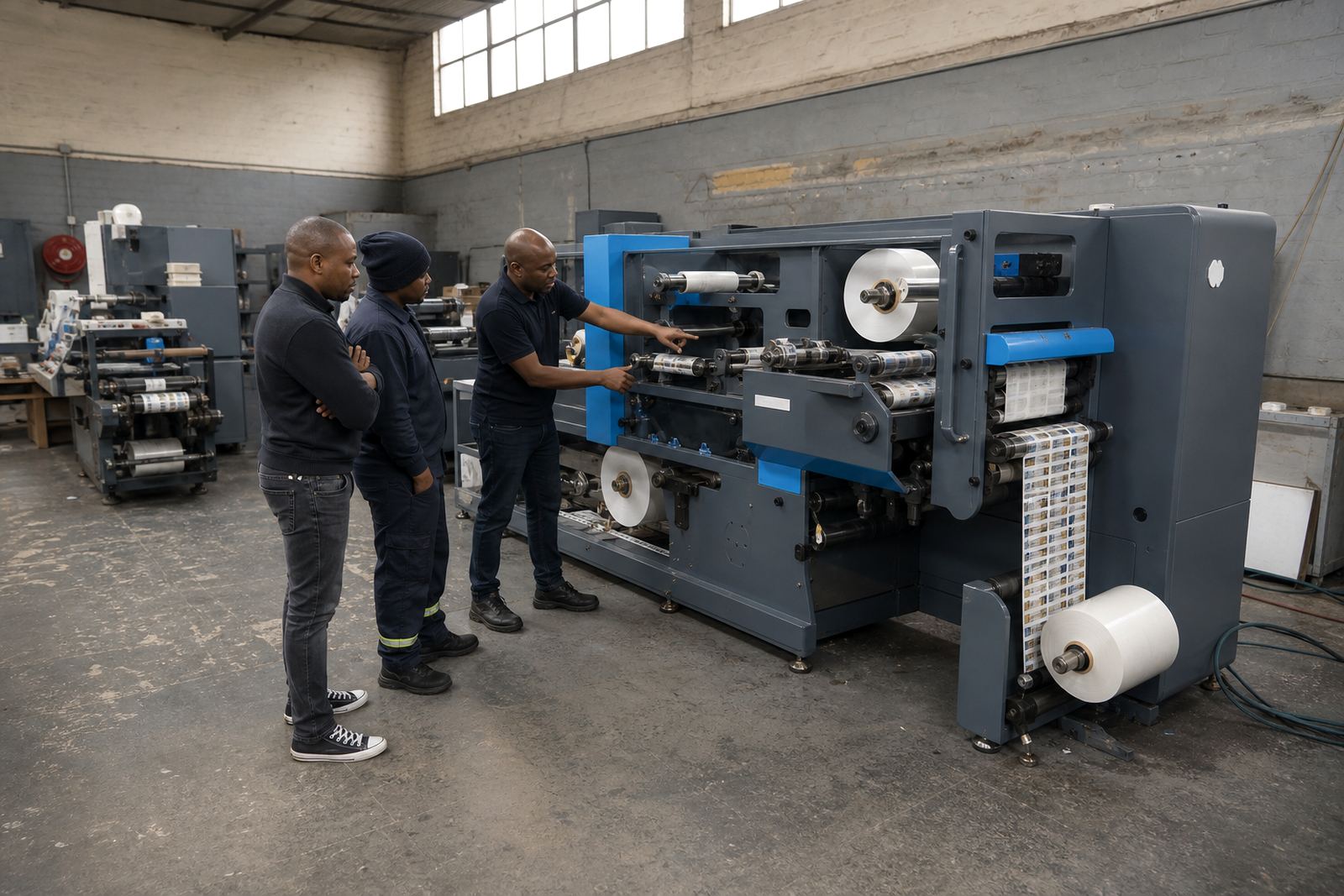
Installation took place over two weeks, with the first week focused on machine placement, utilities, alignment and core setup. The second week covered commissioning, operator training and production checks using the client’s own sample artwork and roll stock. That sequence gave the team a working rhythm before live customer jobs were introduced.
Musa, our applications trainer, worked through reel loading, die setting, waste path checks and tension control. Pieter, the technical manager, handled the mechanical and electrical checks, while Lerato coordinated the service handover and follow-up parts notes. The operators wanted clear steps, not theory for its own sake, so the sessions stayed close to the actual jobs they would run.
The first production week was used to sort the small things that matter on a compact line. That included label edge quality, strip waste movement, rewind firmness and the way the machine behaved when a job changed from one stock to another. A neat sample roll is often the difference between a useful test run and a pile of wasted material.
- Installation and commissioning over two weeks
- Operator training on loading, cutting and rewind control
- Practical checks with client stock and artwork
- Follow-through on service handover and spares notes
What changed after the line was running
Once the setup was in use, the client had a cleaner path from printed web to finished sample roll. The matrix stripping stayed consistent, the slitting section produced tidy widths and the rewind rolls were easier to pack for customer viewing. For short promotional runs, that matters as much as raw speed.
The workshop also gained more control over proofing work. Instead of building sample labels on a slower, more manual path, the team could use one finishing flow to test shape, finish and presentation before releasing a batch. That reduced handling and made it easier to keep the room orderly when several small orders landed in the same week.
For a coastal site, the real value sits in repeatability. Operators need a line that behaves the same way on paper, film and coated label stock. When the tension, cut depth and rewind set-up stay steady, there is less wastage and fewer stops for adjustment.
- Cleaner output rolls for sample presentation
- Better control on short promotional batches
- Less manual handling between process steps
- More repeatable results across different stocks
What we would set up in the same way
On a similar project, we would keep the same order of work: layout first, then commissioning, then operator practice on real stock. That sequence suits compact rooms where space is limited and the team needs to learn the machine in the same conditions it will face during daily production.
We would also keep the registration work conservative at the start. Short runs punish overconfident settings, and a small adjustment in cut position or rewind tension can save a batch of labels from looking uneven. A practical setup beats a rushed one every time, especially when the job mix changes from one day to the next.
If the line is intended for sample rolls and short promotional work, the best result comes from a layout that keeps the operator in control of the web. That means sensible access, clear waste paths and enough room to inspect the roll before it leaves the machine.
Key facts
| Project | Umhlanga Sample Line |
|---|---|
| Town | Umhlanga, KwaZulu-Natal |
| Line type | Compact digital label finishing setup |
| Processes | Lamination, varnish, die-cutting, matrix stripping, slitting, rewinding |
| Roll format | Sample rolls and short promotional batches |
| Timeline | 2 weeks installation and commissioning |