A compact line for tighter label runs in Roodepoort
The team was printing self adhesive labels for retail and product packs, then finishing them on a compact line that had to handle shorter changeovers and a wider mix of roll sizes. Their main concern was not the print stage alone, but the finishing side where a small setup fault can show up as wasted liner, drifting registration or rolls that do not rewind cleanly.
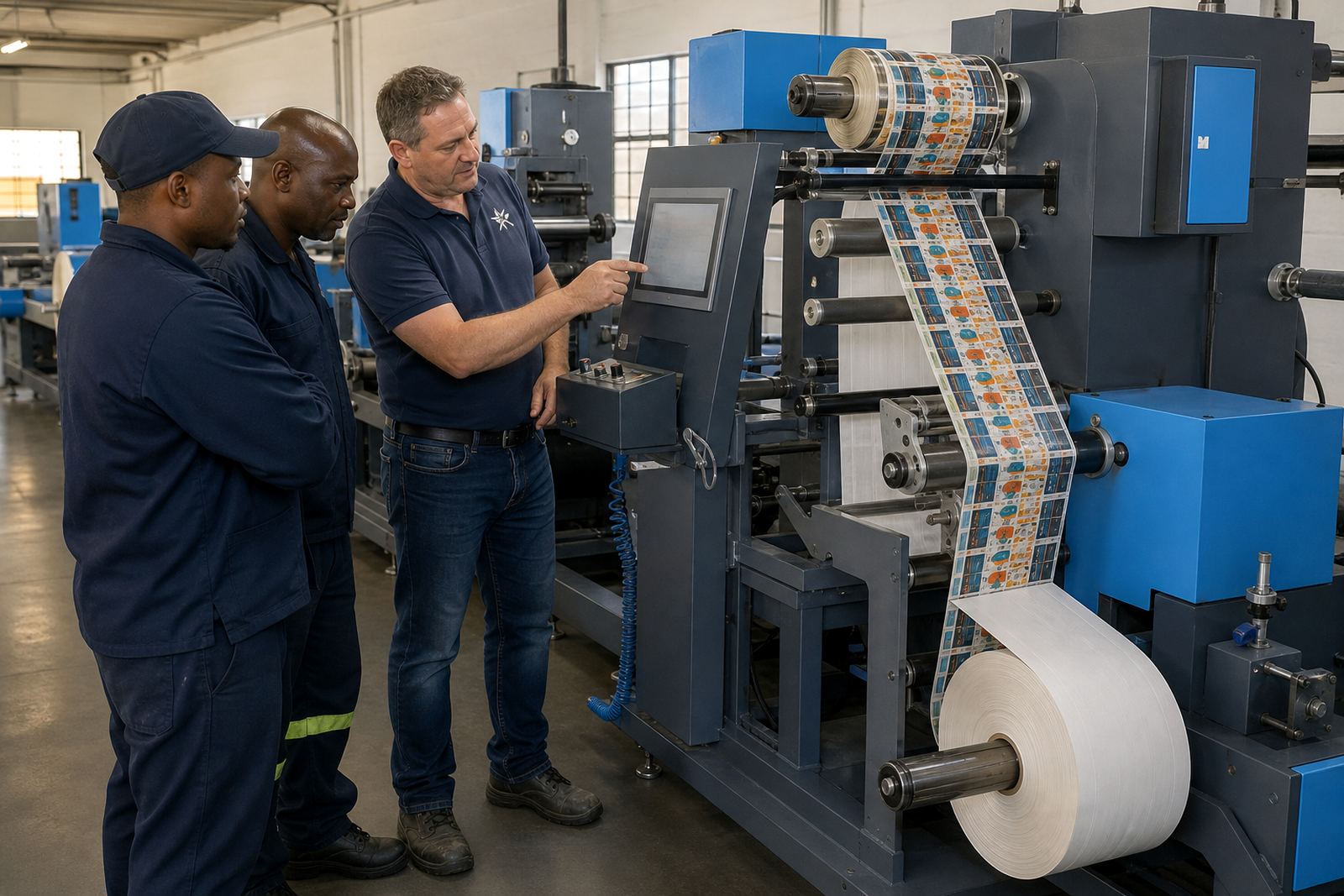
The brief was to train operators on the full path from unwind to rewind, with enough repetition for practical use on live production. That meant working through web path control, tension settings, lamination alignment, matrix stripping, slitting positions and label count checks, not just a quick walk through the buttons and screen prompts.
What the production team needed from the training
The line had to suit mixed job sizes and a changing artwork mix, so the team needed a method that worked for short labels, square packs and narrow rolls without constant rework. They also needed confidence around registration marks, since the printed web had to stay steady through die cutting and finishing even when artwork changed from one order to the next.
- Operator steps for unwind, lamination, semi rotary die cutting and rewind
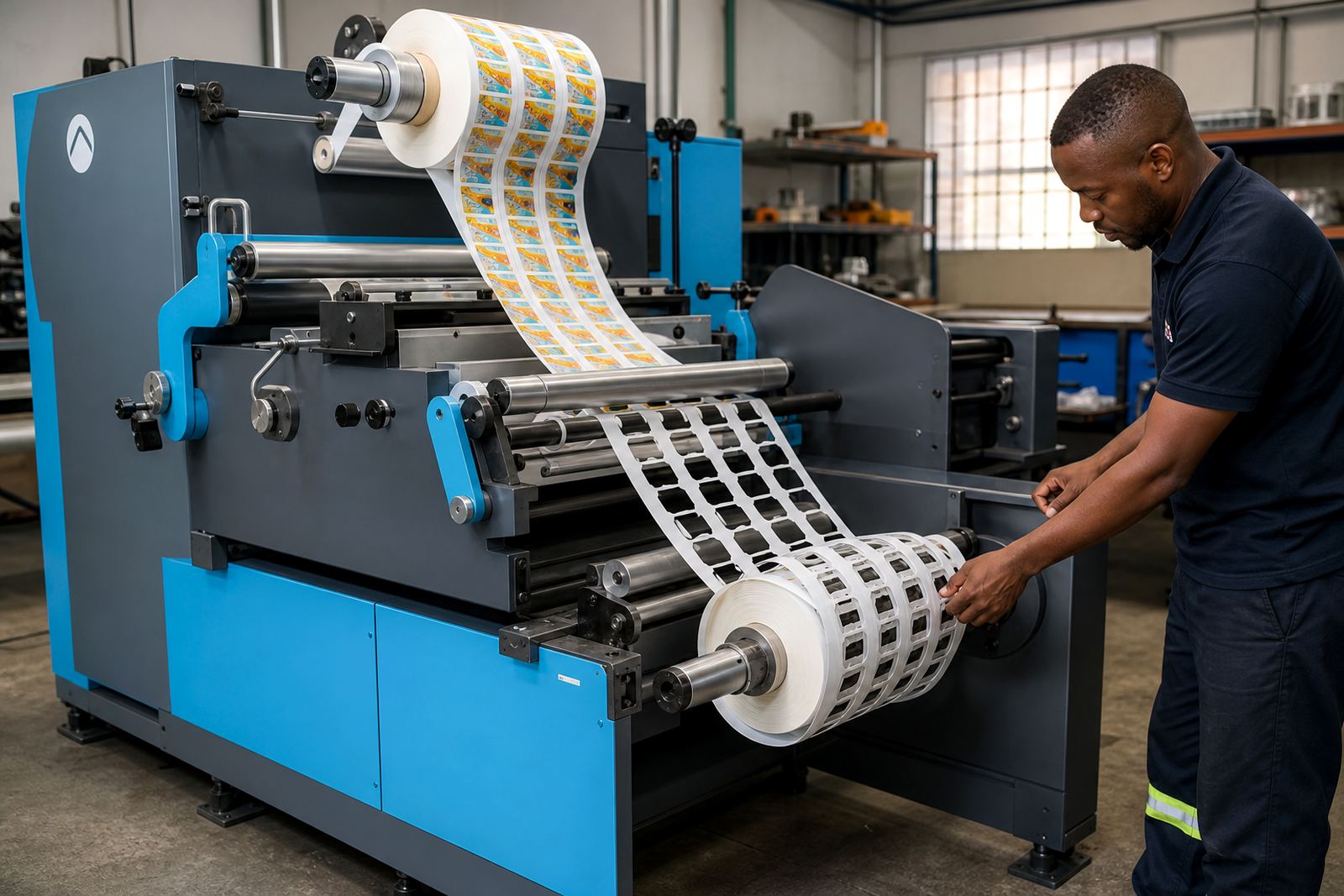
- Matrix stripping checks for clean waste removal on narrow and wider webs
- Slitting setup for multiple lanes and consistent roll build
- Registration calibration for printed marks, cut position and repeat length
- Basic fault finding on web tracking, tension drift and cut depth issues
We also went through the practical side of flexible dies and finishing plates, plus the point where varnish or lamination affects cut quality. On label work, a small shift in film tension or an uneven slit can alter the final roll, so the operators needed a repeatable method rather than a loose habit.
The equipment and setup work on site
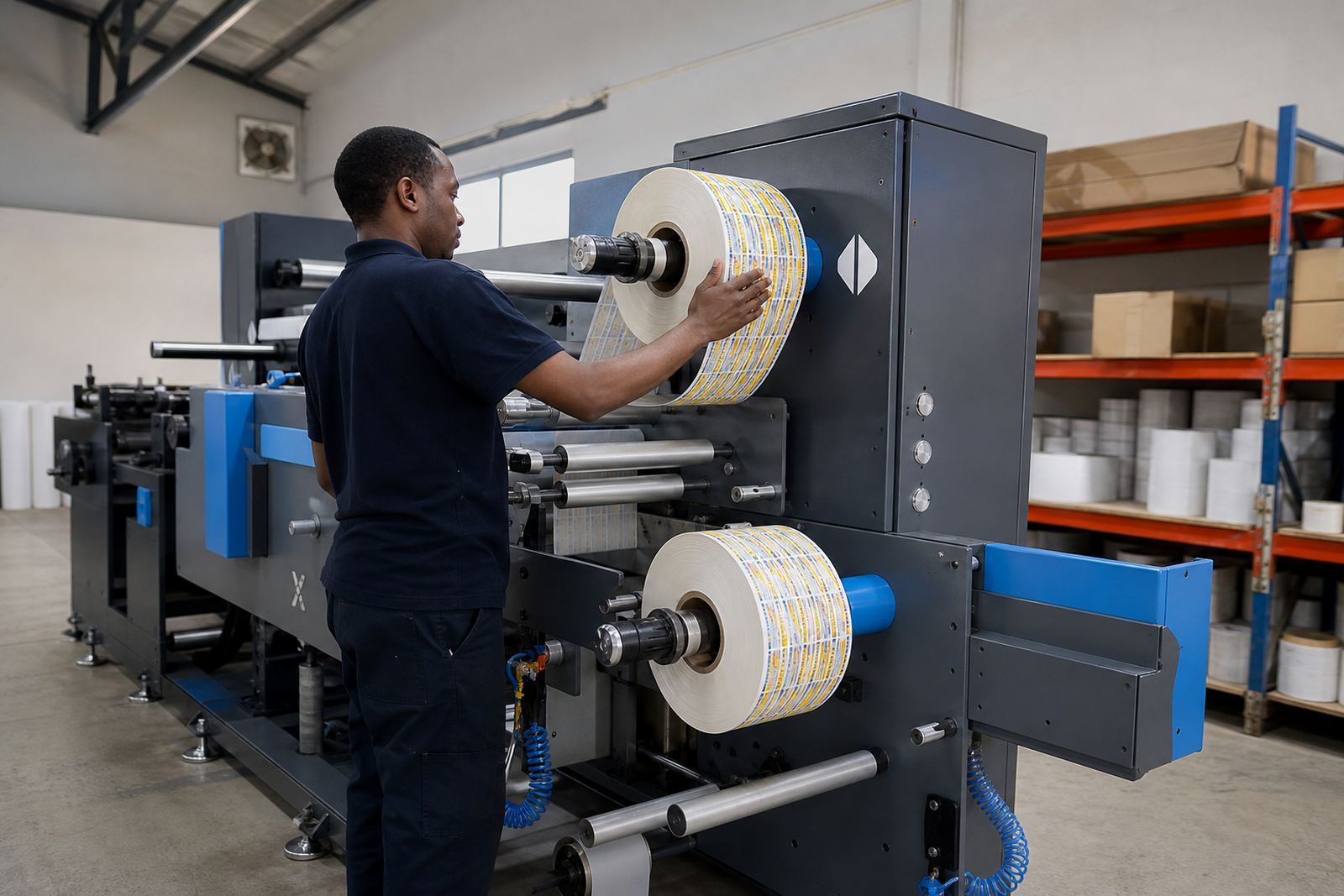
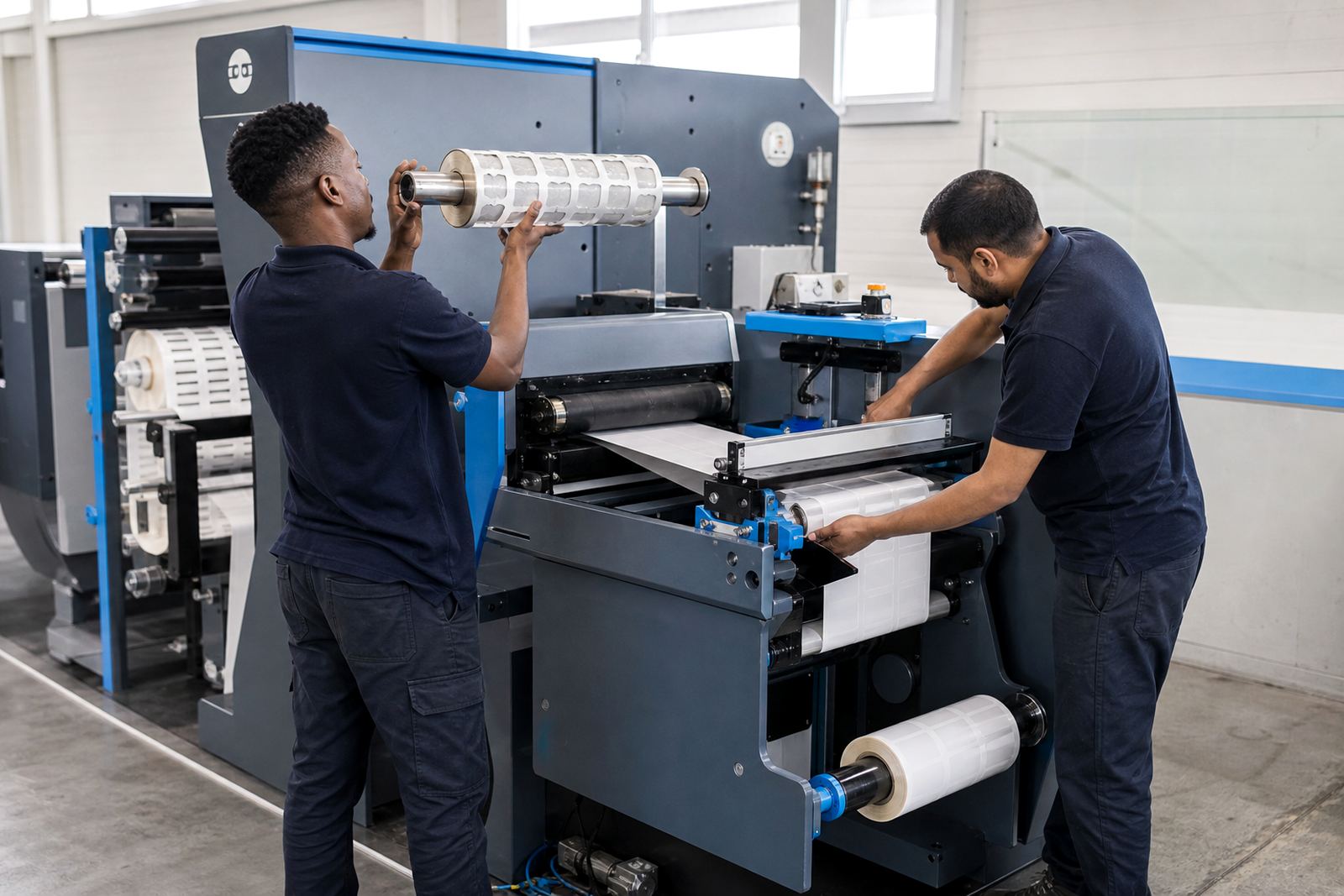
The setup was a compact digital label finishing line built around unwind, lamination, die cutting, waste stripping, slitting and rewind stations. It was sized for label rolls in the common production range used by local printers and packaging teams, with enough adjustment for narrower jobs without changing the full line layout.
Our work covered line commissioning, registration calibration and die setup help, then moved into production testing with live material. We checked the interaction between printed marks, cut repeat length and waste removal, then confirmed how the rewind section handled tight rolls and mixed slit widths. Where the run needed it, we adjusted the slitting pattern and tension points so the roll edges stayed clean and the finished reels sat properly on the core.
- Compact finishing line with unwind, lamination, die cut, strip waste, slit and rewind functions
- Configured for printed roll labels with registration marks and repeat length control
- Suitable for short run label work and mixed artwork changeovers
- Set up for manual operator control with guided calibration steps
Three weeks from setup to steady production
The project ran over three weeks. The first week covered machine installation, line alignment and operator familiarisation. During the second week we focused on registration calibration, die setup help and repeat testing with a few live jobs. The third week centred on production handling, cleaning routines and the checks that keep the finished rolls consistent across a full shift.
The timeline mattered because the team needed more than a machine handover. They had to learn the order of operations around lamination, cutting and rewind, plus the small decisions that prevent waste on short label jobs. By the end of the training phase, the operators were handling changeovers with less hesitation and were using the same method for each job instead of making ad hoc adjustments.
Results seen on the finishing floor
After the training cycle, the team had a clearer routine for live production and a better feel for how the line behaved under different web tensions and artwork layouts. Labels were coming off the line with cleaner edges, the matrix stripped more predictably and the rewind section was producing neater rolls that were easier to pack and move.
The practical gain was not just cleaner output, but fewer avoidable pauses during set up. Operators could recognise when the registration drifted, when the slit width needed checking and when the waste path needed clearing. That made the line more usable for day to day production in a busy Roodepoort plant where mixed orders can land one after another.
- Cleaner matrix removal on short and medium label runs
- More consistent registration through the cut cycle
- Better roll build on the rewind station
- Less trial and error on changeovers
What we would redo on a similar Roodepoort job
We would keep the same order of work on a similar project, starting with line setup, then moving into live material testing and operator drills. That sequence gives the team context before the practical steps, which matters when a finishing line has to cope with different label stocks, varnish changes and varied reel widths.
We would also keep the training close to the actual jobs that the team prints, because generic examples tend to miss the real issues. In this case the combination of compact web handling, registration marks and changing slit widths made the hands on sessions worthwhile. For follow up parts, servicing or production support, the team can use our contact form and route the request through the right support area.
Key facts
| Project | Roodepoort Training Project |
|---|---|
| Town | Roodepoort, Gauteng |
| Client type | Production team in label finishing |
| Scope | Machine installation, line commissioning and operator training |
| Process | Unwind, lamination, die cutting, matrix stripping, slitting and rewind |
| Support model | Preventive maintenance, breakdown repairs and spare parts supply |