Mixed Labels Needed A Line That Could Shift Quickly
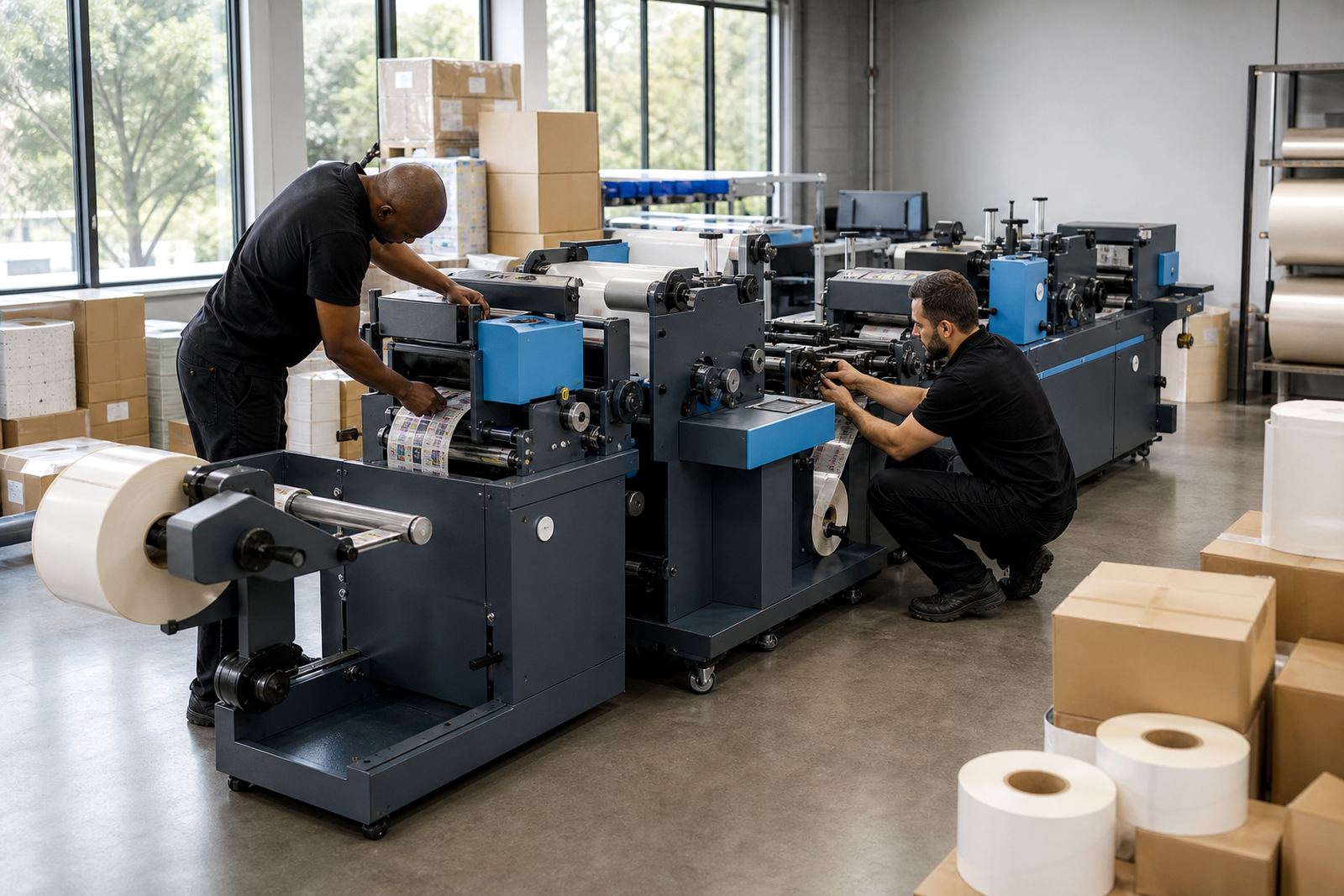
The Midrand site was producing a spread of label work for different pack sizes, pallet labels and branded cartons, so the brief was not about raw speed alone. It needed a practical finishing path that could cope with smaller rolls one hour and wider, heavier work the next, without fighting the print on the web.
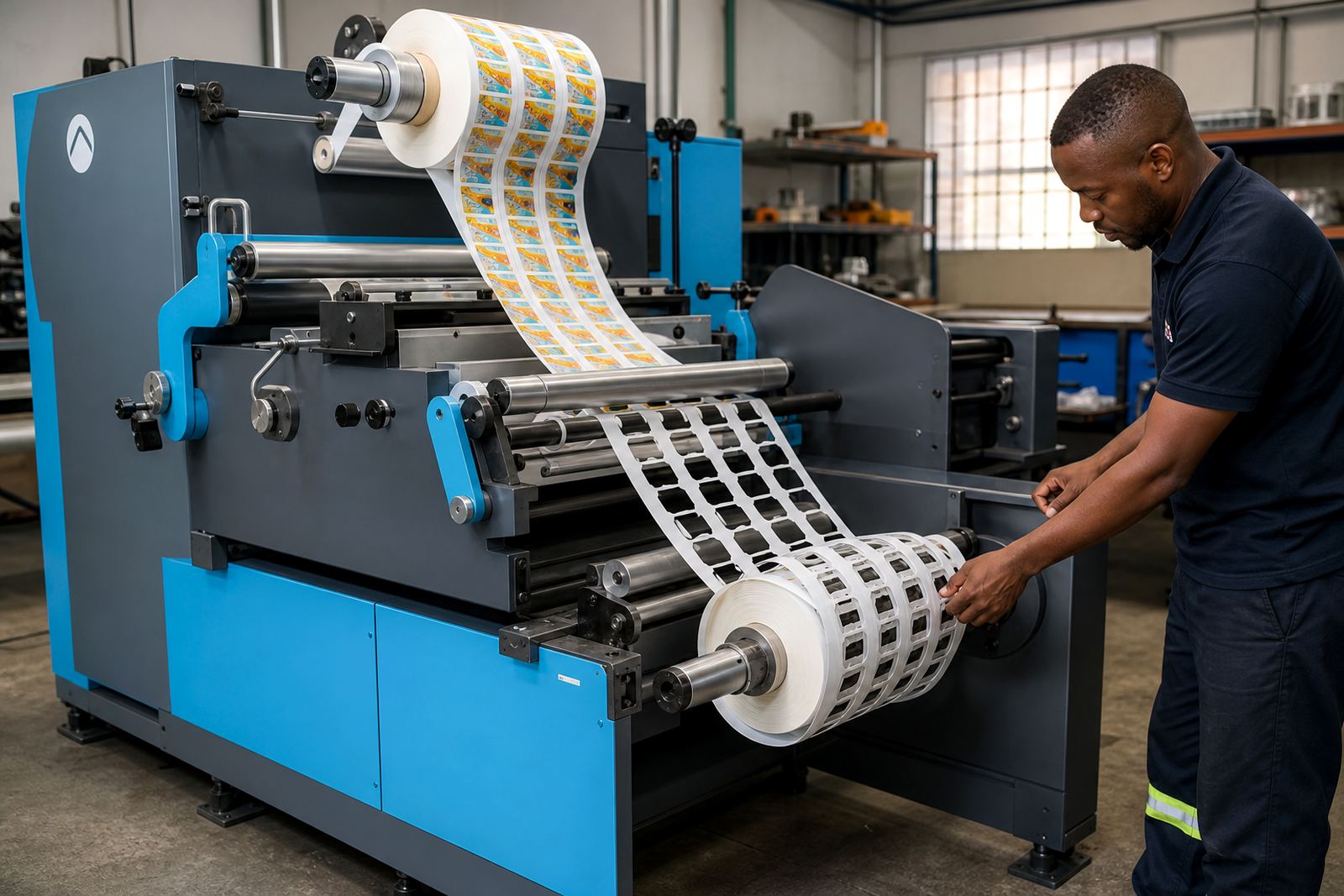
The team wanted digital label die-cutting with clean registration, reliable stripping and tidy rewinding. They also needed a setup that would take laminated stock and varnished stock without leaving rough edges or crushed cores, because the final rolls had to move straight into application and packing.
- Mixed label formats on short and medium runs
- Registration marks read cleanly through the line
- Consistent matrix stripping on adhesive stocks
- Slitting for narrow repeats and multiple-up output
- Rewinding that kept roll edges square and tight
What We Matched To The Midrand Floor
We planned a modular finishing line built around unwind, laminate, die-cut, strip waste, slit and rewind stages. The line could be used as a full path or split for certain jobs, which mattered on a floor where the job mix changes through the week and operators need room to move around the machine beds.
The setup included semi-rotary die-cutting for repeat work, and a laser option for more detailed label outlines where the artwork or tooling requirements were tighter. Flexible dies were set for the repeat families that the client used most often, while the control points were aligned to registration marks printed on the web. That kept the die station honest when stock stretch and print drift showed up together.
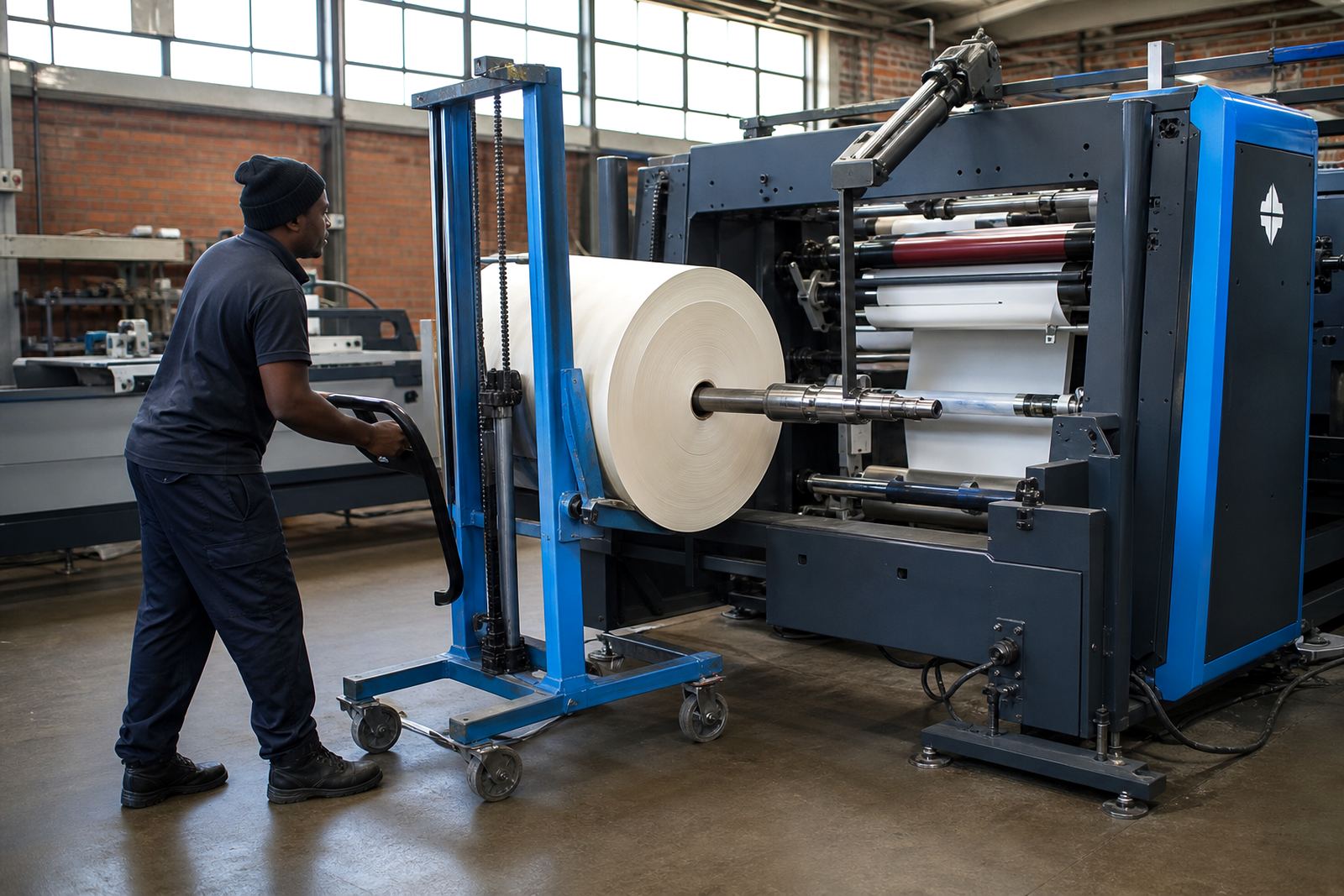
- Unwind section sized for practical roll handling
- Lamination path for protective film and gloss build-up
- Die-cut station for semi-rotary and flexible die work
- Matrix stripping with stable waste take-off
- Slitting knives for smaller finished rolls
- Rewind section set for firm, even tension
Installation Work Around A Live Production Area
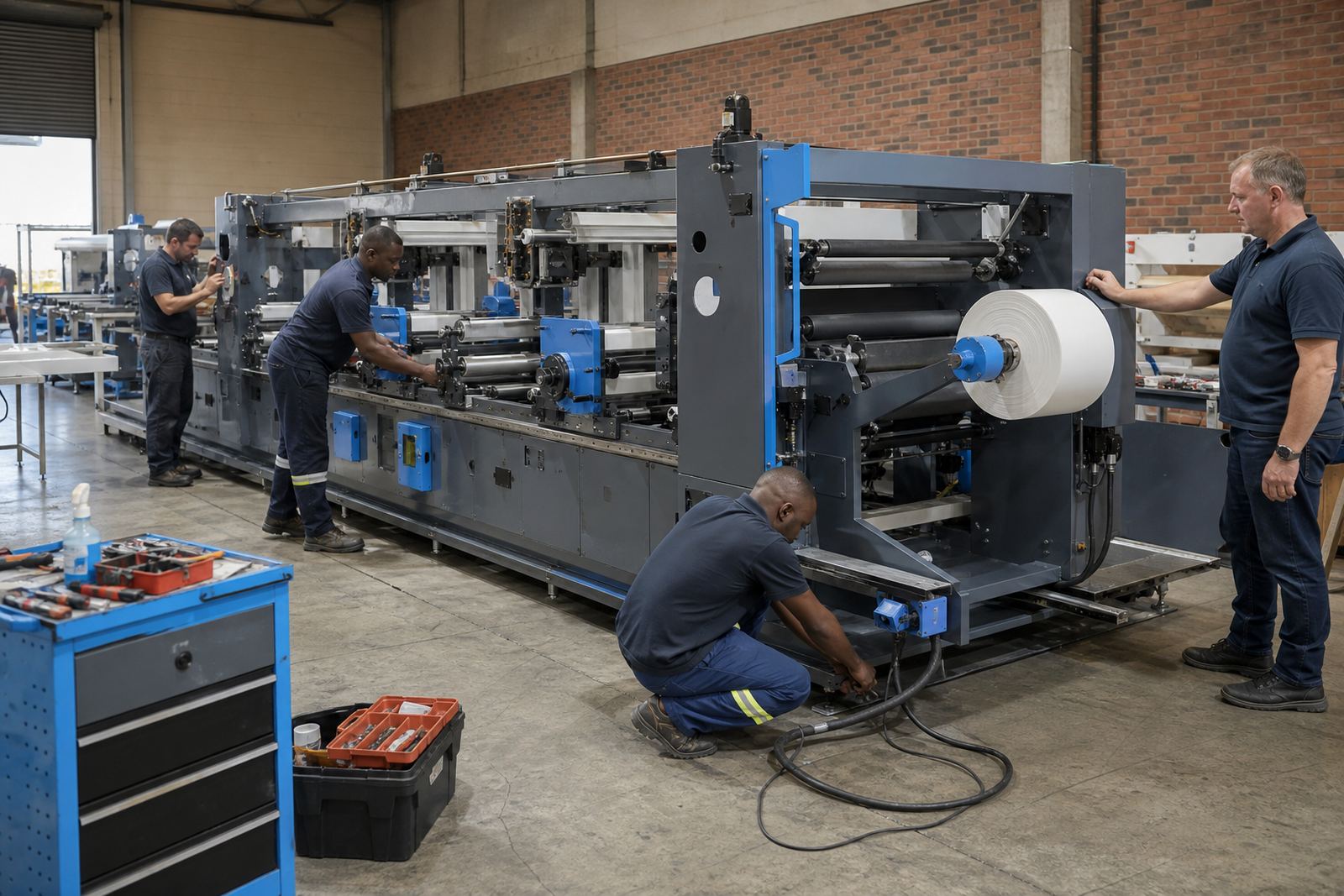
The installation was handled while the site remained active, so the placement had to respect walkways, stock zones and the feeder side of adjacent equipment. We checked the floor plan, marked the machine positions and worked through access points for loading rolls, setting dies and lifting maintenance covers. It is the kind of room where one bad angle turns into wasted time every shift.
We also set the line for the local reality of packaging work, where adhesive stock can vary in thickness and paper facing can behave differently from film. The operators needed a steady path for set-up, so we adjusted web threading, guide points and rewind tension before the handover. Small changes there save a lot of tape and test stock later.
- Machine placement matched the existing material flow
- Threading points were marked for repeat set-ups
- Guide and tension settings were tuned on site
- Waste removal was checked with full matrix stripping
- Safety points were shown at the actual working positions
Training That Focused On Real Jobs, Not Theory
The operators wanted clear steps for the jobs they see most often, so the training was built around label size changes, repeat shifts and the way each substrate behaves on the finishing line. We covered registration calibration, rewind setup and slitting setup using the client's own work order pattern, which helped the team see how a small change upstream affects the finished roll.
We also worked through die setup help for the flexible dies, plus the checks needed before a long run starts. That included verifying mark detection, watching the laminate lay-down and checking that stripped waste stayed clear as the web moved through the line. When the machine is set well, operators spend less time fighting the process and more time keeping output clean.
- Operator training on threading and start-up checks
- Registration calibration for printed label marks
- Rewind setup for tight, even finished rolls
- Slitting setup for narrow and multi-up output
- Die setup help for repeat families and specials
Project Timing And The Hand-Over Sequence
The project ran over three weeks from floor check to hand-over. The first week covered measurement, layout and equipment placement. The second week was used for assembly, alignment and the first production tests. The third week focused on operator practice, finishing adjustments and a closer look at maintenance points, so the team could work with the line without guessing where each adjustment lived.
By the end of the hand-over sequence, the line was producing finished rolls with cleaner edges and steadier waste separation. The client also had a clearer routine for preventive maintenance, which matters on finishing equipment because a loose guide, blunt knife or dirty sensor tends to show up in the finished roll before anyone wants it to.
- Week 1: site check, layout and access planning
- Week 2: installation, alignment and test runs
- Week 3: training, fine tuning and hand-over
- Maintenance points documented for the operating team
What Changed On The Finished Rolls
The immediate gain was cleaner control of mixed jobs. Short runs no longer needed the same amount of rework, and the team could shift between laminated stock and plain label stock with fewer interruptions. Registration held better through the line, the matrix stripped more cleanly and the rewind rolls stayed more uniform across the widths being used.
There was also a practical gain in how the floor worked. Operators had a line they could understand, service staff knew where the wear points sat, and the producer had a clearer path for breakdown repairs and spare parts planning. In a packaging environment, that makes a difference when one urgent job lands in the middle of an ordinary week.
- Cleaner label edges after cutting and slitting
- More even rewinds across several roll widths
- Less waste snagging during matrix stripping
- Fewer delays around repeat changeovers
- Clearer upkeep routine for the finishing line
What We Would Redo On A Similar Midrand Line
On a similar job we would again start with the real stock list, not the machine brochure. The mix of adhesive face stock, laminate, varnish and repeat length tells you more about the right finishing path than any headline feature does. We would also keep the registration checks close to the actual print quality coming off the press, because that is where the line either settles or starts to drift.
For a producer handling mixed label formats in Midrand, the best result came from a machine path that stayed practical under daily use. The line was set for production, but also for the people running it, which is the part that usually decides whether the equipment keeps its place on the floor.
Key facts
| Project | Midrand Packaging Install |
|---|---|
| Town | Midrand |
| Application | Digital label finishing for mixed formats |
| Core functions | Unwind, laminate, die-cut, strip waste, slit and rewind |
| Cutting methods | Semi-rotary die-cutting and laser finishing options |
| Roll handling | Multiple roll widths with registration mark control |