Fault tracing that starts at the web path
Breakdown work begins with the evidence on the roll, not a vague guess at the cabinet. We look at film tracking, web tension, registration marks, adhesive build-up, servo movement, pneumatic action and the condition of the cutting or slitting section. That matters on pressure-sensitive labels, laminated work and varnished stock, where a small drift can throw the whole job out.
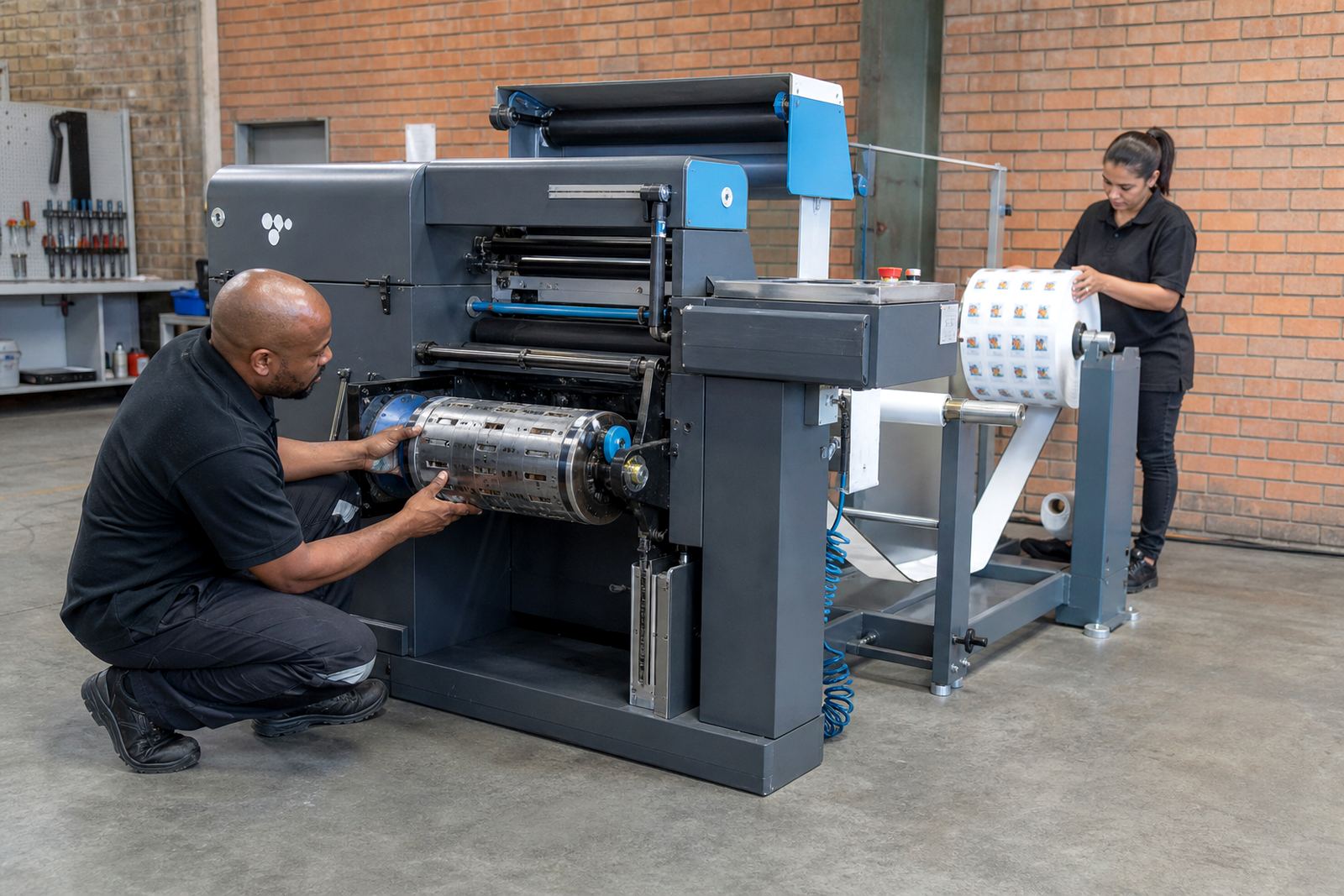
Our repair service covers digital label die-cutting and finishing machines used by label printers and packaging producers. We work on unwind and rewind stations, strip waste systems, matrix handling, semi-rotary die-cut modules, laser cutting units, slitting knives and inspection points. If a machine is pulling off register, tearing the liner, or leaving ragged edges, we isolate the cause and repair the weak point rather than masking it.
What the repair visit usually includes
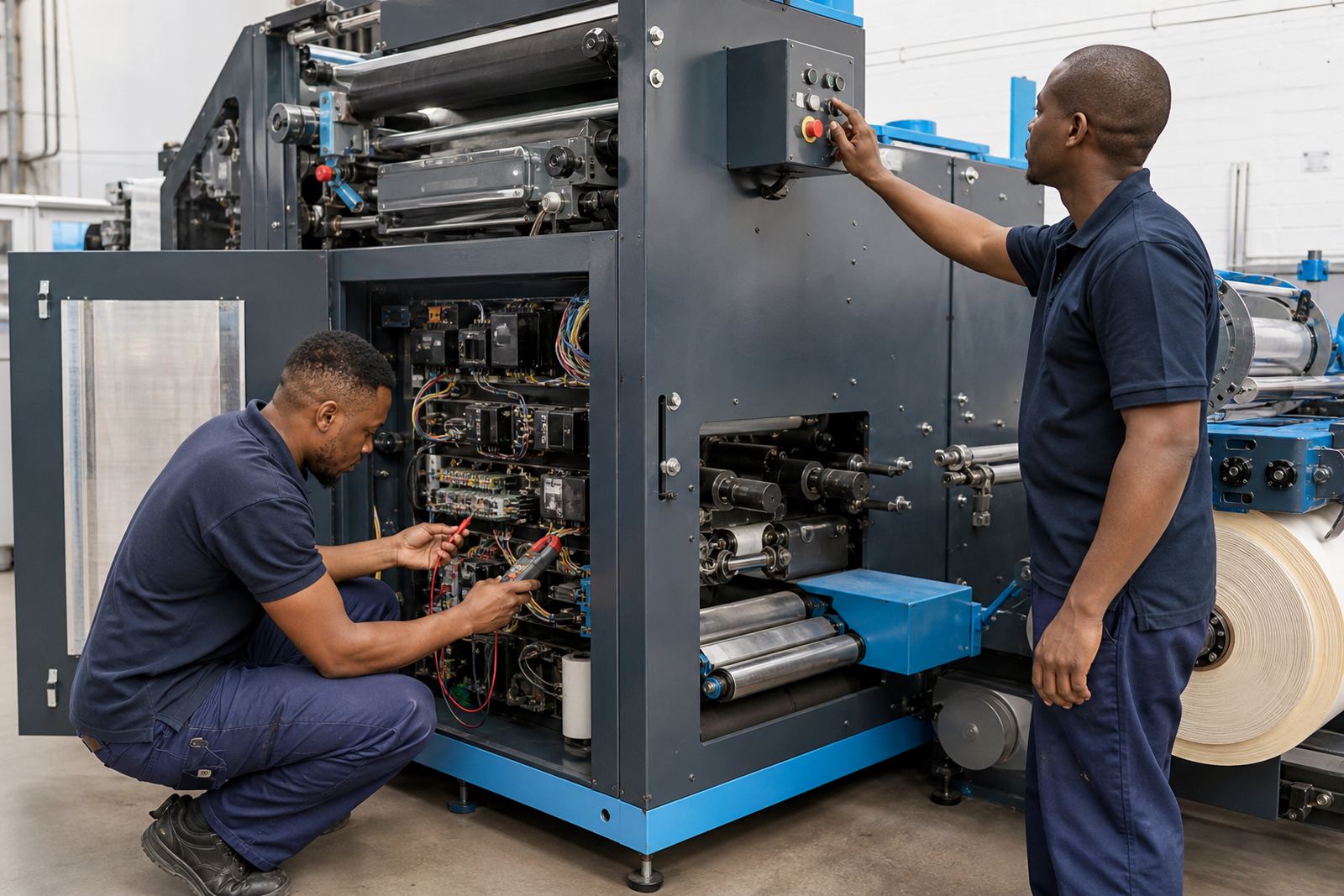
Every breakdown call starts with a practical check of the machine condition and the job that failed. Some faults are mechanical, some are electrical and some sit in the setup. A blocked waste path can look like a drive fault, while poor registration can trace back to a sensor mount or a dirty mark reader.
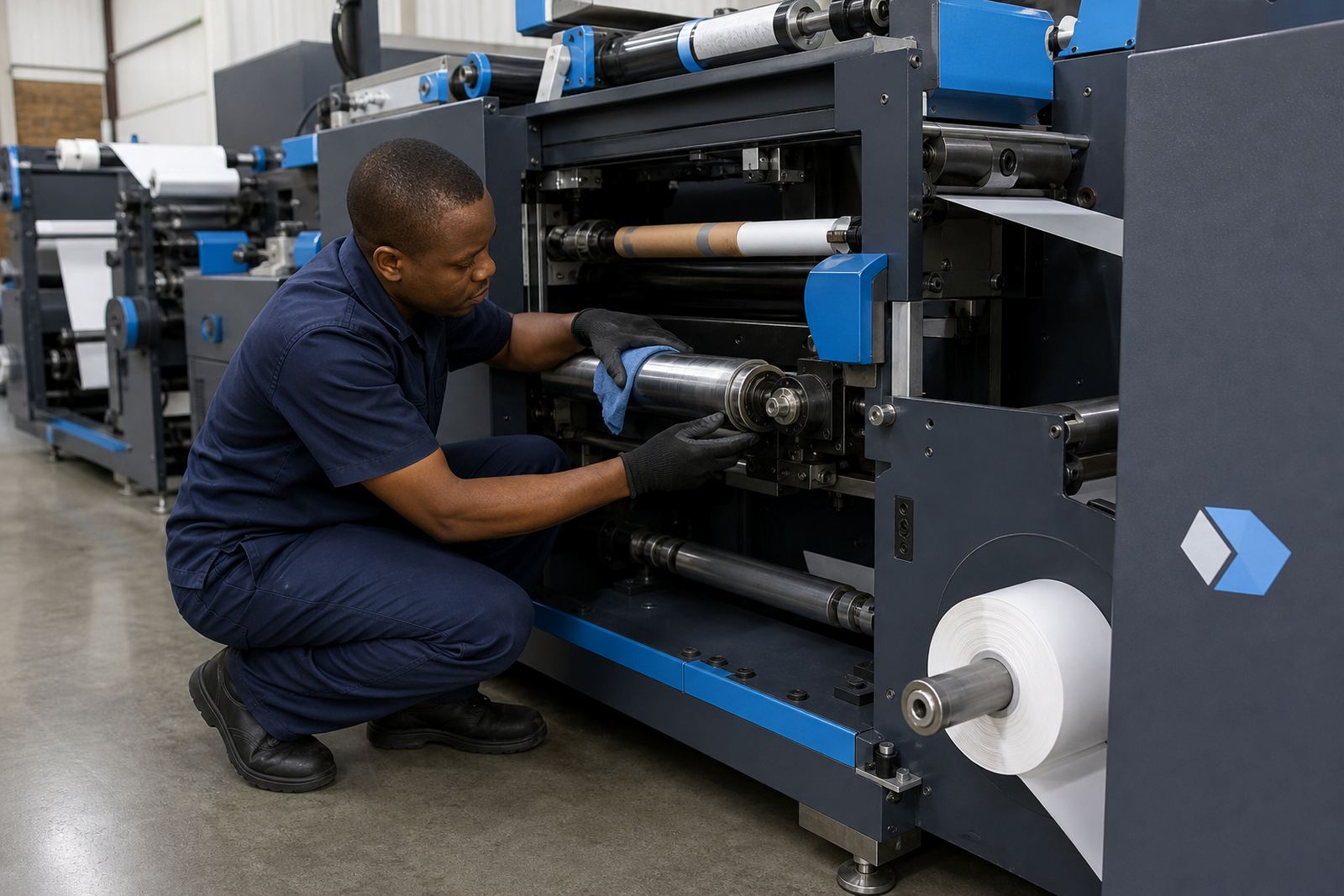
- Mechanical inspection of unwind, rewind, drive rollers and guides
- Cut depth checks on flexible dies or semi-rotary tooling
- Laser path checks where non-contact cutting is used
- Matrix stripping and waste removal faults
- Slitting alignment and rewind tension faults
- Registration mark reading, sensor setting and web tracking
Where parts are worn, we replace them with suitable components and set the machine back to working order. Where the issue is setup-related, we correct the alignment, calibration and feed path so the next roll runs cleanly.
How we handle a breakdown job
The repair process follows the machine from first symptom to final test roll. We look at the fault history, then test each section in sequence so the line does not get rebuilt on top of a hidden problem. That approach matters on machines handling narrow labels, wide shunts of liner waste and mixed stock widths, because the fault often moves through the line rather than staying in one place.
- Initial fault review and machine assessment
- Isolation of the damaged or out-of-setting section
- Repair, replacement or adjustment of worn items
- Registration and tension recalibration
- Test run on production stock where possible
- Operator handover with practical notes on the repaired section
If the breakdown involves several points at once, we separate the work into clear stages so the line is not rushed back into service with another weak spot still in place. That is especially useful on jobs using laminate, varnish or tighter artwork registration, where a small error can waste a full roll.
Specs and machine factors we work with
Digital label finishing machines vary, but the repair work often centres on a few fixed details. Roll width, roll diameter, core size, label pitch and web tension all affect how the machine behaves under load. Registration marks must stay readable, and the cutting section has to stay true to the moving web.
We handle equipment set up for short runs, mixed SKUs and longer production shifts. That includes line work with unwind, laminate, die-cut, strip waste, slit and rewind stations, plus machines that use flexible dies, semi-rotary tooling or laser cutting for smaller label formats. On narrow rolls, even a slight lateral drift can create edge damage, so alignment is part of every repair, not an extra.
Pricing shaped by the fault, not a flat guess
Breakdown repair pricing depends on what failed, which parts are needed and how much strip-down is involved. A sensor reset, drive adjustment and web realignment sits in a different range from a damaged cutting unit or a worn rewind assembly. We quote against the fault, the parts required and the labour tied to the repair scope.
For some jobs, the most sensible route is an inspection first, then a repair plan once the fault has been traced. That keeps the cost tied to the real issue instead of a broad estimate that misses the detail. Where a line has repeat faults, we can also separate the urgent repair from the follow-up work so production decisions are easier to make.
Aftercare that helps the next roll run cleaner
Once the fault is cleared, we do not leave the line at a loose setting. The repaired section is checked against the job setup, then the operator gets practical guidance on the points that caused the stoppage. That may include registration calibration, rewind tension setting, slitting position, matrix stripping clearance or die setup notes for the next artwork.
- Operator guidance on the repaired fault area
- Parts advice where wear is starting to show
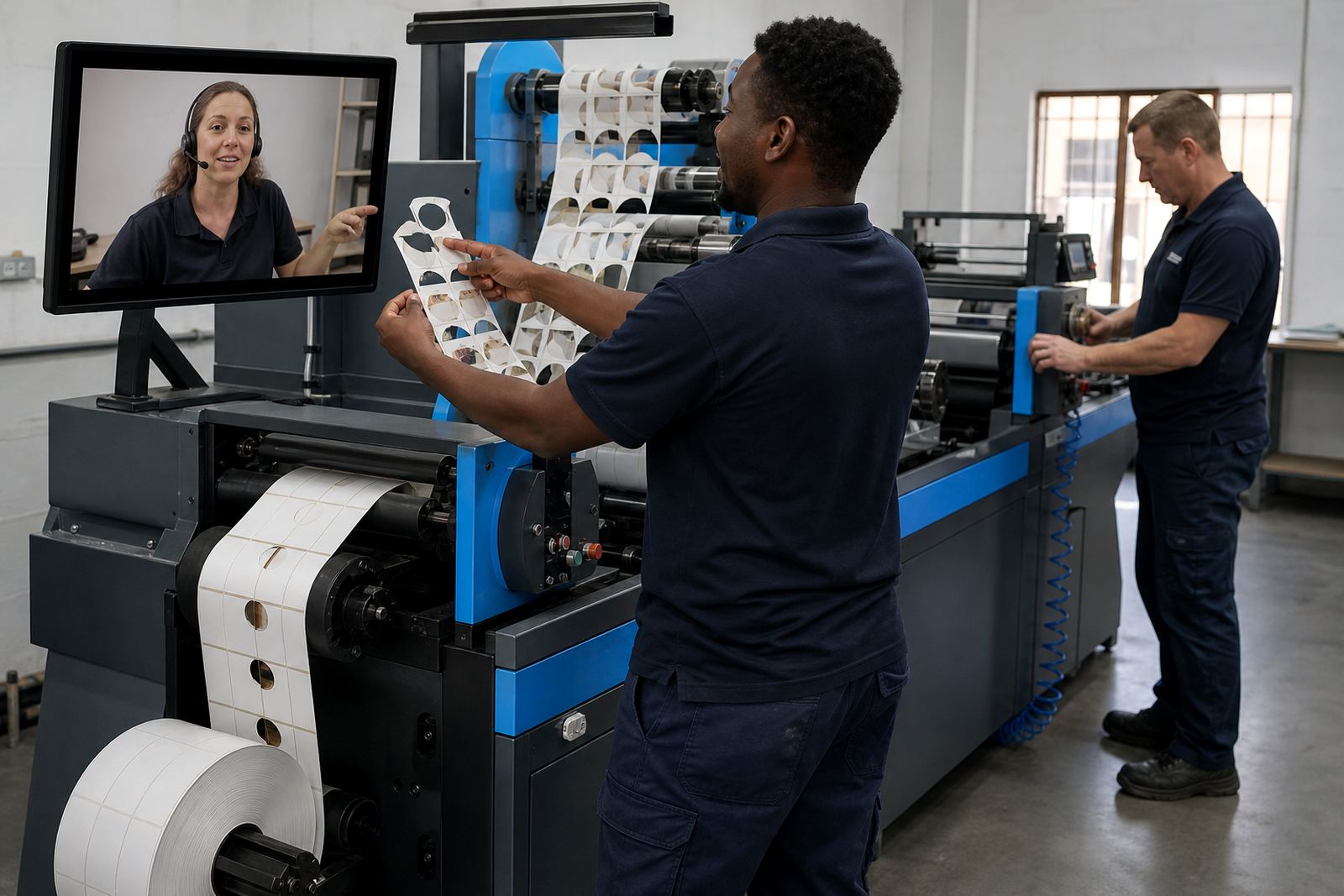
- Remote support for setup questions after the visit
- Spare parts supply for fast-moving wear items
- Production optimisation notes where the job keeps drifting
For label printers and packaging producers, the value is not only in getting the machine running again. It is in restoring a line that can hold register, cut cleanly and wind neatly without forcing the team to fight the same fault on the next roll.
Key facts
| Service area | Kya Sand, Randburg and across South Africa |
|---|---|
| Machine types | Digital label die-cutting and finishing machines |
| Fault areas | Unwind, laminate, cut, strip waste, slit and rewind |
| Cutting methods | Laser cutting and semi-rotary die-cutting |
| Stock formats | Pressure-sensitive labels, laminated and varnished work |
| Support included | Repair work, setup correction, operator guidance and parts supply |