Flexible die fitment that matches the job
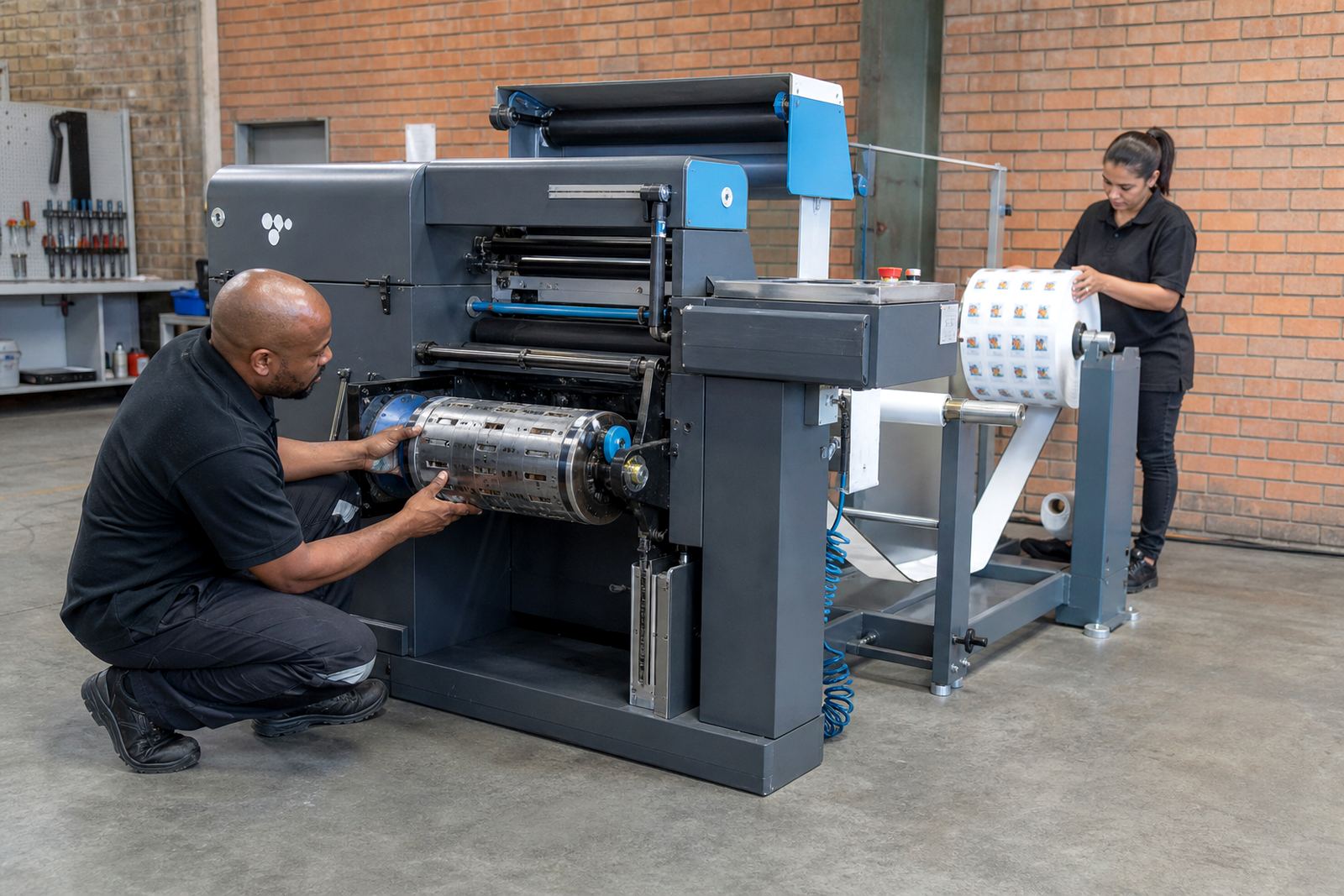
Die setup starts with the finishing format on the floor. Some jobs need a flexible die mounted for semi-rotary cutting, others need a change in cut depth, timing or web tracking to suit coated paper, film or heavier label stock. Our work covers fitment checks, locating the die correctly on the cylinder or holder, and making sure the web path feeds cleanly into the cutting section.
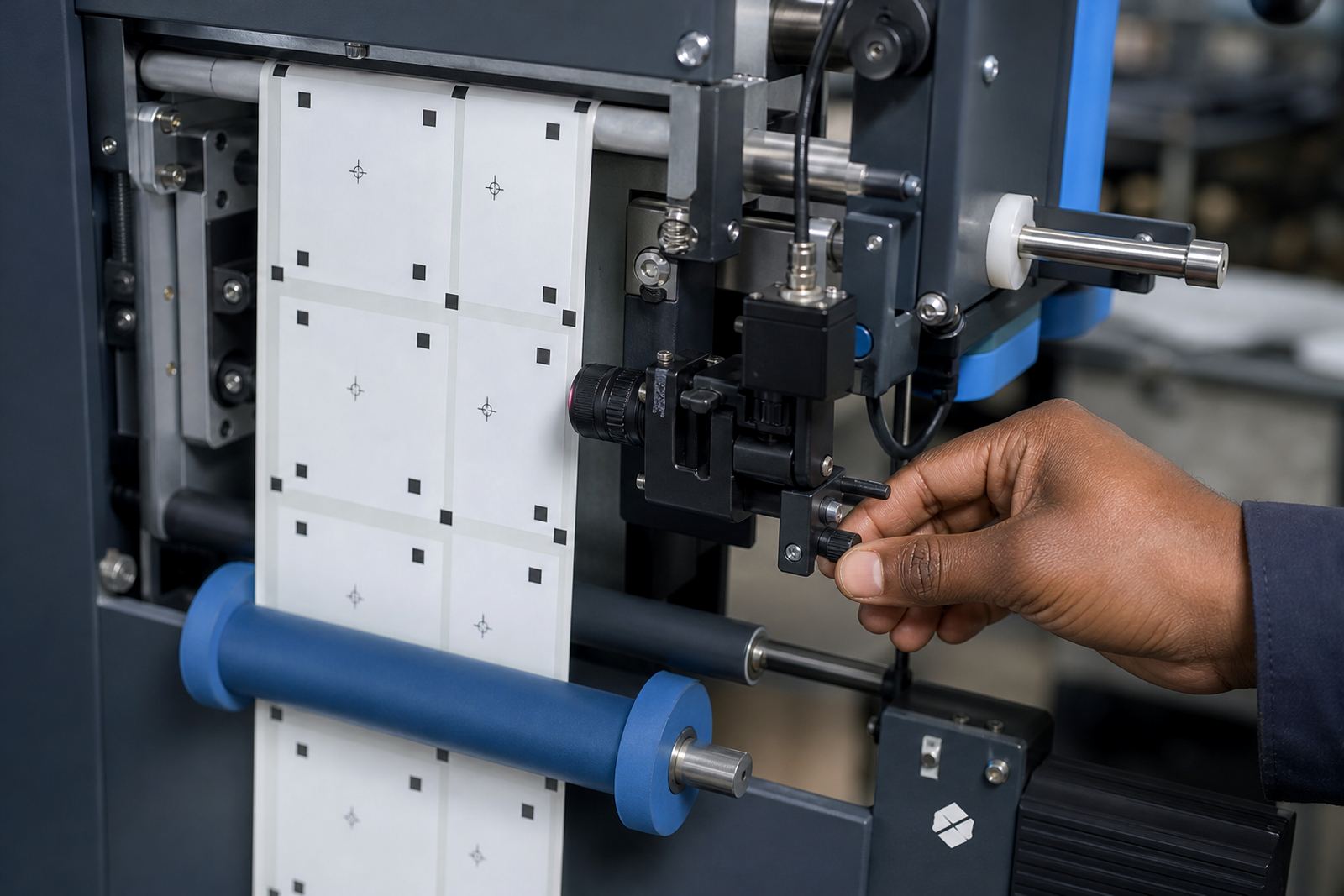
We also look at the printed roll itself. If the label web has slight variation in tension, stretch or lay flat, the cut can drift and the matrix can tear unevenly. That is where practical setup matters more than theory. The machine has to hold registration marks, keep pressure steady and let the sheet or roll move without wandering.
- Flexible die fitment for semi-rotary label jobs
- Cut depth and pressure setting for different substrates
- Web path checks before the first production roll
- Alignment support for repeat label runs
What we check on a live finishing line
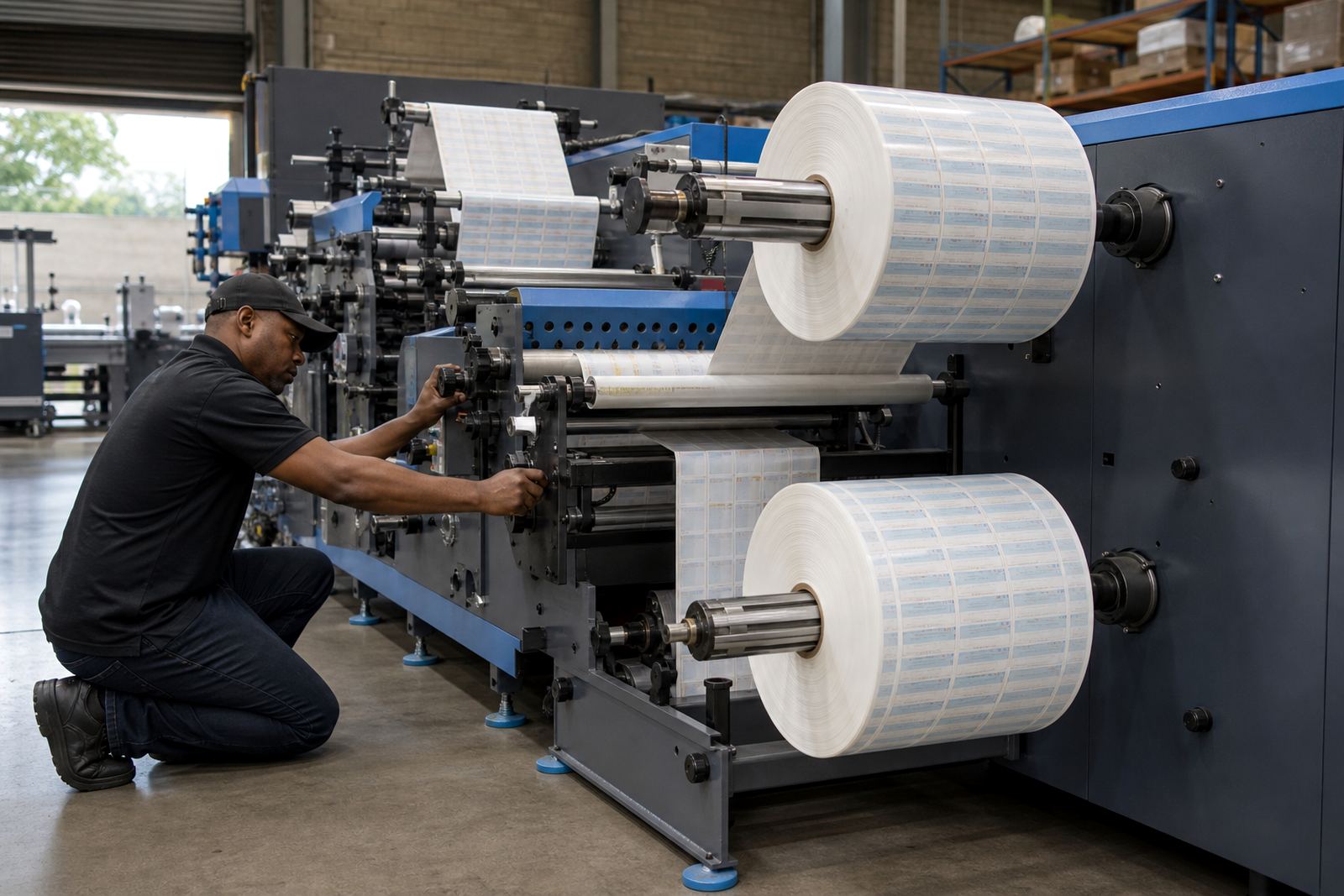
Die setup help is not only about fitting the tool. We check the unwind, the lamination section if it is part of the line, the die station, matrix stripping, slitting and rewind. When the cut line is off by even a small amount, the waste matrix may pull, labels may lift at the corners, or the rewind can build an uneven roll. That becomes costly fast on a busy shift.
Our technicians set the machine so the job runs to the printed register marks and the die lands where it should on the web. Where the line includes varnish or cold foil work, we also consider surface slip and cure condition. The aim is a clean repeat that holds through the full roll, not only the first few metres.
- Registration mark reading and correction
- Matrix stripping behaviour during the run
- Slitting width and rewind tension checks
- Laminated and varnished stock handling where relevant
A practical setup process for short runs and repeats
We begin with the job details, roll width, label pitch, substrate type and the finish required. Then we inspect the current condition of the die, the support tooling and the machine settings. If the job calls for a semi-rotary pass, we tune the timing and pressure so the cut follows the print without crushing the material or leaving uncut corners.
After the first pass, we check the waste path, edge quality and rewind build. If needed, we make fine changes to pressure, lateral position or web tension. That is usually the difference between a line that only starts well and a line that holds its shape through the roll. For many plants the important thing is repeatability, not trial and error.
When the job uses a flexible die for changing artwork, we also help with changeover notes so the same setup can be repeated with less guesswork next time. The operator should know where the marks sit, how the matrix should peel, and what the cut edge should look like at a glance.
Turnaround on setup support and line changeovers
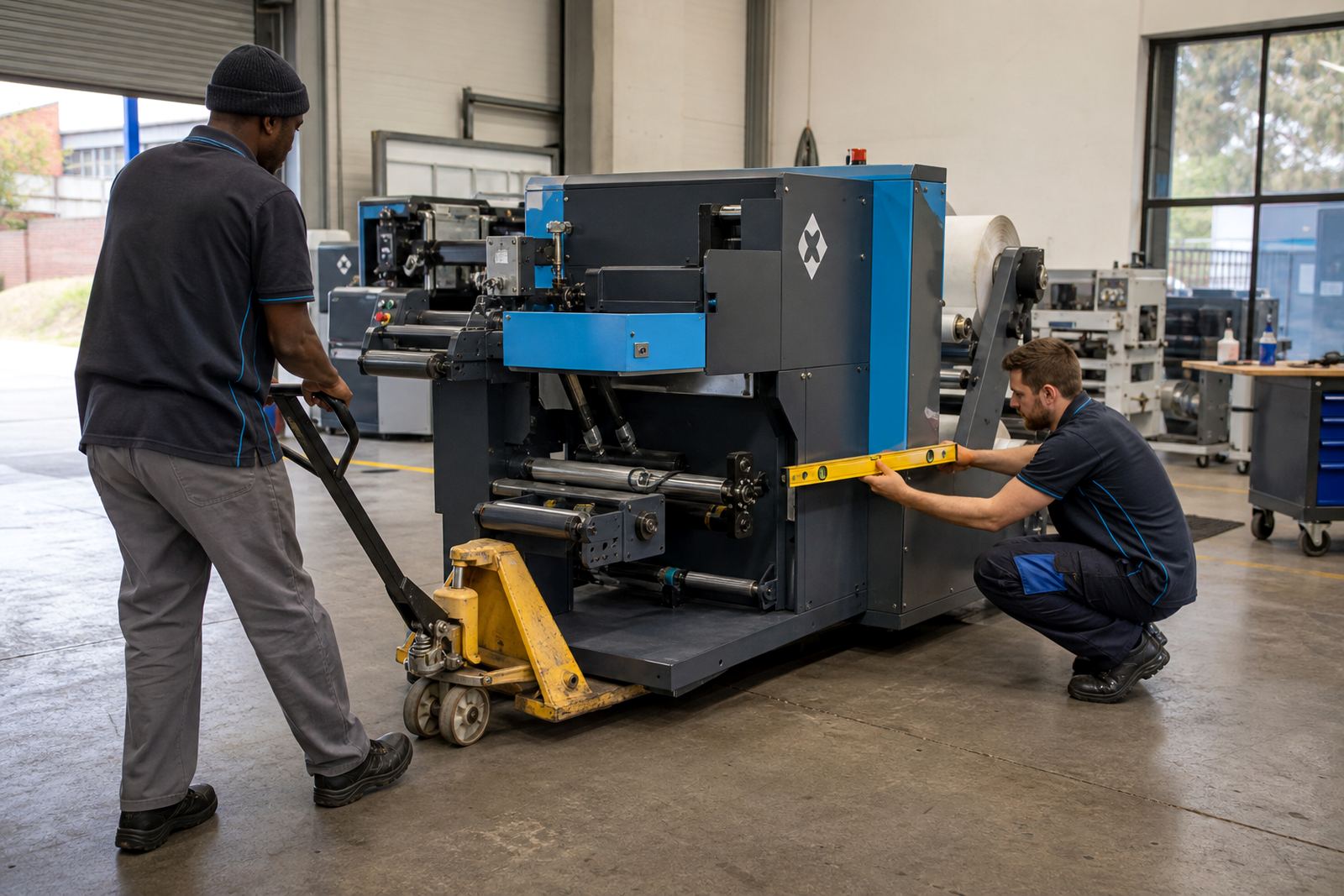
Die setup help can be arranged for new lines, repeat jobs, urgent changeovers or production that has started to drift. In practice, the timing depends on the line condition, the availability of the die set and whether the machine needs a basic alignment or a deeper correction. We work on site across South Africa, including Johannesburg, Pretoria, Durban, Cape Town and Gqeberha.
Where the machine already runs but the job is not sitting correctly, the work may be limited to pressure setting, repeat alignment and operator coaching. Where the web path or rewind is contributing to the fault, we treat the setup as part of the full finishing line. That saves time later because the die is not being blamed for a feed problem upstream.
- New job setup on semi-rotary finishing lines
- Repeat alignment for recurring label work
- Adjustment support after artwork or substrate changes
- On site help for plants in major metro areas
How pricing is approached for die setup help
Pricing depends on the machine type, the job complexity and the amount of hands-on work needed to get the line ready. A straightforward fitment and alignment visit is priced differently from a job that includes web path correction, matrix stripping issues and operator coaching across several test runs. Spare parts, tooling wear and travel are factored separately where needed.
We keep the pricing conversation tied to the actual production work, not a generic service line. That means you get a clear view of what the setup covers, whether it includes calibration, and if the machine needs follow-up checks after the first production batch. It also helps when the plant is running multiple label formats on the same equipment.
If the brief includes lamination, slitting or rewinding adjustments at the same time, we quote for the combined scope rather than separate fragments. That is usually the cleaner route for packaging producers and label converters with tight production windows.
Operator handover and aftercare on the floor
After the setup is complete, we spend time on handover with the operator or shift lead. The point is to leave the crew with settings they can use, not a machine that only works while someone else is standing at the panel. We cover practical checks such as mark position, pressure behaviour, rewind build and the signs of a clean matrix strip.
Aftercare also includes support for the next run if the substrate, artwork or die format changes. For some plants this means a quick revisit to confirm the repeat; for others it means remote guidance while the team prepares the next roll. Our contact form is used for these service requests, and we keep the support practical and specific to the line in front of you.
- Operator handover with machine-specific notes
- Settings guidance for repeat jobs
- Remote support for follow-up checks
- Spare parts supply where worn components affect setup
Key facts
| Machine types | Semi-rotary label finishing lines, digital die-cutting systems and roll-to-roll finishing units |
|---|---|
| Cut methods | Flexible die setup, semi-rotary cutting, registration-based alignment and repeat job fitting |
| Web widths | Common label web formats from narrow rolls to wider packaging webs, subject to machine model |
| Material types | Paper labels, film labels, laminated stock and varnished webs where the finish allows |
| Line functions | Unwind, lamination, die-cutting, matrix stripping, slitting and rewind |
| Service areas | Kya Sand, Randburg plus Johannesburg, Pretoria, Durban, Cape Town, Gqeberha, Midrand and Kempton Park |