Remote support for the moments that slow a label line
When a job stops making clean labels, the problem is often small but costly. A registration mark may be drifting, the matrix may be pulling tight, or the rewind tension may be set for the wrong roll build. Our remote support service helps your team trace the fault and work through the machine settings that affect cut depth, web control and roll quality.
The guidance suits digital label finishing lines used in short-run and repeat work. We cover unwind, laminate, die-cut, strip waste, slit and rewind sections, along with the checks that keep them in step. That includes guidance for clear film, paper, textured stock and pressure-sensitive constructions where the liner, adhesive and face material behave differently on the line.
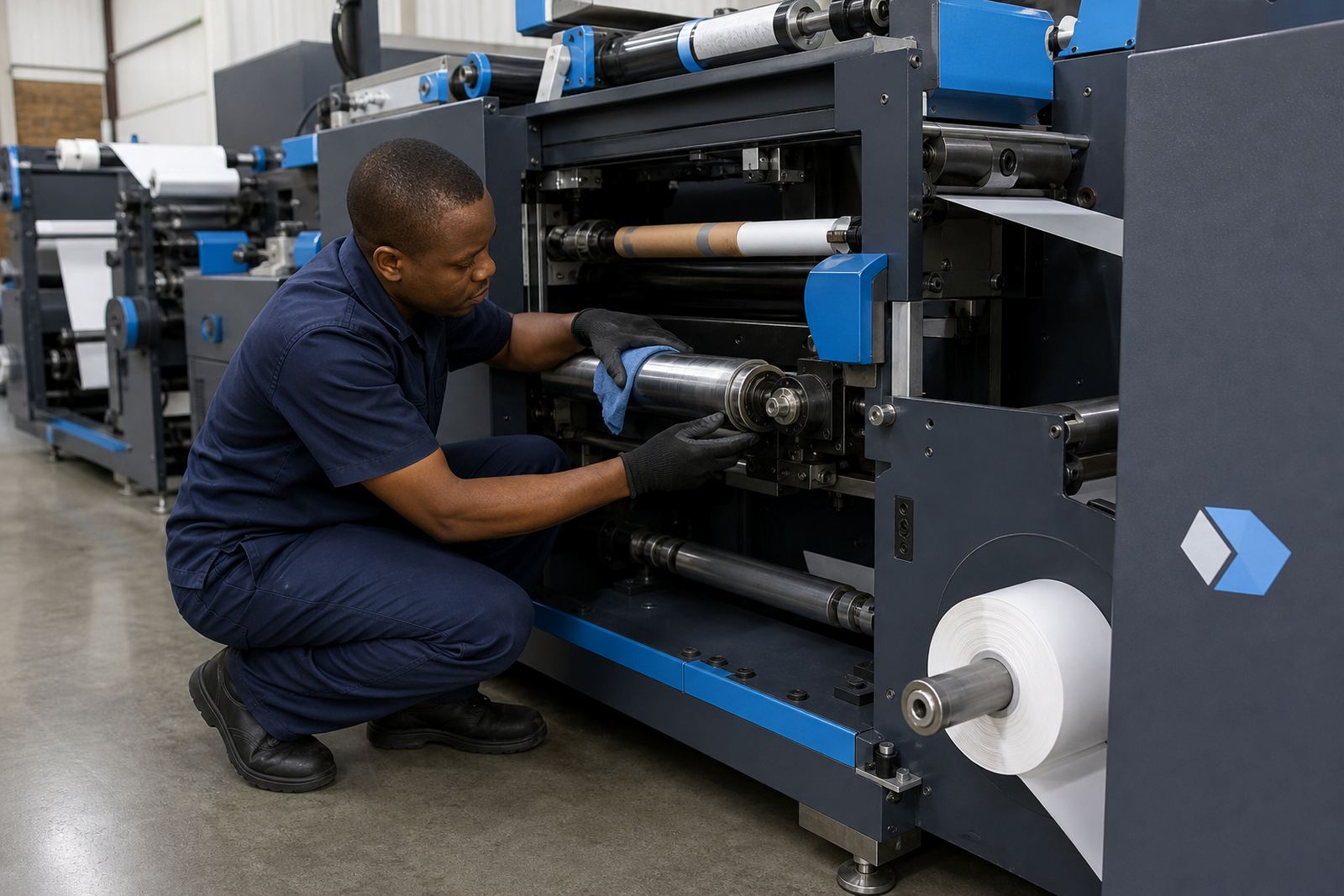
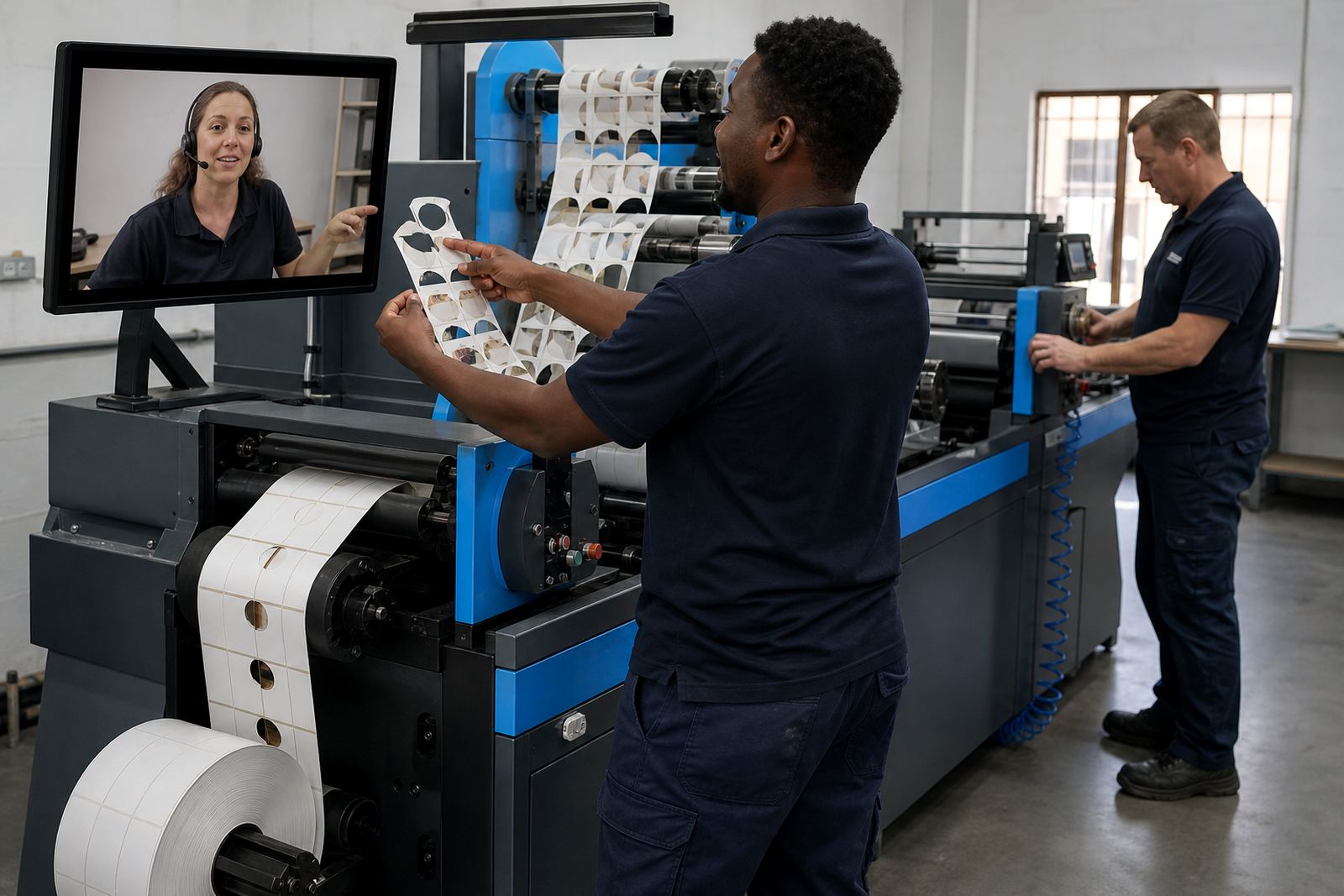
Support is given from our Kya Sand office by people who work with label finishing equipment every day. The aim is practical correction at the machine, not theory. Operators receive clear steps on what to inspect, what to adjust and which readings matter before a run is judged safe for production.
What the remote session can cover
The service is built around live machine observations, photos, short video clips and readings from the control screen where available. We can work through setup, faults and job changeovers, including machines using laser or semi-rotary cutting methods, plus flexible die stations where the die, web path and substrate need close alignment.
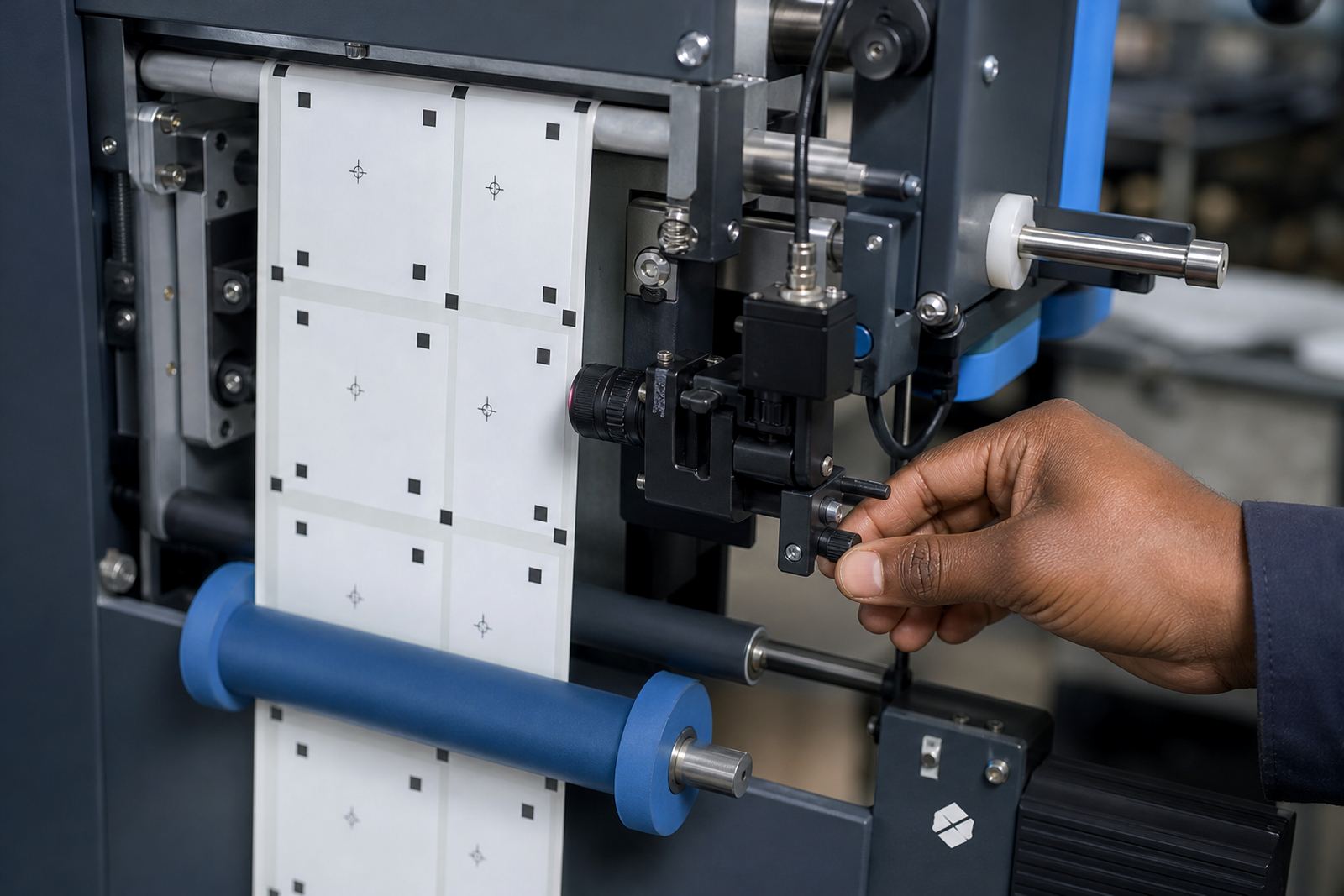
- Registration mark reading and repeat length checks
- Cut quality checks for kiss-cut and full cut jobs
- Matrix stripping problems and edge lift on narrow webs
- Slitting blade position, burrs and web tracking
- Rewind tension, roll build and telescoping issues
- Lamination nip pressure, wrinkles and edge curl
- Varnish windows, cured area alignment and contamination points
Where the machine uses roll stock in larger diameters or heavier labels, we also look at braking, dancer control and unwind stability. Coastal humidity can change the way face stock and liner behave in storage, so we often ask about how the material was kept before the run. A clean, stable feed path is often the difference between a tidy roll and one that walks out of spec.
How the remote process is handled
The first step is to gather the job details that matter: substrate type, roll width, repeat length, finishing method and the fault that appeared on press or on the finishing line. We then guide the operator through a focused check sequence so the machine can be assessed in the right order, not by guesswork. That usually means starting with web path, then registration, then the cutting or slitting section, and finally rewind quality.
Because every line behaves a little differently, the session is adjusted to the machine build and the product being run. If a label printer is sending work to a finishing line with printed registration marks, we look at mark contrast, sensor position and repeat consistency. If the problem is more mechanical, such as uneven matrix stripping or a rewind roll building too loose, the steps are different and the settings must be traced more carefully.
- Collect the job details and machine readings
- Review the fault with the operator or supervisor
- Work through the setup checks in sequence
- Confirm the correction on a short production run
- Note the settings that should stay in place for the job
Turnaround, scope and pricing approach
Remote support is quoted to match the work involved. A short setting check on one finishing station is priced differently from a longer fault-finding session across the full line. The pricing approach reflects the time needed for technical guidance, the number of people involved and whether the machine needs a follow-up check after the first correction.
Some issues are solved with a single focused session. Others need a deeper look at the material path, sensor readings and output quality on a live roll. If spare parts, a die change or mechanical work are needed, that is handled as a separate scope so the support call stays clear. This keeps the quote tied to the real job rather than a broad guess.
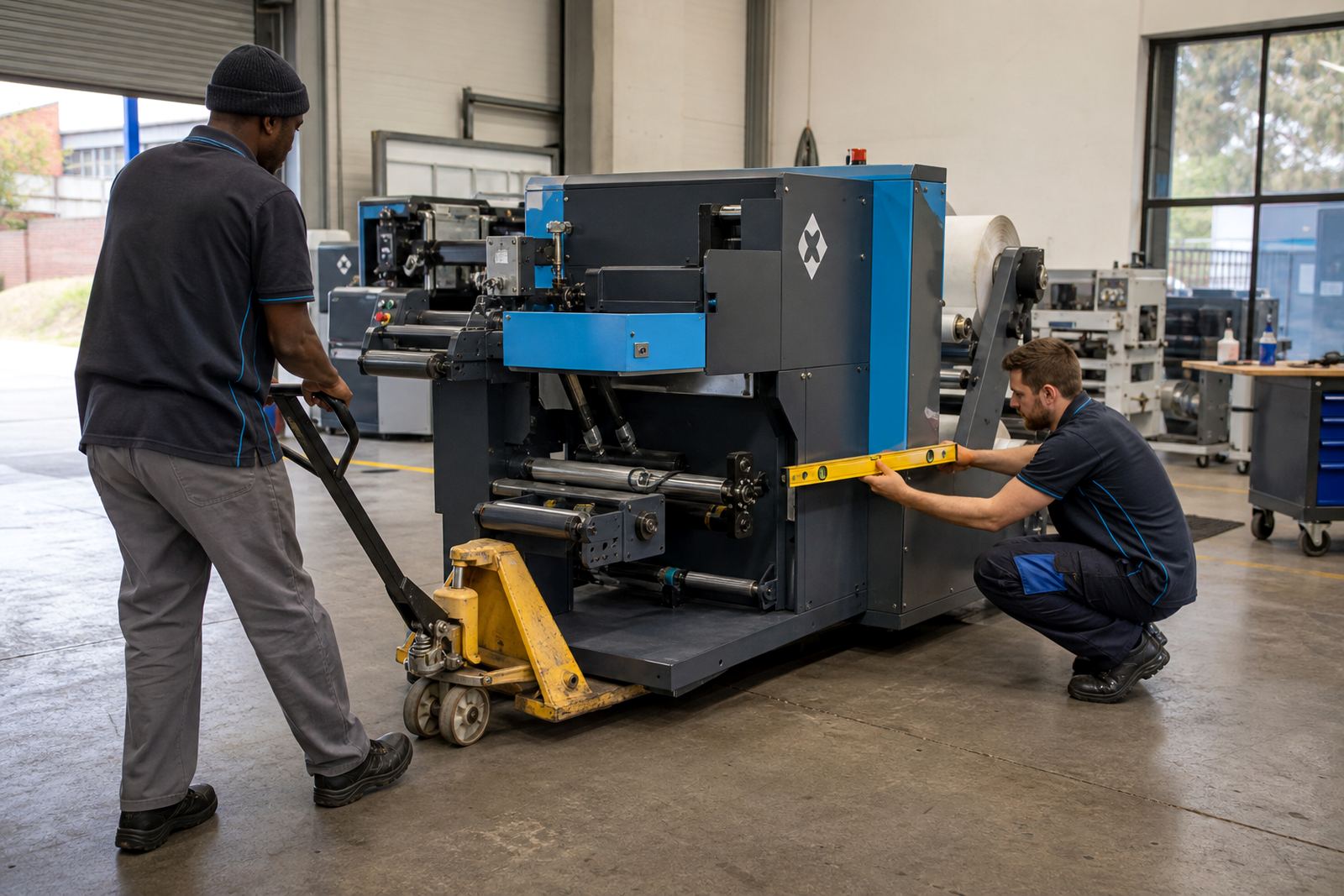
For plants in Johannesburg, Pretoria, Durban, Cape Town and Gqeberha, remote support is often useful before a site visit is arranged. It can narrow the fault, reduce machine stoppage and show whether the issue sits in setup, operator handling or a worn part. That makes the next step more direct for the team on site.
Aftercare that keeps the next run steadier
After the fault is cleared, we leave the team with the settings that were changed and the reasons behind them. That may include registration mark notes, rewind tension ranges, blade position, matrix stripping checks or a reminder on roll loading order. The point is to keep the next changeover calmer and the next roll more consistent.
We also help operators spot the signs that point to a repeat fault. A slight skew on the rewind, a cut line drifting on the second pass, or waste web building too tightly can tell you a lot before the job slips. Where the line needs spare parts or a physical adjustment, the issue is noted so the service team can plan the next step properly.
Our aftercare suits production teams that want clear instruction without long explanations. It is direct, mechanical and practical, with the same care for narrow labels, wider cartons and textured substrates that need a steady finish.
Local support from Kya Sand into every major label corridor
Label-Cutter works from Kya Sand, Randburg and supports label finishing teams across South Africa. Remote support is used by operations that want a technical eye on the machine before stoppage grows into missed orders. It is also useful after installation, after operator handover, or when a job needs a tighter finish on a repeat run.
Our team includes Thabo Mdlalose, Karen Naidoo, Pieter Pienaar, Lerato Bhengu, Musa Wessels and Ayesha Shezi. That mix helps with machine setup, service planning, training detail and parts follow-through when a remote fix points to a worn component or a setting that needs to be locked in properly.
If you need support for laser cutting, semi-rotary tooling, flexible dies, lamination or waste stripping, our contact form is the right place to send the job details. Include the machine type, roll width, substrate, fault and any registration or rewind notes you already have.
Key facts
| Service type | Remote technical support for label finishing machines |
|---|---|
| Machine scope | Laser cutting, semi-rotary die-cutting, lamination, varnish, slitting and rewinding |
| Typical faults | Registration drift, matrix stripping, rewind tension, cut quality and web tracking |
| Input needed | Photos, short video, control readings, substrate details and roll size |
| Area covered | South Africa, including Johannesburg, Pretoria, Durban, Cape Town and Gqeberha |
| Base | Kya Sand, Randburg |