What rewind setup covers on a finishing line
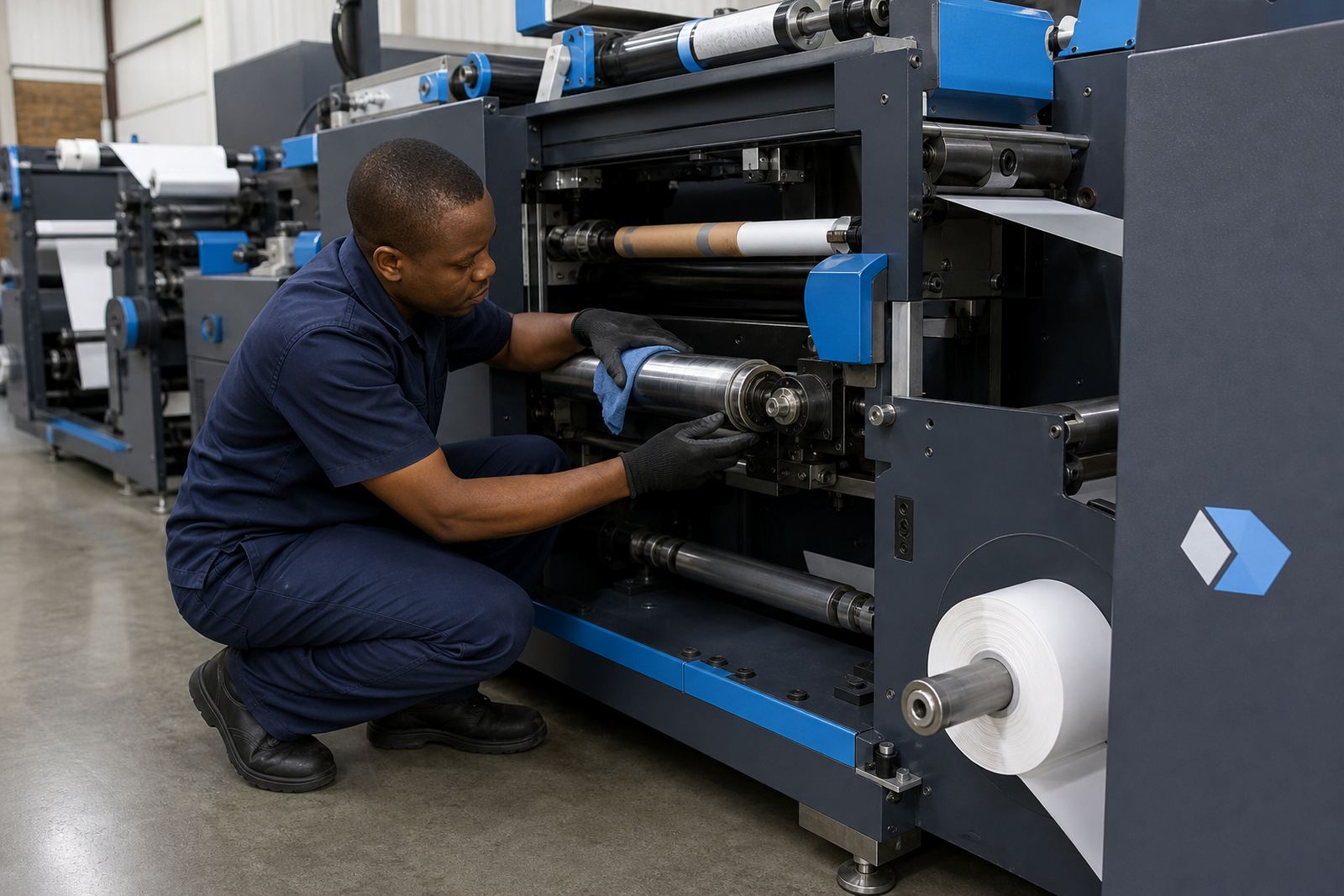
Rewind setup is part of the final stages on a digital label finishing line, after print, lamination, varnish or die-cutting depending on the build. The aim is to collect the web into a clean roll with correct tension, even edges and a core that stays true through the full roll build.
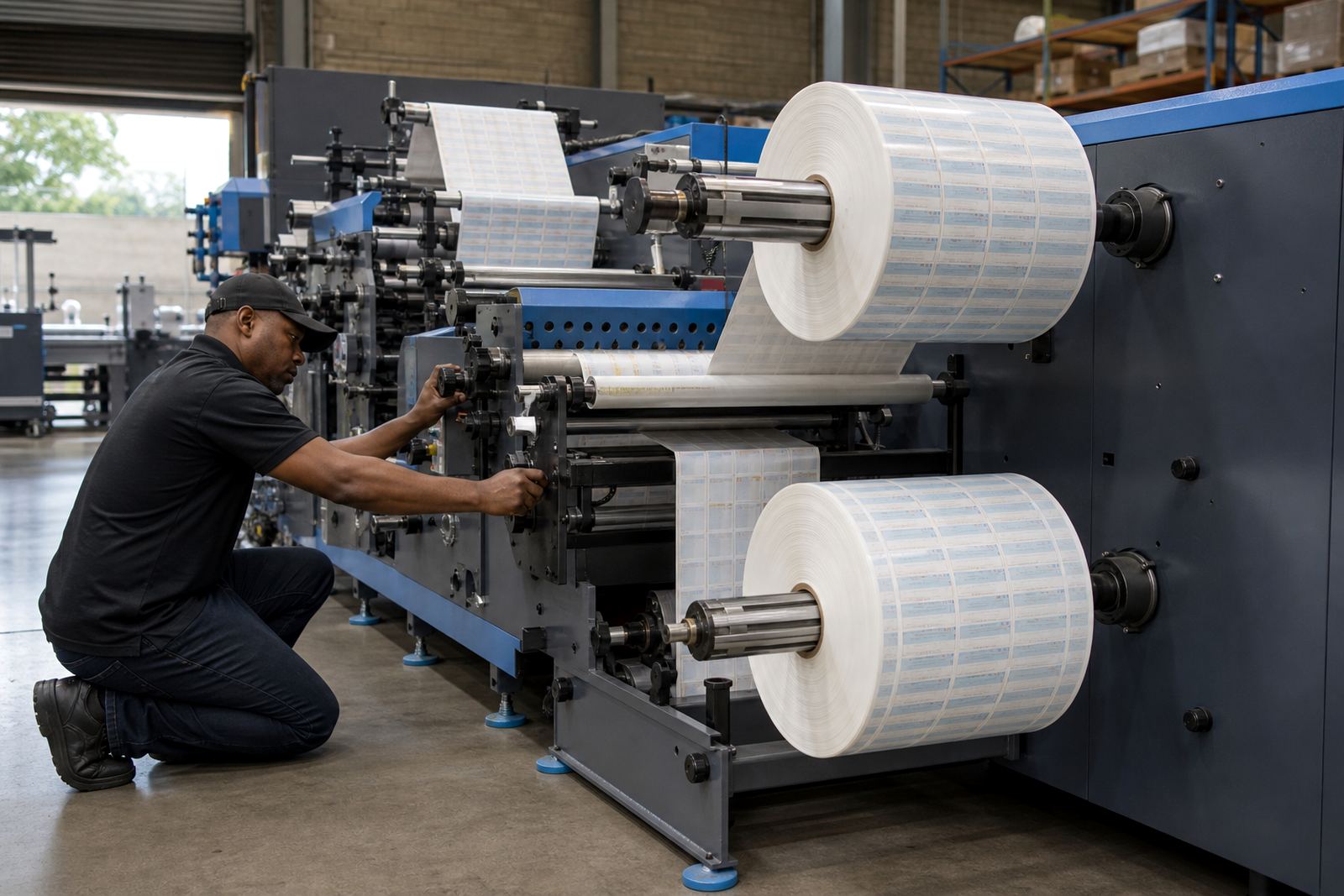
We set the machine for the label stock, liner type, web width and finished roll size. That includes core loading, shaft fit, dancer or web tension settings, lane separation where multiple-up work is running, and the rewind direction needed for downstream packing or slitting.
- Core loading and shaft alignment
- Tension balance for film, paper and pressure-sensitive stock
- Roll build quality checks for edge wander and telescoping
- Lane separation for multi-lane output
- Finished roll size targets and unwind to rewind match-up
How we approach setup on your line
Every job starts with the roll construction and the way the web moves through the machine. A label roll with a light paper face stock behaves differently from a heavier filmic build, and varnish or lamination can change the grip on the web as it moves into rewind.
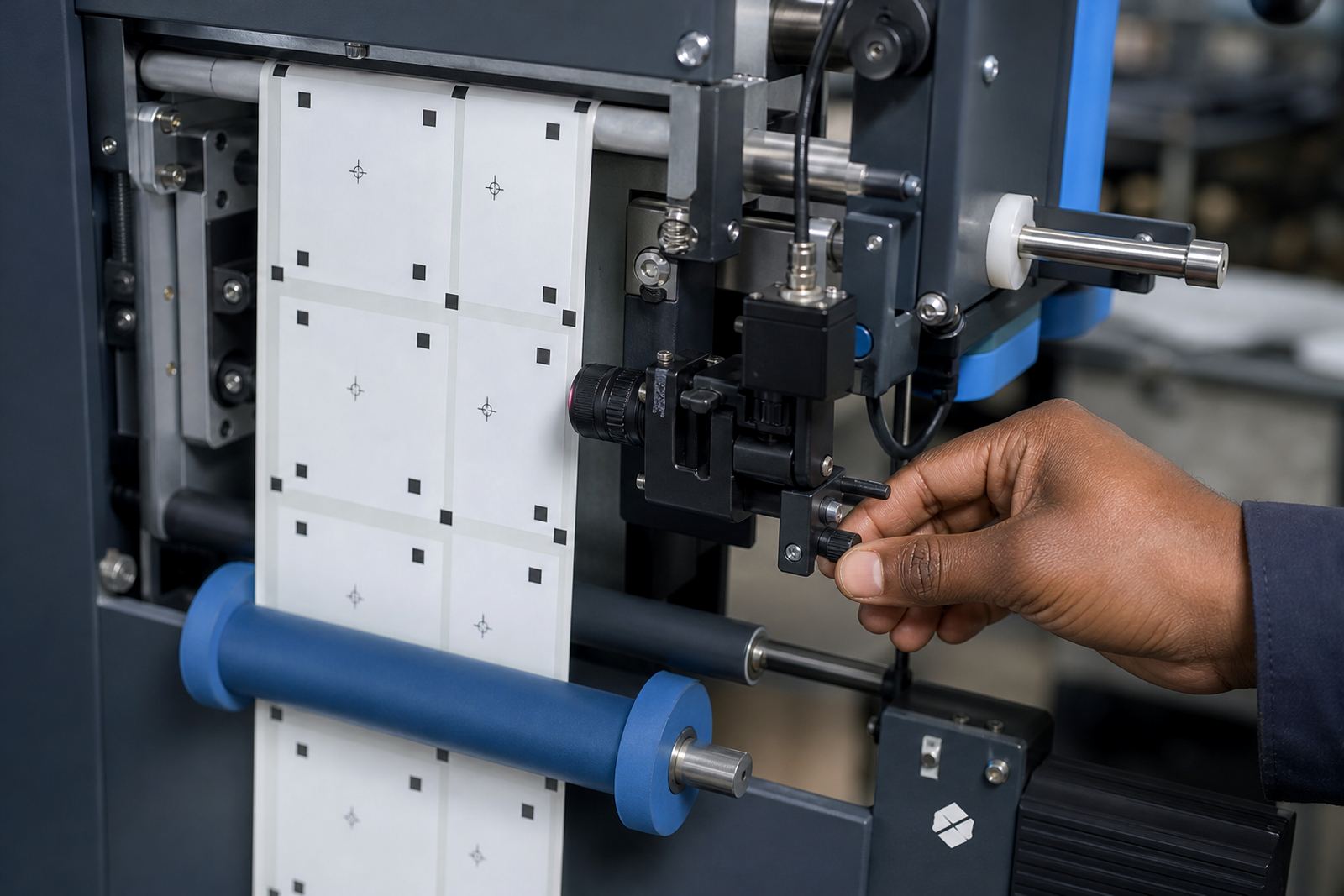
We check registration marks, web path, nip pressure and slitting position before the final rewind test. If the line is running semi-rotary die-cutting, we also look at pull consistency from station to station so the rewind does not tighten or drift at the end of the run.
- Web path review from unwind to rewind
- Registration check before speed is increased
- Slit position set for clean lane division
- Roll build test on the actual production stock
Roll quality problems we sort out
Most rewind faults show up as a shape problem in the roll, not a machine fault on its own. Telescoping, soft edges, loose cores and wrinkled lanes usually point to tension that is not balanced across the web or a rewind that is pulling harder than the stock can handle.
We also look at how the roll behaves when it is cut off the shaft. A neat rewind should release cleanly, stay square and stack without edge damage. Where there are multiple lanes, we set separation so one lane does not steal tension from the next.
- Telescoping and cone-shaped roll build
- Loose or crushed cores
- Wrinkling at the edge of the web
- Uneven lane pull on split webs
- Rolls that are too hard or too soft
Machines, materials and finishing details
Rewind setup matters on both laser and semi-rotary finishing lines, and the settings change with the material. Pressure-sensitive labels, clear film, textured paper and linered stock all hold tension differently, especially where lamination or varnish has added bulk to the web.
We set up for typical label roll sizes used in production, from narrow lanes for small-format labels to wider web builds for packaging work. Where flexible dies are used, we check that the cut remains clean and the rewind does not distort the cut edge before the matrix is stripped and rewound.
- Suitable for narrow and wide label webs
- Works with laminated and varnished stock
- Supports matrix stripping before rewind
- Checks for stable roll build on film and paper
What the service visit includes
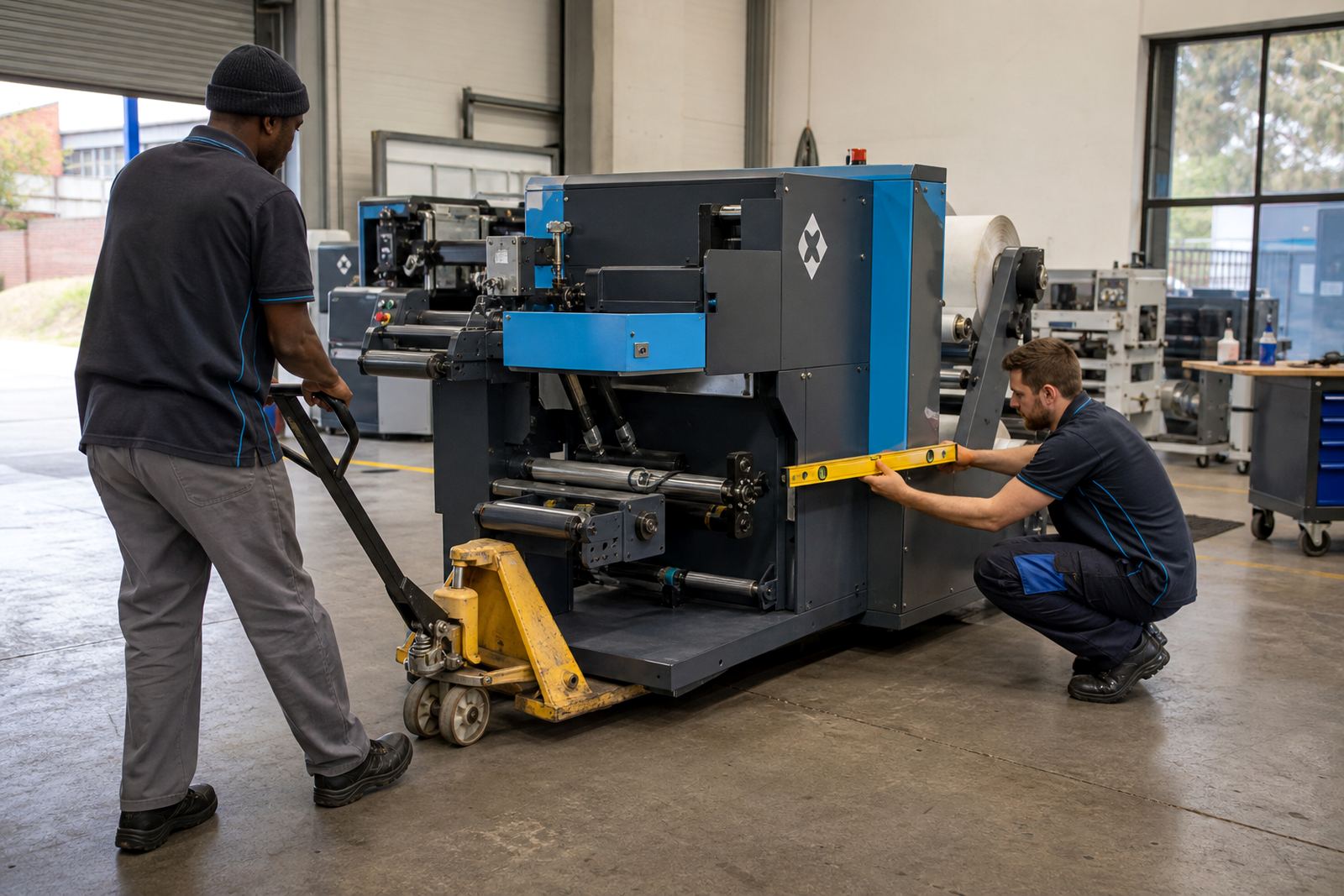
Our rewind setup service is practical and hands-on. We work on the machine at your shop, showroom or production floor, then test the result with your own stock and your own roll size requirements. If the line is part of a larger finishing setup, we make sure the unwind, die-cut, slit and rewind stages are talking to each other properly.
The visit can include operator guidance, basic fault finding and a review of the settings used for repeat jobs. Where the line needs a cleaner lane split or tighter roll build control, we adjust the setup and show the operator what to watch during production.
- Core loading and mandrel fit checks
- Speed and tension adjustment on the live line
- Operator guidance on roll build control
- Support for repeat jobs with the same stock
Pricing approach and follow-through
Pricing depends on the machine type, the amount of setting work involved, travel to your site and whether the job is a one-off setup or part of a broader commissioning visit. If there are worn parts, alignment issues or a slitting problem tied to the rewind, those items are priced separately so the scope stays clear.
After setup, we stay available for spare parts supply, remote support, breakdown repairs and production tuning tied to the finishing line. That helps when a new roll size, new substrate or fresh lane layout is added to the work mix and the rewind needs to be revisited.
- Quoted by scope, machine type and site requirements
- Separate pricing for parts and repair work
- Support for later stock changes and new roll sizes
- Assistance with production optimisation on the line
Key facts
| Service scope | Core loading, tension balance, lane separation, roll build quality |
|---|---|
| Compatible finishing | Laser die-cutting, semi-rotary die-cutting, lamination, varnish, slitting |
| Typical roll work | Narrow label rolls to wider production webs |
| Setup checks | Registration marks, edge alignment, rewind direction, core fit |
| Support options | On-site setup, remote support, operator training, spare parts supply |
| Coverage | Kya Sand, Randburg and major South African production centres |