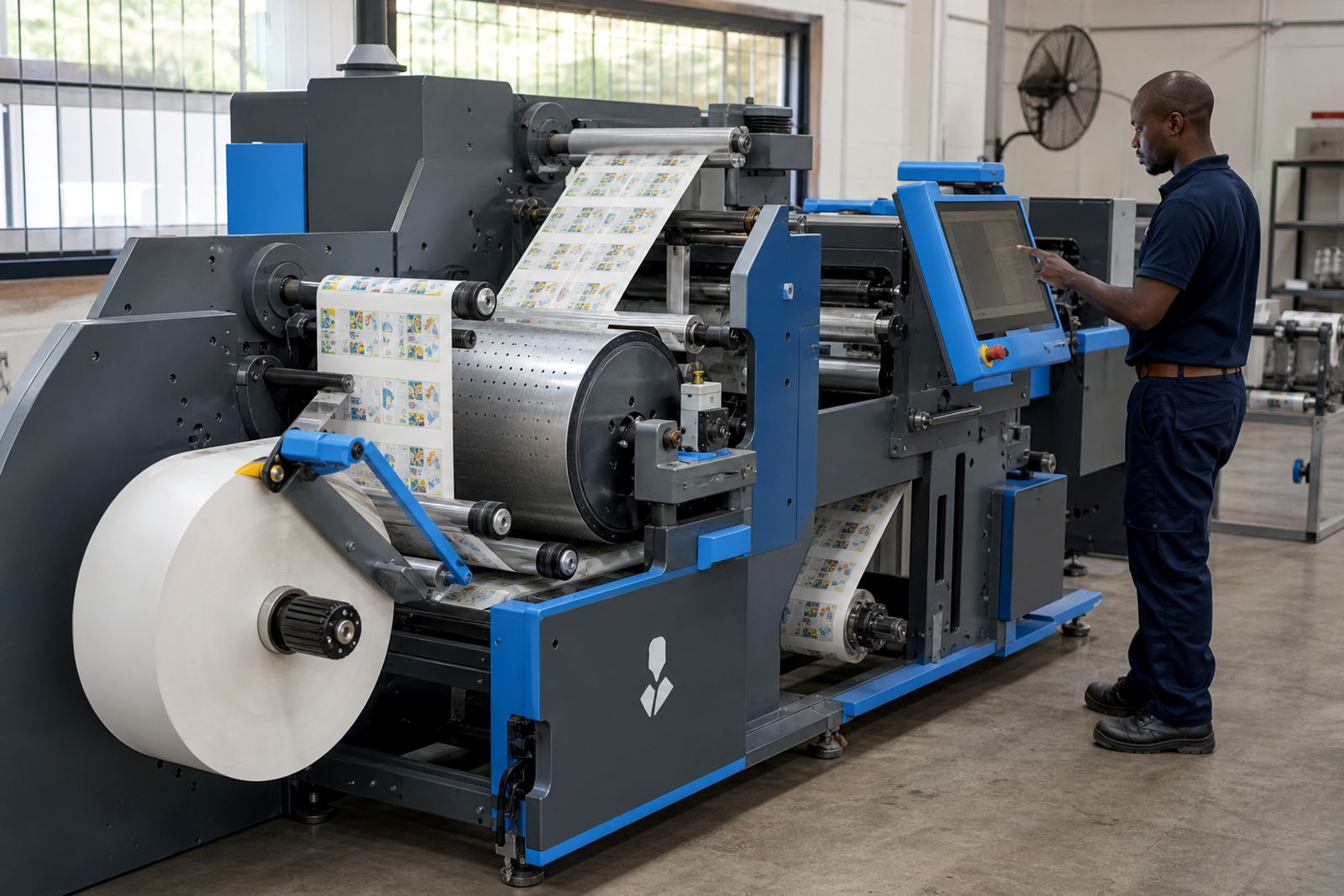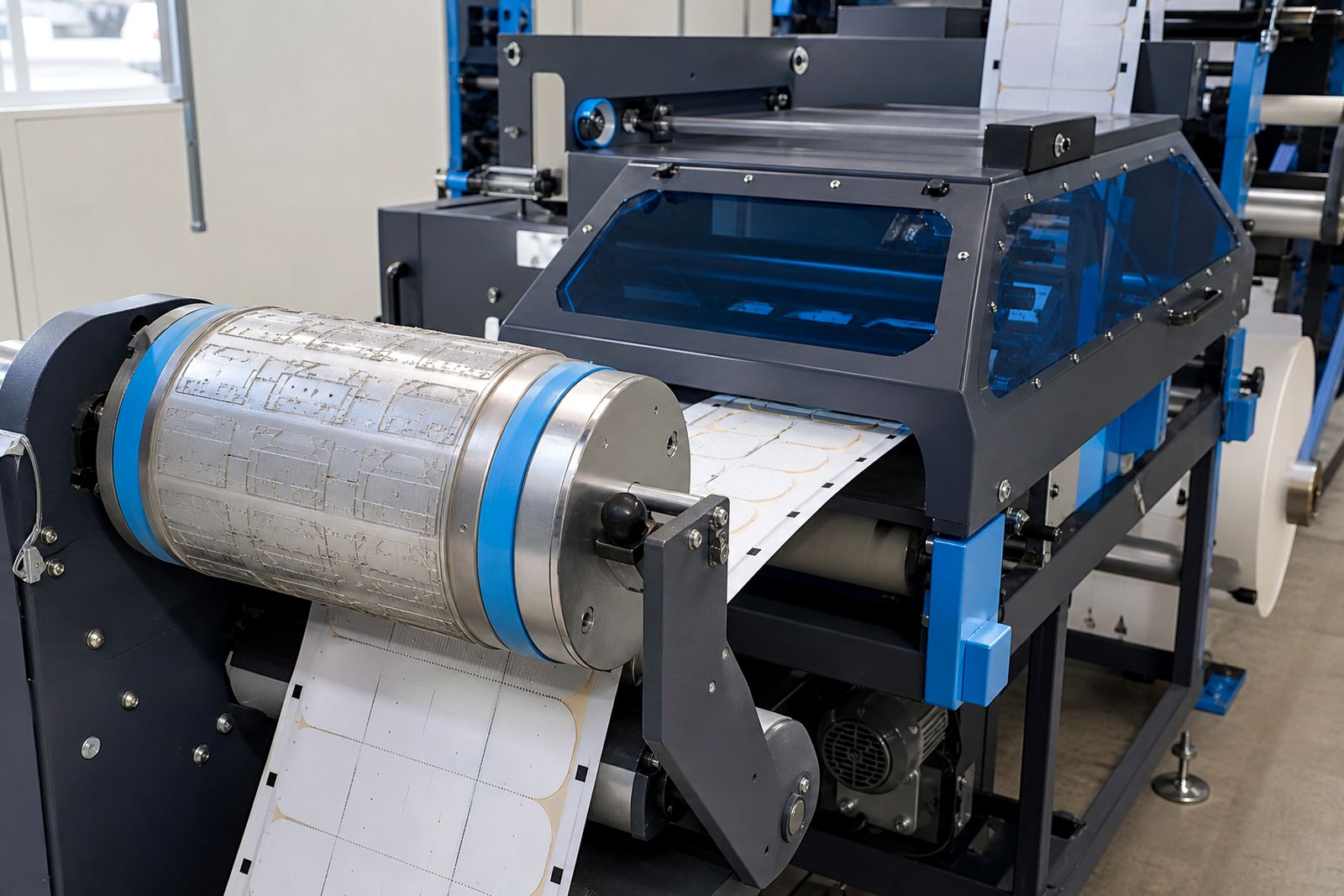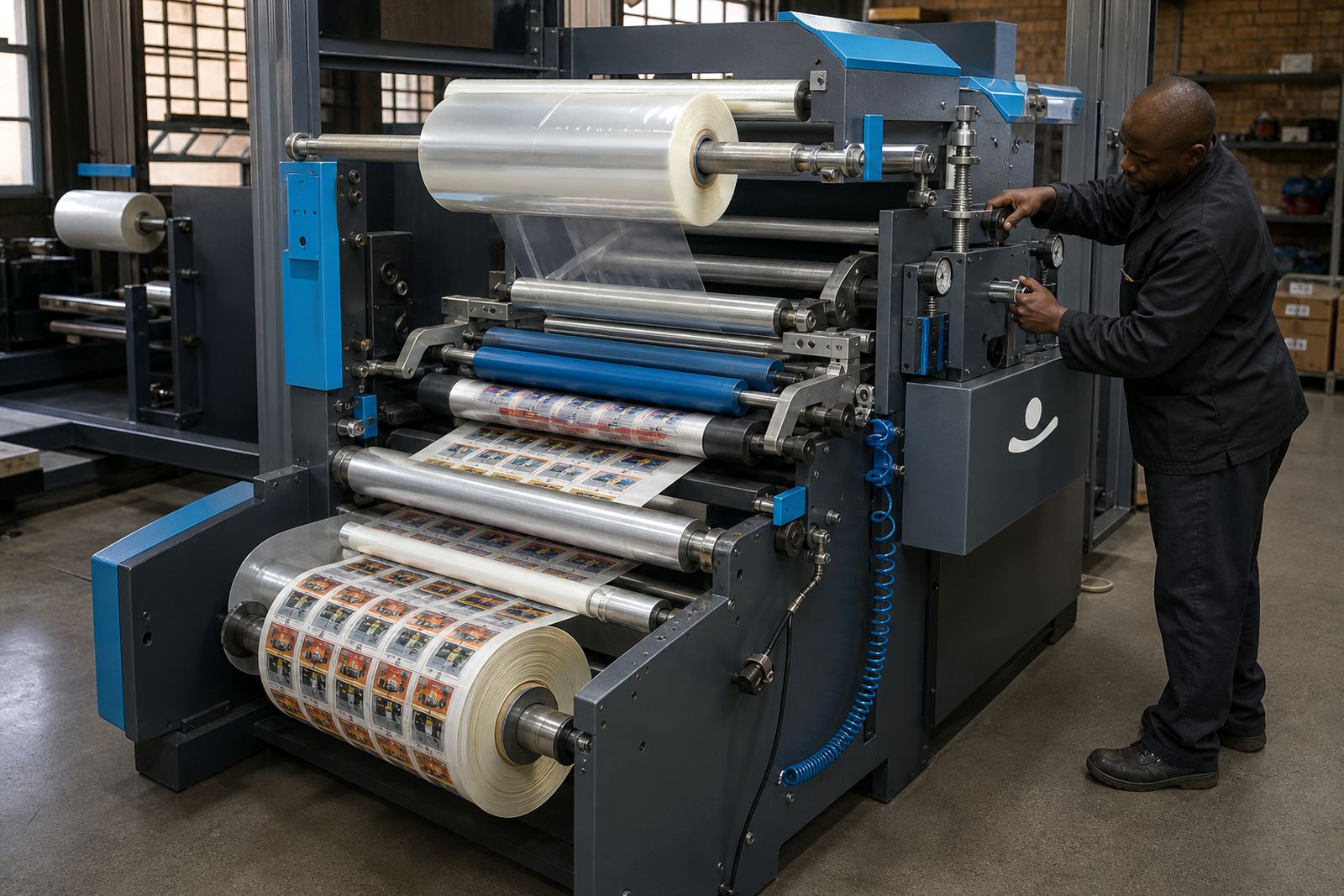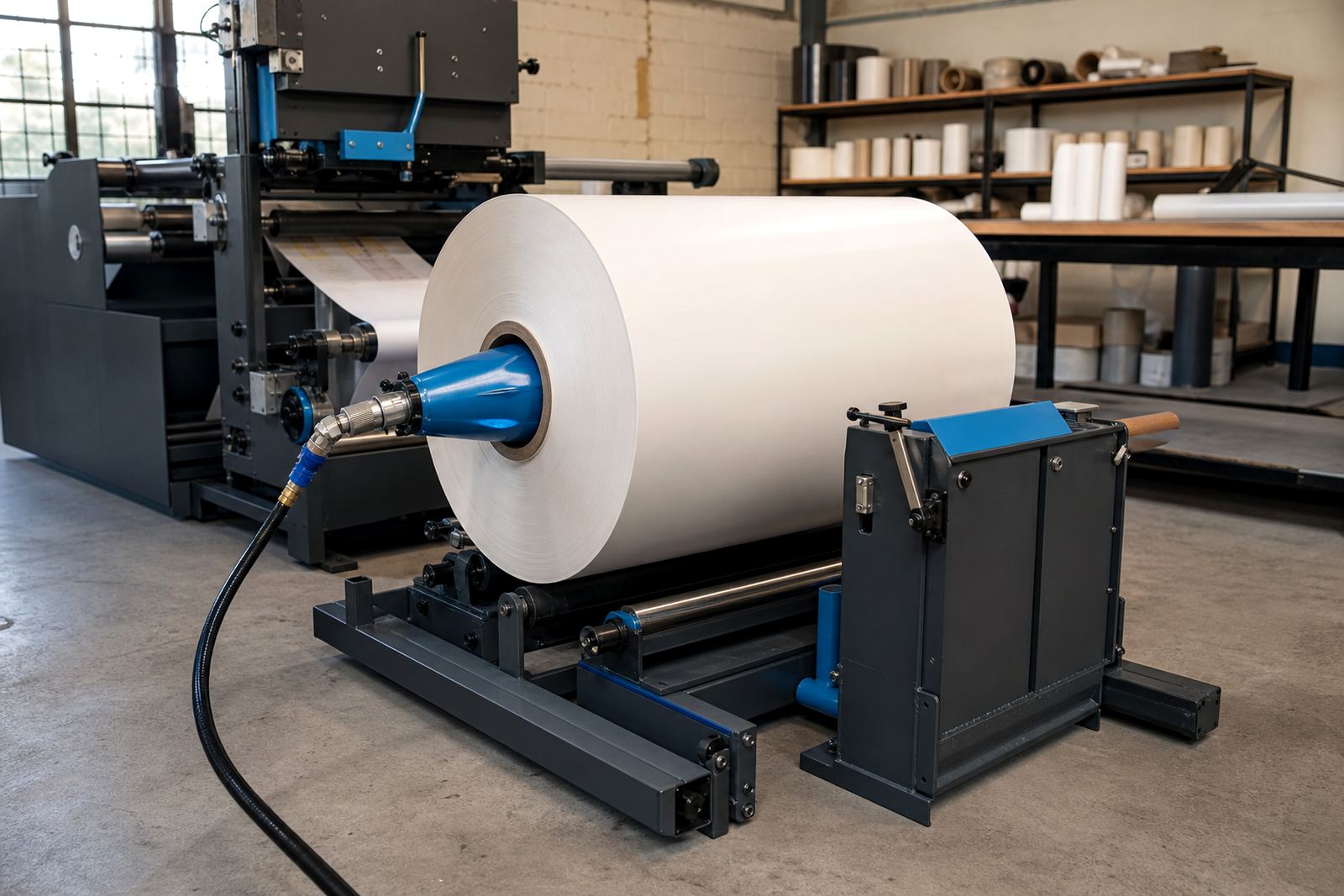
A firmer hold at the rewind and unwind stations
An air shaft is a clamping shaft that expands inside the core when air is applied, then relaxes so the finished roll can be loaded or removed. In label finishing, that grip matters when web tension needs to stay even across narrow slits, heavier laminate laydowns, or a roll with a softer core that tends to slip under load.
On a digital label line, the upgrade is often fitted to unwind, rewind or turret-style stations where roll handling slows the team down. It also helps when you move between core sizes or run mixed jobs with different roll weights, because the shaft can hold the core more squarely and reduce the little drifts that show up at speed.
- Faster mounting and removal of label rolls
- Better grip on paper, film and synthetic cores
- More stable rewind tension on long runs
- Useful where roll widths change through the week
Core sizes, widths and holding styles that get specified
Most air shaft upgrades are specified around the core diameter, roll face width and the way the machine loads the roll. In label work, common core sizes include 76 mm, with some lines also needing smaller or larger cores for short runs, narrow labels or heavier production rolls. The shaft length needs to suit the web width and the machine frame, with enough support across the full roll face.
Different holding styles are used for different jobs. Keyed segments, lugs, expanding elements and friction sleeves all behave a little differently, and the right choice depends on the grade of core, the roll weight and how often the operator changes rolls during a shift.
- Core diameter: 50 mm, 76 mm or other specified sizes
- Face width matched to the machine web and roll width
- Expanding elements for consistent grip
- End journals and mounts matched to the frame type
For finishing lines working with registration marks, semi-rotary die-cutting or matrix stripping, stable roll control supports cleaner tracking through the path.
Where the upgrade earns its keep on a real label floor
This upgrade suits label printers and packaging producers that run short digital jobs, mixed materials or repeated changeovers. It is useful where operators load and unload rolls many times in a day, or where the same machine handles laminated work, varnish jobs and plain stock with different core behaviour. If the line includes slitting and rewinding, a firmer hold at the shaft can make the roll behave better as it builds.
On a busy floor in Johannesburg, Durban or Cape Town, the value shows up in smoother handling of the roll, less fiddling with alignment and fewer stops for re-seating the core. In humid coastal conditions, core condition matters too, because softer boards and uneven edges can slip if the shaft grip is weak.
- Digital label finishing lines with rewind and slit sections
- Jobs that use frequent roll changeovers
- Operations moving between different core grades
- Lines where roll tracking needs to stay steady under tension
Fitting, alignment and the checks that matter on installation
Fitting an air shaft upgrade usually means checking the machine journals, shaft length, bore match and drive side arrangement before installation. The shaft must sit square in the frame, with the chuck or locking points aligned so the core grips evenly from one end to the other. On a conversion, the installer also checks the air feed path, valve position and pressure setting so the shaft expands and releases cleanly.
If the line uses a manual inflating point or an integrated air supply, the fitting needs to suit the current layout of the machine. That includes clearance around guards, access for the operator and enough room for roll loading without scraping the web path. Where a machine already runs semi-rotary tooling, lamination or varnish, the shaft choice needs to support the same production flow without creating extra handling steps.
- Machine frame dimensions and journal fit
- Core size and roll width range
- Air connection point and valve arrangement
- Operator access for loading and removal
Keeping the shaft in working shape
Air shafts need plain, regular care rather than heavy intervention. Dirt and adhesive build-up should be cleared from the expanding elements, journals and sealing faces so the grip stays even. The air path must stay free of leaks, because a slow leak can show up as poor holding, uneven expansion or a core that starts to walk during a run.
During service visits, our technical team checks the wear points, seals and inflation behaviour as part of the machine line. If the shaft starts to lose pressure, slip under load or mark the core, it is usually worth checking the condition of the segments before the next production week gets busy.
- Clean out dust, adhesive and trim debris
- Inspect seals and inflation points for leaks
- Check end journals for wear and scoring
- Watch for slippage on heavier rolls
Details to confirm before the shaft is supplied
For the right air shaft upgrade, the ordering details need to match the machine and the jobs it carries. The usual points are the core size, shaft length, supported roll weight, mount type and whether the shaft is for unwind, rewind or a special station. If the line handles narrow labels, the face width and the position of the expanding elements become especially important.
It also helps to note the material mix, whether the line works with paper or film labels, and whether the roll path includes lamination, stripping or slitting before rewind. Those details guide the choice of grip style and the air connection layout so the upgrade fits the way the machine is already used.
- Core diameter and roll face width
- Machine model and station location
- Maximum roll weight and web tension range
- Operating side, bore and mounting style
Key facts
| Product type | Air shaft upgrade for label finishing machines |
|---|---|
| Core sizes | Typically 50 mm, 76 mm and other specified diameters |
| Use points | Unwind, rewind and related roll-handling stations |
| Roll width range | Matched to machine web width and shaft face width |
| Fitment | Manual or integrated air supply, depending on the line |
| Typical applications | Label printing, slitting, rewinding and finishing lines |