What the cold lamination unit does on a label line
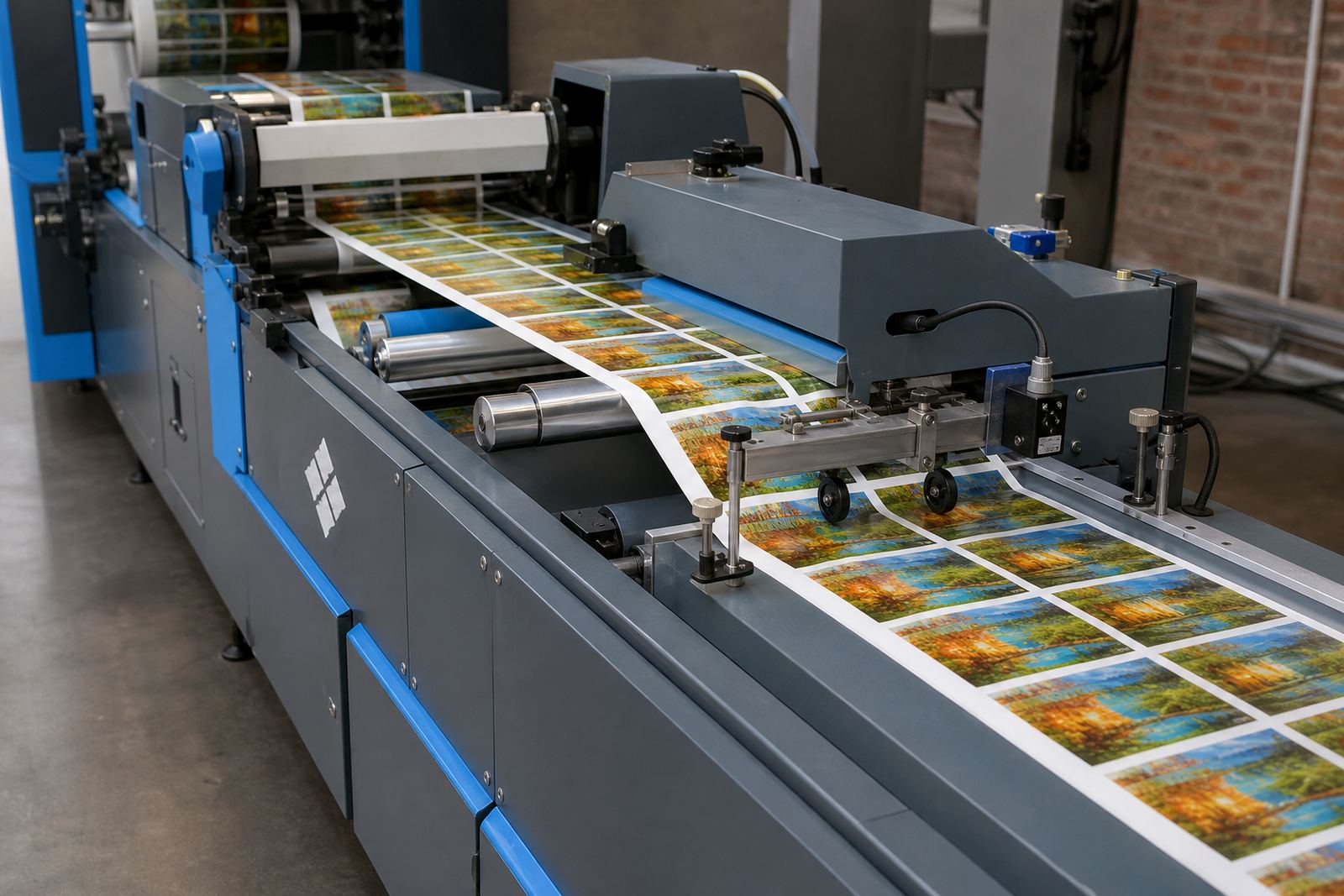
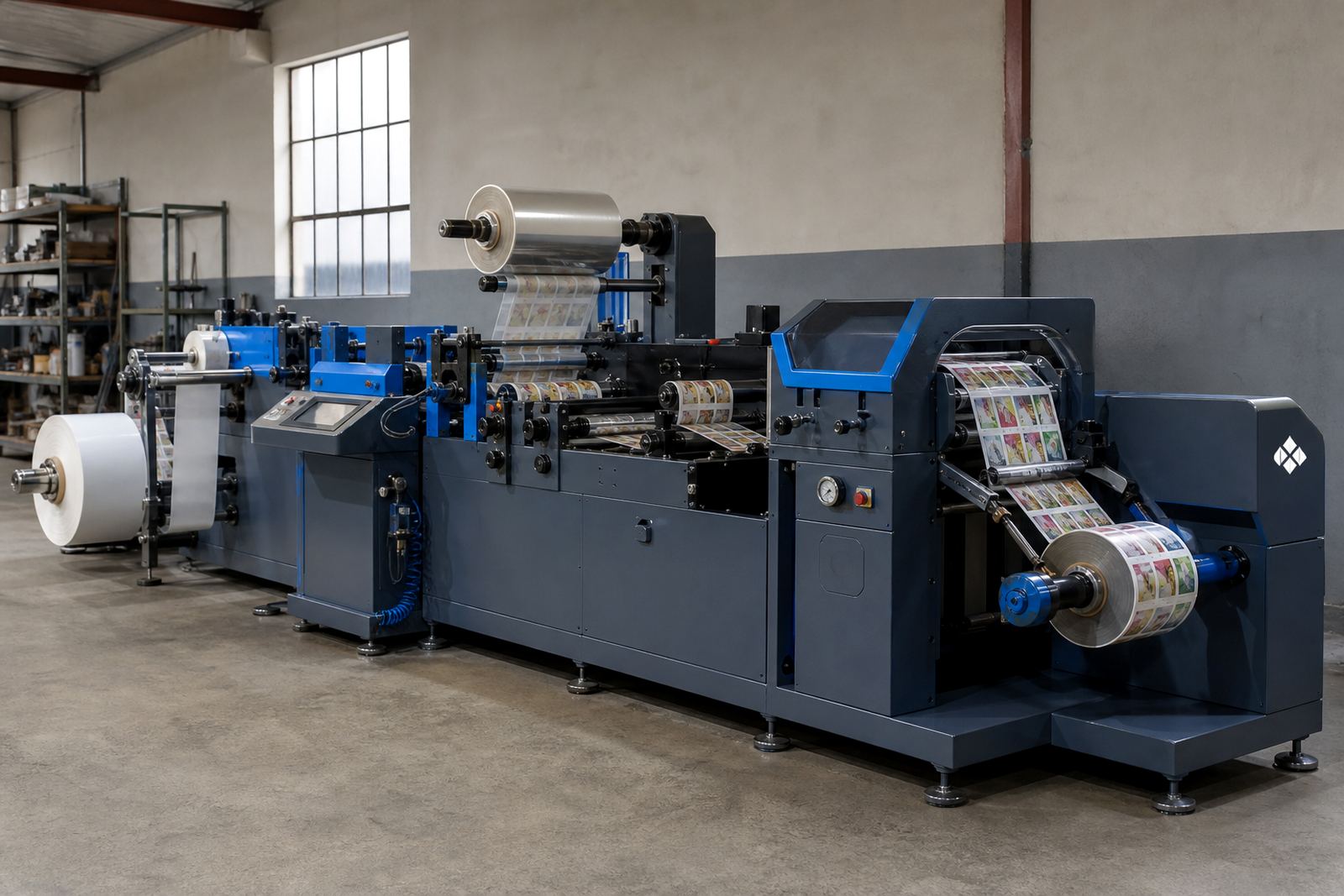
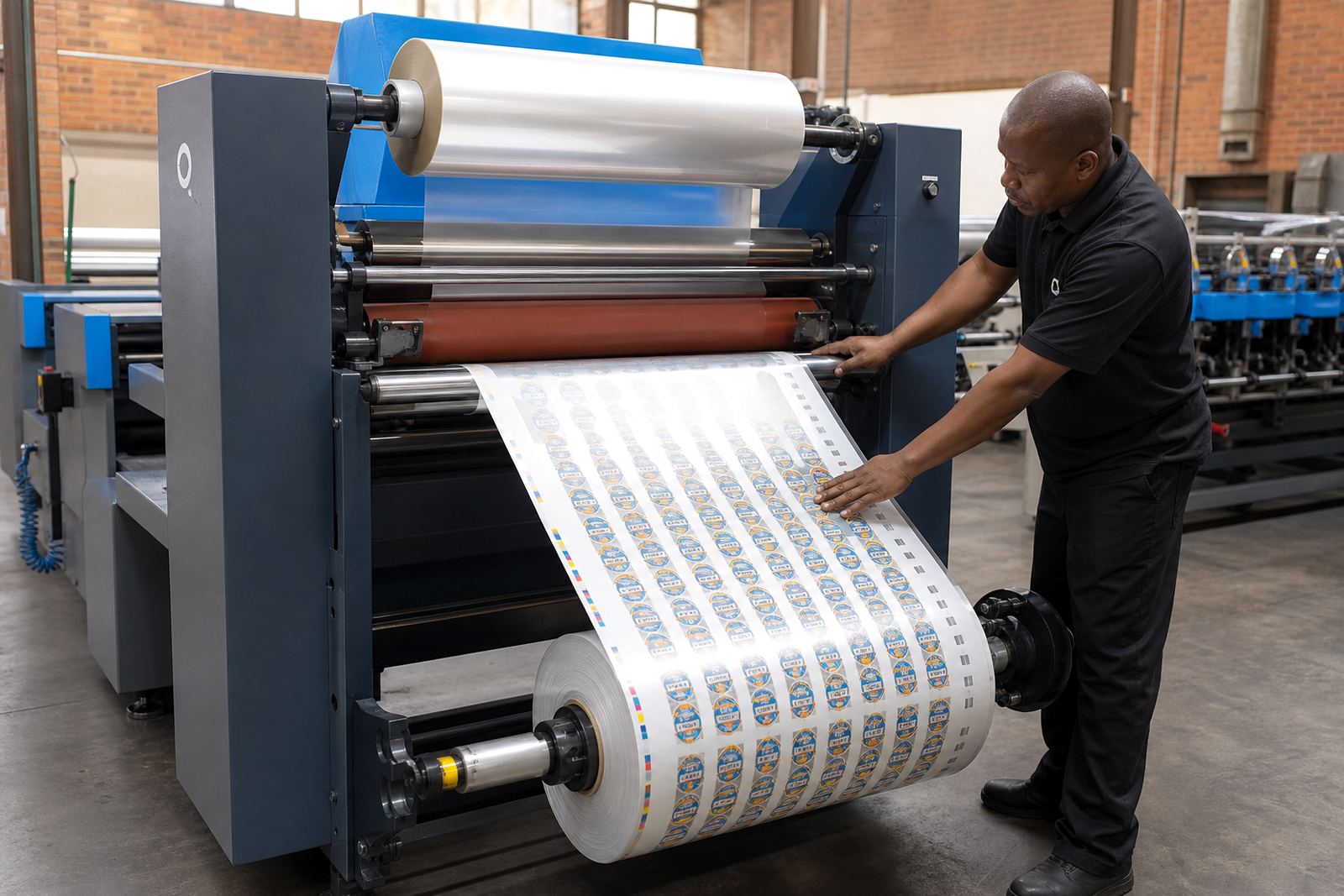
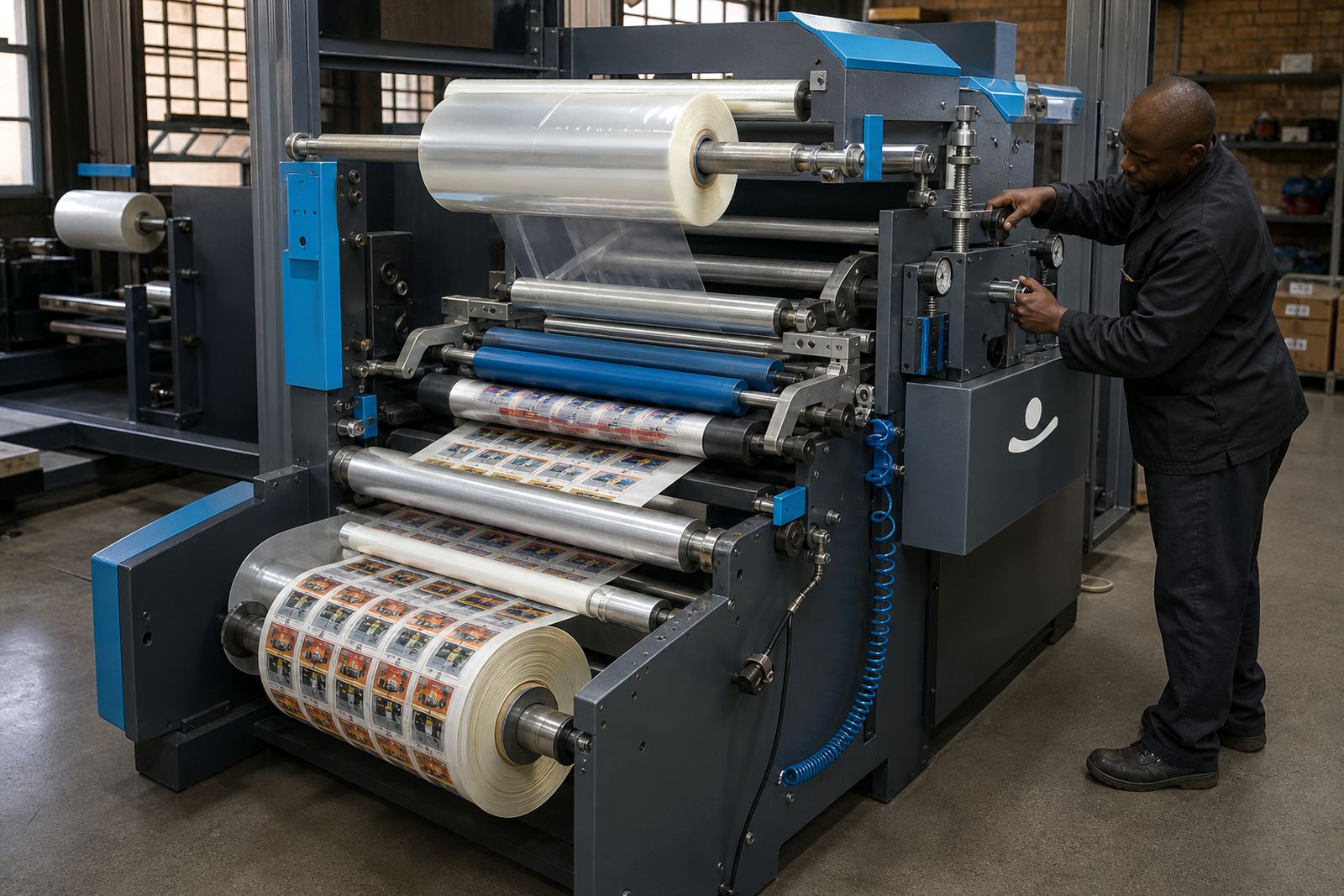
This module lays a clear or specialist film over the printed web and bonds it by pressure rather than heat. On a digital label line, that helps protect varnished or unvarnished labels from rub marks, handling wear and minor moisture exposure while the roll moves through finishing. It also gives a steadier surface for later slitting, matrix stripping and rewinding, which matters when the printed stock carries fine text or dense blocks of colour.
In practical use, the unit sits between print and final converting, or before die-cutting on a line that needs extra surface protection. The nip pressure, web tension and web path all need to stay even, especially on narrow rolls and lighter face stocks that can curl when the laminate is added.
- Works with pressure-sensitive films in clear or matt finishes
- Supports coated paper, filmic labels and many synthetic facestocks
- Helps guard printed graphics during handling and transport
Web widths, roll sizes and finish options
Cold lamination units are matched to the press width and the finished label format, so roll width and core size matter from the start. For label converters working with multiple jobs, the unit needs enough adjustment to handle narrower facestocks without wander, and enough capacity for full production rolls without edge drift. Film thickness, liner type and roll diameter all affect how the web tracks through the nip.
Most lines need the unit to keep registration stable while working with printed marks, especially where the label artwork must line up with a semi-rotary or laser finish later in the line. Where a plant runs mixed jobs, an adjustable unwind and tension control help the laminate stay flat through the run.
- Common web widths are set to the press or finishing line width
- Roll diameter and core size must suit the unwind cradle
- Film can be clear, matt or specialist protective grade
- Web guides and tension control keep narrow labels tracking correctly
Where this unit fits best in South African production
This module suits label printers, packaging producers and trade finishers running pressure-sensitive work for food, personal care, homecare, chemical and industrial labels. It is especially useful where the finished label passes through repeated handling, pallet movement or outer carton packing, because the laminate takes the scuffing before the print does. In humid coastal areas such as Durban and Gqeberha, the added film layer can help a label hold its look during storage and dispatch.
It also fits plants that need a cleaner surface before die-cutting or slitting, because the laminate can reduce loose surface dust and help the roll stay tidier through rewind. For lines that use registration marks, the film path needs careful setting so the printed marks remain readable for downstream cutting.
- Short label runs with frequent artwork changes
- Jobs that need added rub resistance
- Film labels and coated papers that need a neat finish
- Converting lines working with semi-rotary or laser finishing
Installation, fitting and line set-up details
Fitment normally depends on the machine frame, web path and available floor space around the finishing line. The unit must align square to the print web, and the unwind and rewind path should allow smooth loading of laminate rolls and finished label rolls. Where the line uses registration calibration or a camera mark reader, the lamination station must not distort the printed marks or shift the repeat.
Power needs vary by build, but most units in this trade rely on mains supply for drive, controls and web handling. If the line is being installed beside a laminator, slitter or die-cutter, the drive settings and guarding need to be checked as one system, not as separate machines. That is where line commissioning and operator training become part of the job, because the unit has to work with the rest of the finishing path.
- Check frame width, web entry height and rewind clearance
- Confirm the laminate unwind direction and core size
- Set nip pressure to suit the facestock and film
- Match the controls to the rest of the finishing line
Care that keeps the laminate path steady
Good care starts with clean rollers, proper tension and a close eye on adhesive transfer at the nip. Dust, adhesive edge build-up and small web folds can leave marks that show up later on the final roll. If the unit is used daily, the rollers and guide points need routine checking so the laminate stays flat and the web does not wander into the trim zone.
Preventive maintenance also helps the bearings, sensors and drive components stay accurate over long runs. On plants that do matrix stripping and slitting after lamination, the whole path should be checked together, because a minor drift at the laminate station can show up as poor rewind edges at the end of the line.
- Clean rollers and guide surfaces with suitable lint-free cloths
- Watch for adhesive edge build-up and film skew
- Check tension settings after roll changes
- Inspect sensors, bearings and drive points during scheduled servicing
Order details that need to match the job
When a cold lamination unit is specified, the key detail is how it will sit on the line and what stock it must handle. We need the web width, core size, max roll diameter, film type and whether the unit must run as a standalone station or as part of a combined finishing line. Registration mark style, unwind direction and the required rewind direction all affect the final setup.
It also helps to know what print process feeds the unit, whether the job uses varnish under the laminate, and if the final roll will go on to die-cutting, slitting or rewinding. Those details shape the guide setup, nip choice and operator training. For teams working from Kya Sand, Randburg, we support installation, breakdown repairs, spare parts supply and production optimisation across Johannesburg, Pretoria, Durban, Cape Town and Gqeberha.
- Web width and finished roll width
- Core size, max roll diameter and laminate film thickness
- Print method, registration mark style and rewind direction
- Whether the unit feeds die-cutting, slitting or rewind only
Key facts
| Product type | Cold lamination unit for pressure-sensitive label films |
|---|---|
| Typical web width range | Built to suit the finishing line width, with adjustable guides for narrow label webs |
| Material compatibility | Printed paper labels, filmic labels and many synthetic facestocks |
| Function | Adds protective laminate before die-cutting, slitting or rewinding |
| Control points | Web tension, nip pressure, alignment, unwind and rewind tracking |
| Integration | Suitable for inline label finishing, including registration-controlled production |
| Service support | Installation, operator training, preventive maintenance and spare parts supply |