What the semi-rotary station does on a label line
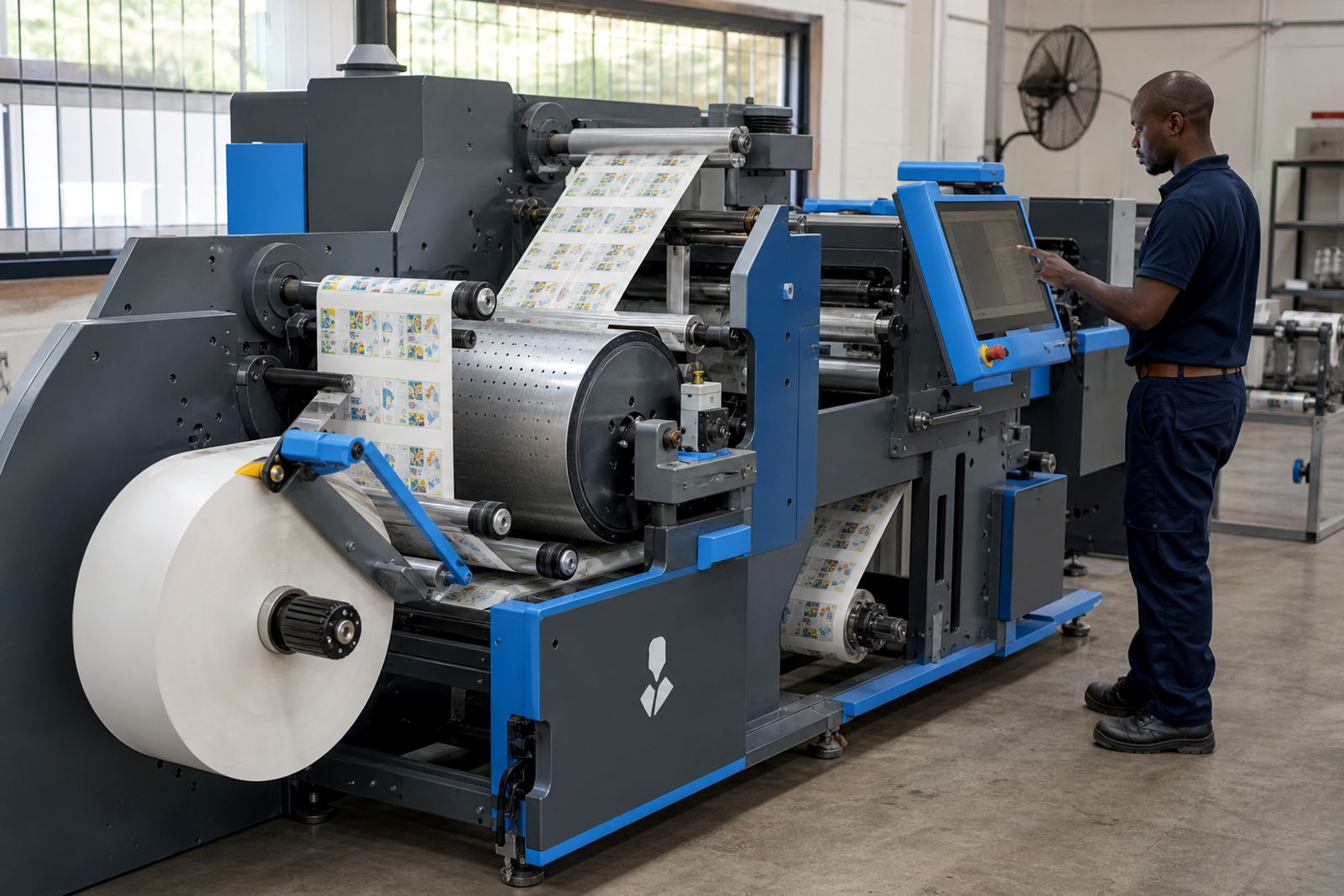
A semi-rotary die cutter works with a flexible die cylinder and registration marks so the cut lands in the right place on each printed repeat. The web advances, the cutting head engages for the cut stroke, then releases while the web moves to the next repeat. That rhythm suits short to medium run label work where artwork changes, substrates vary and tight positioning matters.
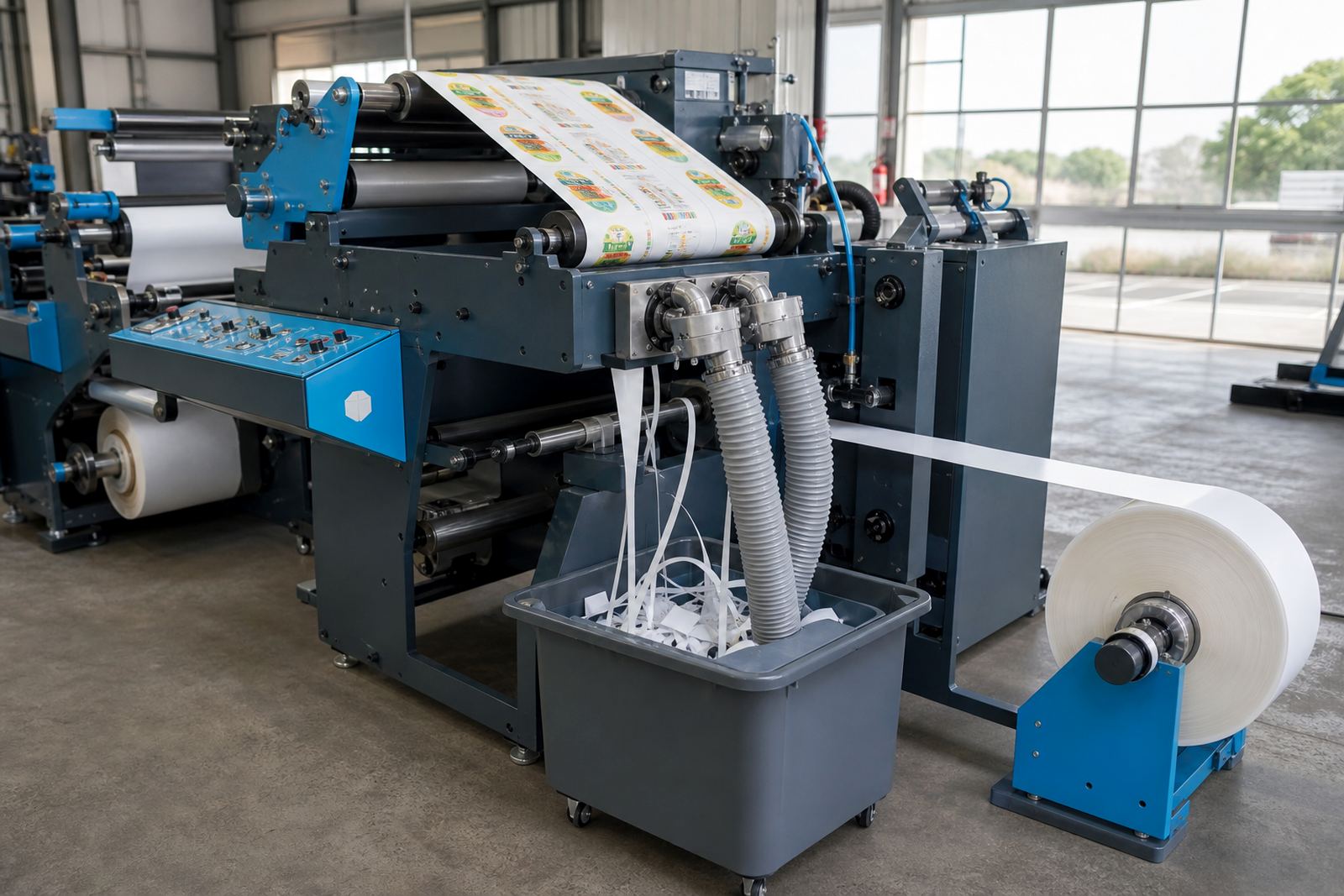
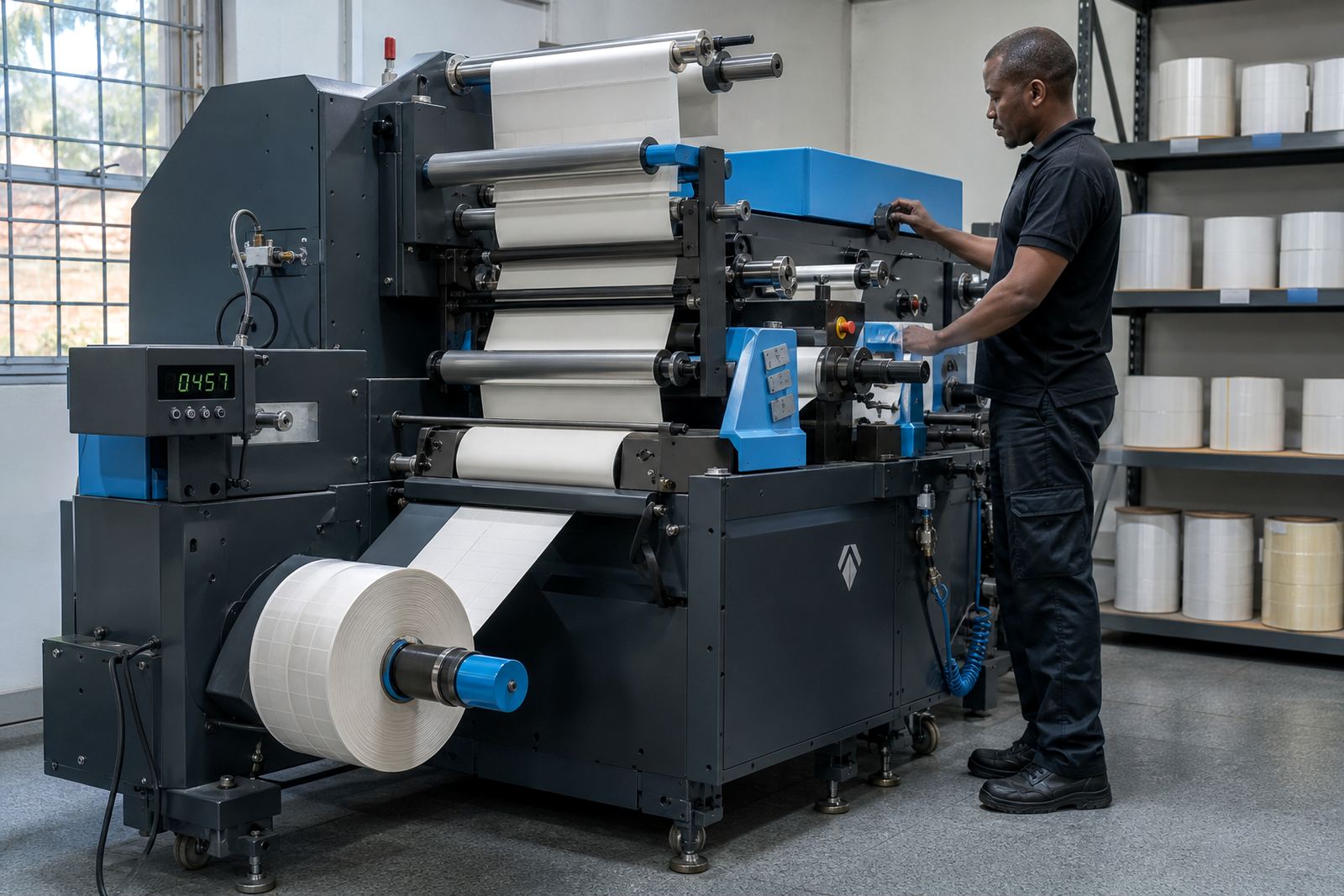
In a converted label line, the unit normally follows print and before final rewinding. It can run kiss-cut label stock, slit lanes, strip waste and deliver wound rolls that are neat enough for packing, dispatch or further converting. On many jobs the aim is clean edge definition without crushing the face stock or tracking adhesive onto the tooling.
For printers handling multiple SKUs, the real value lies in control. Registration sensors watch the printed mark, the die section tracks the repeat, and the operator can hold position across changing lengths more reliably than with a free-running setup. That matters when the label shape, liner thickness or varnish build changes through the week.
Common configurations and working widths
These machines are specified around web width, repeat length, unwind and rewind size, plus the cutting method required by the product mix. Some lines need a compact bench-style unit for smaller rolls, while others call for a heavier frame that carries larger diameter unwind and rewind shafts. The right size depends on the label format, the press output and the amount of waste to strip.
Typical options include servo-controlled registration, interchangeable die stations, matrix stripping, slitting knives, tension control and rewind shafts for one or more lanes. Where the production mix changes often, a machine with quick die change capability and clear access around the web path saves time at setup and during cleaning.
- Web widths commonly range from narrow label stock through broader packaging webs, depending on the frame.
- Repeat control is set from printed registration marks or sensor reading on the web.
- Unwind and rewind sizes should match the roll diameters used in the shop.
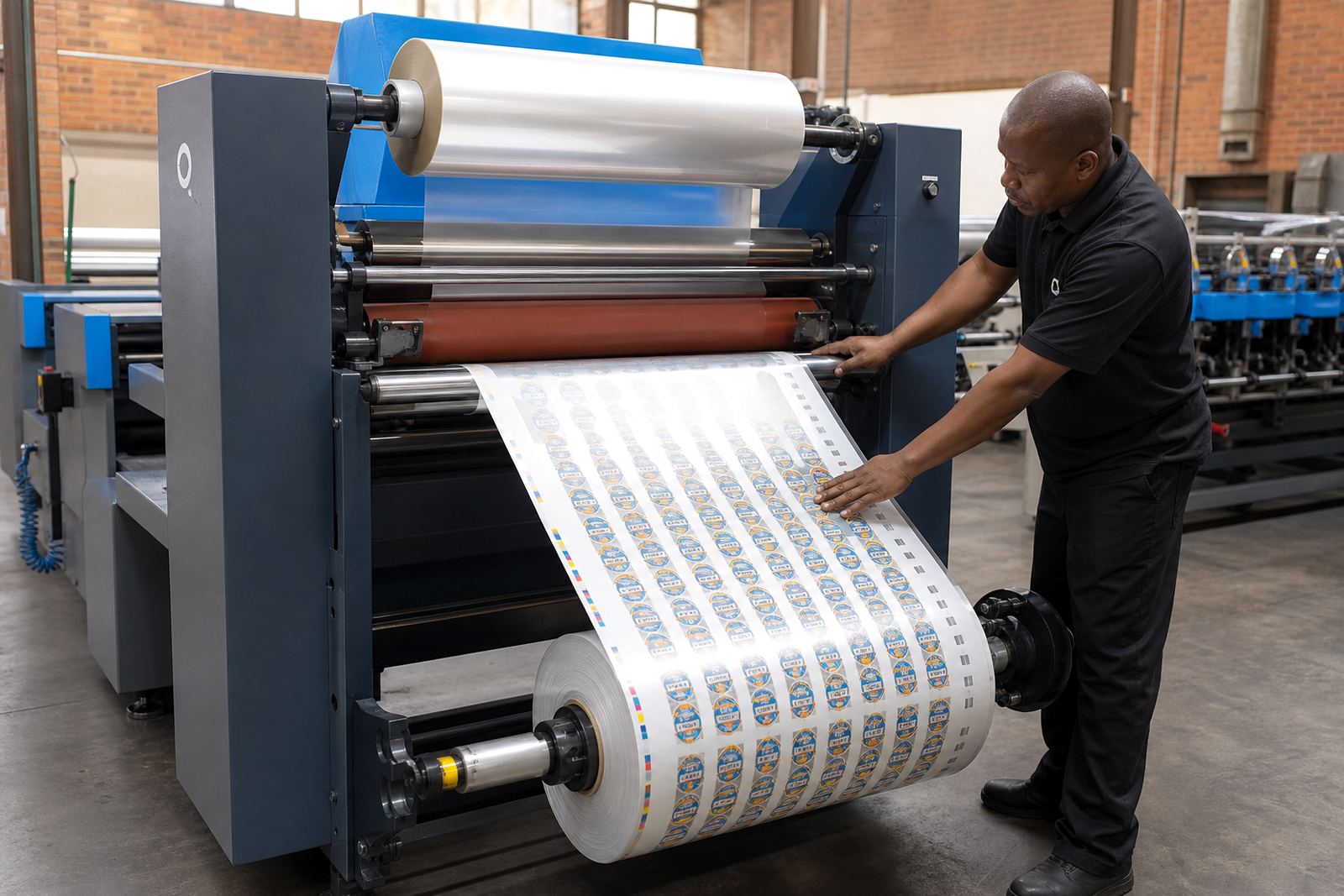
- Some lines add lamination, cold foil, varnish or inspection before the cut station.
- Slitting and rewinding can be used to split wide webs into finished lanes.
Where it fits in South African production
This equipment suits label printers and packaging producers in Johannesburg, Pretoria, Durban, Cape Town and Gqeberha where short runs, versioned artwork and frequent changeovers are common. It is a good match for pressure-sensitive labels, product identifiers, barcode labels, prime labels and packaging components that must hold repeat accuracy across longer shifts.
Plants that print on film, paper or specialist label face stocks often need registration correction because the substrate may stretch or shift after printing, lamination or varnish. A semi-rotary cutter handles that movement better than a fixed mechanical rhythm when the repeat changes from job to job. In a coastal plant, the web path and finished rolls also need attention because humidity can alter handling and curl.
Where matrix stripping and slitting are done in the same pass, the finished rolls leave the machine ready for packing or downstream use. That makes the unit useful for converters who want tighter control over roll formation, especially where each product line needs a clean outer edge and stable rewind tension.
Installation, power and line fitting details
The machine needs to be fitted to the rest of the finishing line with the right web height, infeed alignment and floor space for loading, threading and roll changes. Power supply requirements depend on the configuration, motor drive and control system, so the electrical supply, phase and available isolation should be checked before installation. In a working shop, clear access around the unwind, die section and rewind area helps the operator handle rolls safely.
Installation usually includes mechanical positioning, electrical connection, sensor setup, registration calibration and run testing with your own label stock. Where the machine forms part of a larger line, the tension settings and web path need to match the print output and the laminating section ahead of it. A line that is poorly aligned can start producing edge wander, matrix breaks or uneven rewind build-up.
- Confirm web width, roll OD and core size before delivery.
- Check whether the job mix needs semi-rotary, laser, or both in the finishing room.
- Make sure the control side can read your registration marks clearly.
- Allow space for waste removal, rewound rolls and operator access.
- Plan the electrical feed and isolation point for the installed frame.
Care, wear points and daily operator checks
Good running depends on keeping the web path clean and the die section set correctly. Adhesive build-up, dust from paper stock and stray liner fibres can affect cut quality, so the station should be cleaned regularly and checked after heavy runs. Flexible dies must be handled carefully, and the cutting surface should be inspected for wear, burrs or damage that affects cut depth.
The main checks are tension, registration, die pressure, slit alignment and rewind build. If the matrix is not stripping cleanly, the operator should inspect the waste path, the pull angle and the nip settings. On laminated jobs, the finished roll should be watched for edge lift or telescoping, because both can point to tension imbalance or poor rewind setup.
Preventive maintenance normally covers bearings, guides, shafts, sensors and drive components, together with wear parts linked to the specific machine format. On a busy line, a small fault at the die station can spread into waste loss, missed marks and extra handling, so regular servicing is worth more than waiting for a stoppage.
What to confirm before ordering this unit
Before a semi-rotary die cutter is specified, the buyer should confirm the label size range, the widest web, the longest repeat, the substrate types and the level of finishing required in one pass. That information shapes the frame size, the control package and the cutting method. It also helps determine whether the line should carry matrix stripping, slitting, rewinding, inspection or additional finishing modules.
The same order discussion should cover roll diameters, core sizes, registration mark style, artwork tolerance and the amount of operator intervention allowed in the room. If the job mix includes narrow roll labels and wider packaging webs, the machine must be set up for the more demanding side of the range. A shop that runs many small batches may need easier changeover and clearer sensor access than a line built for long repeats.
- Label width and repeat length.
- Substrate type, face stock and liner construction.
- Unwind and rewind roll size, plus core diameter.
- Need for lamination, varnish, slitting or waste stripping.
- Registration mark format and print contrast.
- Power supply details and floor space at the finishing line.
Key facts
| Product type | Semi-rotary die-cutting finishing unit for labels |
|---|---|
| Cutting method | Flexible die cylinder with registration-controlled semi-rotary action |
| Typical functions | Die-cutting, matrix stripping, slitting, rewinding, registration calibration |
| Job fit | Short to medium label runs with changing repeats and artwork versions |
| Media range | Pressure-sensitive labels on paper, film and other converter stocks |
| Service support | Installation, operator training, servicing, parts and line setup |