What the flexible die station does on the line
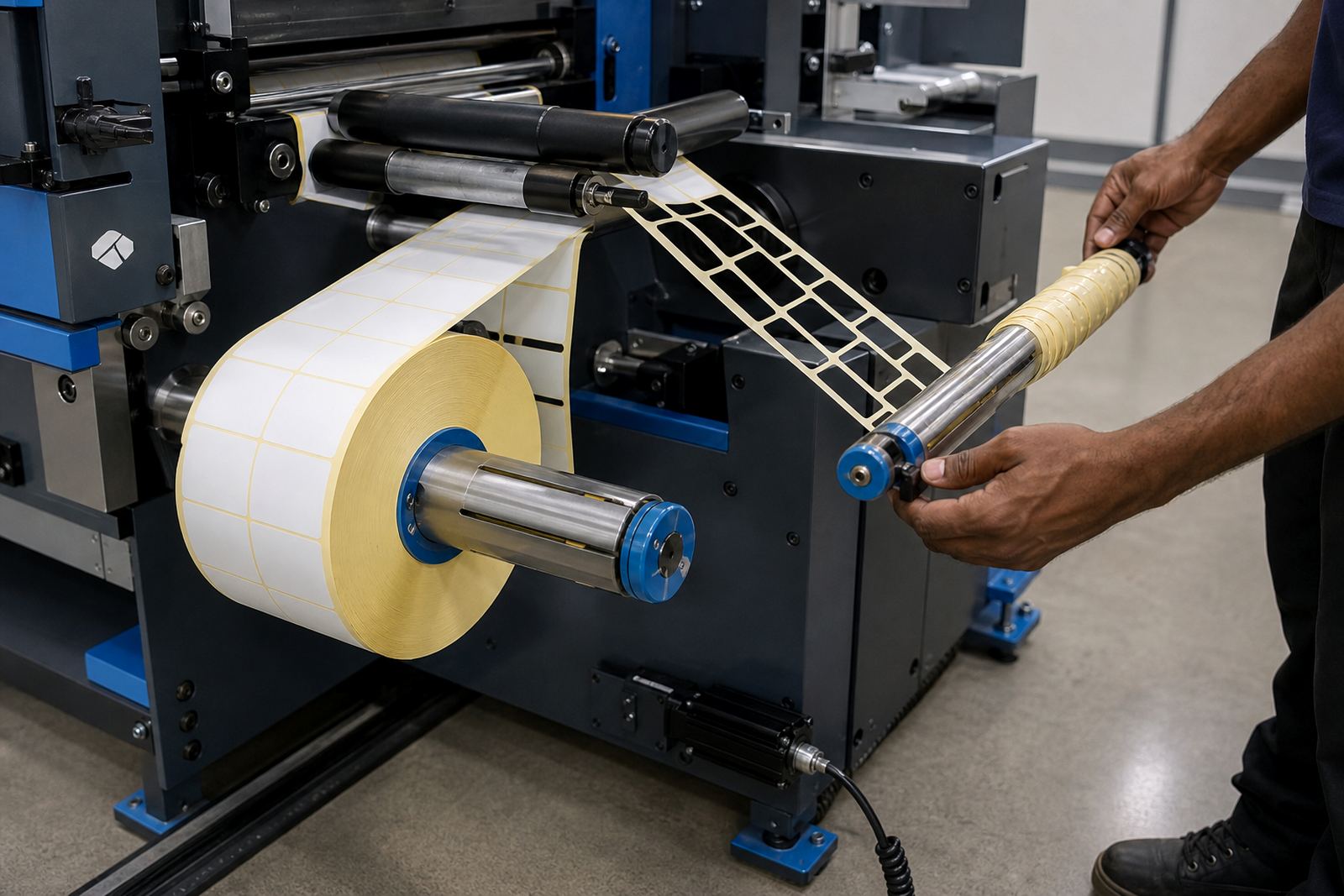
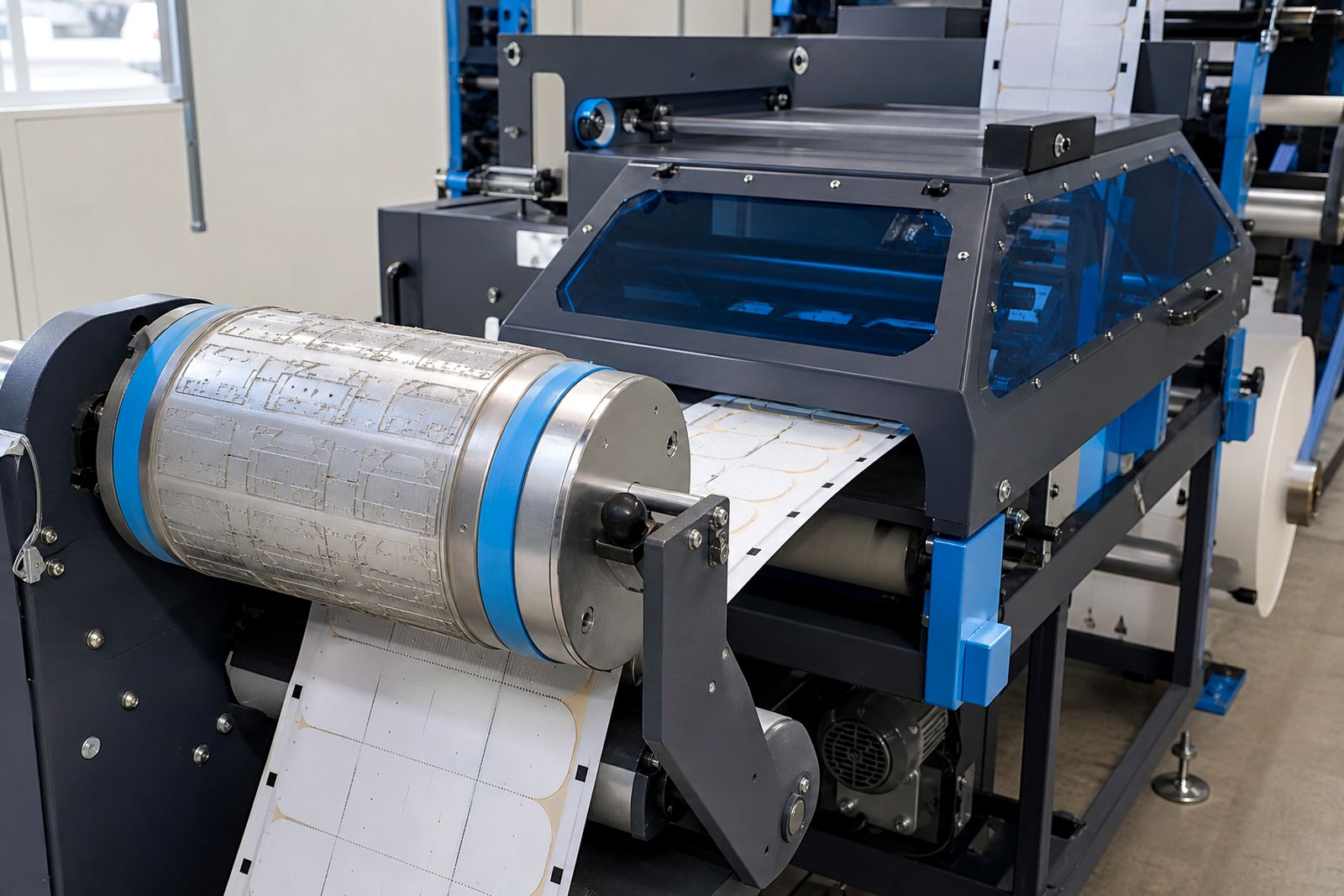
This unit takes printed roll stock and brings the cut into line with the print image by using a flexible die cylinder or sleeve system. On a typical label line it sits after print, after varnish or after lamination, and it handles kiss-cut or full-cut work depending on the die build and the substrate.
For short and medium runs, the main value is consistency. Registration marks are used to keep the cut matched to the printed image, while matrix stripping, slitting and rewind control keep the web tidy for finishing or packing. Where artwork changes often, a quick die swap saves a great deal of handling between jobs.
- Cutting can be set for pressure-sensitive labels, cartons, sleeves or tags, depending on web build.
- Flexible dies suit repeat jobs where the same outline is needed across many rolls.
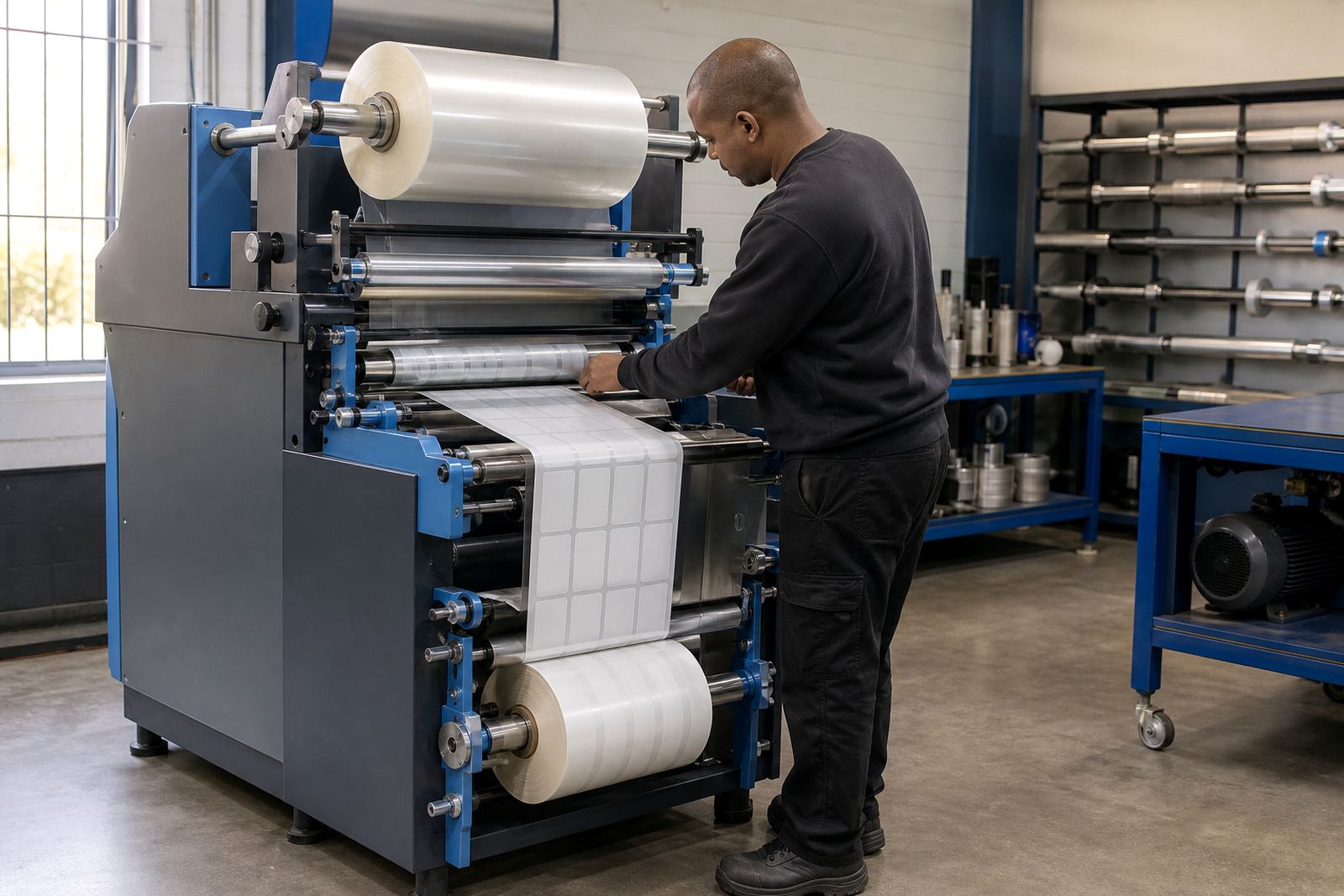
- The station can work with lamination layers, varnished stock and printed carrier webs.
Sizes, web widths and build choices
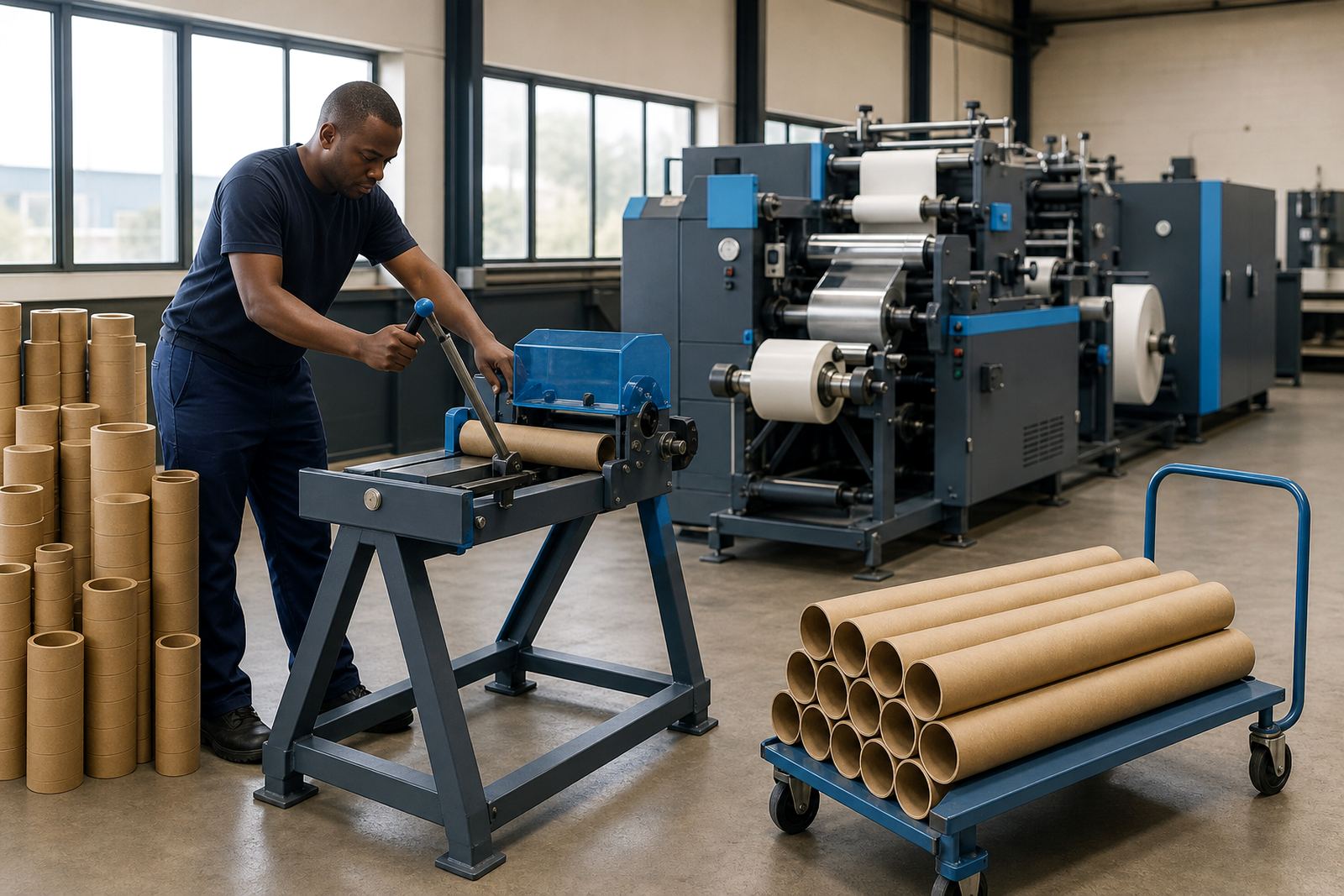
Flexible die units are selected around the web width, repeat length and the roll formats that leave your press or rewinder. In label production, the machine has to match the real stock path, not just the artwork size, so roll diameter, core size and the tension needed for the material all matter.
Typical options include a narrow-web build for label work, wider stations for packaging converters and different unwind and rewind capacities. Some setups use a single die station with slitting knives and rewind shafts built into the same frame. Others add extra finishing heads where the web needs more than one operation in a single pass.
- Web widths commonly range from narrow label sizes to wider packaging webs.
- Repeat length must suit the die cylinder or flexible die format selected.
- Core size, roll diameter and unwind weight affect the frame choice.
- Line speed has to match the die pressure control and waste removal path.
Where it suits South African production
In Johannesburg and Randburg, the unit suits converters handling varied label work for food, chemical, personal care and logistics packs. In Durban and Cape Town, coastal humidity makes web control, adhesive behaviour and clean rewind more noticeable, especially on lighter facestocks or films that pick up static and curl.
Packaging producers in Pretoria, Gqeberha and Midrand often use flexible die stations when a press room must move between jobs with different outlines, slits and finishing needs. It is also a sound fit for teams that want one line to do lamination, die-cutting, matrix stripping and rewinding without shifting reels between machines.
- Best for short-run and mixed-artwork label work.
- Useful where frequent die changes are part of the day.
- Suitable for converters that need slitting and rewind in line.
- Works well where registration marks must be held tight on repeat jobs.
Installation, alignment and operator handover
Fitting a flexible die unit is not only about bolting the frame into place. The unwind path, nip pressure, dancer settings and rewind tension all need to be matched to the stock you run most often. If the line includes lamination or varnish, those modules must leave enough stability for the die station to hold register without web wander.
Our installation work covers machine placement, line commissioning, registration calibration and setup for slitting, rewind and waste strip handling. We also train operators on die mounting, pressure checks, web threading and daily cleaning around the waste path. For sites in Kya Sand, Kempton Park or farther afield, the practical goal is the same: clean cut edges and a roll that is ready for packing or the next process.
- Check the floor space and reel access before fitting.
- Confirm whether the station sits inline or as a separate converting unit.
- Review power supply, control cabinet position and air needs where applicable.
- Allow room for waste removal and safe die change access.
Care that keeps the cut clean
Flexible die tooling lasts longer when the station is kept clean and the pressure settings are not driven harder than needed. Dust, adhesive build-up and bits of stripped matrix can affect the edge, while a poor rewind setting can pull the web off line and distort the cut. Small checks during the shift help more than a long fix at the end of the week.
Preventive maintenance usually focuses on bearings, drive belts, knife condition, guide rollers, sensors and the waste path. If the machine is used on coated or laminated stock, it pays to inspect the surface more often because small marks show up fast on finished labels. Service visits can also include die setup help and production optimisation when the same job needs a cleaner edge or less waste break-up.
- Keep the die and cylinder faces free of adhesive and dust.
- Inspect web guides and tension points before long runs.
- Replace worn slitting blades before they start pulling fibres.
- Check registration marks and sensor alignment after artwork changes.
The order details that matter before supply
To specify the right flexible die unit, the important details are the print width, maximum repeat, stock types and the finishing steps you want in the same pass. We also need to know whether the line will handle laser-cut work, semi-rotary die-cutting or flexible dies only, because that changes the station build and control setup.
When a quote is being prepared, it helps to confirm the widest and narrowest rolls, the core size, unwind and rewind diameters, web tension range and any slitting pattern needed. If you use registration marks, note the sensor style and the artwork repeat. That gives a proper basis for the machine layout, fitting work and training at the Kya Sand shop or on site elsewhere in South Africa.
- Print width and repeat length.
- Substrate type, adhesive build and liner thickness.
- Required cut style, including kiss-cut or through-cut.
- Unwind, rewind and slitting requirements.
- Any lamination, varnish or matrix stripping steps in line.
Key facts
| Cutting method | Flexible die cylinder or sleeve station for repeatable roll finishing |
|---|---|
| Max web width | Built to suit narrow-web label lines and wider converting formats |
| Typical functions | Die-cutting, matrix stripping, slitting, rewind and register control |
| Compatible stock | Pressure-sensitive labels, laminated webs, varnished stock and film-based labels |
| Control features | Registration mark sensing, pressure adjustment and web tension control |
| Support offered | Installation, commissioning, operator training, maintenance and spare parts |