Lamination and conversion in one working path
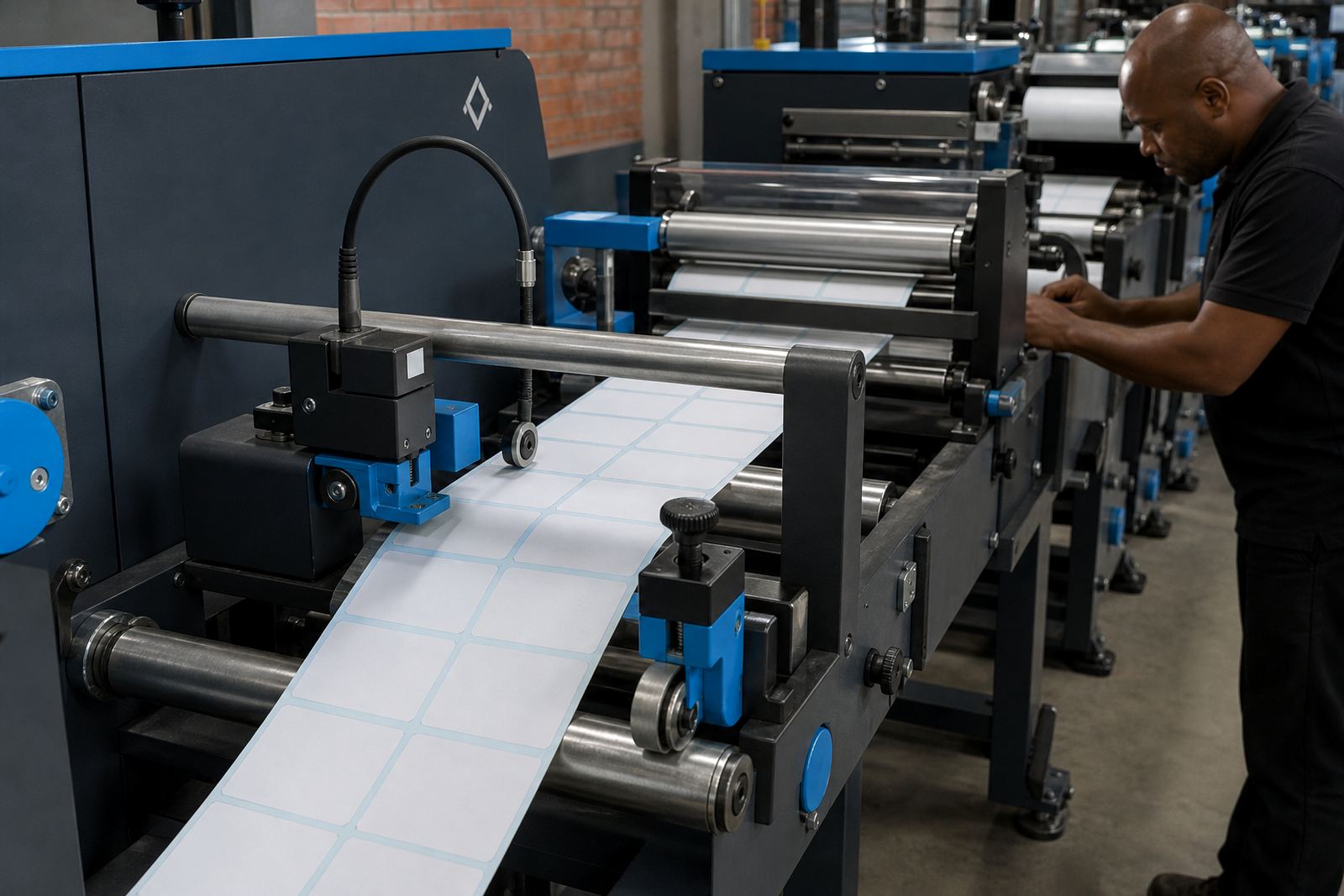
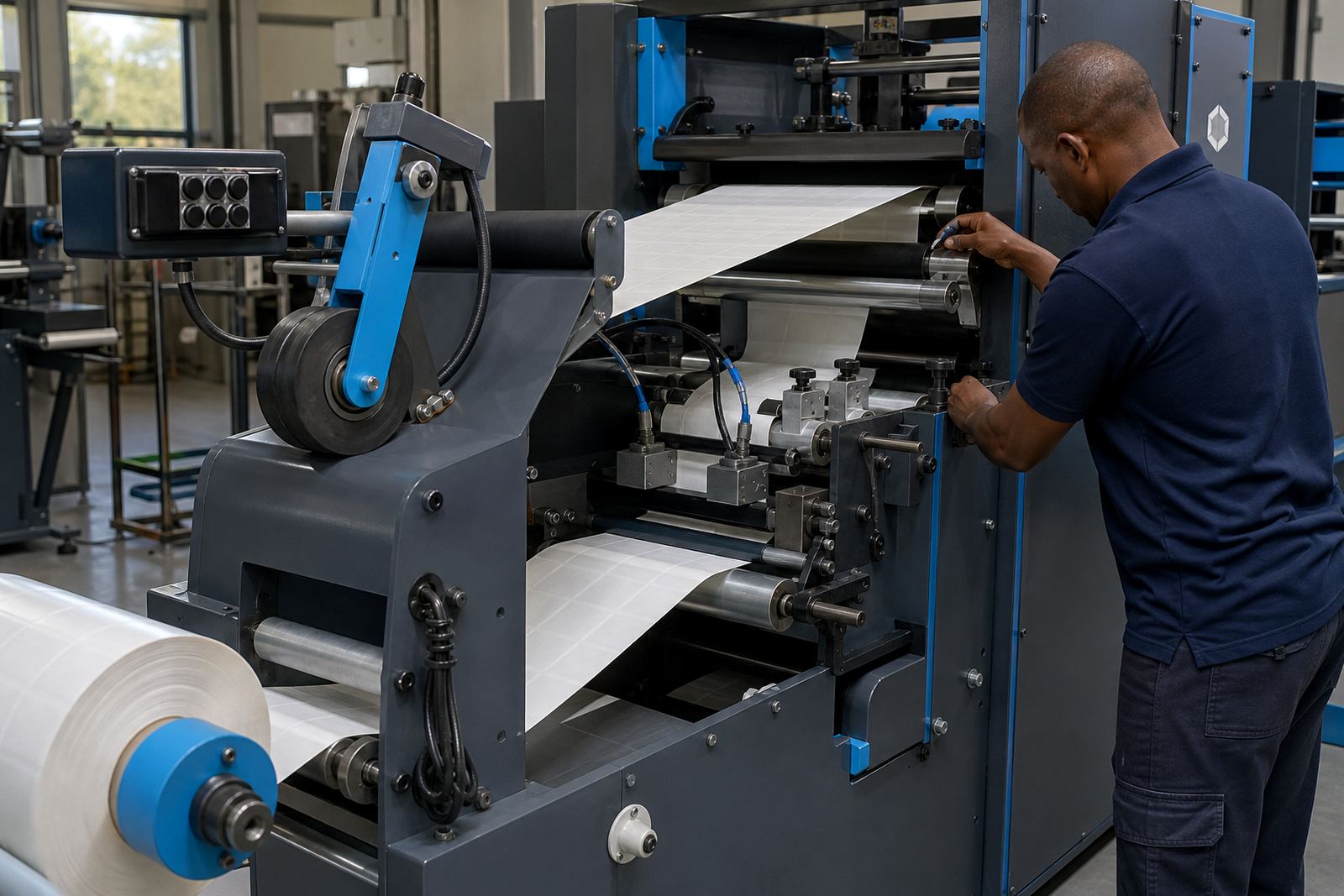
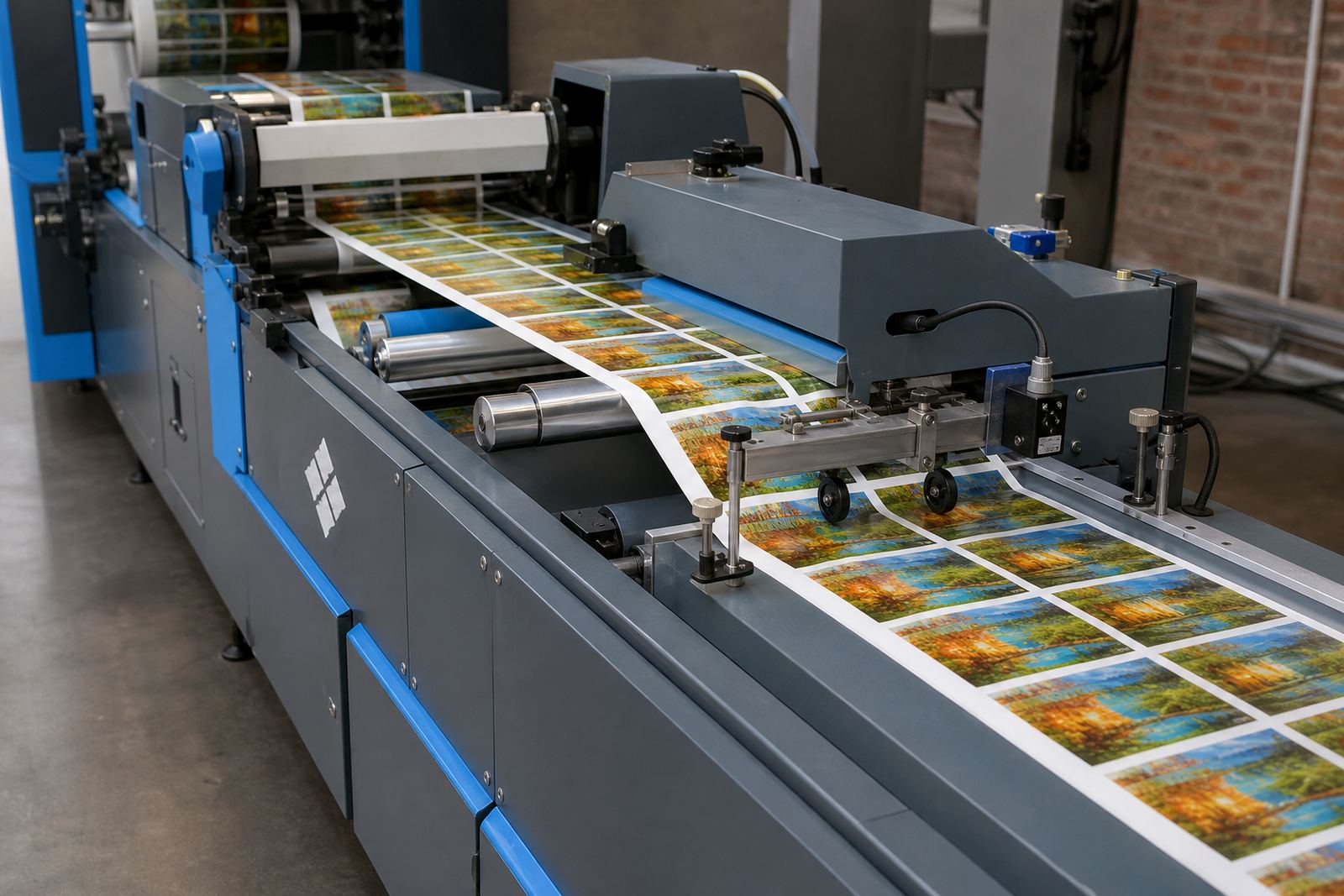
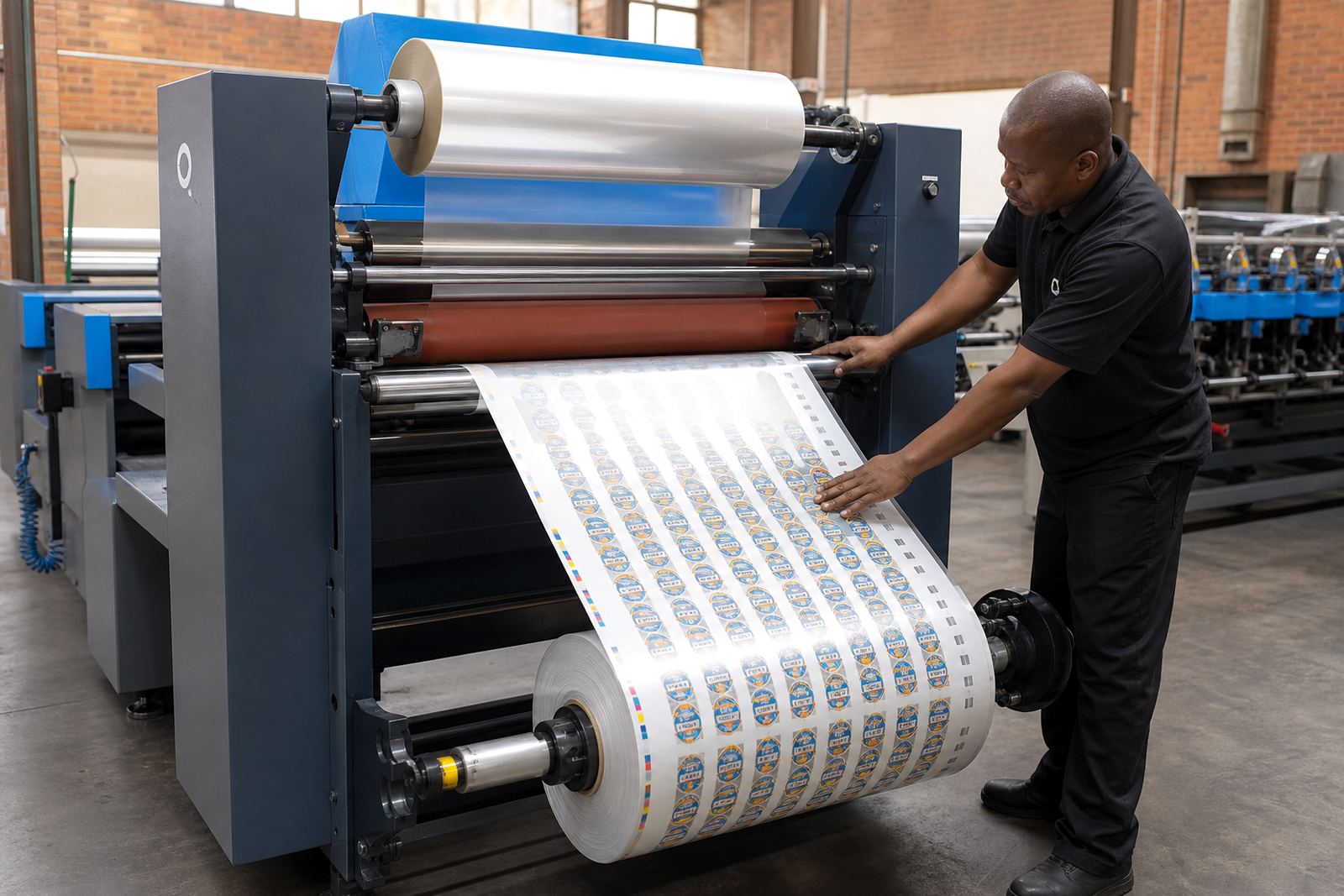
This setup brings the web through a laminating section first, then into the cutting and finishing path without extra handling between stages. Printed labels stay in register while the top film, varnish or protective layer is added before the label shape is defined, waste matrix is removed, and the finished roll is rewound for the next process.
It is used where labels must look sharp, handle scuffing better, or survive moisture, oils and warehouse movement. On coated papers, synthetics and clear films, the operator can set pressure, web tension and cutting depth so the stock stays flat and the cut edge stays consistent.
- Supports clear, paper and synthetic label webs
- Works with registration marks for accurate cut position
- Handles lamination before die cutting or knife cutting
- Can include matrix stripping, slitting and rewind in line
Roll sizes, web widths and finishing options
These systems are usually specified around the label width, roll diameter and the output format needed by the print room. Narrow labels for personal care, food packs and chemical labels need different web control from wider industrial formats, so the unwind, laminating nip and rewind must match the stock properly.
Common options include semi rotary die cutting, laser cutting, flexible dies, slitting knives and rewind shafts for finished rolls. Some line builds add varnish before lamination when the print requires a harder surface, while others use film lamination only on labels that need extra protection.
- Web widths generally range from narrow benchtop runs to wider converter rolls
- Roll diameter and core size should match your printer output
- Flexible dies suit repeat label shapes and longer production runs
- Laser cutting suits variable artwork and short changeover work
Where Laminate And Cut earns its place
The format suits label printers, packaging producers, converters and finishing rooms that handle changing artwork through the week. It is often used for premium product labels, care labels, tamper evident labels, bottles, pouches and shelf-ready packs where a neat edge and a tougher face are part of the brief.
Because lamination and cutting sit together, the operator spends less time moving rolls between machines. That helps when jobs change often, and it also keeps registration marks under control when the print has small text, barcode areas or close tolerance shapes.
- Useful for short and medium production runs
- Fits label shops working with mixed substrates
- Helps when the same roll needs surface protection and finishing
- Works well where clean matrix removal matters to pack presentation
Installation, alignment and line setup on site
Our team installs the machine to suit the print room layout, the unwind direction and the finished roll handling method. Line commissioning covers web path alignment, tension setup, registration calibration and test running with your actual label stock, so the laminate sits flat and the cut follows the printed image.
Power supply, compressed air requirements and floor space depend on the machine build, and these details need to be matched before fitting starts. If the line includes a separate laminating unit, rewind station or slitting section, the spacing between modules must allow safe access for loading, blade changes and routine inspection.
- Check available floor space and service access around the unit
- Confirm power requirements for the chosen machine format
- Allow for core handling, roll lifting and waste removal
- Plan the position of finished rolls, spare cores and knives
Care, cleaning and day to day attention
Good upkeep starts with keeping adhesive dust, trimmed liner and label chaff away from rollers, guides and knife paths. Lamination rollers need regular inspection for build-up, and the cutting section must stay clean so the web tracks properly and the cut line does not wander.
Blunt knives, loose tension settings and worn bearings all show up fast in label finishing, especially on thin films and sticky stocks. Preventive maintenance, operator checks and correct setup help keep waste down and stop small faults from turning into a longer repair on the line.
- Clean rollers, guides and the matrix stripping path often
- Check blades, bearings and tension points during routine service
- Keep spare knives, cores and approved consumables on hand
- Train operators to spot misregistration and web drift early
What to confirm before the machine is specified
To size the right Laminate And Cut setup, the finishing room needs the label width, roll diameter, substrate type and output target. It also helps to know whether the run needs semi rotary die cutting, flexible die tooling, laser cutting, slitting, varnish, matrix stripping or all of those in one line.
Our applications team can work through the print format, registration mark style and rewind direction before installation. That allows the machine to be set for the actual production mix, not only for a sample roll on the bench, which matters when you are running several label types through the same shift.
- Label width, repeat length and finished roll diameter
- Substrate type, adhesive behaviour and whether film lamination is needed
- Cutting method required, including laser or semi rotary options
- Any slitting, rewind or matrix stripping detail that must be built in
Key facts
| Process flow | Unwind, lamination, cutting, waste stripping, slitting and rewind |
|---|---|
| Cutting options | Laser cutting, semi rotary die cutting or flexible die tooling |
| Web materials | Paper, clear film and synthetic label stocks |
| Control features | Registration mark reading, tension control and web alignment |
| Output formats | Finished rolls, slit rolls or rewound parent rolls |
| Typical line use | Label printing, packaging conversion and finishing rooms |