What the compact finishing line does on press
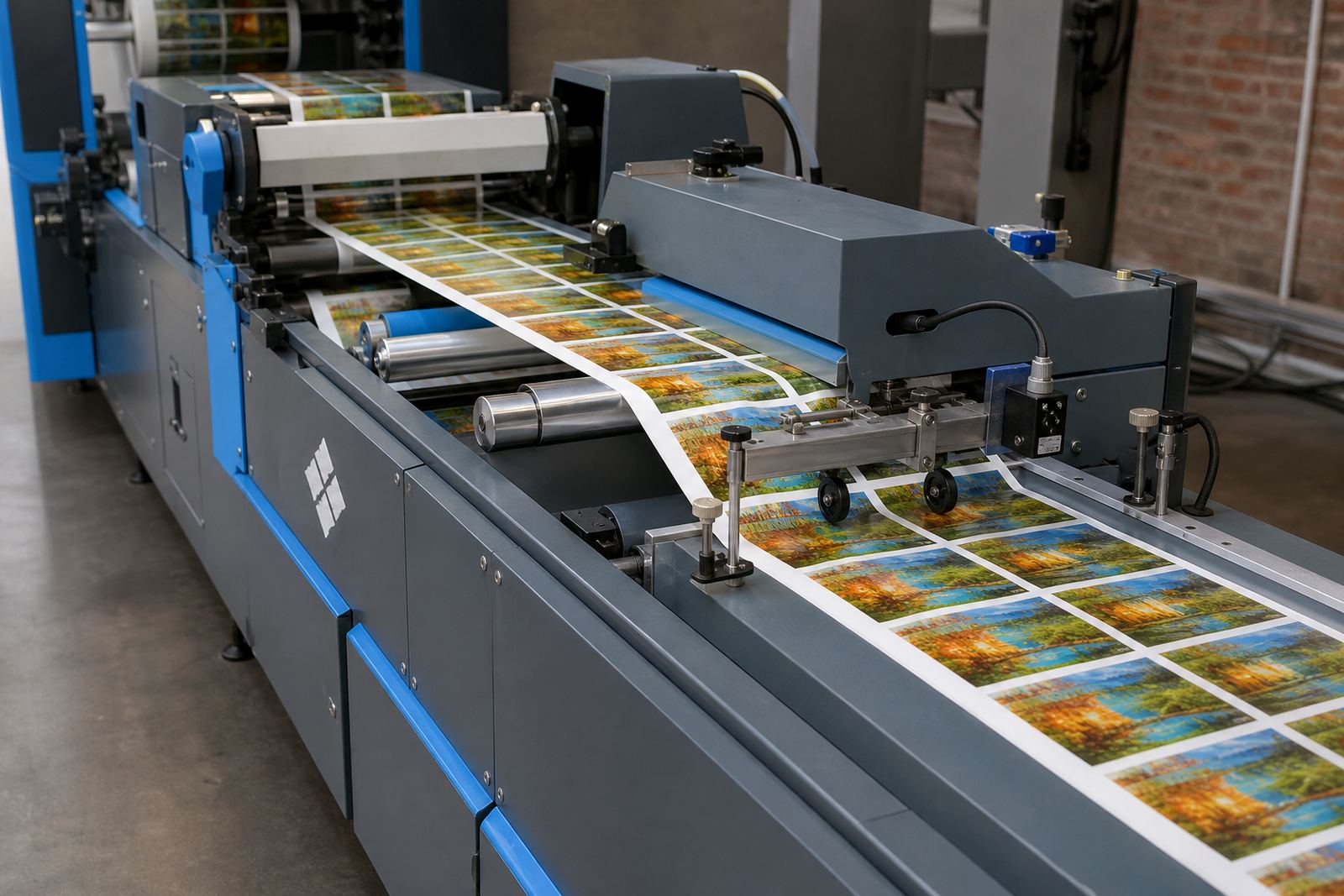
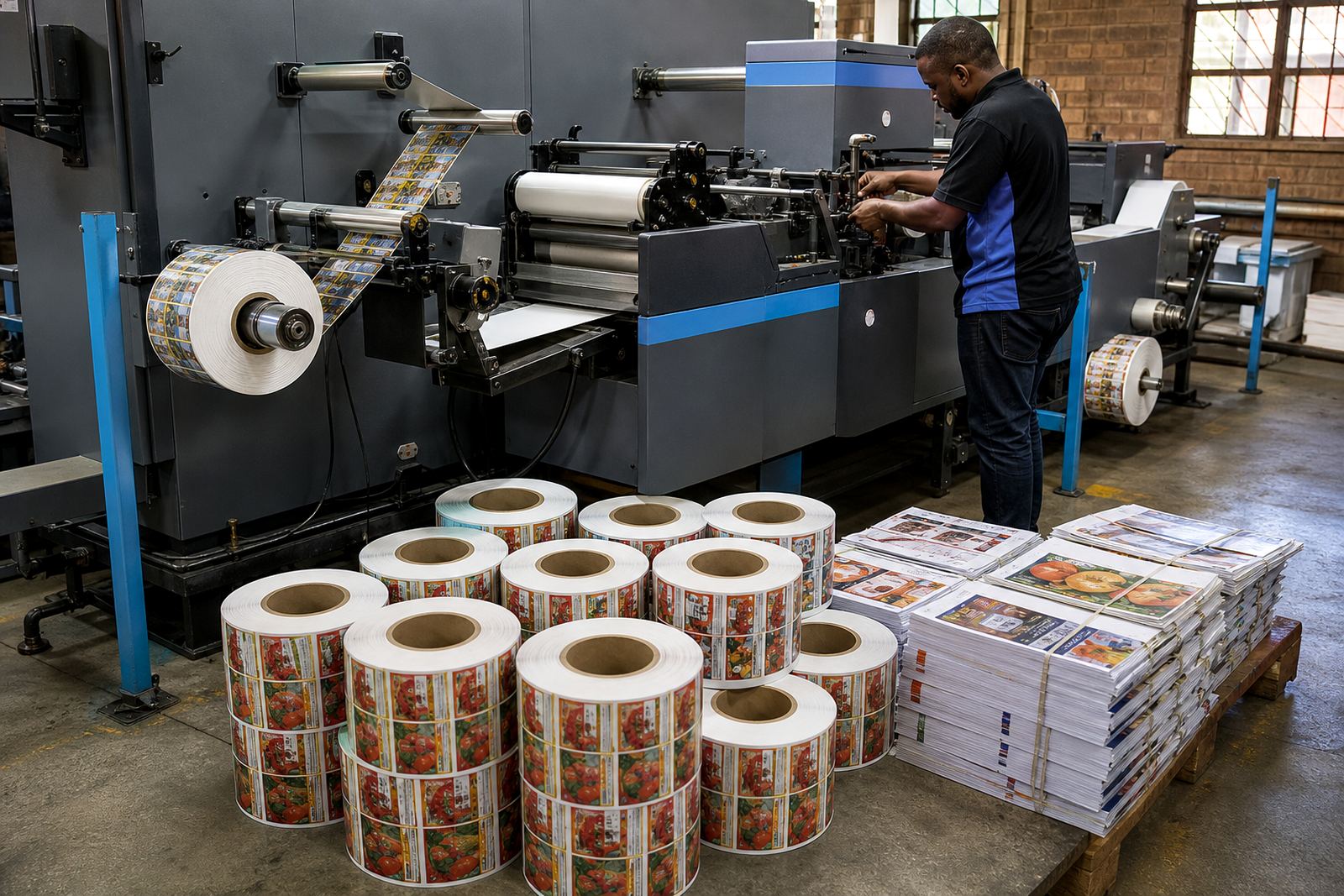
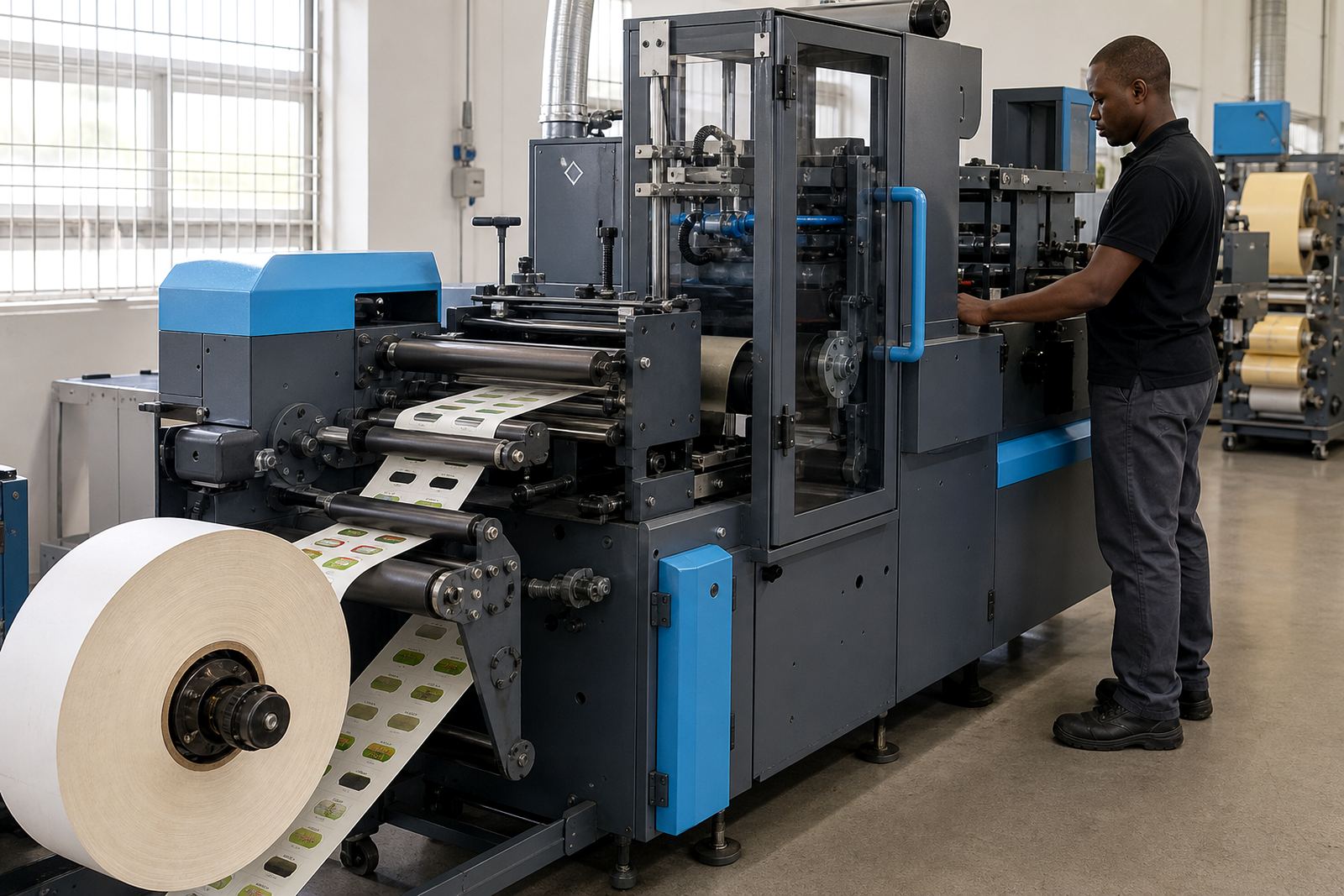
This line combines unwind control, web guiding, lamination, die-cutting, matrix stripping, slitting and rewinding in one working path. It is used where a label printer needs to move from printed roll to finished roll without sending material between separate machines and tables.
The layout is planned for narrower production spaces, but the work still follows proper converting logic. Registration marks stay visible to the cutting section, waste matrix is separated cleanly, and the finished rolls leave the line in a format that can go straight to packing, labelling or further inspection.
- Works with printed rolls carrying registration marks for accurate cut placement.
- Supports pressure-sensitive label stock, face stock and laminated print runs.
- Can be arranged for laser cutting or semi-rotary die-cutting, depending on the label mix.
- Handles matrix stripping and rewinding in the same continuous path.
Footprint, roll widths and finishing options
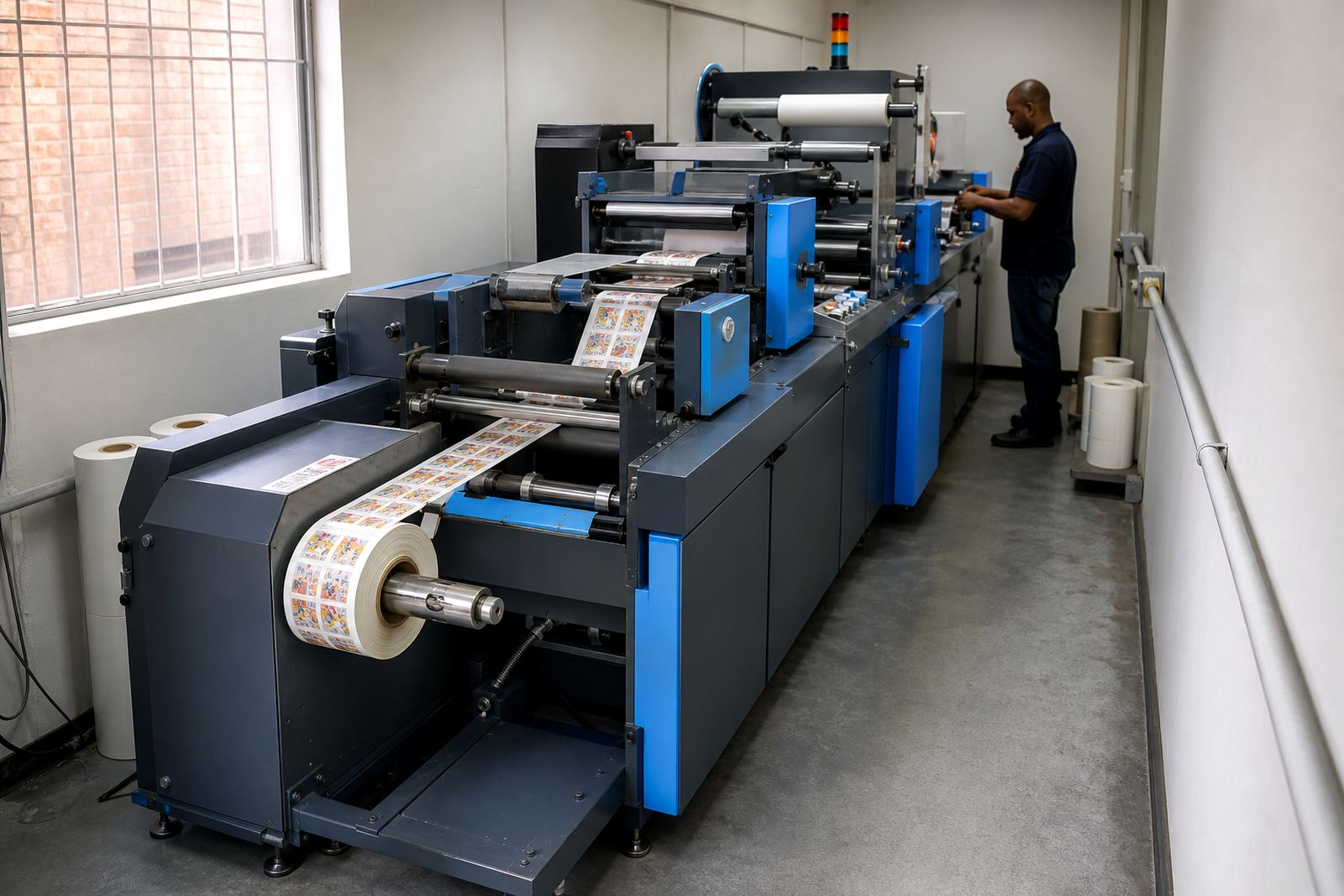
Compact does not mean limited to one narrow job. The machine layout can be set up for different web widths, unwind diameters and rewind requirements, depending on the label format and the floor space available. In smaller rooms the loading side, operator side and waste path need to be planned carefully so the roll flow stays easy to manage.
Typical options include adjustable unwind stands, lamination stations, slitting knives, web inspection points and either flexible dies or laser cutting modules. Some floors want a lighter unit for short digital runs, while others need a heavier frame for higher tension control and firmer rewind formation. If the product mix includes varnish or film lamination, that needs to be built into the line sequence from the start.
- Web widths can be matched to narrow labels or wider packaging rolls.
- Rewind sections may be fitted for single-roll or dual-roll output.
- Slitting can be fixed or adjustable, depending on the format range.
- Lamination, varnish and die-cut modules may be combined in one pass.
Where this line fits best in South African production
This format suits label printers working from a tighter shop floor in places like Kya Sand, Randburg, Midrand, Pretoria East, Montague Gardens or industrial pockets around Durban and Gqeberha. It also works well for packaging producers that need short to medium runs with consistent roll presentation and less handling between print and dispatch.
It is often chosen where a business has growing digital print volumes but not enough room for a full large-format converting cell. Smaller teams benefit from having the core finishing steps in one line, especially when the job mix changes through the week and roll sizes vary between customer orders.
- Good for label converters working with frequent artwork changes.
- Fits floors where aisle space and material staging are tight.
- Useful for packaging teams that finish labels in-house.
- Suitable for runs that need better roll control after digital printing.
Installation, commissioning and operator setup
Installation starts with the floor plan, access route and power position. The machine needs to sit level, with enough clearance for roll loading, waste removal and operator movement around the front and side panels. Where the line includes a laser module or heavier rewind drive, the electrical supply and ventilation points must be checked before final positioning.
Commissioning covers web threading, registration calibration, slitting alignment and waste path setup. Operator training then covers changeovers, tension control, fault spotting and the correct sequence for bringing the web through lamination, cutting and rewind. If the line is being fitted into an existing label room, the earlier print direction and roll handling pattern matter, because even a small offset can affect trim quality and registration consistency.
- Electrical supply and breaker capacity are checked against the chosen machine set.
- Floor levelling matters for clean rewind and stable web tracking.
- Registration marks must be clear enough for the chosen cutting method.
- Operator training should cover setup, cleaning and safe fault recovery.
Care, servicing and keeping output steady
A compact finishing line needs regular cleaning because paper dust, adhesive residue and trim waste can build up around the knife area, rewind shafts and guide rollers. In humid coastal conditions, film handling and label stock storage also need attention so the web does not curl or slip during finishing. The machine should be checked for wear on blades, bearings, belts, sensors and guide surfaces before small issues become poor cut quality.
Preventive maintenance normally includes lubrication where required, sensor cleaning, alignment checks and inspection of the lamination path. If the machine is used heavily for mixed label stocks, the slit setting and die condition need to be watched closely. Breakdowns are easier to control when the service team has the machine history, the job format and the fault symptoms recorded clearly.
- Clean adhesive build-up from rollers and cutting areas regularly.
- Keep slitting knives and cutting tools in good working condition.
- Store label stock flat and dry to protect registration and rewind quality.
- Log repeat faults by job type, web width and material build.
What to confirm before spec is chosen
For a proper fit, the finishing line must match the printed label range, the material construction and the output target. The main points are web width, unwind diameter, rewind diameter, cutting method, slitting count and whether lamination or varnish must happen inline. If the work includes variable data labels or small repeated formats, registration tolerance becomes just as important as speed.
It also helps to confirm the board or film thickness, adhesive type, maximum roll weight and whether the finished rolls go directly to packing or to another converting step. If the line will support semi-rotary work, the die setup and repeat length need to be checked. For laser work, artwork preparation and mark detection must suit the chosen cut path.
- Printed web width and the smallest and largest roll size.
- Material type, thickness and adhesive build.
- Cutting method, repeat length and slitting count.
- Need for lamination, varnish, stripping or rewinding format.
- Available floor space, power supply and operator access.
Key facts
| Machine type | Compact label finishing line for digital print output |
|---|---|
| Core functions | Unwind, lamination, die-cutting, matrix stripping, slitting, rewind |
| Cutting options | Laser cutting or semi-rotary die-cutting with flexible dies |
| Web width | Configured to the required label format and roll range |
| Roll handling | Adjustable unwind and rewind sections for controlled tension |
| Use case | Smaller production floors finishing pressure-sensitive labels and packaging rolls |