Shape cutting from roll stock, without waiting on dies
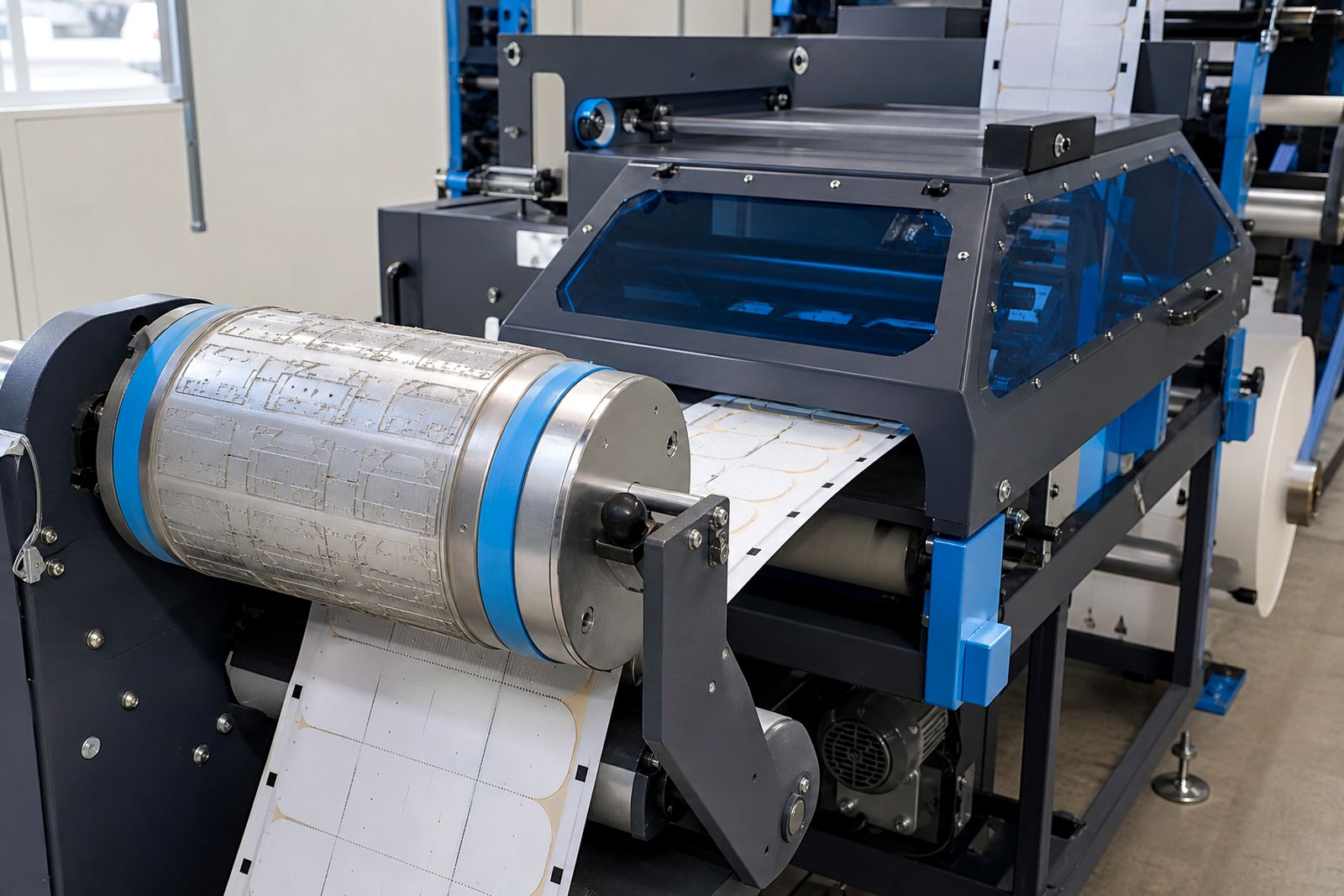
The laser die cutter is a digital finishing unit for label printers and packaging producers that need clean shape cutting on short runs, repeat jobs and variable artwork. It reads registration marks, follows the printed image, and cuts through the chosen face stock while the roll stays in one line through the machine.
In practice, this helps with jobs where a traditional metal die would tie up the schedule. A laser head can be used for contour cutting, kiss cutting, perforation patterns and detailed shapes that shift from job to job. It is suited to labels on paper, film and other coated stocks where the cut line has to stay tight to print and varnish.
For South African production floors, the machine fits where label output changes by client, pack size or language panel. It is common in Durban and Cape Town work where moisture resistance and neat edge control matter, and in Johannesburg and Pretoria plants that handle many small production windows in a week.
Format, web width and finishing choices
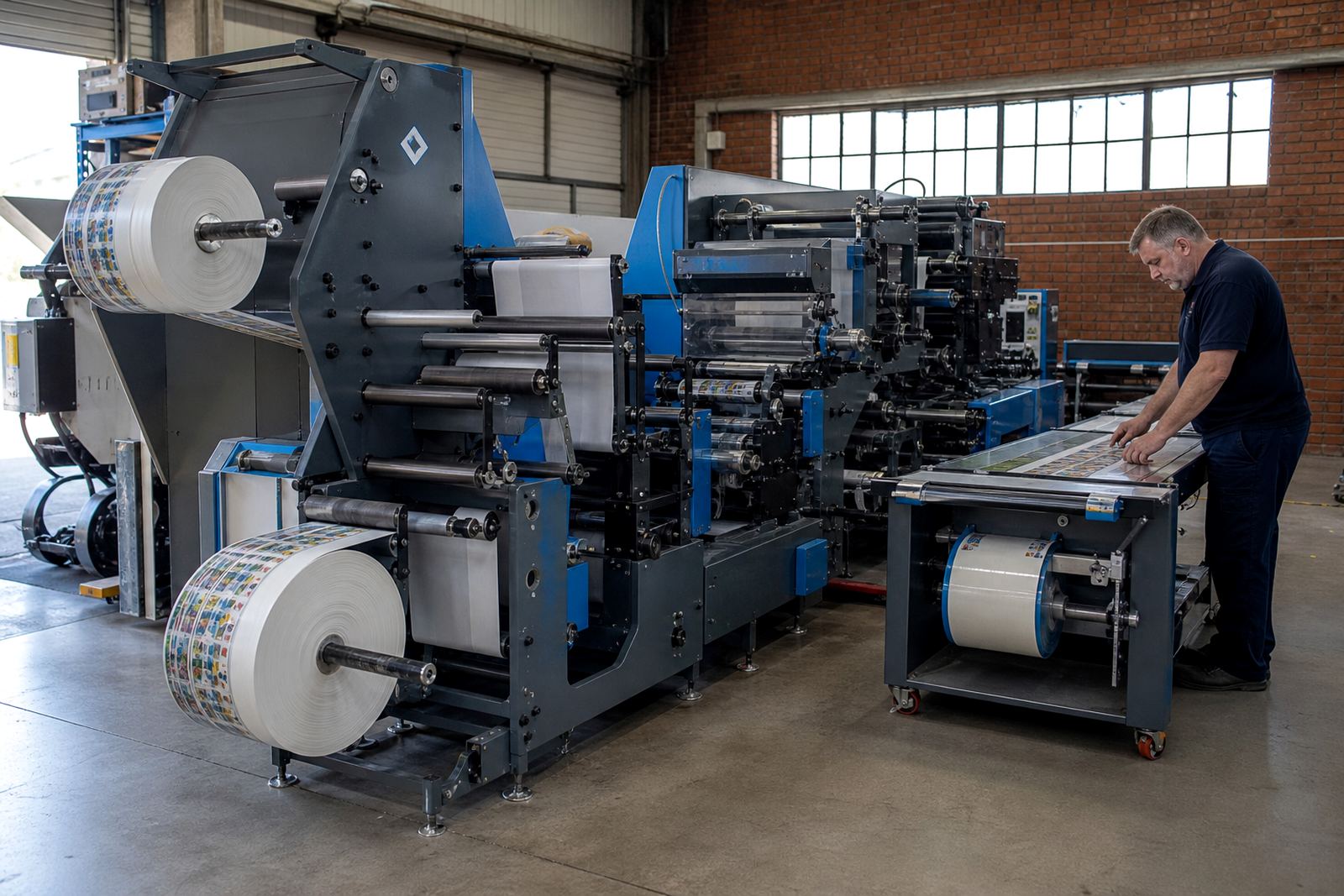
Laser die cutters are specified around the roll format that feeds the line, the web width to be processed and the way the output is collected. Some units are built for compact label reels, while others take wider webs for multiple-up layouts or larger wrap labels. Registration accuracy and unwind stability matter more than a loose maximum speed figure, because the cut has to stay matched to print.
Useful options usually include unwind and rewind control, tension control, matrix stripping, slitting knives, lamination modules and varnish or protective coating handling where the line calls for it. On some setups, semi-rotary or flexible-die stations are used alongside laser work, but the laser unit itself is valued when the shape is changing often and the cut file changes with it.
- Web widths commonly set around label production formats from narrow reels to wider finishing lines.
- Registration mark sensing for printed rolls with fixed or variable artwork.
- Matrix stripping and rewind control for cleaner packing at the end of the line.
- Slitting options for multiple lanes or narrower finished rolls.
- Lamination and varnish handling where the label build-up needs extra protection.
- Cutting modes for kiss cut, full cut and perforation style work.
Jobs that suit laser finishing best
This machine suits short-run label work, seasonal packs, pilot batches and customer jobs that change too often for hard tooling. It also fits plants that handle frequent artwork revisions, because the cut path can be updated without waiting for a new physical die. That helps on multi-SKU production where one reel may carry several label shapes, sizes or language versions.
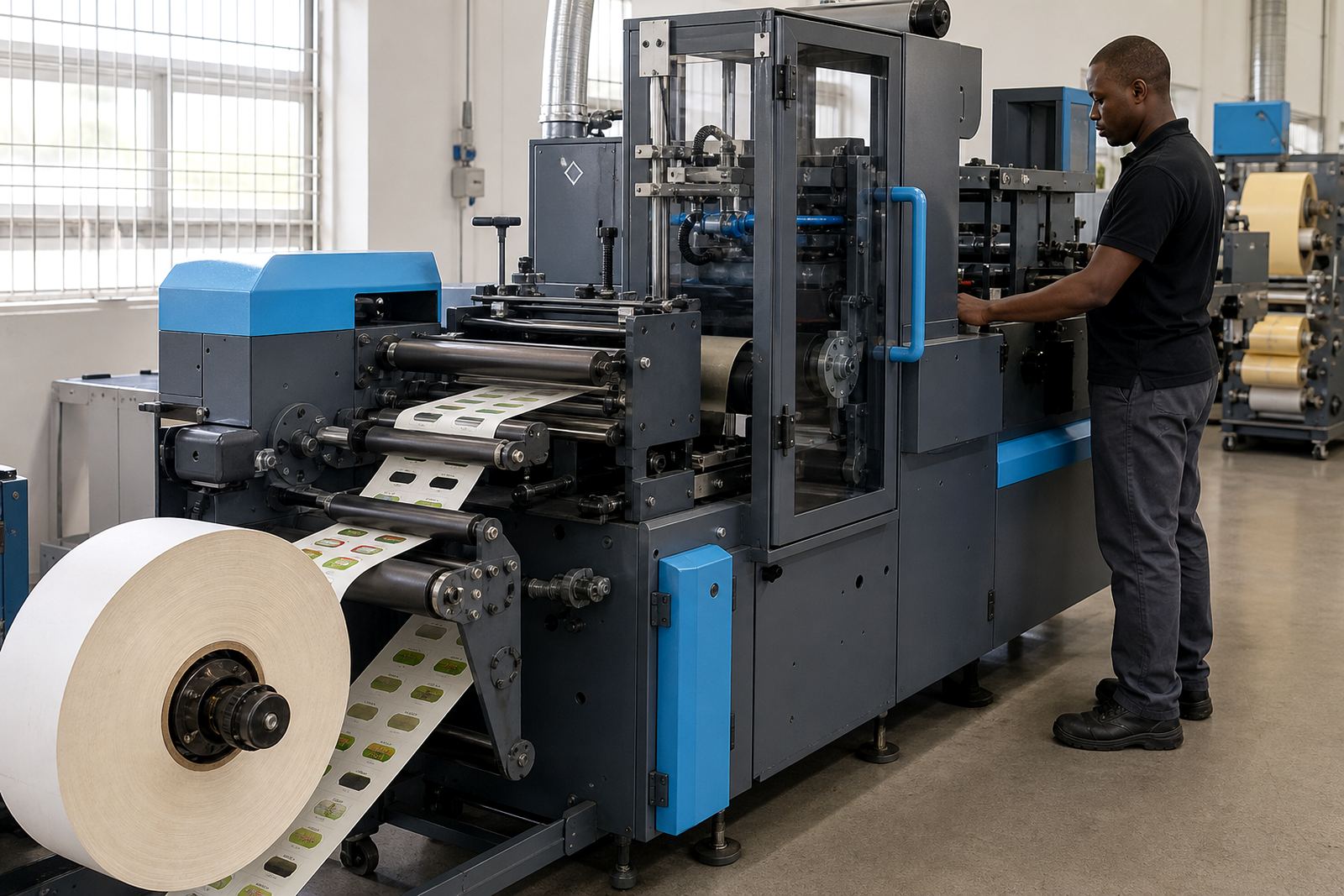
Packaging producers use laser finishing where they need clear edges on pressure-sensitive labels, sticker packs, promotional wraps and short promotional runs. It is also useful where the artwork has internal cut details, fine corners or small apertures that are awkward on some conventional tooling. When a line carries several finishes in one pass, the machine can be set up to cut, strip waste and rewind in one workflow.
- Short and medium label runs with regular artwork changes.
- Variable data label work, including changing shapes and layouts.
- Jobs that need tight registration between print and cut.
- Production where waste stripping and rewind quality matter at dispatch.
- Plants handling coated stocks, film labels and protective finishing layers.
Installation, power and line fitting on the shop floor
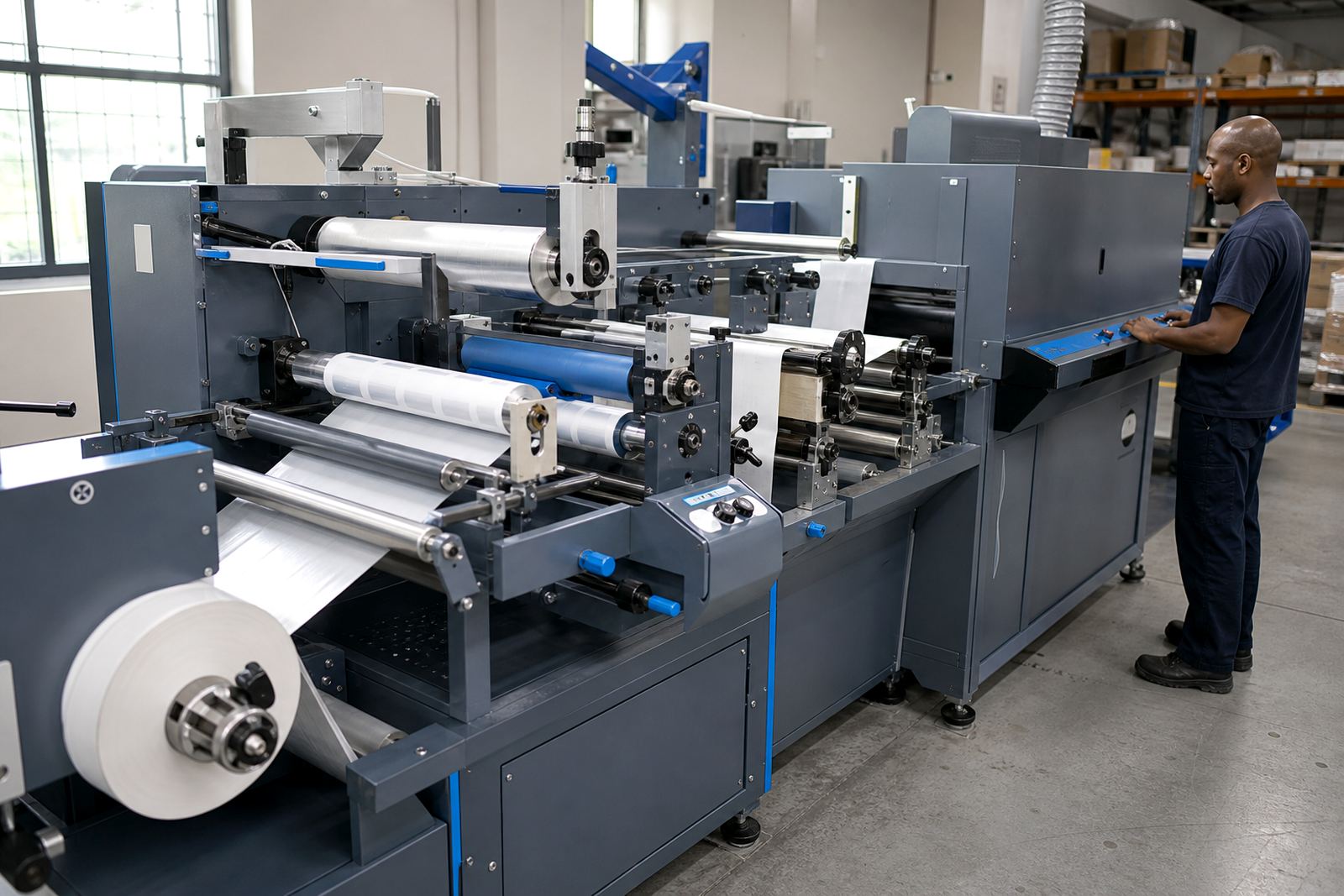
Laser cutting equipment needs correct positioning, stable power and proper ventilation around the operating zone. The install team checks the footprint, roll path, web height and transfer space so the unit sits naturally with the printer, slitter or rewind station. A steady electrical supply is essential for the laser source, control system and web handling parts, and the line should be fitted so operators can reach the unwind, trim, waste take-up and control panel without awkward movement.
On larger label lines, commissioning often includes registration calibration, waste path setting and cut-file checks against the printed roll. If a plant already uses lamination, varnish or slitting stations, the sequence has to be planned so the web moves in the right order and the finished roll leaves the line cleanly. That matters in Randburg and Midrand plants where floor space can be tight and the same room handles printing, finishing and packing.
- Floor space matched to the unwind, cutting zone and rewind section.
- Stable electrical supply for the laser unit and controls.
- Ventilation and fume extraction arranged to suit the cut material.
- Registration calibration for printed rolls with marks or repeat images.
- Web path set for lamination, stripping, slitting and rewind flow.
Keeping the cut clean over long production weeks
Good care starts with clean optics, checked tension settings and a tidy web path. Dust, adhesive build-up and loose trim can upset cut quality, especially on adhesive labels or film stocks with a tacky backing. Operators should keep the bed, rollers and waste path clear, and service teams should inspect belts, sensors, bearings and registration components before they drift out of line.
Preventive maintenance matters on laser units because a small shift in alignment can show up as a cut that wanders at the corners or leaves an uneven edge. Regular checks on the software files, sensor position and rewind tension help the job stay neat from the first roll to the last. In coastal cities like Durban and Gqeberha, humidity can affect handling and storage, so roll stock should be kept properly wrapped until it goes onto the line.
Details to confirm before a laser cutter is specified
To size the machine properly, the order needs the roll width, label length, rewind diameter, material type and the kind of cut required. The team also needs to know whether the job uses registration marks, lamination, varnish or matrix stripping, because each one changes the finishing path. If the line must work with multiple artwork versions, that affects software handling and the number of cut files stored on the system.
It also helps to confirm the production pace, the typical label sizes and whether the finished rolls must be slit into several lanes. For packaging producers, the adhesive type and face stock matter because they affect how the laser performs on the web. A clear brief lets the machine be matched to the actual job mix instead of a loose estimate.
- Maximum roll width and minimum label size.
- Web material, liner type and adhesive construction.
- Required cut type, including kiss cut, full cut or perforation.
- Need for registration marks, lamination, varnish or matrix stripping.
- Rewind diameter, slitting lanes and finished roll presentation.
- Whether the work is narrow label stock or wider packaging web.
Key facts
| Cut method | Laser contour cutting with registration control |
|---|---|
| Web width | Sized to the label format and finishing line |
| Material range | Paper, film and coated pressure-sensitive label stocks |
| Finishing options | Lamination, varnish handling, matrix stripping, slitting and rewind |
| Production mode | Short runs, repeat jobs and frequent artwork changes |
| Installation needs | Electrical supply, web path set-up and ventilation planning |