Built for converted label work that must wind cleanly
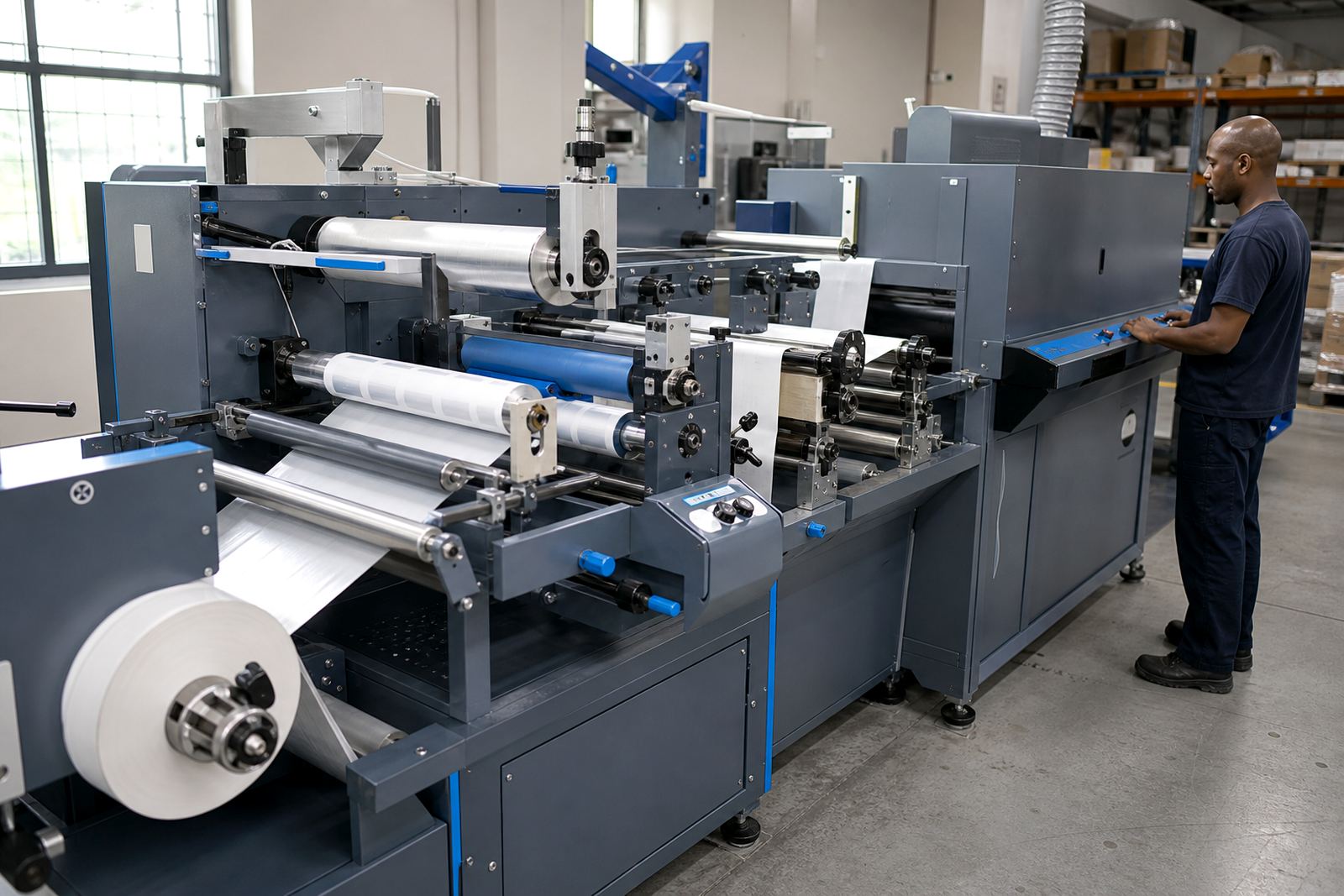
A sheet to roll finisher takes printed or coated web material and rewinds it into usable rolls for downstream dispensing, overlabelling or packing. In label production, that means the web passes through unwind control, lamination if required, die-cutting or kiss-cutting, matrix stripping, slitting and rewinding in one organised line.
That setup is useful where a printer outputs sheets or wide converted web and the next step needs narrow rolls with even edges and consistent tension. The finisher can handle pressure-sensitive stocks, top-coated films and paper labels, provided the media is chosen for the final roll width and core size.
- Suitable for short label runs and mixed artwork changes
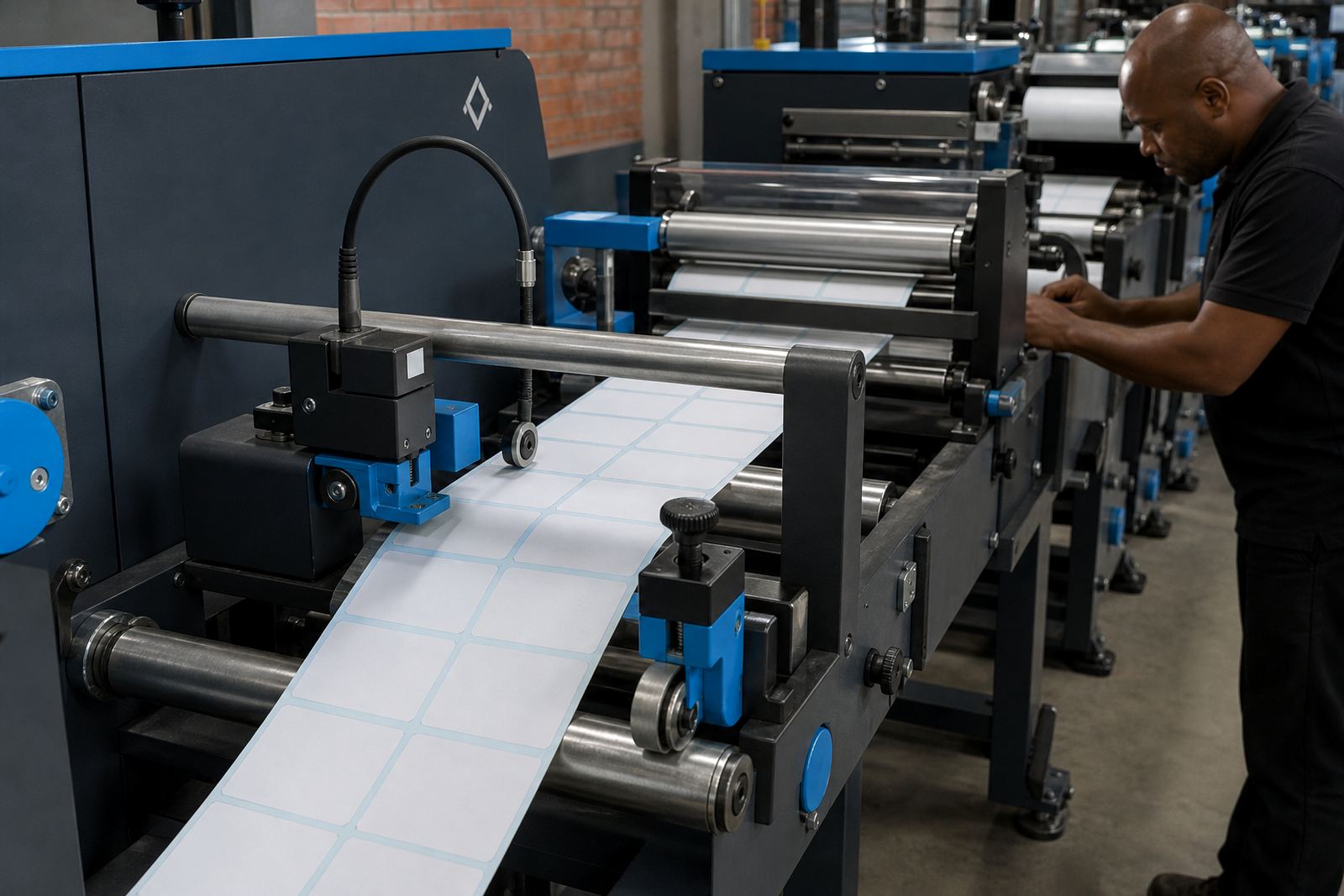
- Works with printed webs that need registration marks for cut alignment
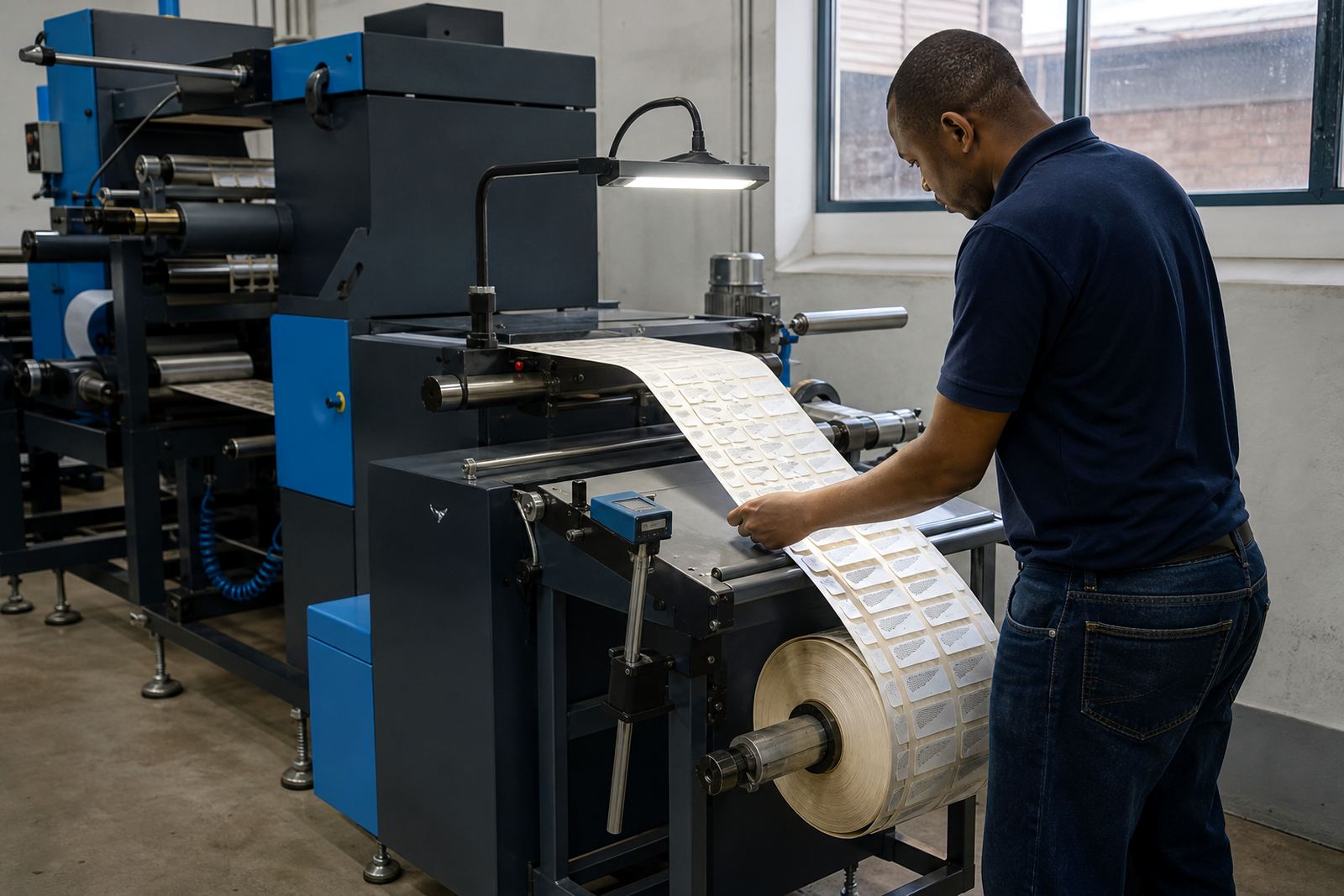
- Supports matrix stripping after die or laser cutting
- Can include varnish or laminate handling where the line requires it
Line options that change the job flow
Different finishing lines are set up for different production styles. A manual or semi-automatic sheet to roll finisher may suit lighter output, while a full digital line adds better control over registration, slitting and rewind tension for more demanding work. Some operations prefer laser die-cutting for flexible artwork changes, while others use semi-rotary or flexible dies where the repeat stays consistent across longer runs.
Common options include a web guide system, tension control, matrix stripping station, slitting knives and one or more rewind shafts. Lamination stations are useful where the label needs extra surface protection, and a varnish stage may be added where the print line carries a clear coat or spot finish. Roll build can be set for narrower labels, wider shingle rolls or converted reels for later conversion.
- Web widths commonly range from 250 mm to 700 mm, depending on the line
- Core sizes are often 76 mm, with other sizes available on request
- Repeat length and cut accuracy depend on artwork, sensor setup and material stability
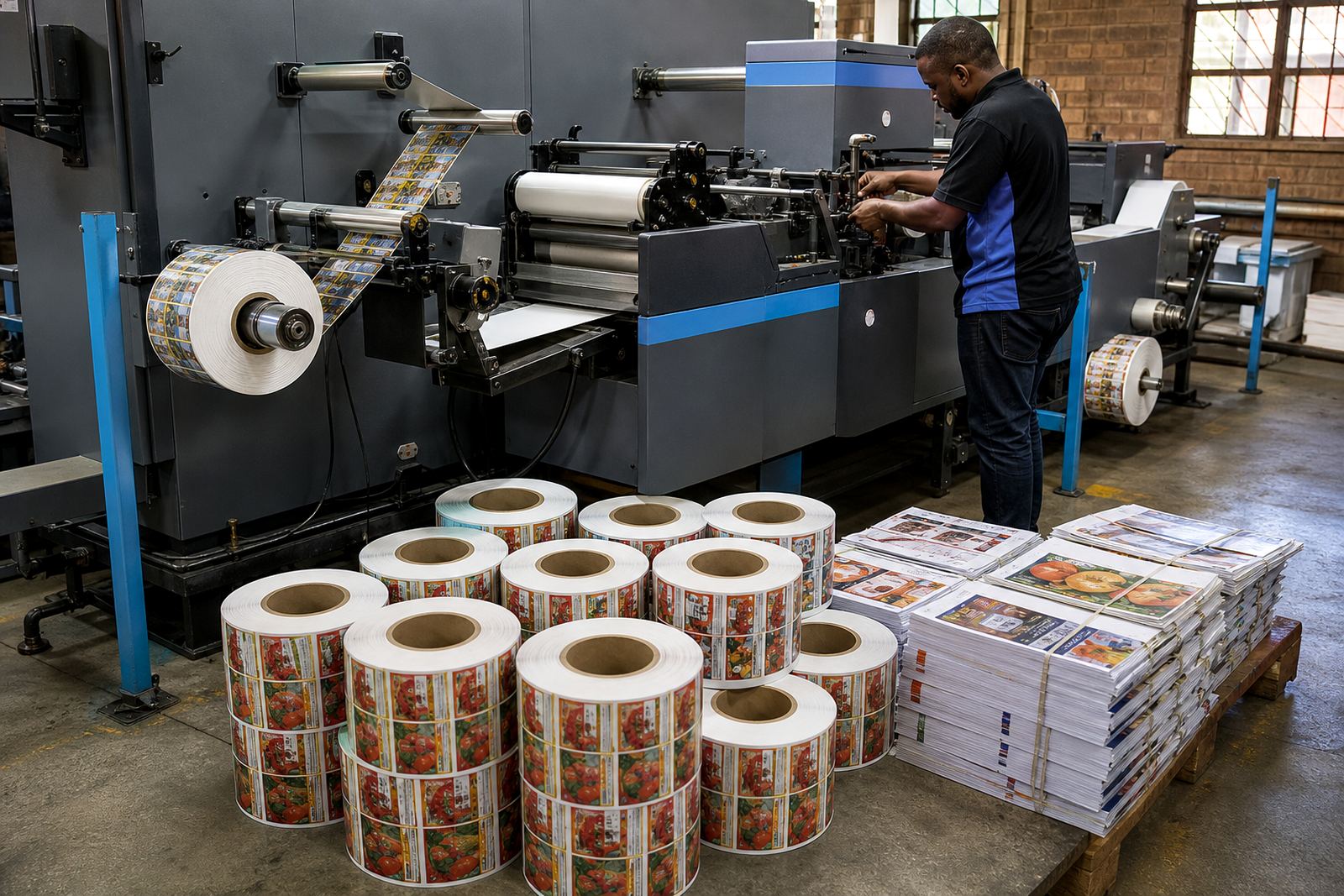
- Finished rolls can be wound face in or face out, based on the application
Where this finisher earns its place
This machine suits label printers, packaging producers and converters that need roll output for pressure-sensitive labels, sleeves or specialty packaging components. It is a practical fit for Johannesburg and Pretoria plants carrying a broad mix of customer artwork, and for Durban or Cape Town sites where humidity can affect web tracking and adhesive behaviour if rolls are left open too long.
It is also useful where the next process needs rolls in a certain direction for dispensers, applicators or downstream packing. Gqeberha operations often value stable rewind and neat edges on jobs that move between print, cutting and finishing in a single shift. The finisher helps keep the final rolls consistent, even when the job changes from one label format to another.
Installation and fitting details that matter on the floor
Installation normally starts with floor space, web path planning and power supply checks. The machine may need a stable single-phase or three-phase supply, depending on the drive system and line configuration, and the layout must allow enough room for unwind access, roll handling and maintenance at both ends of the web path.
Commissioning includes alignment of rollers, sensor calibration, registration mark setting and tension tuning across the full web width. If the line uses slitting or rewinding modules, those stations need to be squared before production starts, otherwise roll edges wander and the rewind can telescope. Operator training should cover changeovers, core loading, knife setting and safe handling of finished rolls.
- Allow clear access for roll loading and strip waste removal
- Check floor level where the rewind section sits
- Confirm the required power phase and breaker rating before installation
- Set the web path for the widest roll the line will carry
Keeping rewind quality steady across shifts
A sheet to roll finisher needs routine care to keep roll formation even and edge damage under control. Guides, rollers and knives collect adhesive dust and paper fibre, so they should be cleaned regularly, especially on hot or humid days when residue builds faster. The sensors that read registration marks should stay clear and properly aligned so the cut position does not drift.
Preventive maintenance usually covers belts, bearings, drive chains, cutters and braking surfaces where fitted. Flexible dies need careful storage and handling, while laser or semi-rotary sections should be checked for wear, alignment and repeat accuracy. If slitting setup changes often, the knives and spacers should be inspected before each new job, not after the roll has already gone off-square.
- Clean adhesive build-up from rollers and guides
- Inspect slitting knives for wear or burrs
- Check matrix stripping paths for blockages
- Keep rewind shafts and cores free of paper dust
What to confirm before the order is placed
The right configuration depends on the material, finished roll size and the way the labels will be used. A narrow pharmacy label, a wider product wrap or a short promotional run may all need a different rewind direction, core size or slitting layout. If the line will carry lamination or varnish, that must be confirmed early because it changes drying, tack and web handling.
It also helps to confirm the artwork repeat, registration mark style, minimum slit width and the maximum outer diameter of the finished roll. If the operation uses more than one substrate, include the paper weight or film thickness as well. For troubleshooting or fitment planning, our contact form is the best place to send the job details and line requirements.
- Web width and finished roll width
- Substrate type, adhesive type and face material
- Required core diameter and maximum roll diameter
- Need for lamination, varnish, slitting or matrix stripping
Key facts
| Machine type | Sheet to roll finisher for label converting and rewind |
|---|---|
| Process options | Unwind, laminate, die-cut, strip waste, slit and rewind |
| Cutting formats | Laser die-cutting, semi-rotary die-cutting, flexible dies |
| Web width range | Typically 250 mm to 700 mm, model dependent |
| Core sizes | Standard 76 mm, with other core options available |
| Location | Kya Sand, Randburg, with South African support coverage |