A support station for cut-to-width rewind cores
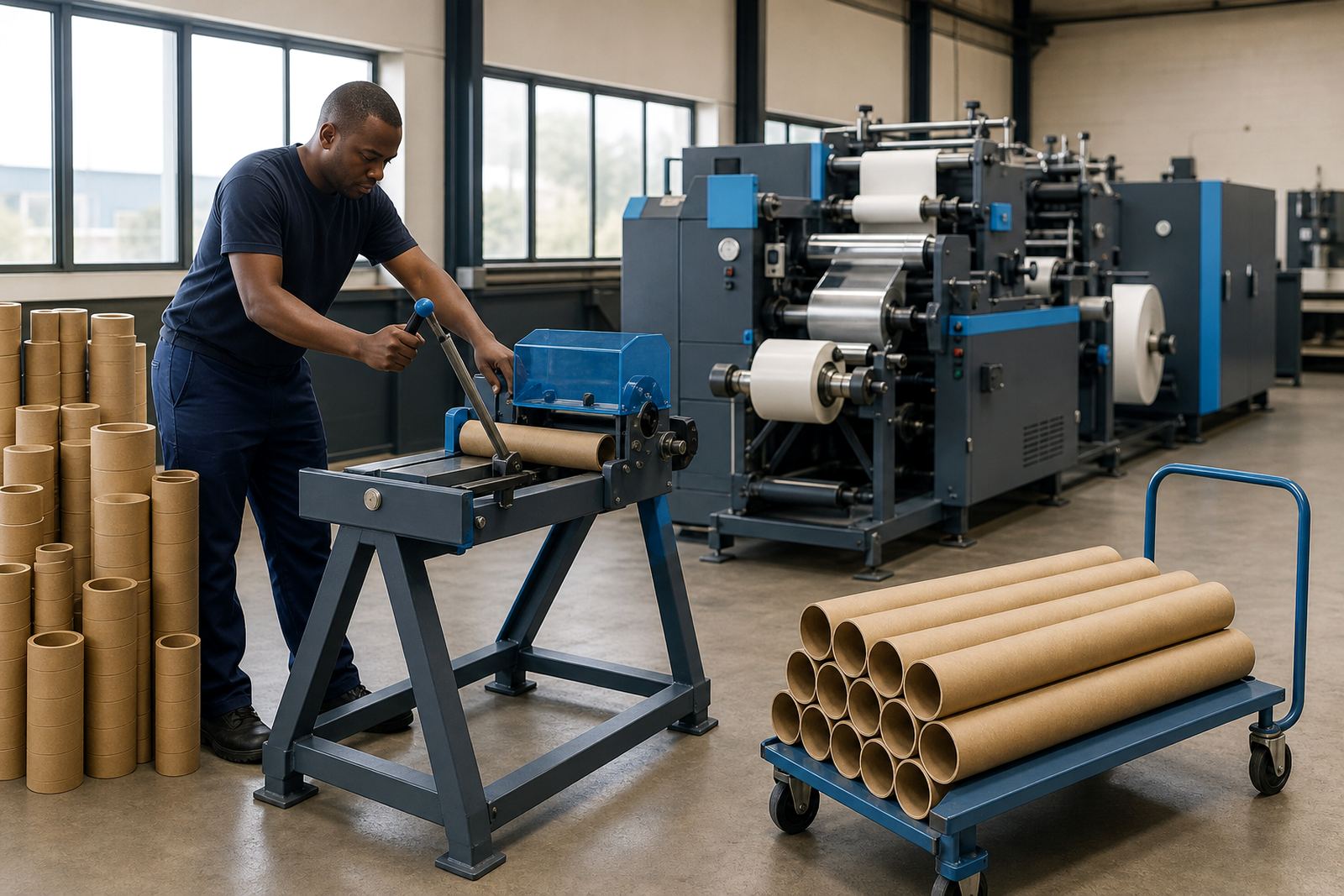
The core cutting stand is used where finished label rolls need the right core width before rewinding starts. It holds core material, guides the cut and helps the operator keep each core square, which matters when rolls move into high-speed finishing or narrow-web label work.
In practice, the stand sits near the converting line and supports repeat cutting for paper, board or plastic cores used on finished rolls. It is suited to label printers, narrow-web converters and packaging teams that prepare their own core stock on site.
- Used for preparing rewind cores to exact finished-roll widths
- Supports clean, square cuts with less edge damage
- Useful where repeated widths are needed across a shift
- Fits into label finishing rooms and reel-handling areas
Widths, core diameters and adjustment points
Core cutting stands are usually specified by the core sizes they must handle. Common setups cover narrow label cores, wider support cores for larger reels, and adjustable stops for more than one roll width. Some units are set up for manual measurement and others use a fixed guide or clamp arrangement for repeat work.
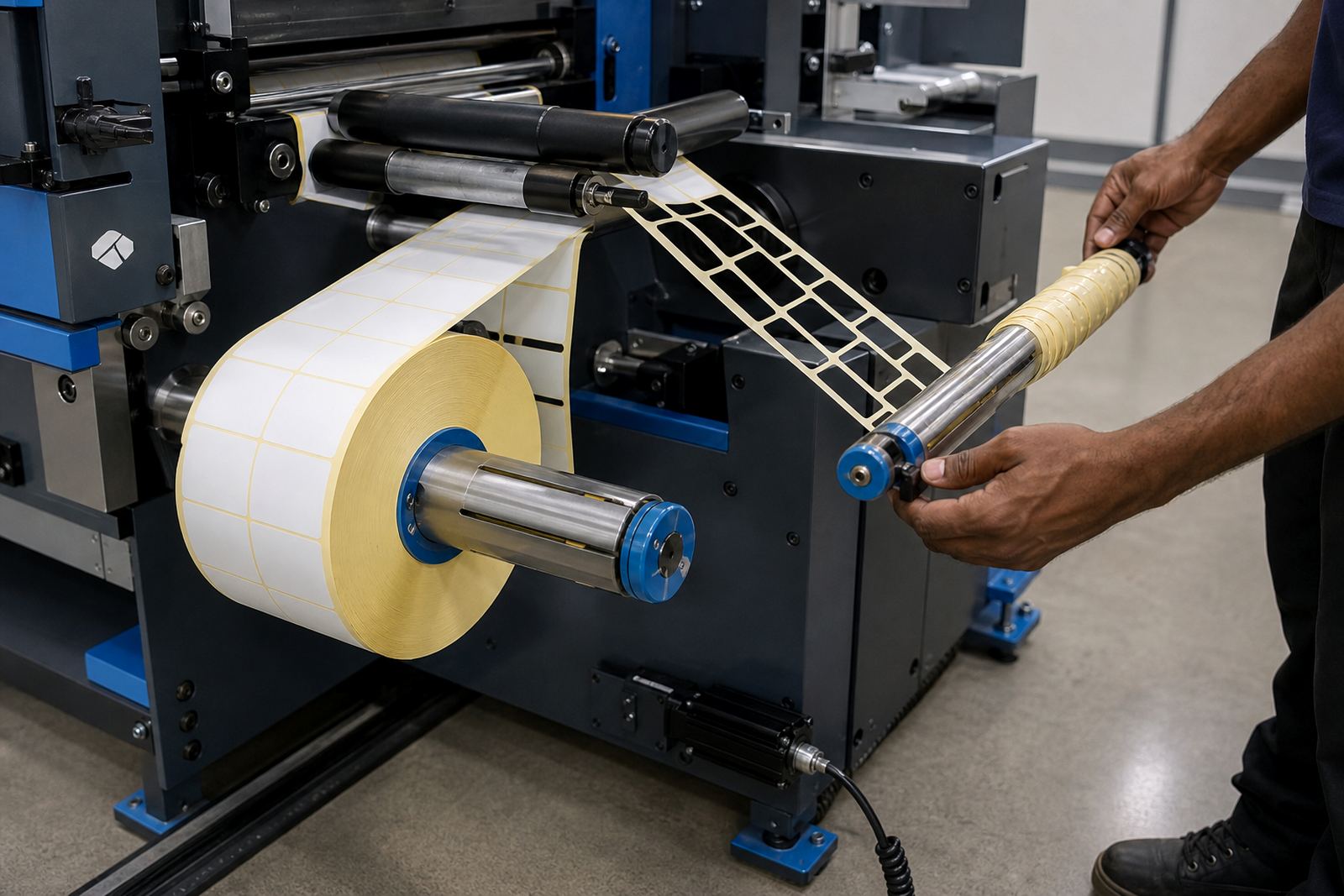
When matching the stand to a label line, the key details are the core outside diameter, core length, cut width range and the thickness of the material being cut. On some lines the stand is paired with a slitter, a rewind station or a separate core prep table so the same operator can move between jobs without resetting the whole finishing line.
- Core diameter range to match the rewinder in use
- Working width for standard and short-run label rolls
- Manual stop, clamp or guide arrangement
- Compatible with paper, board and plastic core stock
Where this unit earns its place on the floor
This unit suits sites that run mixed label jobs and need different finished roll widths during the day. It is also practical where roll quality is checked closely, because an uneven core can throw off rewind tension and make later handling harder.
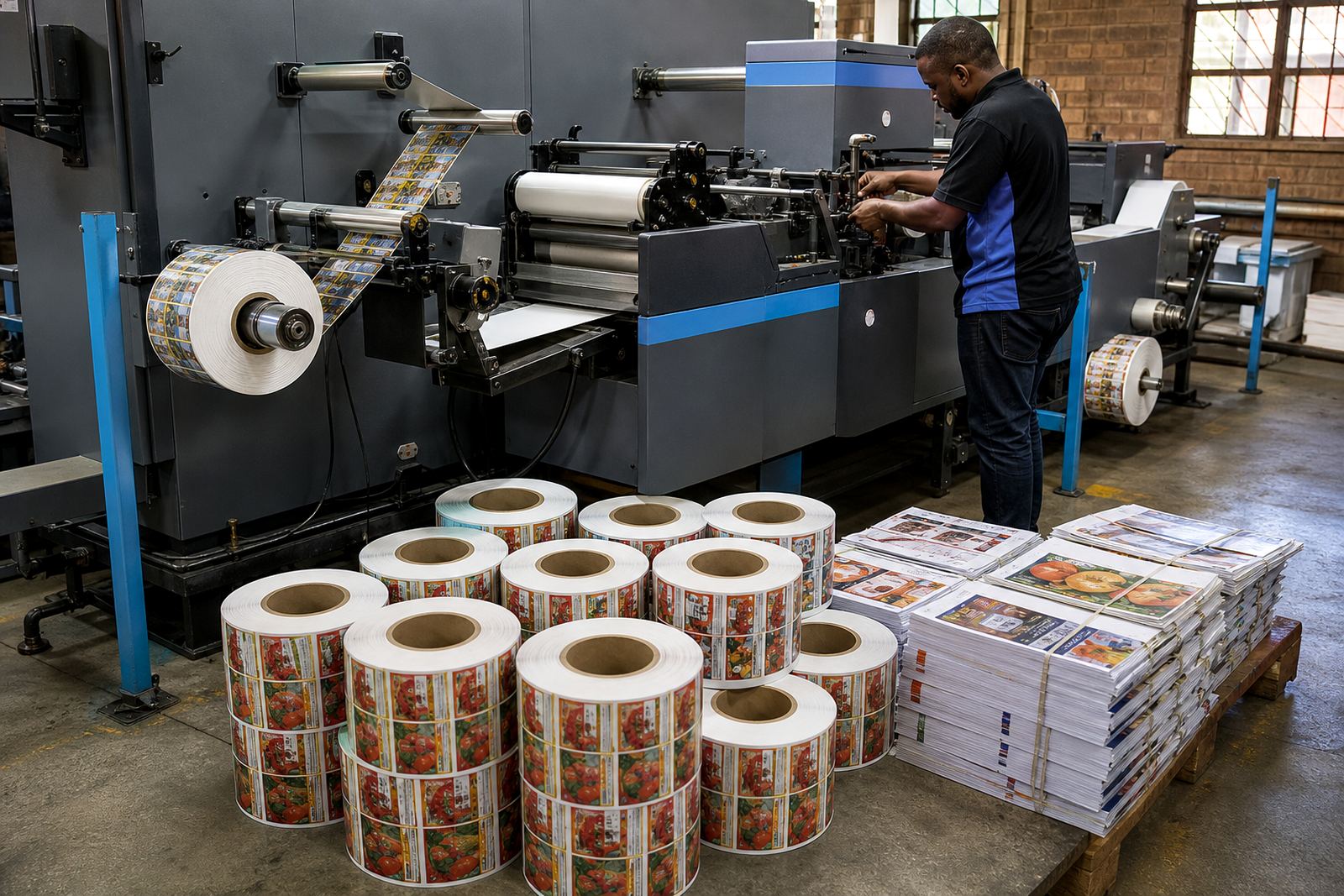
For printers supplying retail labels, industrial labels or packaging sleeves, the stand helps keep the rewind side tidy before slitting, stripping or final rewind. It is a steady fit for Johannesburg, Pretoria, Durban, Cape Town and Gqeberha operations where local production rooms often work with changing order sizes and tight packing specs.
- Label printers handling many repeat widths
- Packaging producers finishing short and long roll runs
- Converters that prepare cores before lamination or die-cutting runs
- Teams that need cleaner roll start points for rewinding
Fitting, layout and line integration
The stand is normally positioned where core stock can be reached without crossing the main travel path of the line. It should sit on a level floor with enough space for loading, measuring and trimming, and with clear access to the rewinder or finishing bench. In a busy shop floor, the layout matters as much as the machine itself.
Installation may include anchoring, alignment to the nearby rewind station and a check that the operator can load cores at a comfortable height. If the unit is integrated with powered cutting or measuring equipment, the electrical connection and control position must suit the rest of the finishing area. A neat set-up reduces handling errors and keeps the roll path predictable.
- Floor space for loading and cut-off handling
- Level placement for accurate repeat cuts
- Alignment with rewinder, slitter or finishing bench
- Electrical connection only where the chosen model uses powered cutting or controls
Care that keeps the cut clean and the edges square
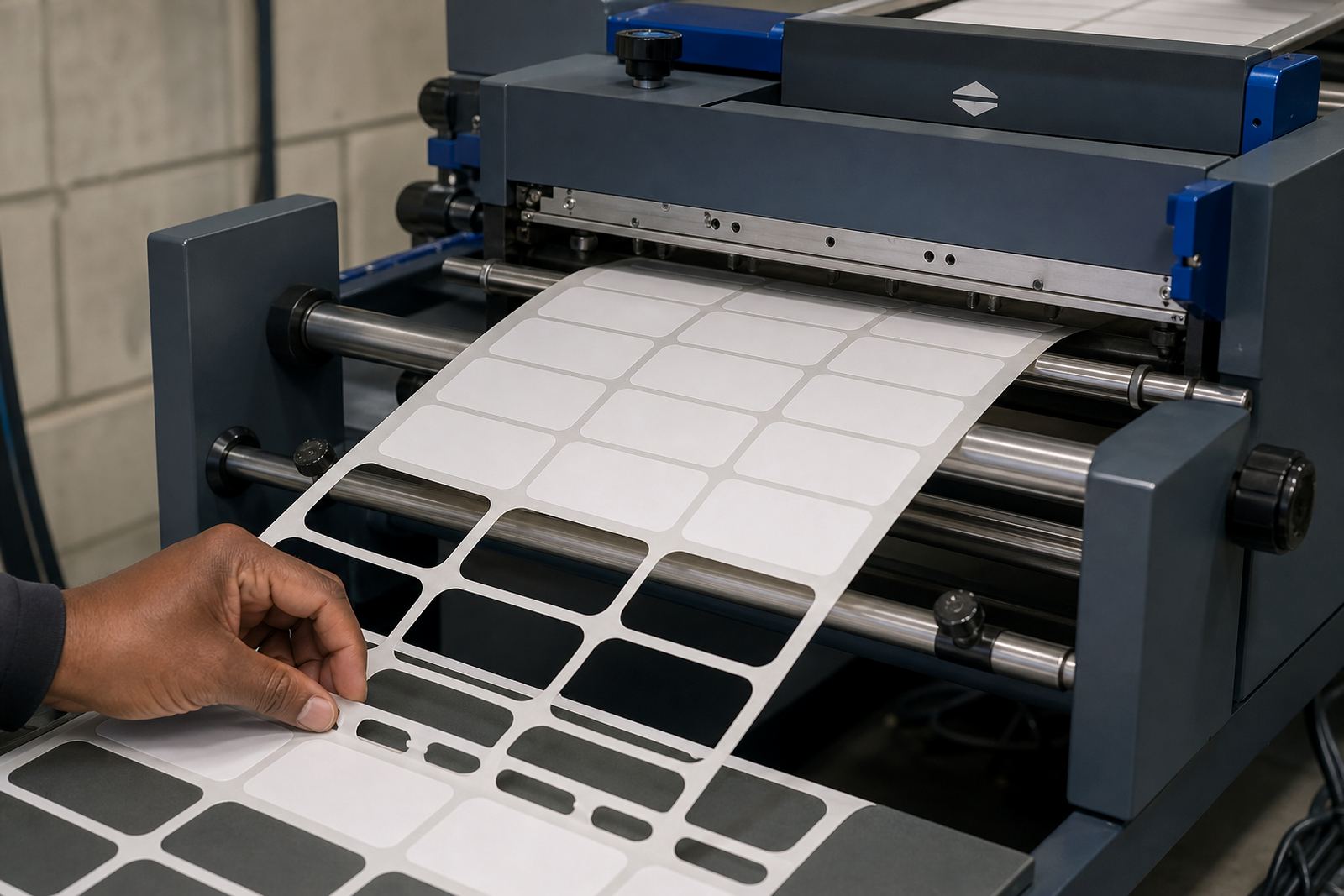
Routine care is straightforward but it matters. Keep the cutting edge sharp, remove paper dust and adhesive build-up, and check the guide faces for wear. If the stand is used near lamination, varnish or matrix stripping work, the surrounding area should be cleared often so offcuts do not move into the core path.
Operators should check the stop settings before a run begins and keep an eye on core squareness after the first few pieces. Small shifts in material thickness or loading pressure can affect the finished roll, so regular checking is worth the time.
- Clean cutting surfaces and guide points regularly
- Inspect blade condition and replace worn edges
- Remove dust, trim scraps and adhesive residue
- Check alignment after movement or servicing
What to confirm when ordering a core cutting stand
To match the stand to your label operation, confirm the core sizes, the width range, the material type and the way the unit will be used on the floor. A narrow-web printer may need a different setup from a packaging line that handles heavier reels or broader finished rolls. The spacing around the unit and the preferred loading direction should also be clear.
Our team works with installation, operator training, preventive maintenance, breakdown repairs, remote support, spare parts supply, die setup help, registration calibration, rewind setup, slitting setup and production optimisation. That helps when the stand has to work alongside other finishing equipment in the same room.
- Required core diameter and width range
- Material type and wall thickness
- Manual or powered cutting preference
- Space available beside the rewinder
- Loading side and operator working height
- Any matching needs with slitting or rewind equipment
Key facts
| Machine type | Core cutting stand for label finishing and rewind prep |
|---|---|
| Use | Cuts rewind cores to required finished-roll widths |
| Core capacity | Single or multi-width setups depending on line needs |
| Material support | Paper, board and plastic core stock |
| Placement | On-floor support unit for finishing rooms and reel prep areas |
| Integration | Works beside rewinders, slitters and core preparation stations |