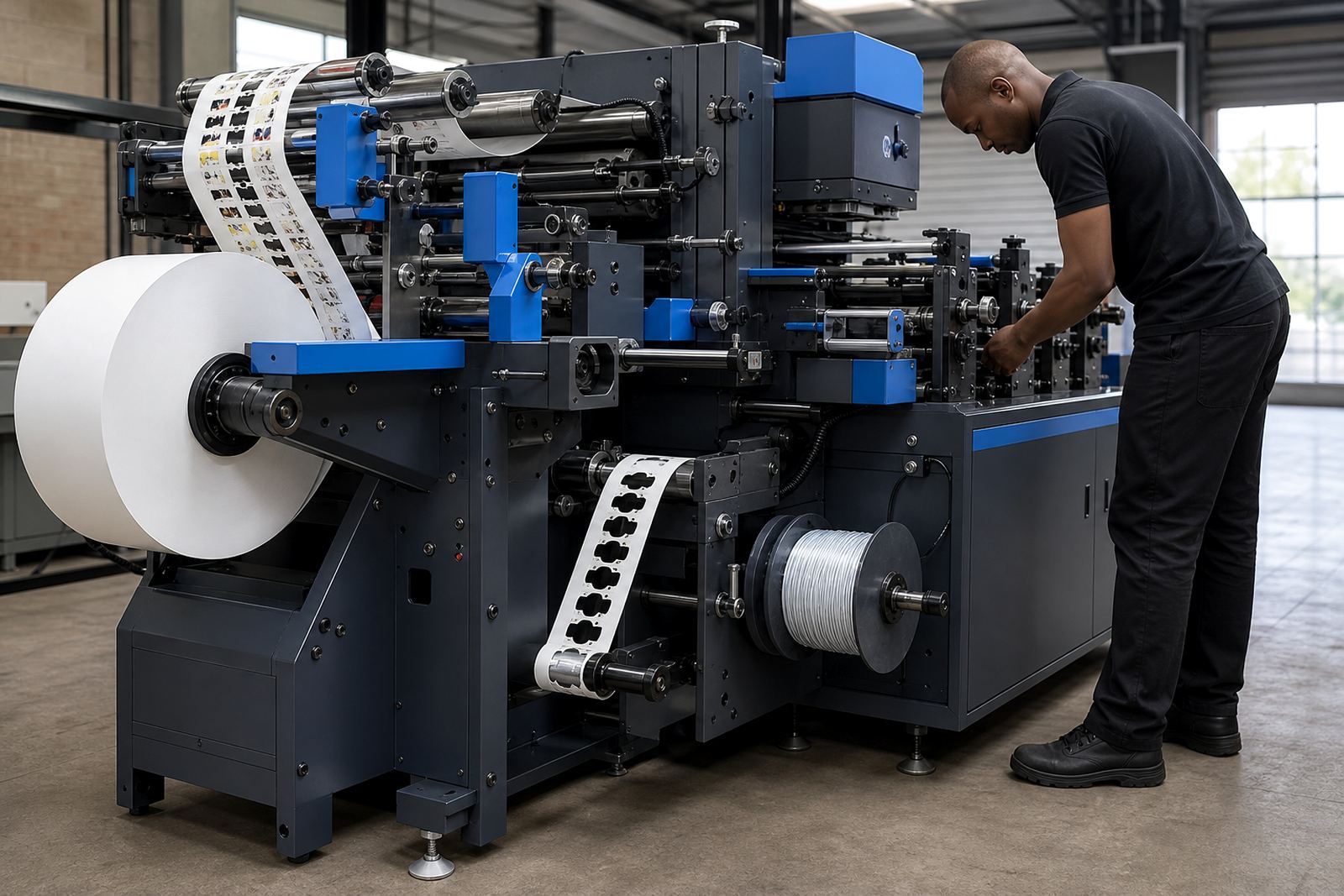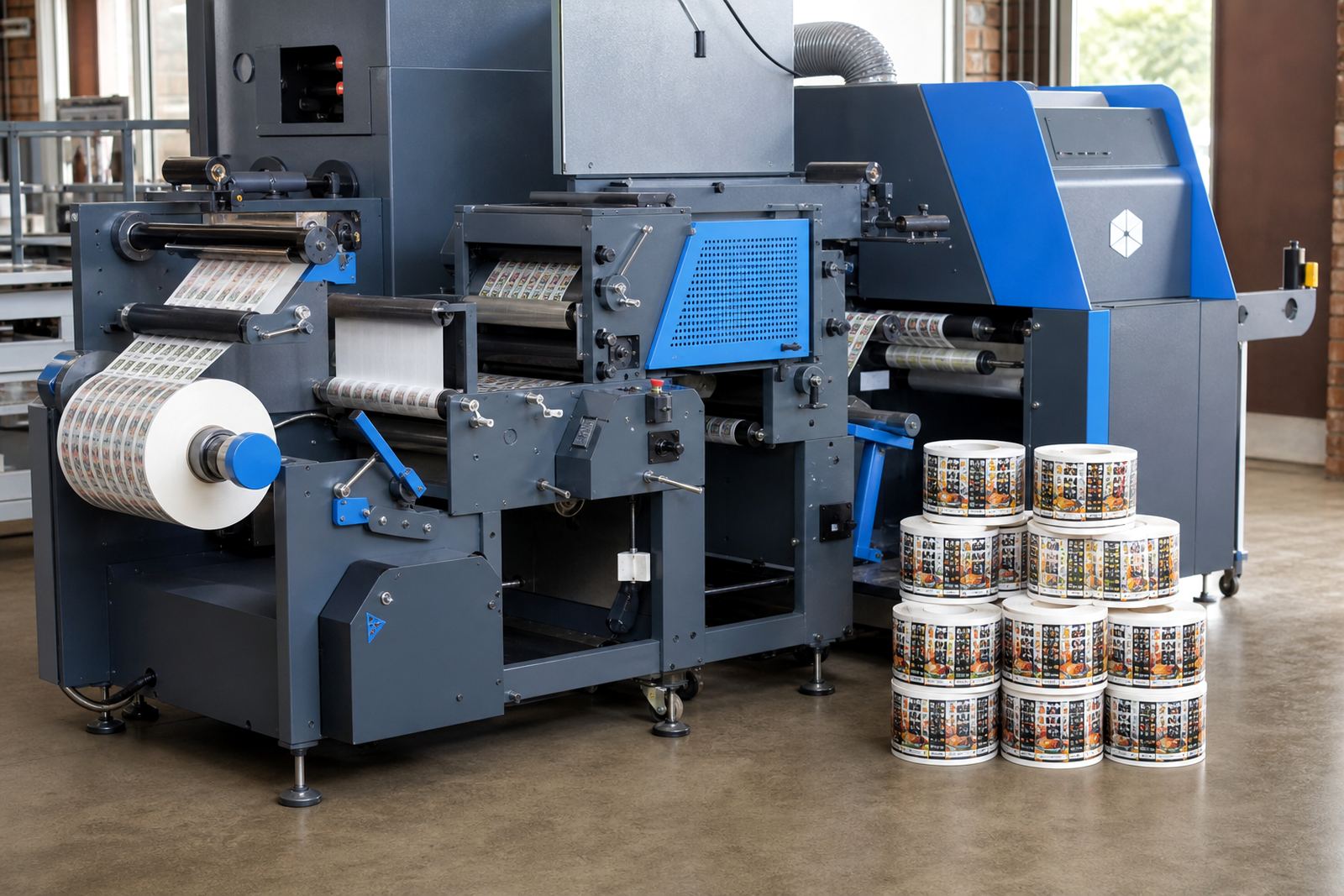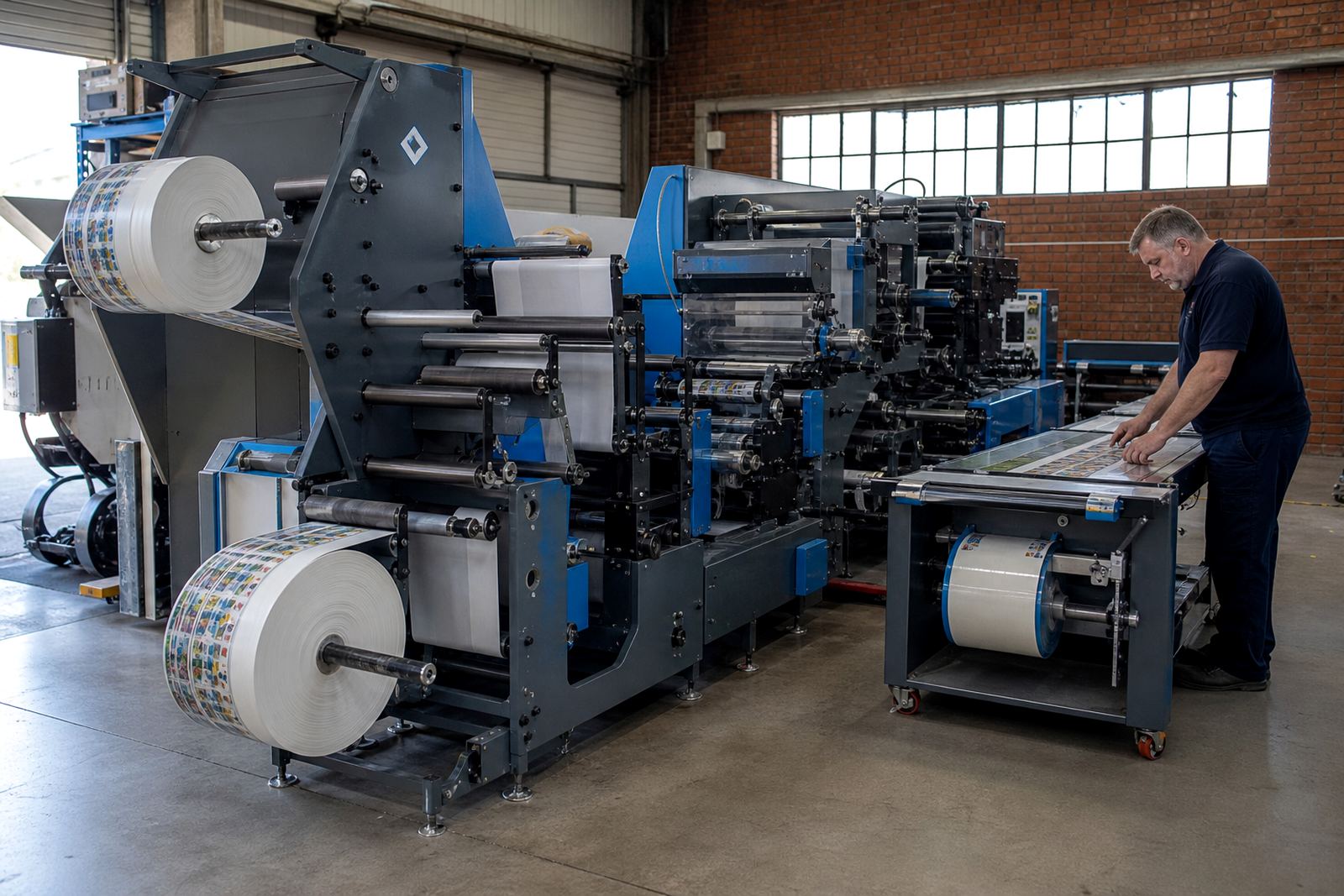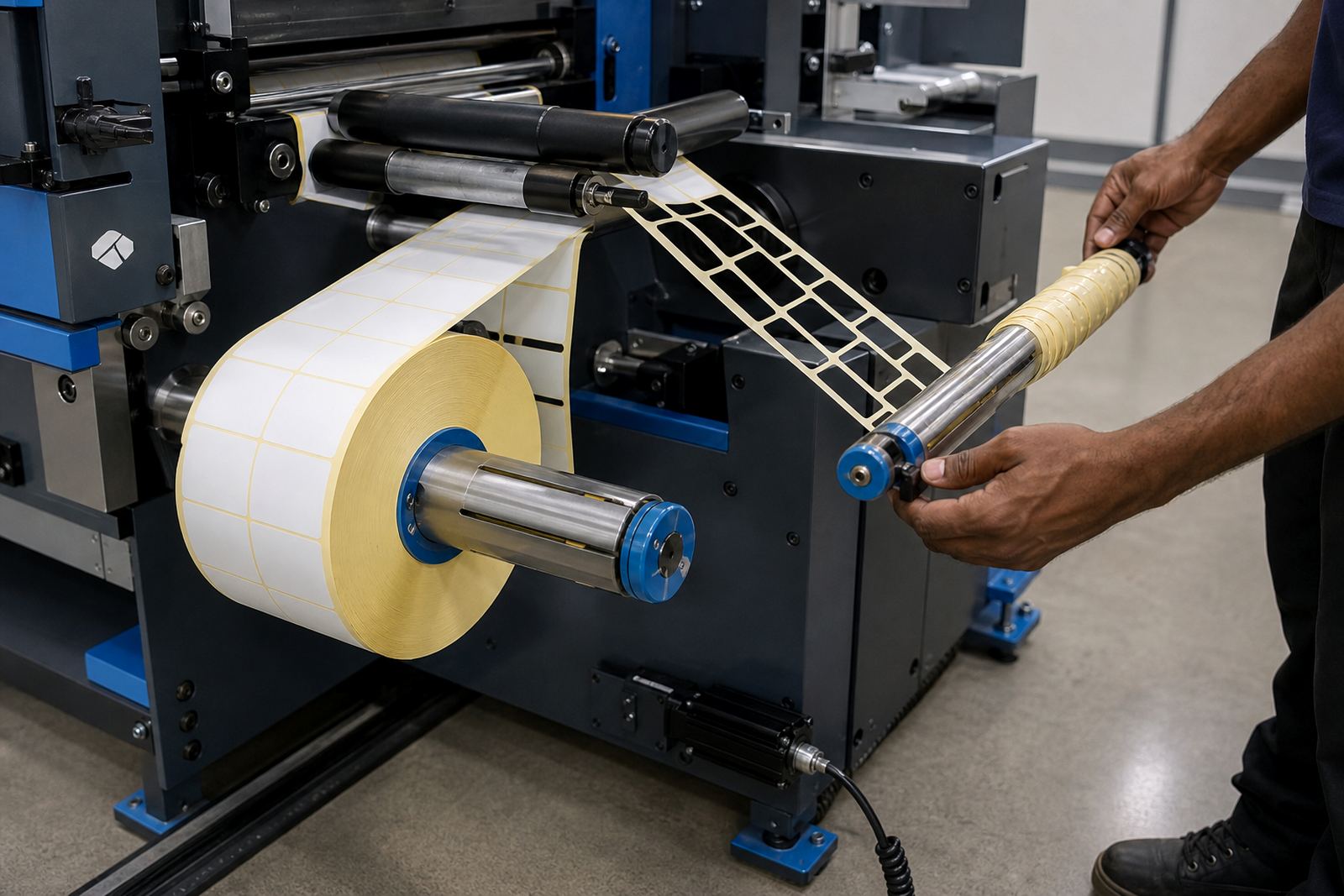
Waste lift after the die-cut station
This module sits after the die-cut or laser finish point and takes over the part of the job that many converters know too well, the waste matrix that wants to tear, lift unevenly or ride back into the web path. It guides the stripped waste away from the label face and rewinds it onto a separate core, leaving the finished label web ready for slitting or final rewind.
On shorter runs the stripping section gives better control when the artwork carries heavy solid areas, small cut-outs or fine internal shapes. On longer runs it keeps the waste under tension so the matrix does not wander across the web edges. That matters on polyester, paper, PP and other common label stock where adhesive tack changes with temperature, humidity and press speed.
- Supports matrix removal after semi-rotary or flat die-cutting
- Works with slit webs that need clean edge control
- Helps protect fine register on repeat label work
- Suitable for pressure-sensitive label stock in roll form
Where the module earns its place on the line
A matrix stripping section suits label printers and packaging producers that run mixed SKU work, short promotional labels, variable data jobs or steady format work with many shape changes. It is also useful where the printed web has tight internal cuts, small text areas close to the waste zone, or varnish and laminate layers that affect how the waste lifts.
In practice, it is a strong fit for operations that need to unwind, laminate, die-cut, strip waste, slit and rewind in one pass. On some lines the stripping frame is paired with a registration mark reader so the strip position stays true as the press speed changes. Where the web is wide, the waste path and rewind torque need to be set carefully or the matrix will stretch and leave fibres behind.
- Label houses handling cartons, bottles, pouches and sleeves
- Converters running clear film, paper labels or filmic stock
- Plants with frequent artwork changes and narrow web margins
- Jobs that need stable roll build before final rewinding
Width, web path and rewind choices
Matrix stripping modules are usually selected around web width, core size, line speed and the way the waste exits the machine. A narrow web may only need a compact stripper with a single waste rewind, while wider finishing lines can call for multiple waste paths or guided edge control. The module must match the printed web width and the physical space available around the die station and rewinder.
Typical options include adjustable guide rollers, tension control, waste edge guides and a dedicated rewind shaft for the stripped matrix. Some setups use a floating nip or dancer arrangement to keep tension steady. Others use an independent servo or motor driven rewind so the waste pack stays firm from start to finish. If the job carries deep kiss-cuts or delicate face stocks, the module needs careful tuning so the labels do not lift with the matrix.
- Web widths commonly matched to 200 mm, 320 mm, 450 mm and wider lines
- Core sizes set to suit 25 mm, 40 mm, 76 mm or custom rewind cores
- Compatible with roll stock supplied on standard label reels
- Can be configured for single waste rewind or split waste paths
Installation notes for a clean running strip
Fitting a matrix stripping module is not just a bolt-on job. The section must line up with the printed register, the die station and the rewind path so the waste clears without touching the face web. On some machines the install includes frame alignment, roller setting, sensor adjustment and a short production test with the actual stock used in the plant.
Our installation and line commissioning work in Kya Sand, Randburg covers the physical fit, the first strip setup and operator handover. Where the line uses electrical drives, the module must be integrated into the control system and set to the correct speed relationship with the rest of the finishing line. If the line includes a laminate station or varnish section before stripping, the web path needs enough dwell and guide control so the adhesive layer has settled properly.
- Machine installation and line commissioning
- Registration calibration for printed web work
- Rewind setup to match core, torque and roll size
- Operator training on start-up, threading and waste handling
Keeping the waste path tidy over long shifts
A stripping module works best when the rollers are kept clean, the guides stay square and the rewind tension does not drift. Adhesive build-up, dust from board stock and small bits of label release liner can all change the way the waste pulls. In humid coastal conditions, especially around Durban or Gqeberha, the waste matrix may behave differently from the dry inland run and the setting needs a little more attention.
Routine care is straightforward but it has to be done properly. Check roller surfaces for adhesive smear, inspect guide bearings, confirm that the waste edge is not snagging and make sure the rewind core is seated firmly. If the strip path starts to whistle or flutter, the tension is often too loose or the web is tracking off centre, not always a bigger fault. Preventive maintenance helps keep the section usable for the next changeover instead of waiting for a breakdown to show up on press.
- Clean rollers and edge guides regularly
- Check waste rewind tension and core locking
- Inspect sensors and guides during service visits
- Keep spare stripping parts and wear items on hand
What to confirm before the module is ordered
To specify the right matrix stripping module, the finishing line details need to be clear. The printed web width, stock type, adhesive behaviour, die format and target roll build all shape the final setup. A thin paper label and a heavy synthetic label do not strip the same way, and a line that only runs small rolls will not need the same rewind arrangement as a wider production line.
Useful points to confirm include the maximum web width, roll outside diameter, rewind direction, core size, the position of registration marks and whether the line will strip a full matrix or a split waste pattern. It also helps to know if the job includes lamination, varnish, slitting or a second rewind after stripping. With that information the module can be set up to suit the actual production path, not a guess.
- Maximum web width and finished label size
- Substrate type, adhesive type and liner construction
- Die-cut style, semi-rotary or laser finish path
- Required roll OD, core size and rewind direction