Varnish station built into a label finishing line
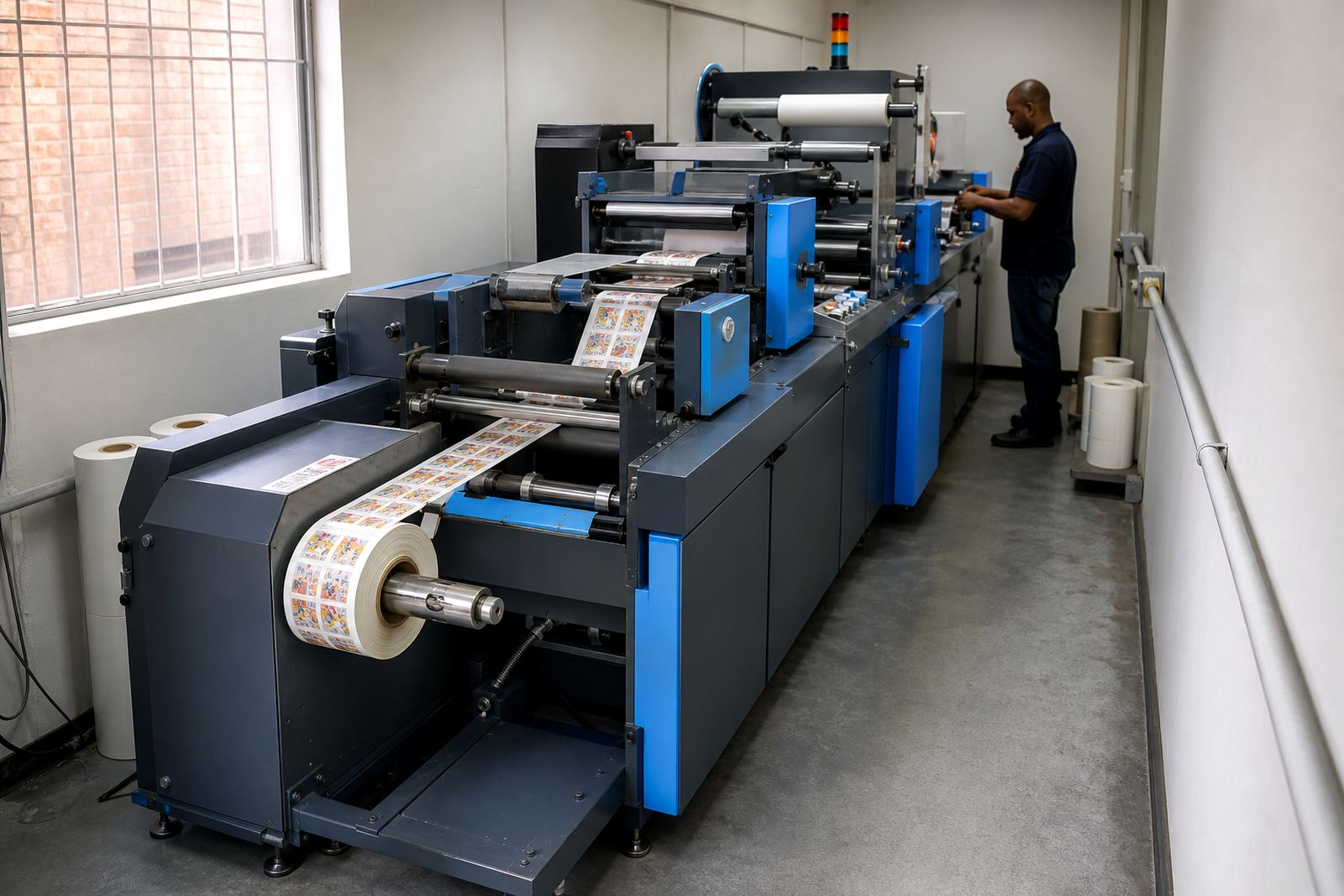
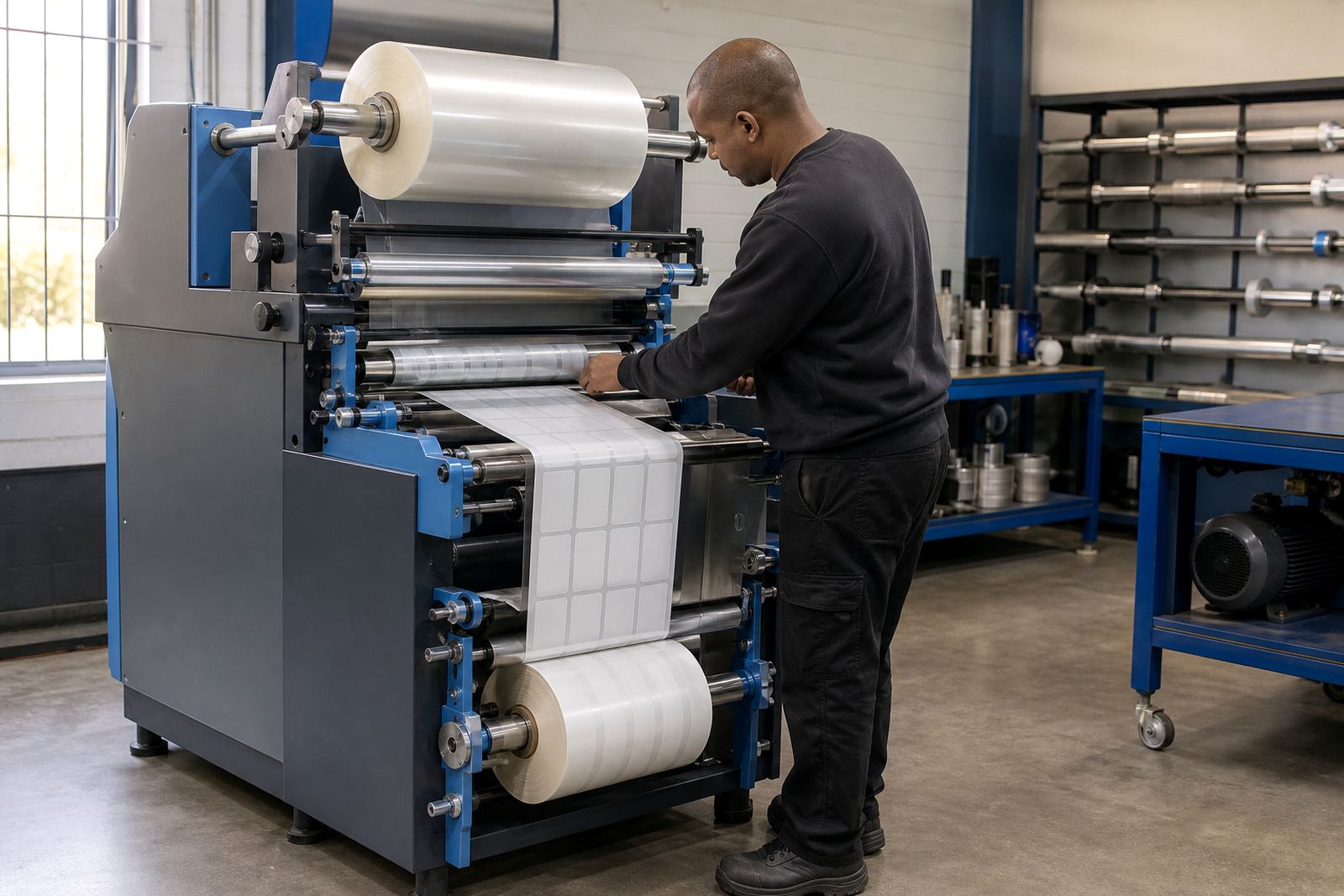
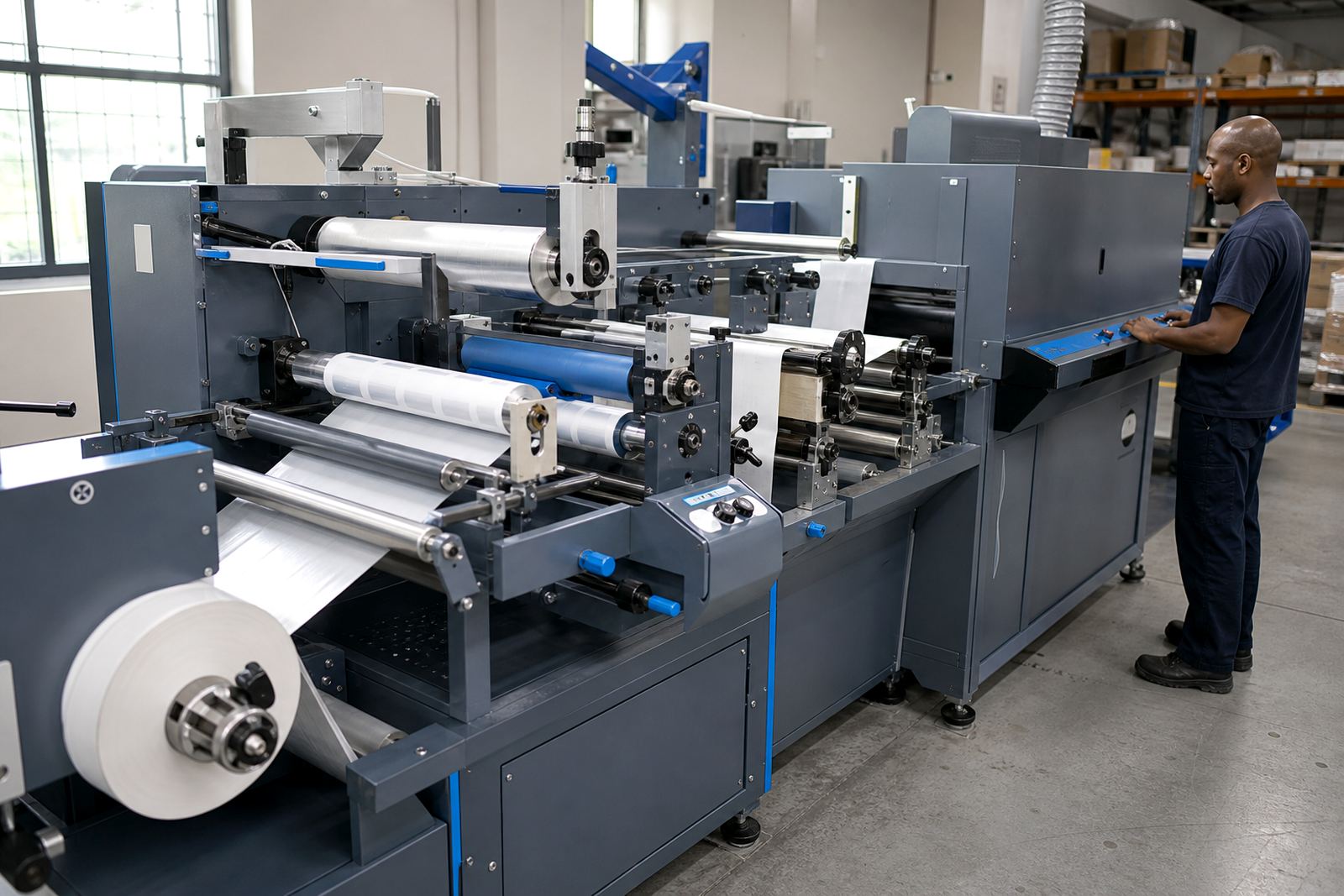
A digital varnish unit sits in the finishing path after print and before die-cutting, so the varnish layer is placed where the label needs added scuff resistance, moisture resistance or a sharper visual finish. In a label line it normally works with an unwind, web guiding, coating head, drying or curing section, matrix stripping, slitting and rewinding. The varnish can be laid down as a flood coat over the full web or as a spot layer where the printed image needs highlight, texture or selective protection.
In production terms, this module is used where labels must travel through the press with steady registration marks and even web tension. It is common on self-adhesive labels, carton labels, flexible packs and security or promotional work where the printed face needs a final coat before the roll is finished. On a well set line the varnish stage should keep coating weight consistent and hold the web flat enough for clean downstream die-cutting.
Coating styles, web widths and roll handling
Different lines call for different coating systems, and the right choice depends on the print format and the output roll. Some units are set up for flexographic varnish, others for UV varnish, and some use a digital spot coating head for short-run work. Semi-rotary and laser finishing lines both benefit from a varnish module when the job needs extra surface protection before the cut.
- Web widths commonly run from 250 mm to 530 mm, with wider custom lines available for larger label webs.
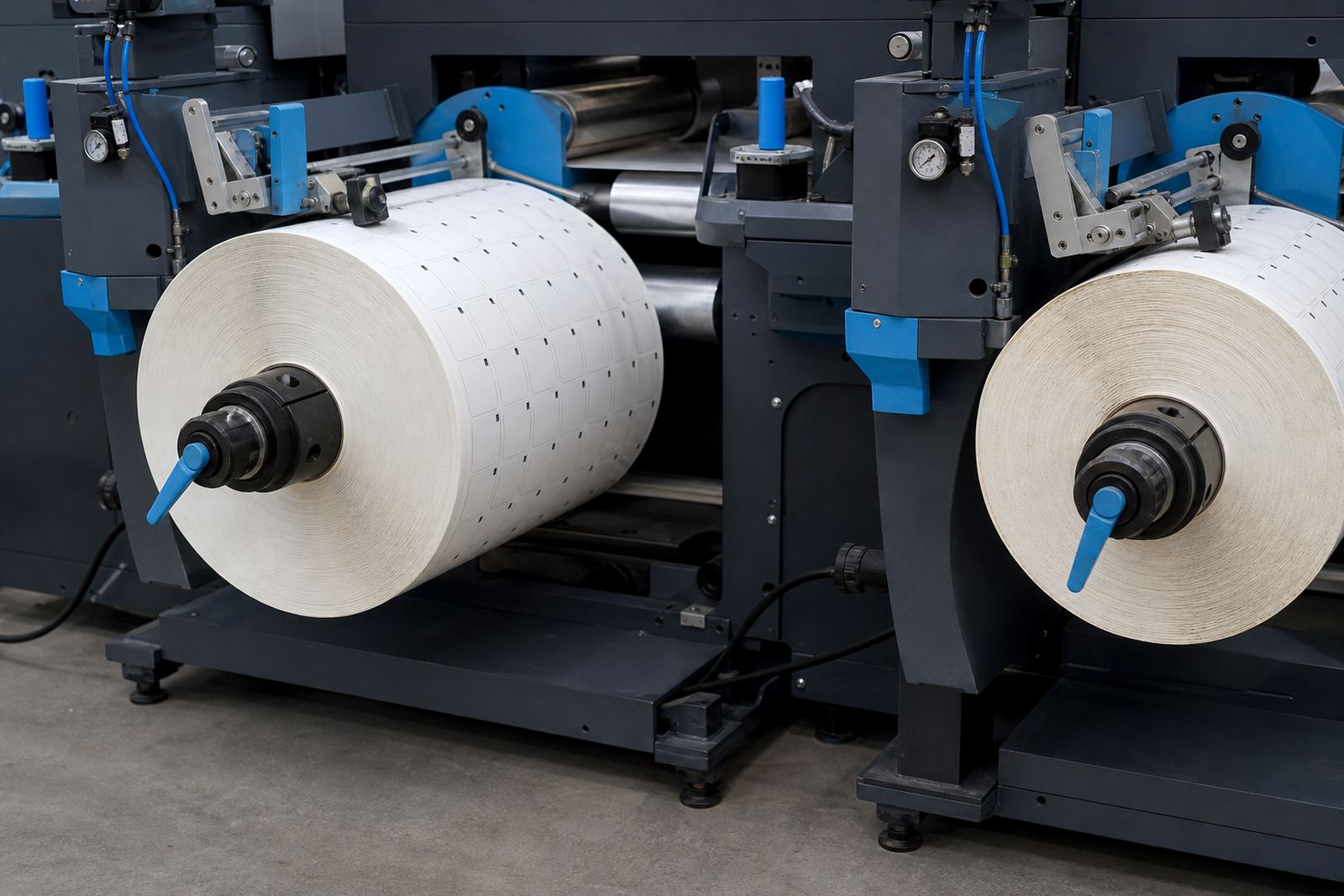
- Roll diameters are usually matched to the unwind and rewind stations, often 400 mm to 800 mm outside diameter.
- Coating can be full flood, spot varnish or patterned highlight work, depending on the print file and the laydown system.
- Registration marks are used to keep varnish in position on the printed image and to hold accuracy through the die station.
- Matrix stripping and rewind control matter when the varnish layer changes slip, surface feel or web stiffness.
For packaging producers that run mixed work, a varnish station should be selected with enough adjustment on coat thickness, web guidance and drying speed to handle both coated paper and film labels. Where the line runs narrow formats for cosmetics, wine, food or chemical labels, stable edge guiding and repeatable setup make a large differance to waste levels.
Where the unit fits best on South African jobs
Digital varnish finishing makes sense where labels must survive handling, refrigeration, warehouse movement or shelf display. In South African plants the strongest demand is often on premium product labels, fast-moving consumer goods, food packs, personal care lines and short-run promotional labels. The same unit also suits converters who need spot gloss on printed artwork or a protective coat over variable data work.
In Gauteng, KwaZulu-Natal, the Western Cape and the Eastern Cape, label printers often need a line that can switch between plain protective coating and decorative finishing without major retooling. A digital varnish unit helps when a shop handles different paper stocks, self-adhesive materials or film facestocks and the operator needs tight control over the finished roll. Where jobs move quickly from print to finishing, the varnish module becomes part of the same production rhythm rather than a separate off-line step.
- Suitable for narrow web label converting and short to medium production runs.
- Works well on promotional labels, product decoration and protective top coats.
- Can be paired with lamination, die-cutting, stripping, slitting and rewinding.
- Useful where the final roll must run cleanly on automatic application equipment.
Fitting, commissioning and operator setup
A varnish unit must be fitted with proper alignment to the rest of the finishing line, because coating accuracy depends on registration, tension and web path. Installation usually includes mechanical mounting, electrical connection, curing or drying checks, web tracking, and setting the coating head to match the line speed and roll format. If the unit uses UV curing, the lamp section and guarding need careful attention during commissioning, and the operator needs a clear routine for start-up, web threading and shutdown.
Our team handles machine installation, line commissioning and operator training for label printers and packaging producers across South Africa. In practice that means checking the web entry, coating pressure, registration marks, edge guide and rewind build so the varnish stays in step with the rest of the line. Where a plant already runs semi-rotary die-cutting or flexible die tooling, the varnish setup must be matched to the die station so the finished roll stays clean through the full cycle.
- Mechanical alignment of the coating head and web path.
- Electrical and control checks for the drive, curing or dryer section.
- Registration calibration so varnish lands in the correct print position.
- Operator training on threading, cleaning, coat adjustment and roll changeover.
Cleaning, wear points and practical care
Varnish units need regular cleaning because dried coating on rollers, nozzles or plates can mark the web and upset coverage. Daily care normally includes wiping exposed surfaces, checking the doctoring or metering parts, clearing overspray or residue and making sure the web path stays free of build-up. On UV systems, lamp condition and shield cleanliness matter just as much as the coating parts.
Preventive maintenance should include inspection of bearings, drive belts, hoses, pump parts and electrical connections where they are used. On busy lines, a small fault in the varnish stage can show up later as uneven gloss, streaking or poor die-cut register, so the service routine should cover the whole finishing sequence not only the coating head. In coastal areas the air carries more moisture and dust, which can affect storage, curing and the finish on the roll if the unit is left uncleaned after production.
- Clean rollers and metering parts before dried varnish builds up.
- Check web tracking and tension before every run.
- Keep spare doctoring parts, seals and service items on hand.
- Inspect electrical contacts, guards and moving parts during planned maintenance.
What to confirm before the order is placed
Before ordering a digital varnish unit, the finishing line needs a proper match on width, speed, coating method and rewind format. The machine builder should know the label material, the print process, the target roll diameter and whether the varnish is flood, spot or a mixed effect. It also helps to confirm the amount of web tension available in the existing line, because that affects how stable the coating path will be during production.
For practical buying and fitting, the key points are usually the unwind and rewind size, the maximum web width, the type of varnish, curing method, power supply, floor space and the downstream die-cutting method. If the line runs laser finishing or semi-rotary die-cutting, the varnish module must be compatible with the registration system and the handling of matrix waste. If you need spare parts supply, breakdown repairs or production optimisation later, those details should be recorded with the order so the service team has the right reference from the start.
- Maximum web width and minimum label size.
- Flood coat or spot varnish requirement.
- Print type, substrate and finish target.
- Unwind, rewind and roll diameter limits.
- Power requirements and curing method.
- Need for registration marks, die setup help or slitting setup.
Key facts
| Machine type | Digital varnish unit for label finishing lines |
|---|---|
| Coating options | Flood varnish, spot varnish, highlight coating |
| Typical web width | 250 mm to 530 mm, depending on line build |
| Roll handling | Matched unwind and rewind, commonly up to 800 mm OD |
| Line integration | Works with print, lamination, die-cutting, stripping, slitting and rewinding |
| Support | Installation, operator training, preventive maintenance and servicing |