A lamination station built for label web handling
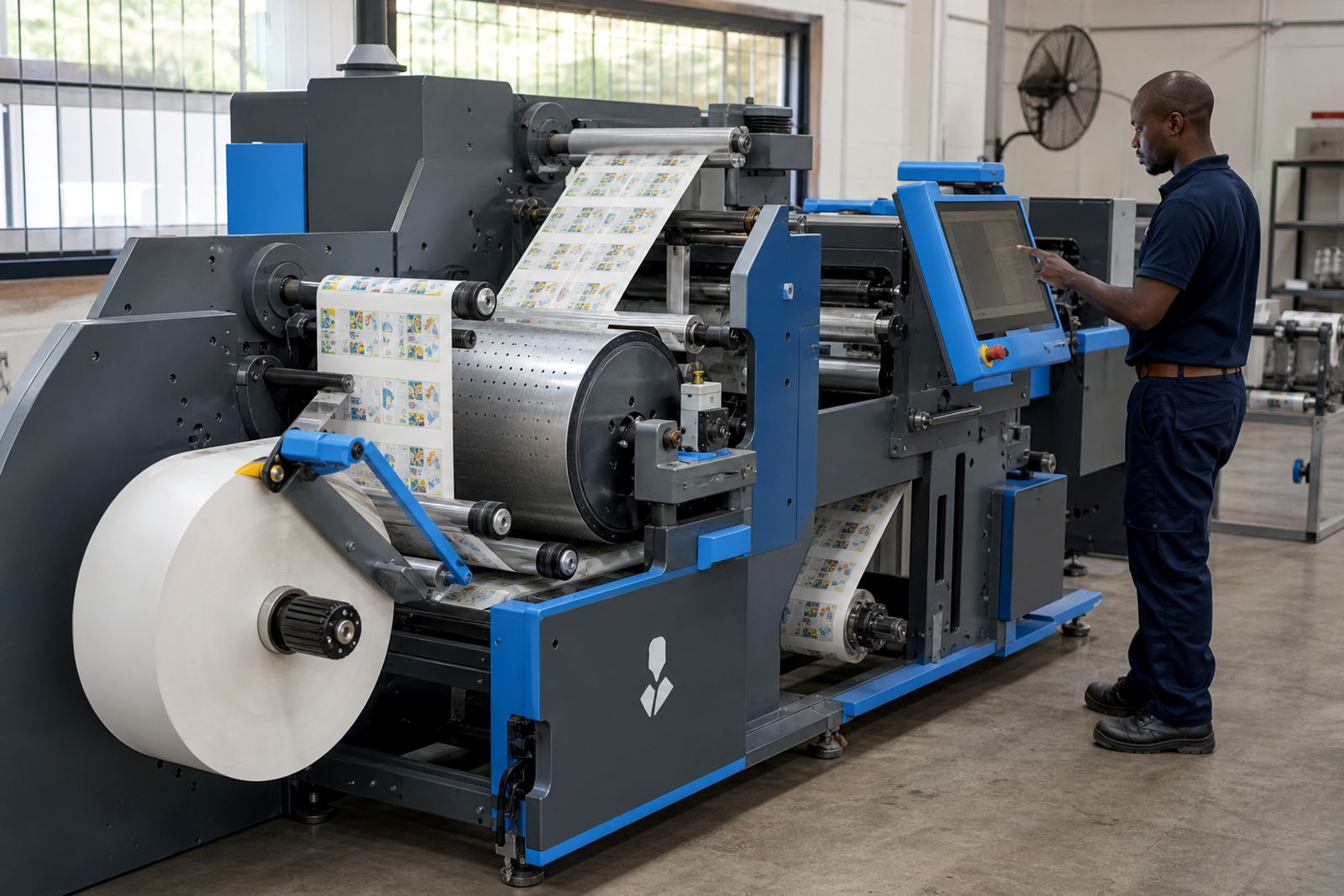
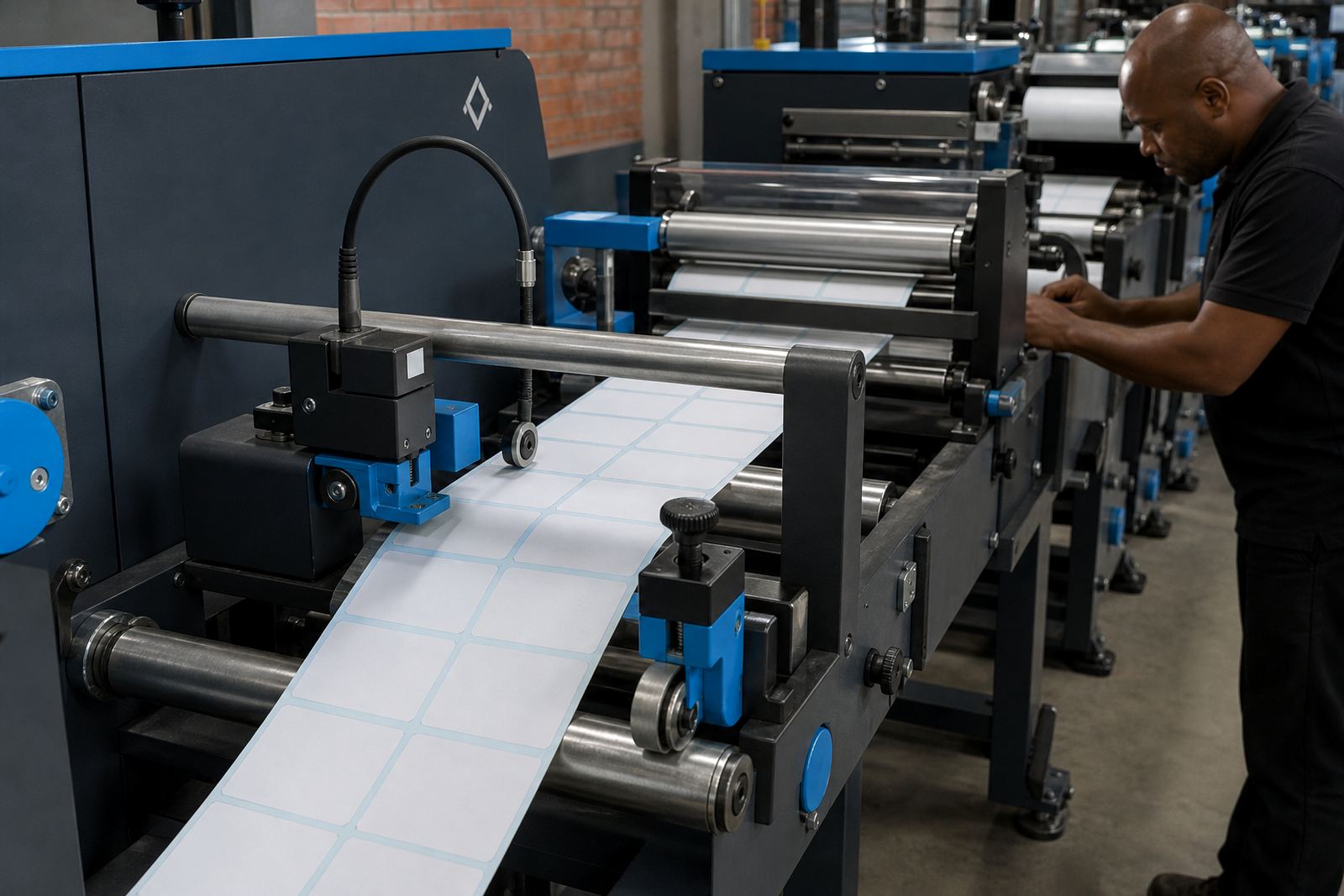
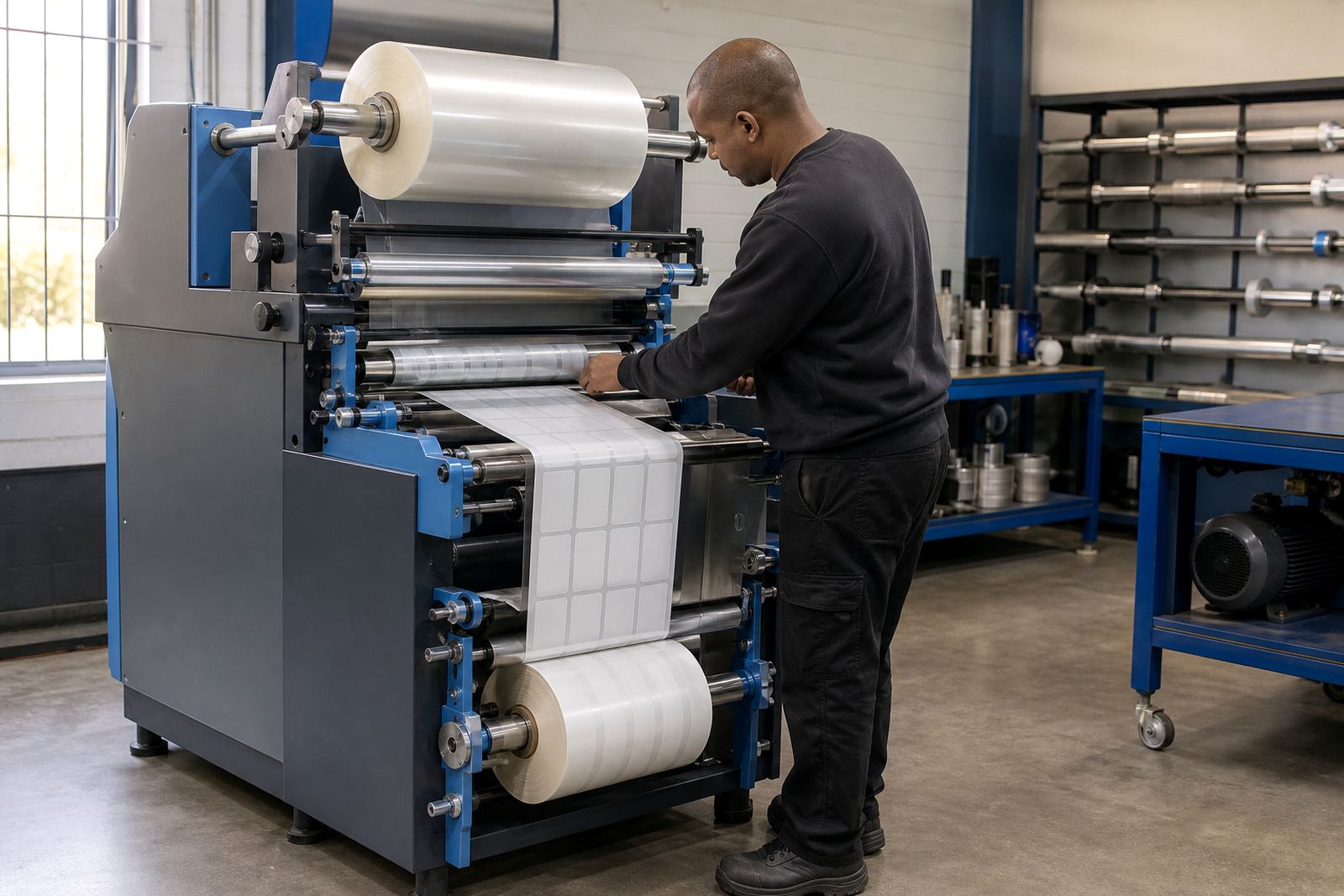
An overlaminate finisher applies a clear film over printed labels so the print face holds up better during converting, packing and despatch. In a label line, that film must track neatly over the print web, hold registration, and stay flat through the nip rollers before the material moves into die-cutting or slitting.
In practical terms, the station handles roll-fed stock, keeps tension steady and gives operators room to set the web path without chasing curl or edge lift. It is used where the print needs more surface protection than the substrate alone can give, especially on packaging work that moves through handling, refrigeration, or regular abrasion.
- Supports roll-to-roll finishing in line with print output
- Works with clear overlaminate films for gloss or matte appearance
- Helps protect barcodes, artwork and handling text
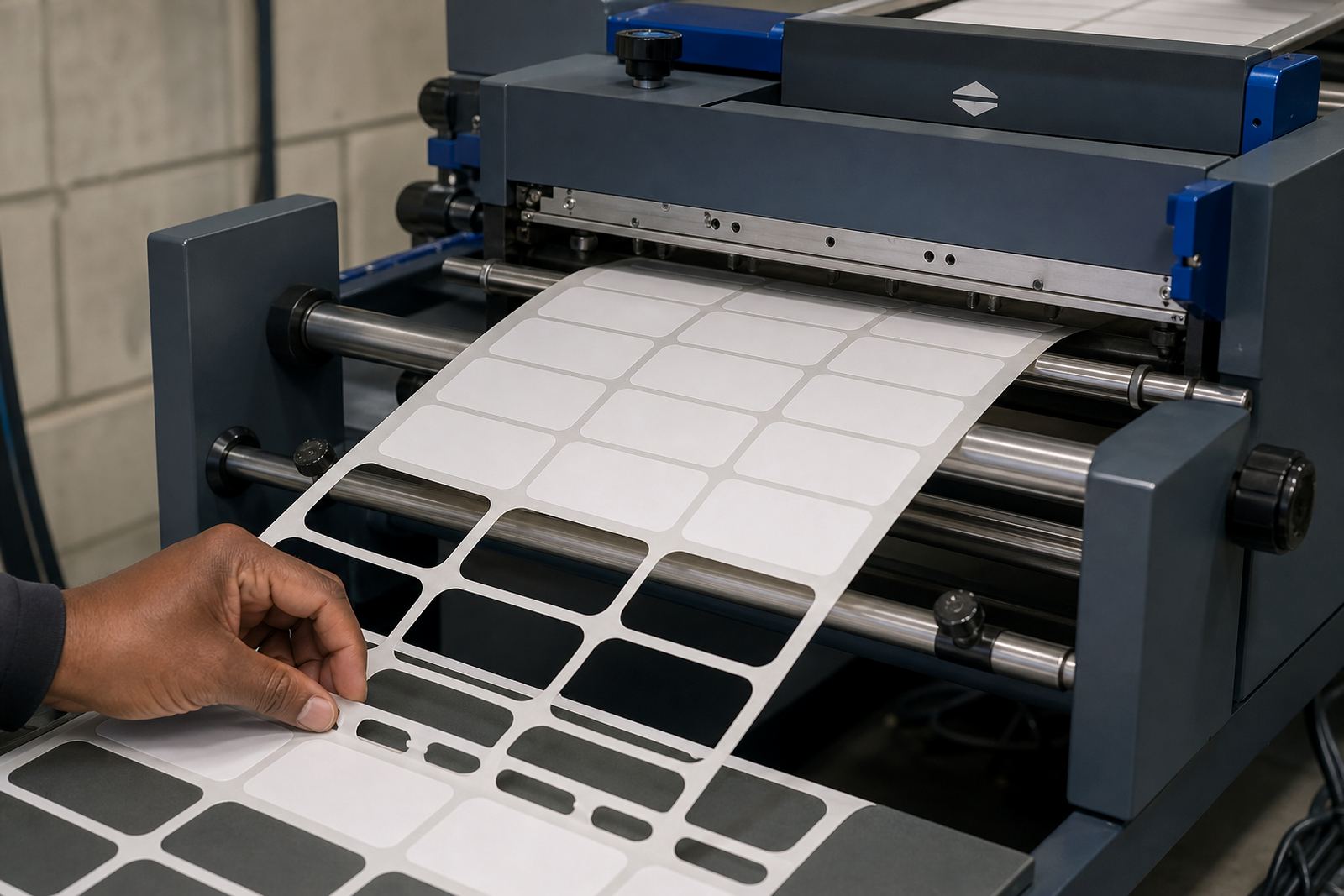
- Can be set ahead of die-cutting, matrix stripping and rewind stages
Where overlamination earns its place on the floor
This kind of finisher fits label printers, pack houses and converters that run short, mixed batches across multiple SKUs. It is useful on products that need a cleaner face, tougher handling, or a more controlled finish before the label is cut into final roll format.
Typical work includes food labels, chemical labels, personal care packs, warehouse labels and retail packs where the printed surface sees fingers, carton rub, or damp conditions. Coastal humidity in Durban or Gqeberha can make web control and film laydown more sensitive, so stable tension and straight tracking matter more than the brochure language suggests.
- Good fit for pressure-sensitive label production
- Useful where print needs added protection before delivery
- Suited to repeat label sizes and mixed artwork runs
- Works well where slitting and rewinding follow the finish stage
Machine build, web path and operating choices
Finisher setups vary by web width, unwind size and the way the film is fed. A compact station may use a manual thread path with pneumatic nip control, while a larger line may add servo-driven tension control, registration sensing and more precise rewind control. The right build depends on whether the work is narrow label stock or broader packaging webs.
Options often include single or dual unwind stands, laminating rollers, web guides, matrix stripping support, slit knives, and rewind turrets or dual rewind shafts. Some lines are arranged for semi-rotary finishing and die-cutting, while others are built around laser cut paths with the overlaminate applied first and the cut stage following after registration is locked in.
- Web widths commonly range from 200 mm to 520 mm
- Roll diameters can suit smaller changeovers or larger production rolls
- Inline or modular layout depends on the plant floor and output mix
- Registration mark sensing helps keep print and cut positions consistent
Installation, fitting and line alignment details
Installation is not only about bolting the frame into place. The machine needs correct level, enough service access, clean routing for the web path and proper alignment with the rest of the finishing line. On a fitted line, even a small offset in the roller path can show up as edge wander, film wrinkles or poor cut registration later on.
Our team handles machine installation, line commissioning and registration calibration, then checks rewind setup and slitting setup against the actual labels being run. Where the job needs it, we also cover operator training so the crew can thread the web, set tension, replace film and keep the finish stable through production.
- Power supply is normally mains-based and must suit the machine rating
- Compressed air may be used for tension, nip or brake functions on some models
- Floor space and service clearance should be confirmed before delivery
- Local supply conditions in Johannesburg, Pretoria or Cape Town may affect positioning and access
Care, wear parts and daily checks
An overlaminate finisher works best when the rollers stay clean, the film path is clear and the tension settings are left where the job needs them. Dust, adhesive residue and film edge slivers can build up around the nip area and guide rollers, so routine cleaning matters more than people expect.
Preventive maintenance helps with roller condition, bearing wear, sensor alignment and blade life on linked slitting sections. If the machine starts marking the film or pulling the web off centre, the cause is often a worn roller cover, dirty guide, weak brake setting or a registration issue rather than the laminate itself.
- Keep rollers free of adhesive build-up
- Check knives and shear parts for edge wear
- Inspect sensors, guides and tension brakes regularly
- Store laminate rolls flat and protected from heat and dirt
Details to confirm before you order
For a proper match, the machine specification should line up with the label format and the production mix. A narrow cosmetic label line does not need the same unwind, rewind or web control package as a broader packaging job with heavy laminate, variable artwork and regular roll changes.
Confirm the finished roll width, substrate thickness, laminate type, core size and the amount of unwind and rewind capacity needed on the floor. It also helps to know whether the line will run standard pressure-sensitive labels, high-clarity work, varnished stock or labels that need extra slip control before they are slit and rewound.
- Label web width and finished roll diameter
- Substrate type, adhesive type and laminate finish
- Core size, slit count and rewind direction
- Required registration mark style and sensing method
- Power supply details and available compressed air
- Whether the station is standalone, inline or part of a wider finishing line
Key facts
| Machine type | Overlaminate finisher for roll-fed label production |
|---|---|
| Web width | Typically 200 mm to 520 mm depending on build |
| Functions | Lamination, web guidance, slitting support, rewind control |
| Compatible stages | Before die-cutting, matrix stripping or final rewind |
| Power | Mains-powered; exact load depends on configuration |
| Options | Manual thread path, tension control, registration sensing, dual rewind |