Clean lane control for label webs that move fast
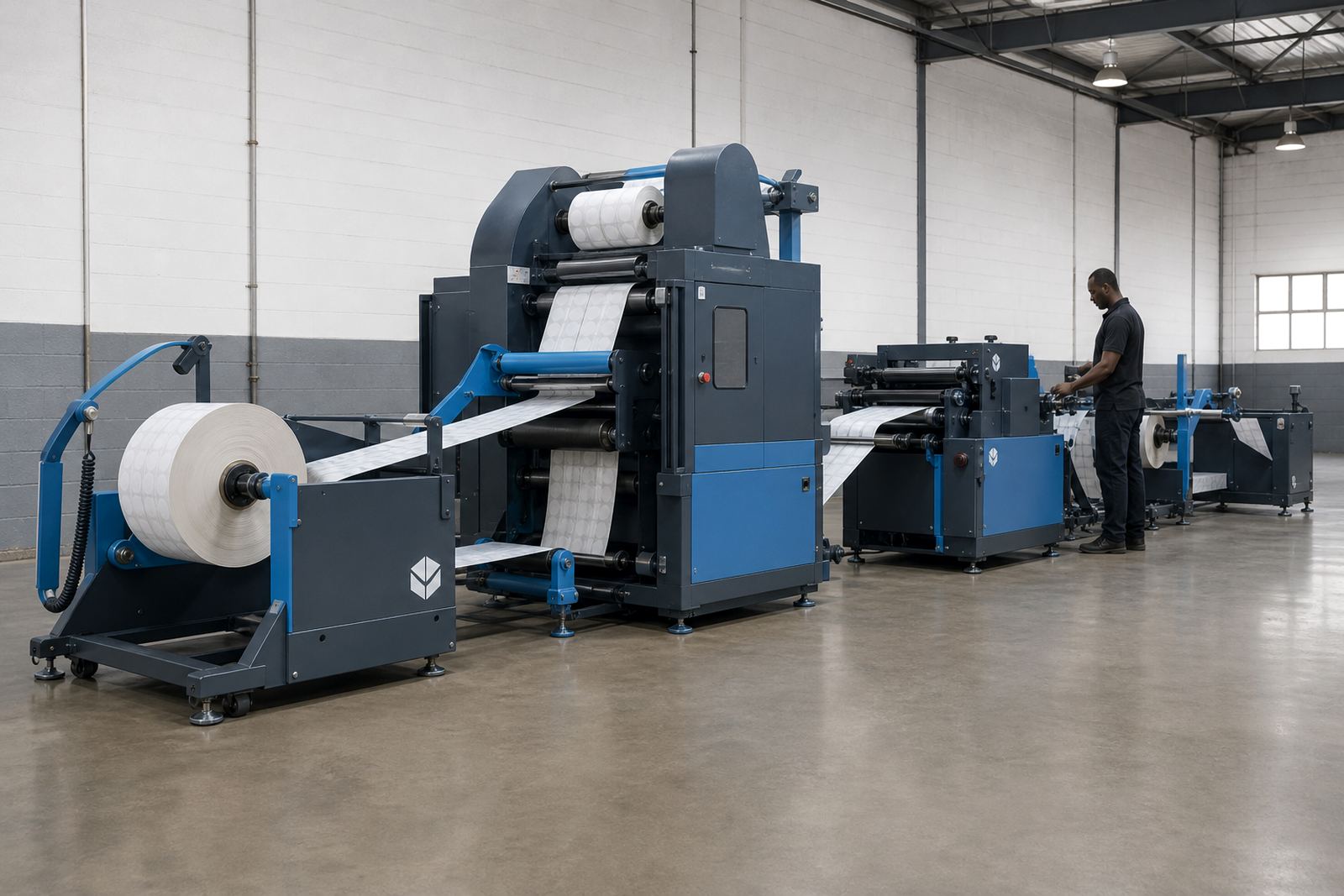
This unit is used where the web must be split into narrow lanes without wandering edges or ragged trim. In label finishing, the cut has to stay aligned with registration marks, web tension and the unwind path, otherwise the roll build becomes uneven and the rewind edge starts to drift.
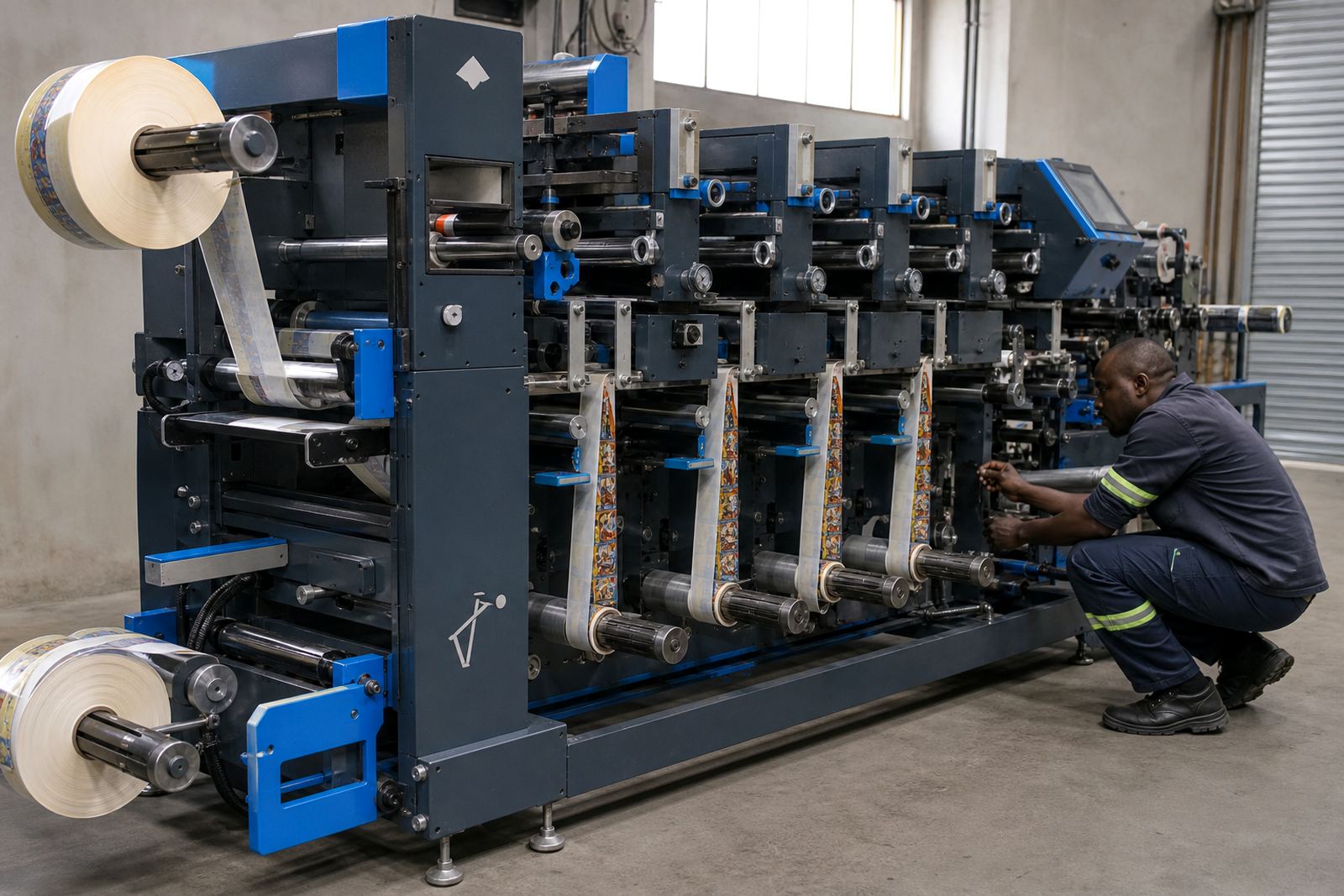
Shear slitting uses paired blades rather than a simple crush cut, so it suits demanding face stocks, films and coated materials where a cleaner edge is wanted. The setup is commonly added after lamination, varnish or die-cutting, then followed by matrix stripping and rewind control. On the floor it is used to keep lane width consistent when the job has more than one-up or when the finished rolls must be split for downstream packing.
- Stable lane width control on narrow web work
- Better edge quality on coated and film based label stock
- Works with rewind, slitting and strip waste handling
- Useful where registration must stay true across the run
Options that match the roll format on your press
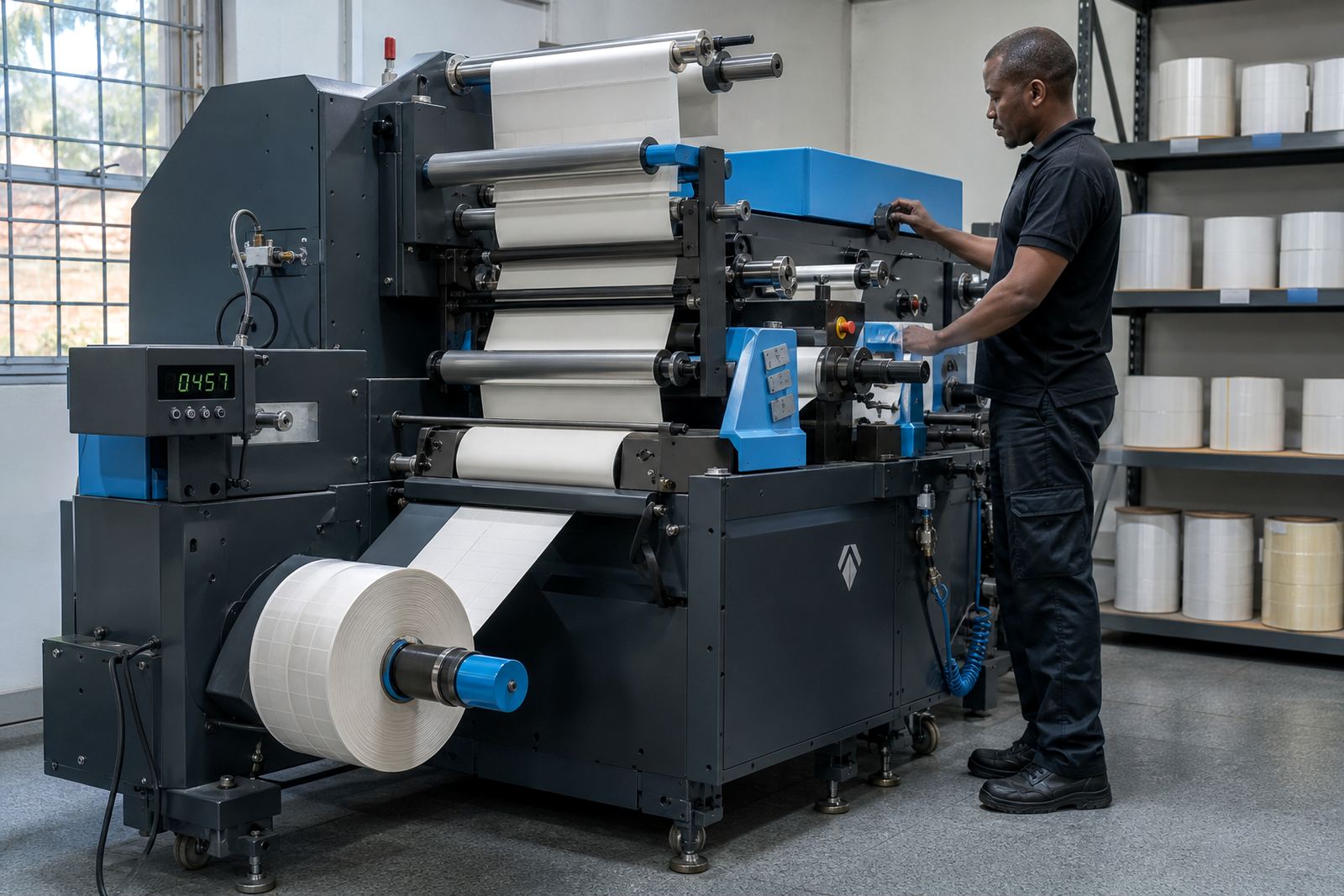
Shear slitting units are matched to the web width, roll diameter and the way the line feeds into finishing. Common setups handle compact rolls for shorter production lots as well as wider parent rolls for higher output. The shafting, guide rollers and blade carriers need to suit the material thickness and the way the stock behaves under tension.
For label printers and packaging producers, the main checks are the usable web width, the maximum unwind and rewind diameters, and how many lanes need to be split. Some lines work with fixed blade positions, while others use adjustable carriers for repeated changeovers. Where the stock carries fine print or a close registration layout, the slitting head must hold alignment without pulling the web sideways.
- Web width matched to the parent roll format
- Single lane or multi lane slitting arrangements
- Fixed or adjustable blade carrier layouts
- Guides and rollers set for stable web travel
Where this setup earns its keep
This product suits label printers producing narrow rolls for food labels, care labels, chemical packs and carton sleeves, as well as packaging lines that need clean slit rolls for further converting. It is also a practical fit where the printed web carries varnish, laminate or pressure sensitive adhesive and the finished roll must stay neat for packing and dispatch.
In busy finishing rooms around Randburg, Johannesburg and Pretoria, shear slitting is often used when the job mix shifts between short runs and repeat work. The same setup can help on more technical label stock where a dull or misaligned cut would leave fluff, edge lift or poor roll build. Coastal sites in Durban, Cape Town and Gqeberha also rely on careful set-up because humidity can change how some films and papers track through the line.
- Short and medium label runs with regular changeovers
- Pressure sensitive labels with tight roll build limits
- Printed webs that need clean edges after finishing
- Production lines that split stock into several lanes
Fitting, line set-up and training on the machine
The unit is normally installed into a finishing line with the unwind, web guide, slitting section and rewind all set in sequence. Alignment matters from the first pass, because a small angle error can show up later as telescoping, edge trimming loss or a soft roll shoulder. If the line carries registration marks for die-cut work or print repeat control, the slitting head must be set around that print position with care.
Our team handles machine installation, line commissioning and operator training across South Africa. That includes blade setting, lane setup, tension checks and the handover needed for day to day production. Where a line already has lamination, die cutting, matrix stripping or rewind stations, the slitting unit is fitted to work with the rest of the web path instead of fighting it.
- Installation into new or existing finishing lines
- Registration aware setup for printed webs
- Operator training on lane setting and tension control
- Commissioning with the full web path in view
Care that keeps the cut honest
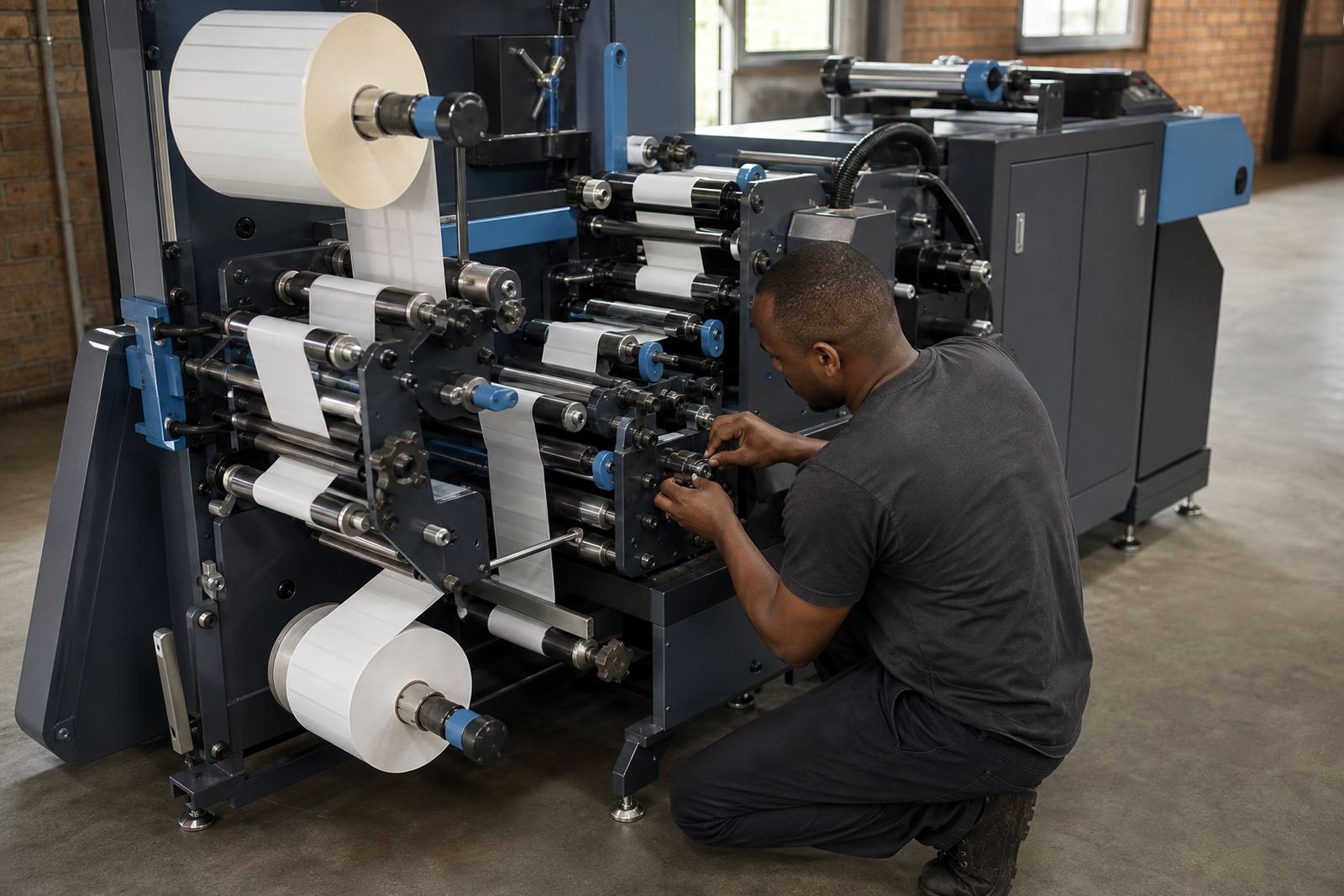
Shear blades need regular inspection, cleaning and correct overlap, especially on adhesive backed stock that can carry dust, varnish residue or fine paper fibres. A worn edge will start to fray the lane and put extra load on the rewind. On thicker or coated material, the blade pair should be checked for wear marks and side play before the job drifts out of tolerance.
Preventive maintenance usually covers blade condition, shaft bearings, roller alignment, tension settings and the state of the web guide. If a fault shows up in the production week, breakdown repairs and remote support are available through our team, with spare parts supply handled from our Kya Sand base. A clean slitting station is easier to keep accurate than one that runs with trapped trim and dust around the blade area.
- Check blade wear and blade overlap regularly
- Keep adhesive residue off rollers and guides
- Watch rewind build for telescoping or edge flare
- Review tension after material or lane changes
What to confirm before the unit is specified
When ordering a shear slitting unit, the useful details are the web width, roll diameter, substrate type, number of lanes and the quality target for the finished roll. It also helps to know whether the line uses flexible dies, semi rotary die-cutting, lamination or varnish before the slitting section, because each stage changes how the web behaves.
Tell us the registration style, the unwind and rewind sizes, and whether the job needs split rolls for further packing or direct use on another line. If the plant is in Johannesburg, Durban, Cape Town, Pretoria or Gqeberha, the same practical checks still apply. The more exact the format and material notes, the easier it is to set up a line that stays true under production pressure.
- Web width and finished roll diameter
- Substrate type, coating and adhesive build-up
- Number of lanes and required slit widths
- Whether the line includes die cutting or lamination
Key facts
| Unit type | Shear slitting setup for label finishing lines |
|---|---|
| Cut method | Paired blade shear slitting for cleaner edge control |
| Typical web range | Configured to suit the parent roll and lane layout |
| Compatible process stages | Unwind, laminate, die-cut, strip waste, slit and rewind |
| Control focus | Lane width stability, tension control and roll build quality |
| Service cover | Installation, operator training, maintenance and repairs |