Trim control beside the slitter
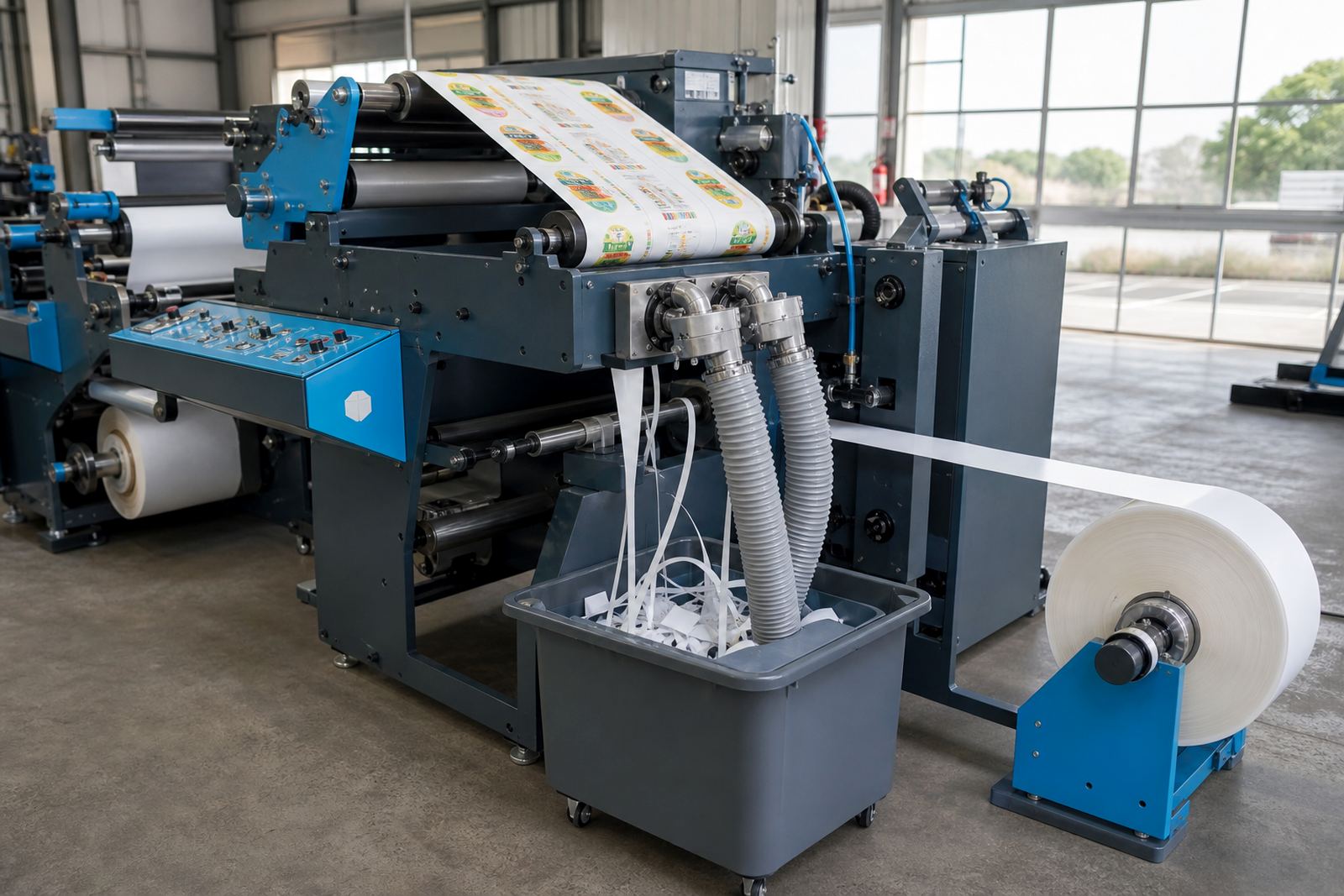
An inline trim extractor sits on the finishing line after slitting or die-cutting and takes light trim, matrix offcuts and loose strip waste into a controlled collection path. On busy label rooms in Kya Sand, Randburg and beyond, that means less waste hanging off the line, fewer stoppages for manual clearing, and a neater working area around the unwind and rewind stations.
The extractor can be fitted to label presses, offline finishing machines or compact converting lines where narrow waste strips leave the web in long ribbons. It is commonly used where the trim width changes from job to job, or where the operator has to keep registration marks and web tension stable while the waste is removed cleanly.
- For matrix stripping after die-cutting
- For slit edge waste on narrow label webs
- For clean collection on light packaging film or paper stock
- For lines where operators need a clearer floor area around the machine
Build options for different trim loads
Inline trim extractors are usually specified by web width, waste volume and how the waste is presented to the unit. Some setups use a compact extraction head with a small collector, while others need a longer duct run and a stronger blower to move continuous trim from wider webs or heavier liner waste.
Typical options include adjustable infeed height, variable extraction speed, antistatic trim control, a collection bag or bin, and a waste path that can be placed to the left or right of the machine frame. On wider lines, the guide path and suction points need to match the slitting layout so the trim is caught before it snakes across rollers or wraps around shafts.
- Web widths from narrow label rolls to wider packaging webs
- Left hand or right hand trim take-off
- Collector bag, bin or ducted waste outlet
- Variable suction control for light and heavier trim
Where the unit suits the work
This kind of extractor suits label houses producing self-adhesive rolls, shrink sleeves, overlaminated labels and short-run packaging jobs where trim can build up quickly. It is also useful where semi-rotary die-cutting leaves a fine matrix that needs to stay under control while the rewinder keeps pace with the line.
In production rooms handling film, paper, foil or laminated stock, the extractor helps keep the operator focused on edge quality, slit accuracy and rewind build. It is a practical addition on lines that see frequent changeovers, because the trim path can be adjusted when roll widths, unwind diameters or slit counts change from one job to the next.
- Pressure-sensitive label production
- Short-run packaging and sleeve converting
- Film, paper and laminated web finishing
- Sites with repeated changeovers and mixed job sizes
Installation points that matter on the line
Fitting needs depend on the finishing machine frame, the waste path and the available floor space around the unwind and rewind sections. The extractor has to sit where it can collect trim without pulling against the web path or disturbing registration, so the mounting position and duct route need careful setting during installation.
Where the unit uses mains power, the supply point must match the motor and control panel requirements, with room for the service team to access the collector, belts and filters. If the line uses pneumatic controls or auxiliary air for a discharge flap, the plant air point needs to be placed close enough for a tidy connection and stable operation.
- Mounting position relative to the slitter and rewinder
- Power supply matched to motor and controls
- Duct route and collector position
- Access space for belt, filter and waste removal checks
Keeping the extractor clean and steady
Routine care is plain work, but it matters. Trim dust, adhesive crumbs and liner fibres can collect in the intake path, around the collector and on the filter media, especially on jobs with coated stock or tacky adhesive lines. A quick visual check before a long run helps keep the airflow steady and the waste path open.
Belts, seals and collection bags should be checked for wear, while the suction path should stay free of loose label edges and snared matrix pieces. On lines handling narrow waste strips, an untidy trim path can start to wander if the guide rollers are dirty, so cleaning the contact points is part of normal upkeep.
- Clear the collector before it overfills
- Check filters for adhesive dust and fibre build-up
- Inspect belts, seals and ducts for wear
- Wipe guide points so trim feeds cleanly
What to confirm before the order is sent out
To specify the right inline trim extractor, we need the web width, trim width, waste type and the machine speed range. We also need to know whether the waste is from matrix stripping, edge slitting or both, because the intake position and collector size change with the job.
It helps to confirm the roll outer diameter, core size, unwind and rewind direction, available floor space, and whether the machine is running paper, film or laminated stock. If the line already has a slitting knife set or a semi-rotary die station, the trim extractor has to work around those parts without crowding the operator or the service access points.
- Web width and slit layout
- Trim type, matrix or edge waste
- Roll diameter and core size
- Machine speed, floor space and power point location
Support for setup, training and servicing
Inline trim extractors are part of a wider finishing line, so the setup has to suit the way the whole machine is used. Our team handles installation, operator training, preventive maintenance, breakdown repairs, remote support, spare parts supply, die setup help, registration calibration, rewind setup, slitting setup and production optimisation from Kya Sand, Randburg.
That matters where trim removal is tied to the rhythm of the line. If the waste path is set too tight, the trim may curl and snag. If it is too open, the extractor can lose grip on light material. A clean installation and correct operator training help keep those settings practical on real jobs across Johannesburg, Pretoria, Durban, Cape Town and Gqeberha.
- Machine installation and line commissioning
- Operator training on trim handling and waste routing
- Preventive maintenance and breakdown repairs
- Spare parts supply and remote support
Key facts
| Product type | Inline trim extraction system for label finishing lines |
|---|---|
| Common waste | Matrix trim, slit edge waste, light liner offcuts |
| Typical use | Inline or offline label die-cutting and slitting |
| Controls | Variable extraction control, depending on configuration |
| Collector options | Bag, bin or ducted outlet |
| Installation points | Mounting position, power point, duct route, access space |