Built for bigger rolls and longer production runs
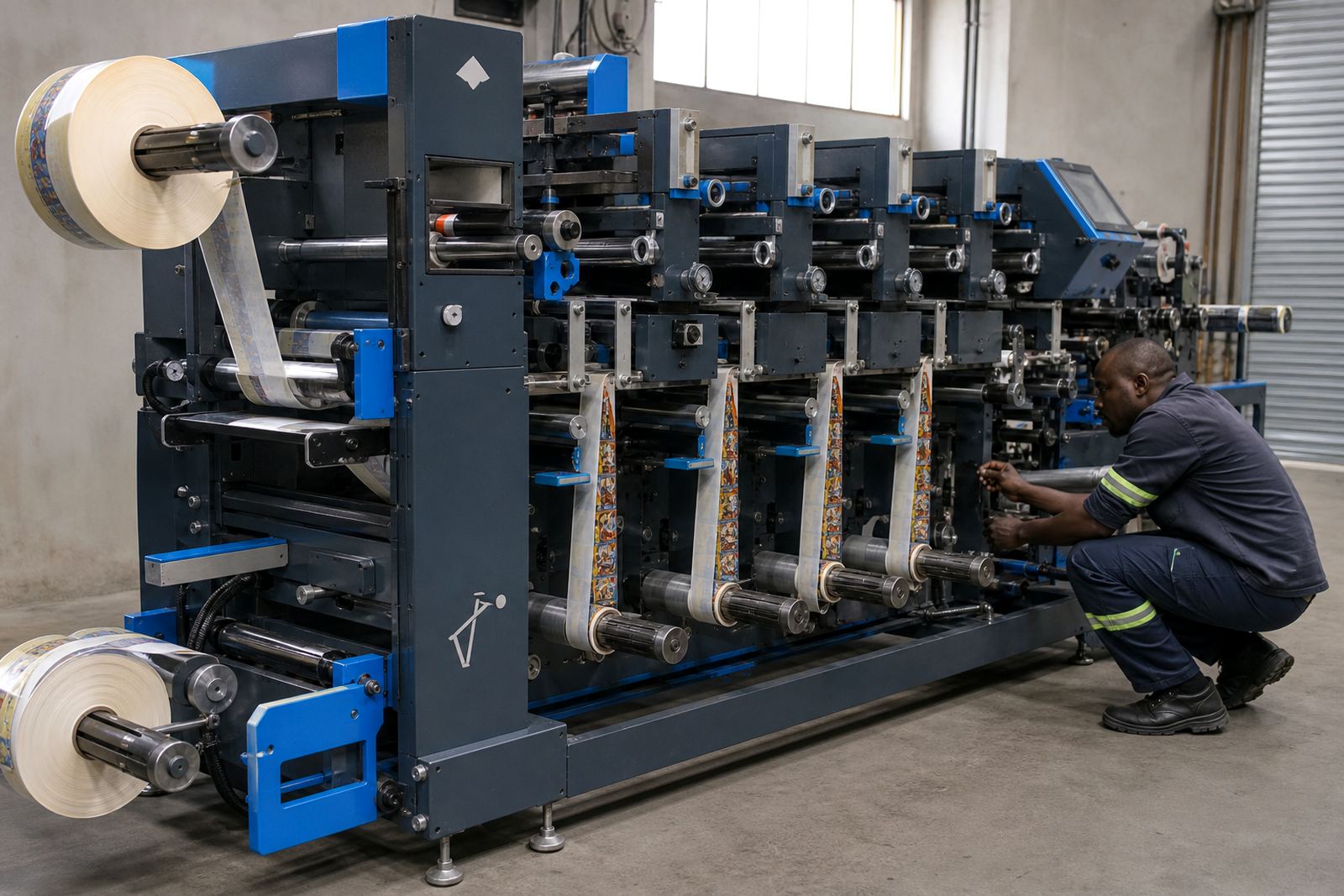
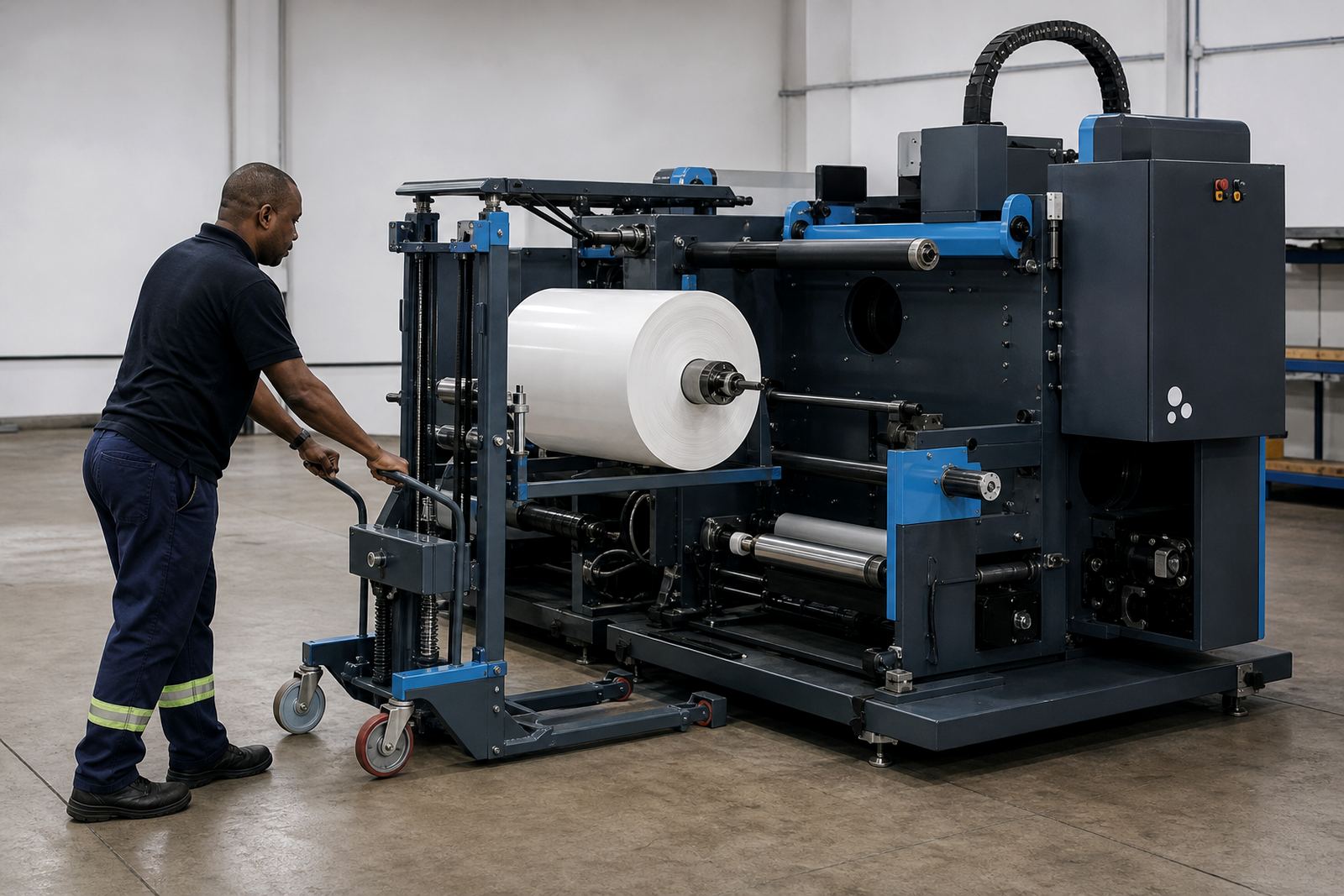
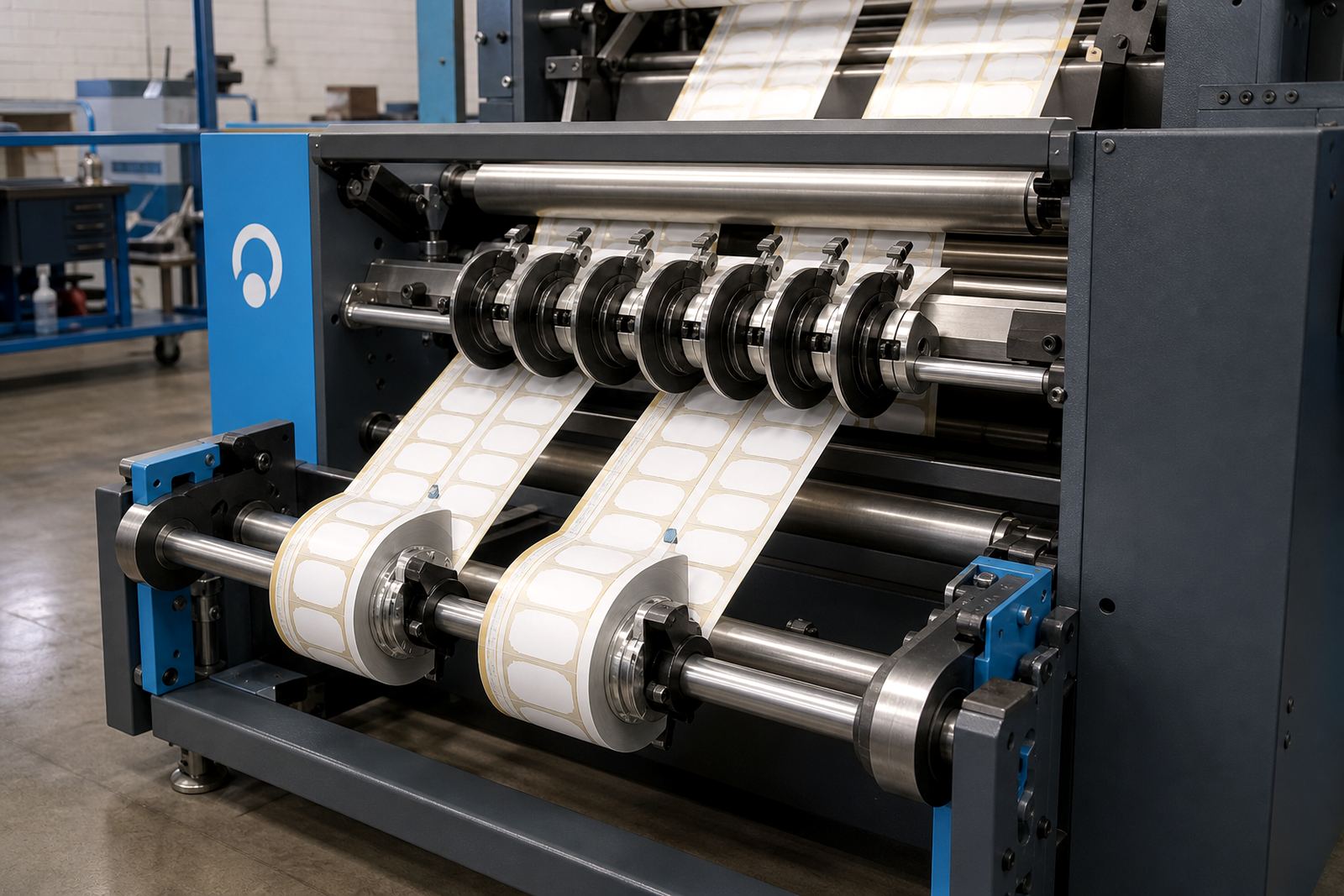
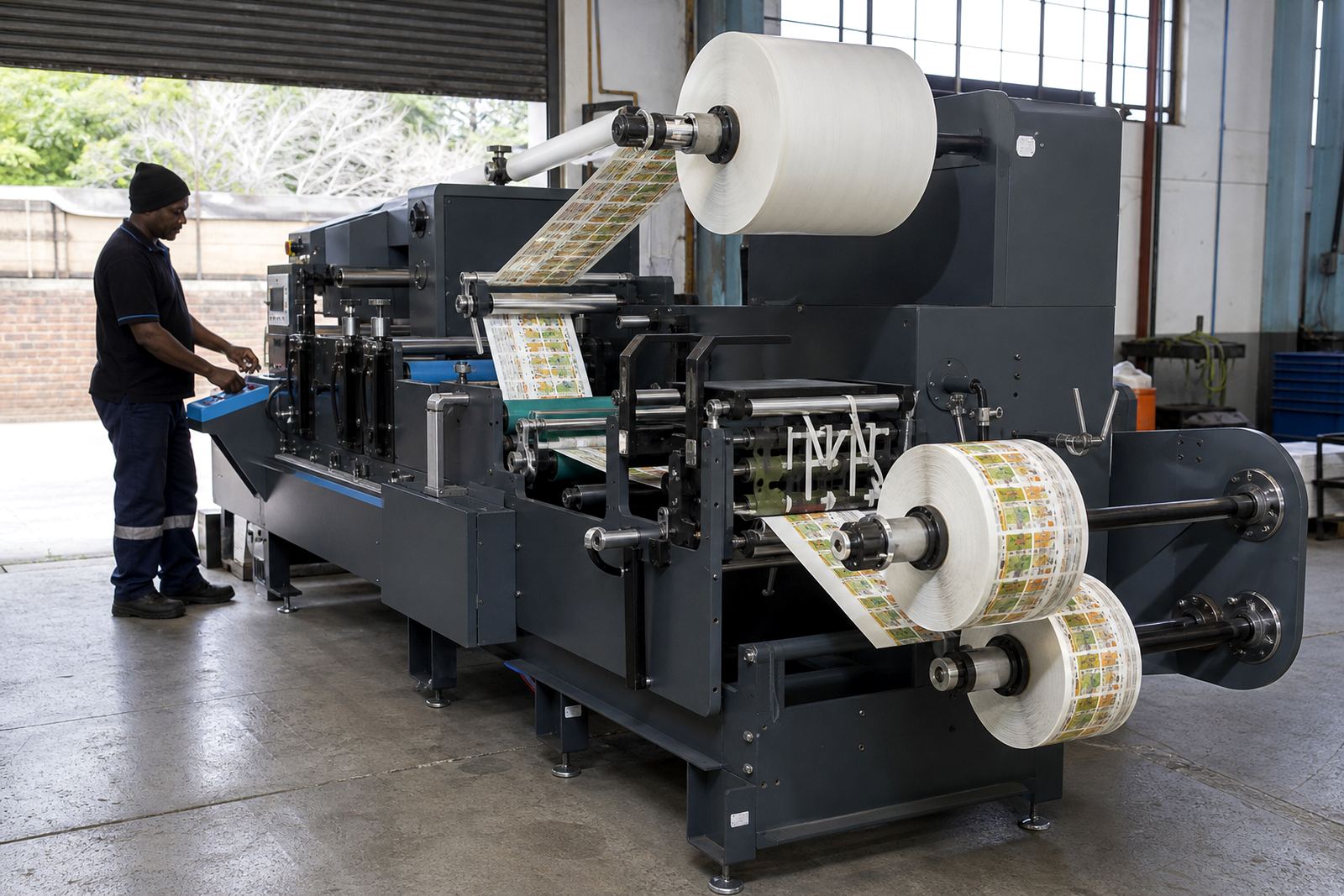
This machine line is used where a standard finishing set-up starts to feel cramped. Bigger unwind and rewind diameters let operators load heavier mother rolls and run for longer stretches, which is useful on pressure-sensitive labels, short packaging jobs and steady format work. The web path keeps the material under control through lamination, die-cutting, matrix stripping, slitting and rewinding, with registration marks guiding each cut position.
On digital label work, the finisher must keep the web steady even when artwork changes from job to job. Semi-rotary die-cutting is often preferred for flexible dies and repeat label work, while laser finishing can suit patterns that need no physical die, especially when shapes shift often. The right choice depends on substrate, label size, line speed and the finish expected at the rewinder.
- Designed for larger unwind and rewind diameters
- Supports longer continuous runs with fewer roll changes
- Works with printed label rolls, varnished stock and laminated webs
- Uses registration marks for accurate cut placement
Where this format fits on the floor
The Large Roll Finisher suits label printers handling food, beverage, personal care, chemical and industrial packs, where labels may carry barcodes, batch codes, gloss varnish or laminate. It also fits packaging producers that need printed self-adhesive rolls prepared for application in house or sent out in final form. Bigger roll handling helps where runs are planned in advance and the print room wants fewer interruptions for roll swaps.
In Gauteng plants and coastal sites alike, the machine needs a clean, level spot and enough space for roll loading, waste removal and rewind access. Humidity can change paper behaviour, so edge control and tension settings matter more on long runs in Durban or Gqeberha than many teams first expect. A good set-up keeps the web square through the cut, strips the matrix cleanly and leaves the rewind tight enough for packing or label application.
- Label converters with repeat print-and-finish work
- Packaging producers running prepared rolls in house
- Jobs with laminate, varnish, or mixed substrates
- Operations needing cleaner matrix stripping and slitting control
Installation, line fitment and operator handover
Installation for a large roll finisher is more than placing the frame and plugging in power. The web path has to be aligned, rollers checked, sensors set and the finishing sequence matched to the printed artwork. If the line includes lamination, die-cutting, stripping, slitting and rewinding in one pass, the spacing between stations becomes critical. The machine also needs correct registration calibration so the cut stays true to the print mark.
Our installation work covers line commissioning, operator training and the first production set-up. That usually includes guide settings, web threading, cut pressure, rewind tension and the handling of flexible dies where the machine uses them. We also look at how the job changes from roll to roll, because a finisher that is comfortable on one substrate may need a different approach on a thinner film or a heavier paper stock.
- Power connection and control check before commissioning
- Alignment of unwind, process path and rewind stations
- Registration mark calibration for printed labels
- Operator training on threading, tension and waste handling
Care, wear points and day-to-day upkeep
These machines do best when the web path stays clean and the moving parts are checked often. Adhesive dust, loose matrix edges and slitting trim can build up around rollers and blades, which affects cut quality and rewind shape. Lamination rollers should stay clean, and any wear on the guide path needs attention before it starts marking the film or shifting the web.
Preventive maintenance usually covers bearings, drive parts, sensor alignment, blade condition and the state of the strip waste path. On jobs with longer runs, the rewind torque needs to stay consistent from core to full roll. A tidy machine room helps, but so does a clear spare parts plan for common wear items and the consumables tied to the finishing method in use.
- Keep rollers, guides and stripping points free of adhesive build-up
- Check blade condition and flexible die wear on scheduled intervals
- Watch rewind tension as the roll grows
- Inspect sensors and registration marks during changeovers
Details to confirm before ordering
Before a large roll finisher is specified, the key details are the print width, finished label size, roll diameter, core size, substrate type and whether the job needs lamination, varnish or both. It also helps to know if the line will handle only one label format or a wider mix with different repeats. The more exact the job data, the easier it is to specify unwind, rewind and finishing stations that fit the real production pattern.
Please confirm the kind of die-cutting required, whether semi-rotary tooling or laser finishing is preferred, and how the waste matrix should leave the line. If you need slitting as well, state the number of lanes and the target roll build. Those details decide the machine layout, the control settings and the accessories needed for clean rewinding.
- Web width, finished label size and repeat length
- Unwind and rewind diameter range
- Core size, substrate and surface finish
- Need for lamination, varnish, slitting or matrix stripping
Key facts
| Machine type | Large roll digital label finisher |
|---|---|
| Finishing methods | Lamination, semi-rotary die-cutting, laser finishing, matrix stripping, slitting, rewinding |
| Roll handling | Larger unwind and rewind diameters for long runs |
| Web control | Registration mark sensing, tension control and guide alignment |
| Typical substrates | Paper, film and laminated label stocks |
| Support | Installation, operator training, servicing, spare parts and production support |