What the tension pack does on a finishing line
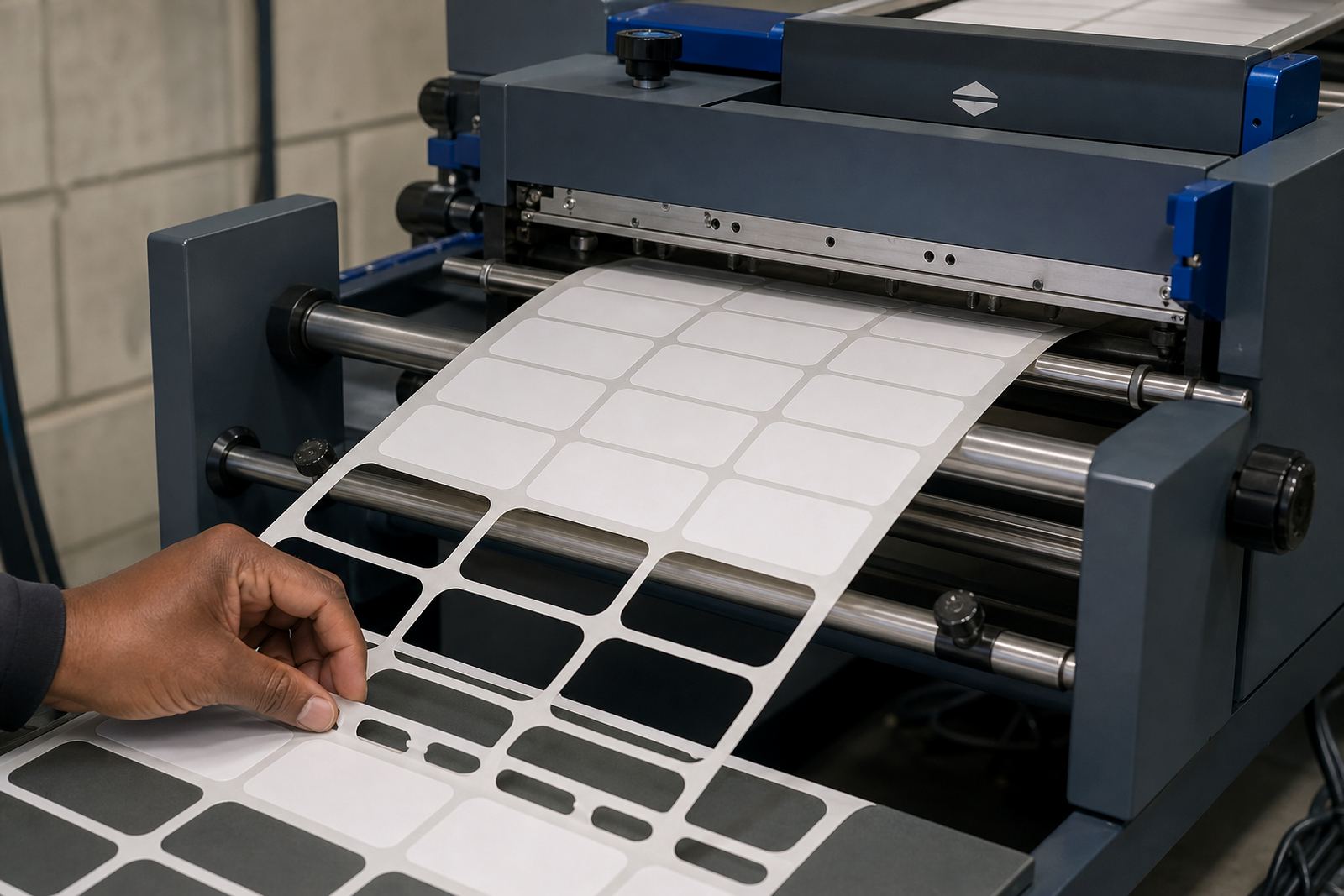
This control package sits between the unwind, processing stations and rewind section to keep the web moving with less drift, chatter and pull variation. On digital label work, a small shift in tension can change cut depth, register accuracy and the way the matrix releases after waste stripping, so the pack is set up to hold a steady path through the machine.
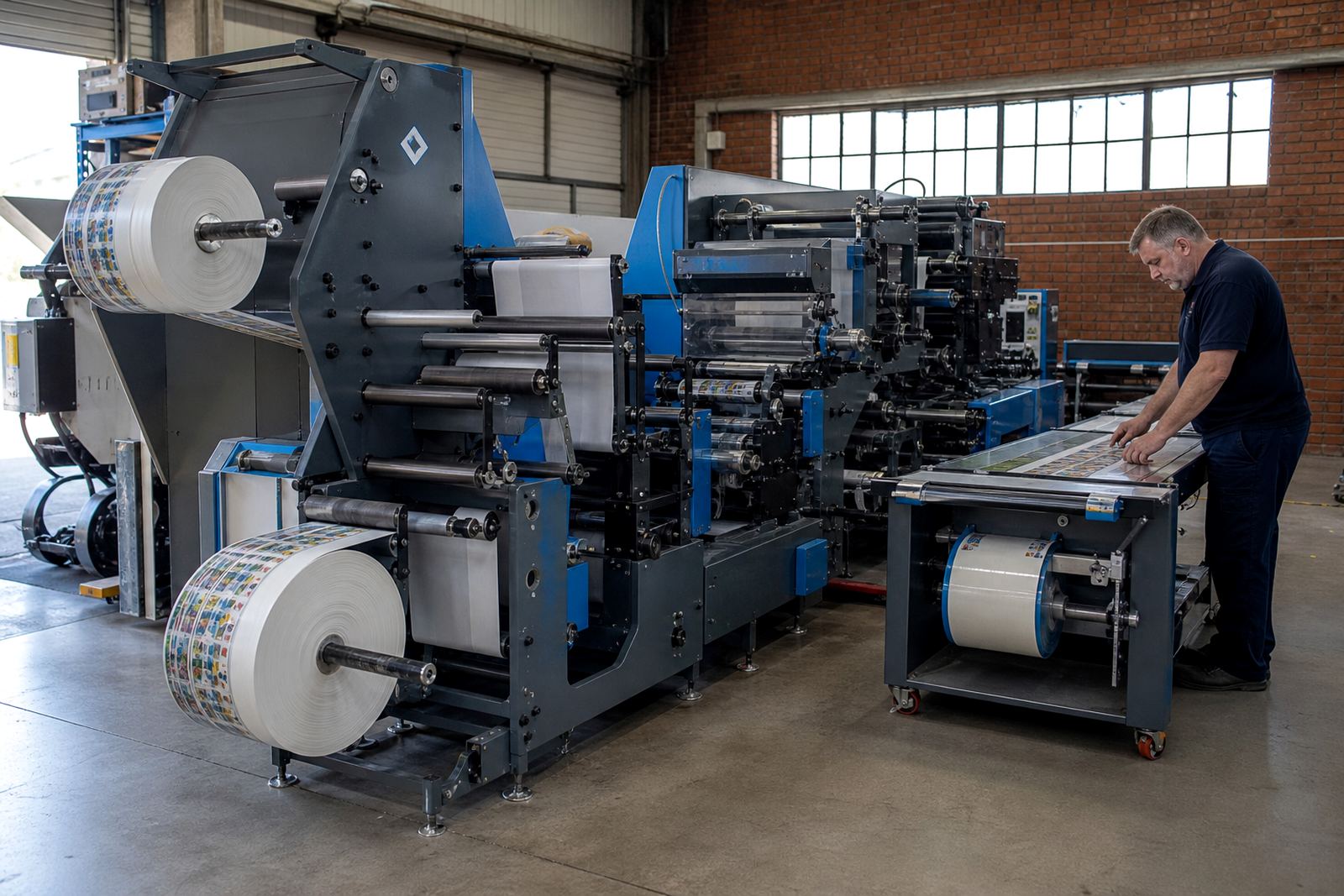
It is used where the roll has to travel through lamination, varnish, semi-rotary or laser die-cutting, slit knives and rewinding without the web stretching or relaxing unevenly. That matters on thin facestocks, soft films and laminated structures, especially when the job runs long metres and the core build must stay tight to the end.
- Controls web pull between unwind and rewind stations
- Supports stable register through print marks and cut marks
- Helps reduce telescoping, wrinkles and loose roll build
- Works with matrix stripping, slitting and slitting-rewind setups
Typical builds and control options
Tension control packages are normally specified to match the line width, web type and roll size used in the plant. A compact set-up for narrow labels is not the same as a wider finishing line handling heavier stock, thicker laminates or multiple slitting paths, so the load path and drive arrangement need to be matched carefully.
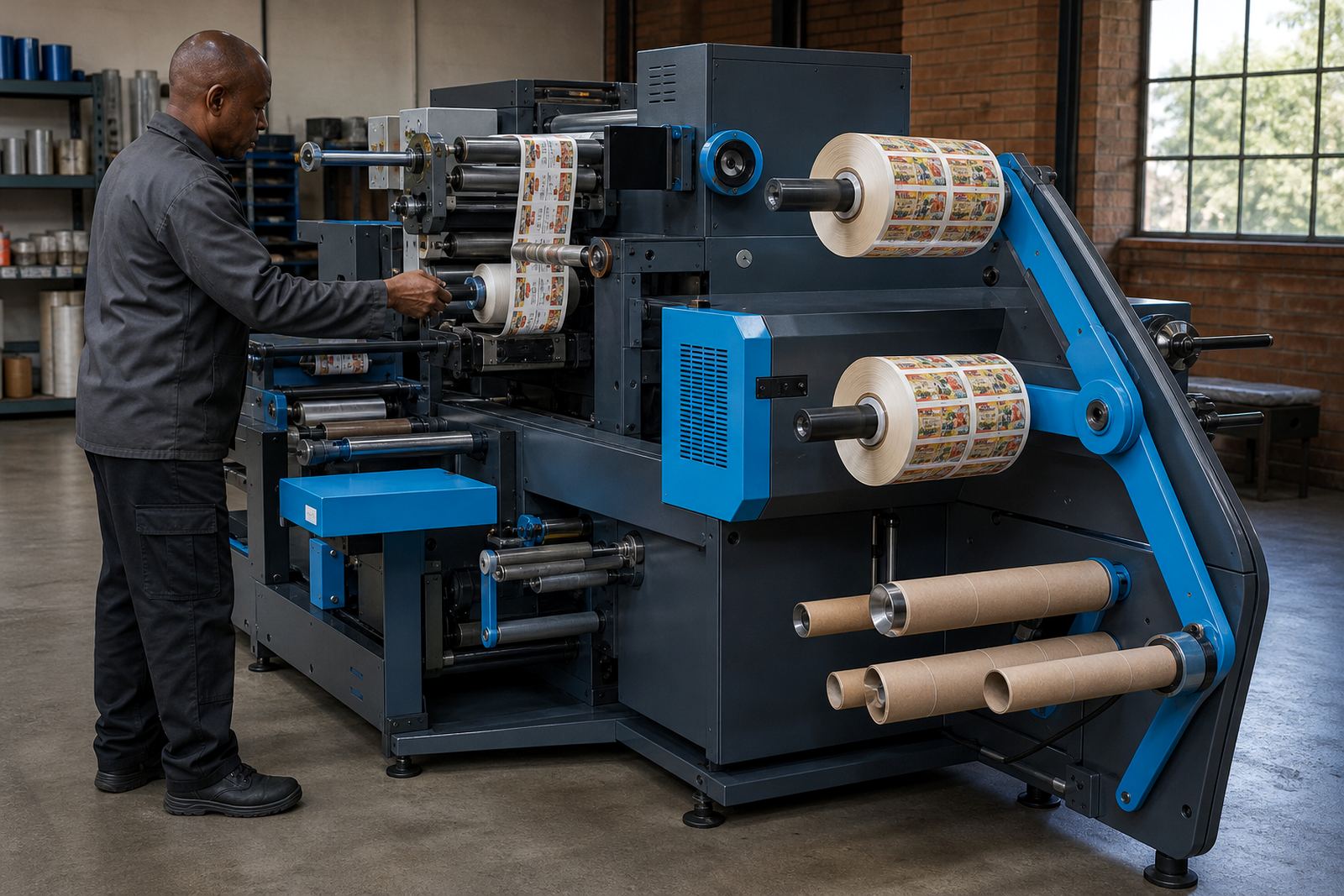
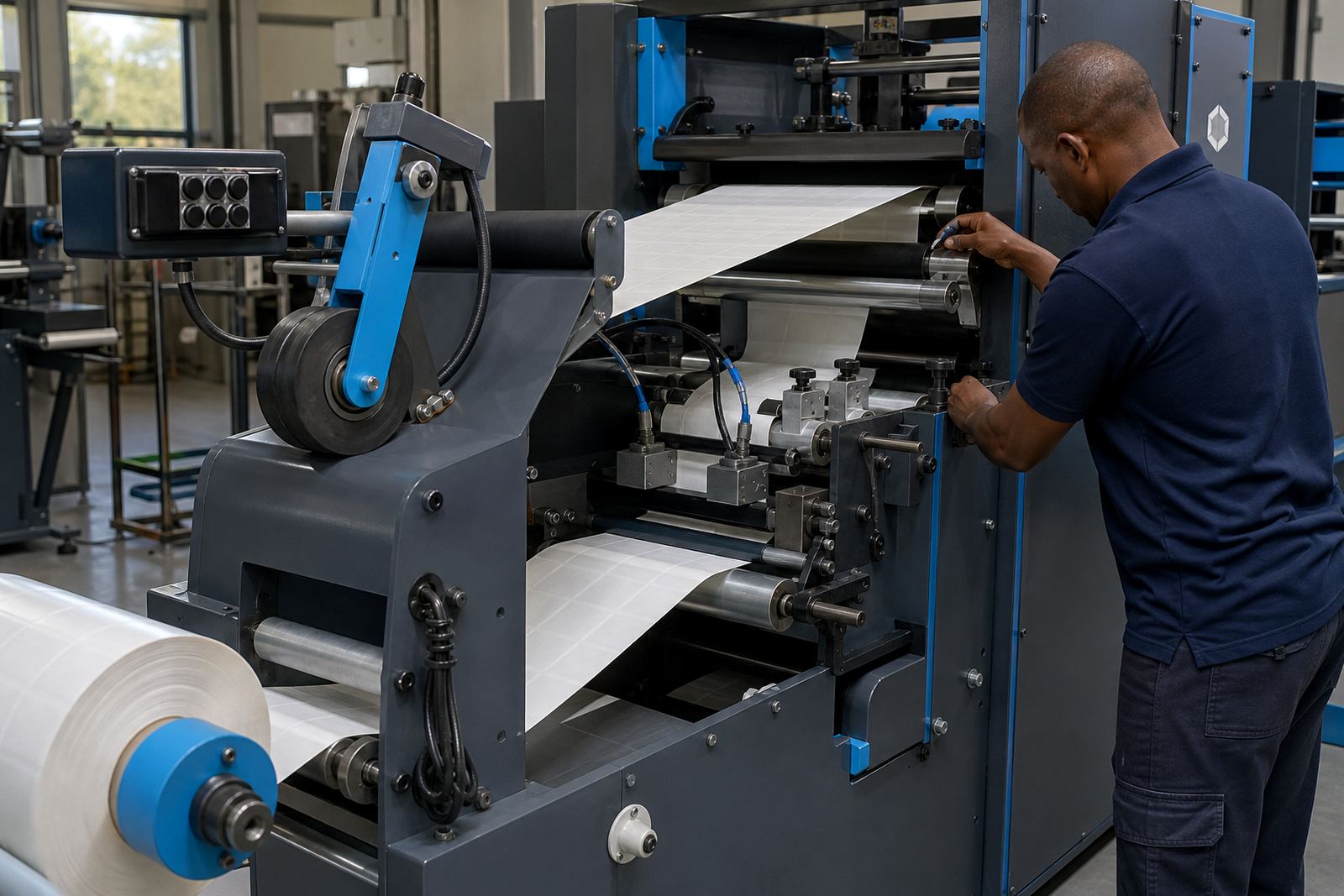
Common control elements include a brake or drive on the unwind, load sensing or dancer control, feedback for stable web pull, and a rewind section that winds the finished rolls cleanly. Some lines use fixed web guides and simple mechanical adjustment, while others need more exact electronic control for finer label work and tighter repeat lengths.
- Narrow web and wider label line configurations
- Manual, semi-automatic or closed-loop tension control
- Unwind brake, dancer, load cell or drive-based control
- Options for print registration, rewind torque and web stabilising
Where the pack suits the job
The pack suits shops and production floors that handle short runs, repeat label work and mixed substrates where setup changes are common. It is useful when a line has to move from uncoated paper to film, or from simple slitting to full finishing with lamination and waste removal.
In practical terms, it helps on beverage labels, food packs, chemical labels, care products and promotional labels where roll consistency matters at the end of the run. Plants that work with digital print output often need steadier tension than a basic rewind frame can give, especially when the job includes registration marks and tight cut tolerances.
- Digital label finishing rooms with varied daily jobs
- Packaging producers needing repeatable roll build
- Labels with lamination, varnish or intricate cut paths
- Lines that must keep slits aligned to the reel core
Installation, fitting and line integration
Fitting a tension control pack usually means checking the machine frame, web path, roll direction, power supply and the available space around the unwind and rewind stations. The pack has to sit square to the line, with the sensors or control points placed where they can read the web without rubbing or false movement.
Installation can include line commissioning, operator training and setup for registration calibration, rewind tension and slitting alignment. If the line is already in service, the existing rollers, brakes and sensor points must be checked first so the new control package works with the rest of the machine rather than fighting it.
- Check frame width, web path and roll direction
- Confirm power supply and control interface requirements
- Allow space for operator access and roll changeovers
- Set tension values for the actual substrate and repeat length
Care, cleaning and everyday checks
A tension pack works best when the web path stays clean and the rollers, guides and sensing surfaces are kept free of adhesive dust, trim offcuts and loose label stock. In a humid coastal store room, or in a hot inland plant, dirt and moisture can change how the web moves so regular checks matter.
Operators should watch for uneven roll build, drifting register, slipping edges or noise from the unwind and rewind stations. Bearings, belts, sensors and braking parts need routine inspection, and worn items should be replaced before they start affecting the cut quality or waste stripping section.
- Clean rollers, guides and sensors without leaving residue
- Inspect bearings, belts, brakes and load points routinely
- Watch for edge wandering, loose rolls and uneven rewind
- Keep spare wear parts ready for scheduled servicing
Details to confirm before ordering
To specify the right tension control pack, the machine width, web material and finishing sequence need to be clear. We also look at roll diameter, core size, maximum reel weight, line speed and whether the machine is working with printed registration marks or plain material.
It helps to know if the line will handle lamination, varnish, semi-rotary die-cutting, flexible dies, matrix stripping, slitting or a combined process. A proper match depends on the real job on the floor, not just the name on the machine plate.
- Web width, roll diameter and core size
- Substrate type, adhesive build and liner weight
- Process flow including lamination, die-cutting and rewind
- Control preference, sensor layout and available power
Key facts
| Function | Web tension stabilising for label finishing lines |
|---|---|
| Processes | Lamination, die-cutting, matrix stripping, slitting and rewinding |
| Control methods | Brake, dancer, load cell or drive-based options |
| Web compatibility | Paper, film, laminated stock and linered label webs |
| Typical roll sizes | Specified to machine width, core size and reel weight |
| Integration | Fits unwind and rewind sections with registration control |
| Service support | Installation, operator training, maintenance and parts supply |