Counted rewinding for labels that leave the press in order
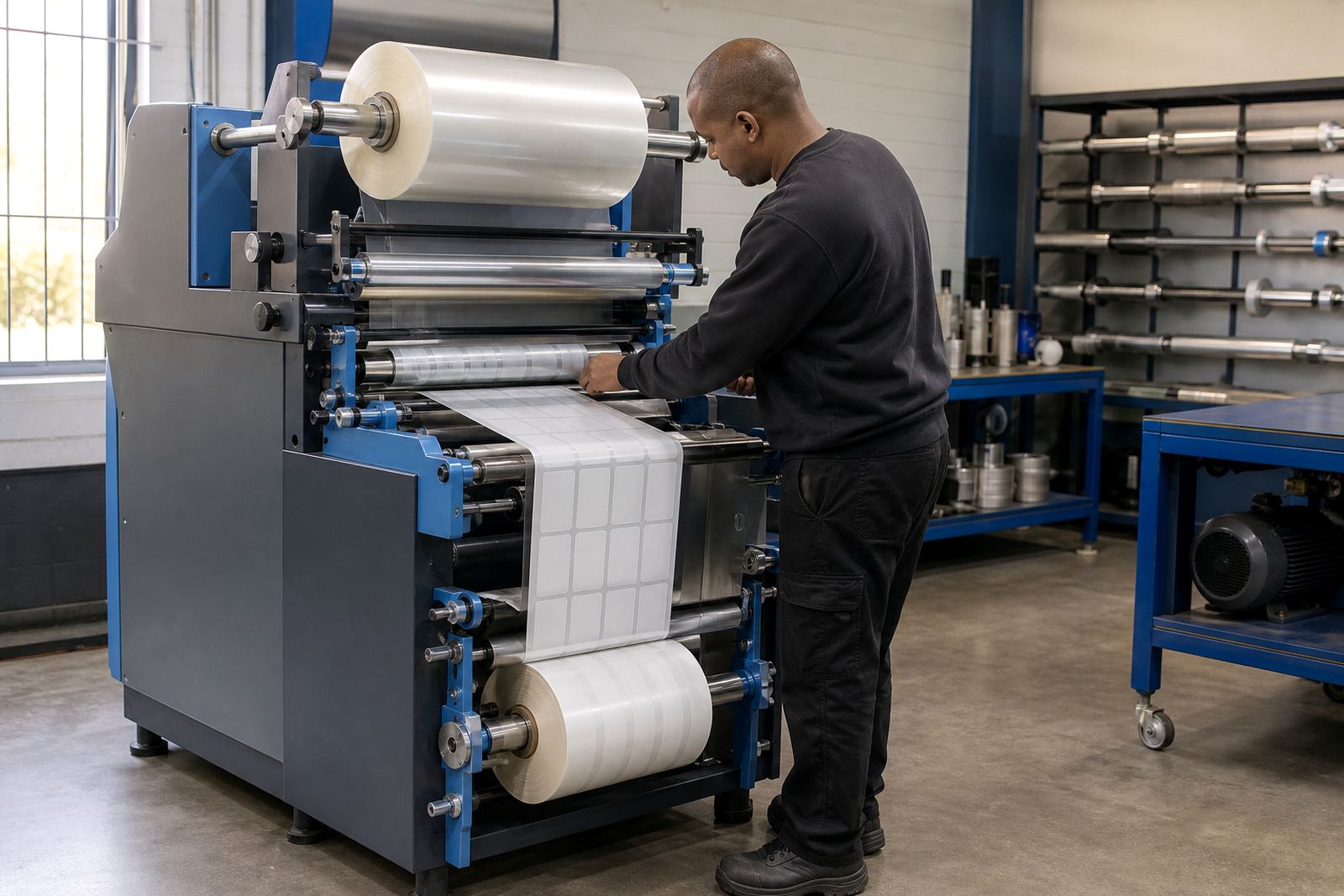
The Label Counter Rewinder is built for label work where the roll count matters as much as the rewind itself. It takes finished labels from a slitting line, digital die-cutting line or finishing station and rewinds them into controlled batches, so the output leaves the machine in clean, traceable rolls. In practice that helps when a plant issues labels in fixed quantities for carton packs, bottle runs, sachet work or customer dispatch packs.
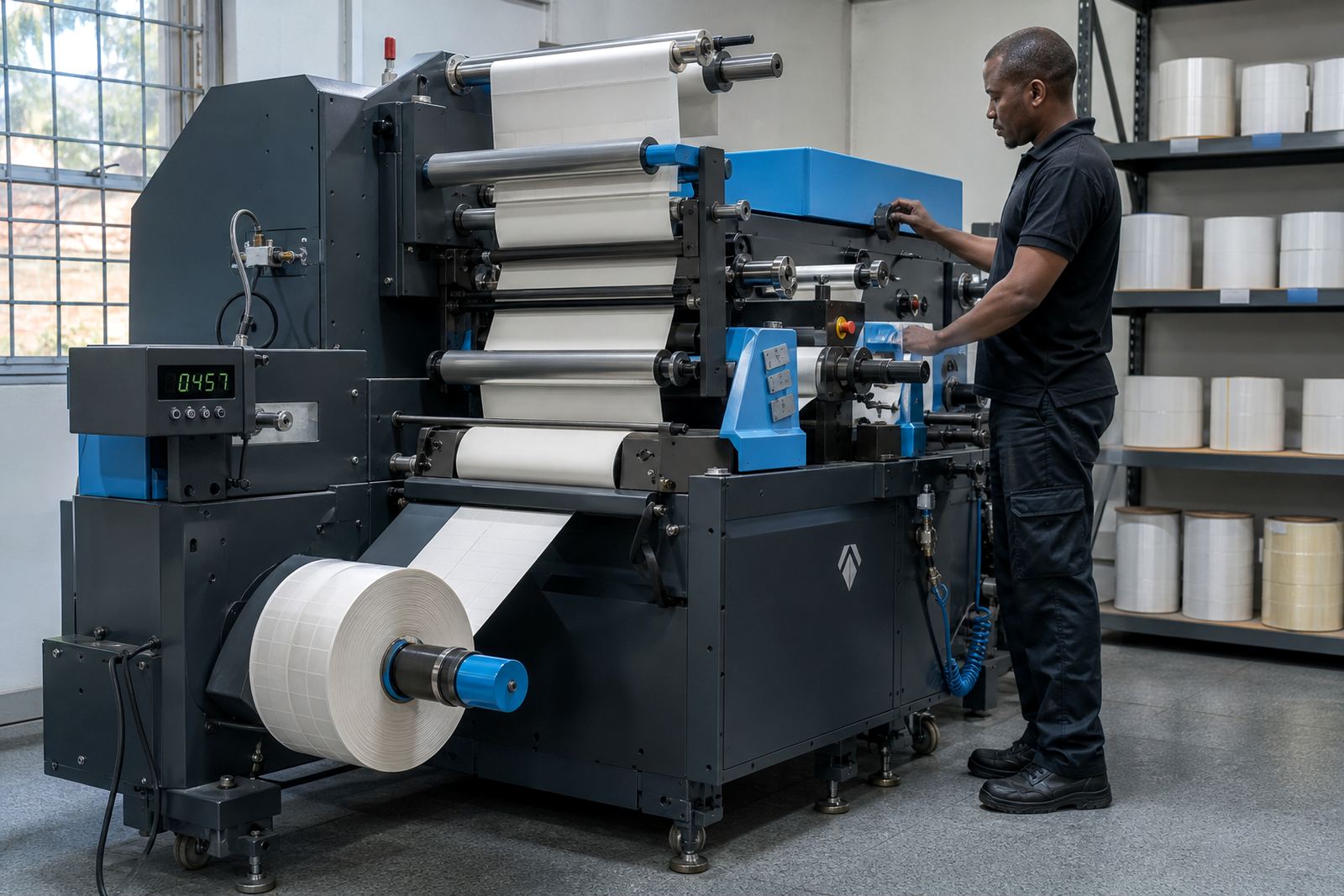
The machine reads the web as it rewinds and counts the labels or repeats according to the set format. That can be a simple label count per roll, a set batch quantity, or a repeat count tied to the artwork length and the registration marks on the web. On digital label work, that control matters when the print image, varnish, laminate and cut line all need to stay in step.
- Counted rewinding for labels on pressure-sensitive stock
- Suitable for laminated and varnished webs
- Works with matrix stripped output from finishing lines
- Can be set for batch rolls or production issue rolls
How the rewind section handles label stock
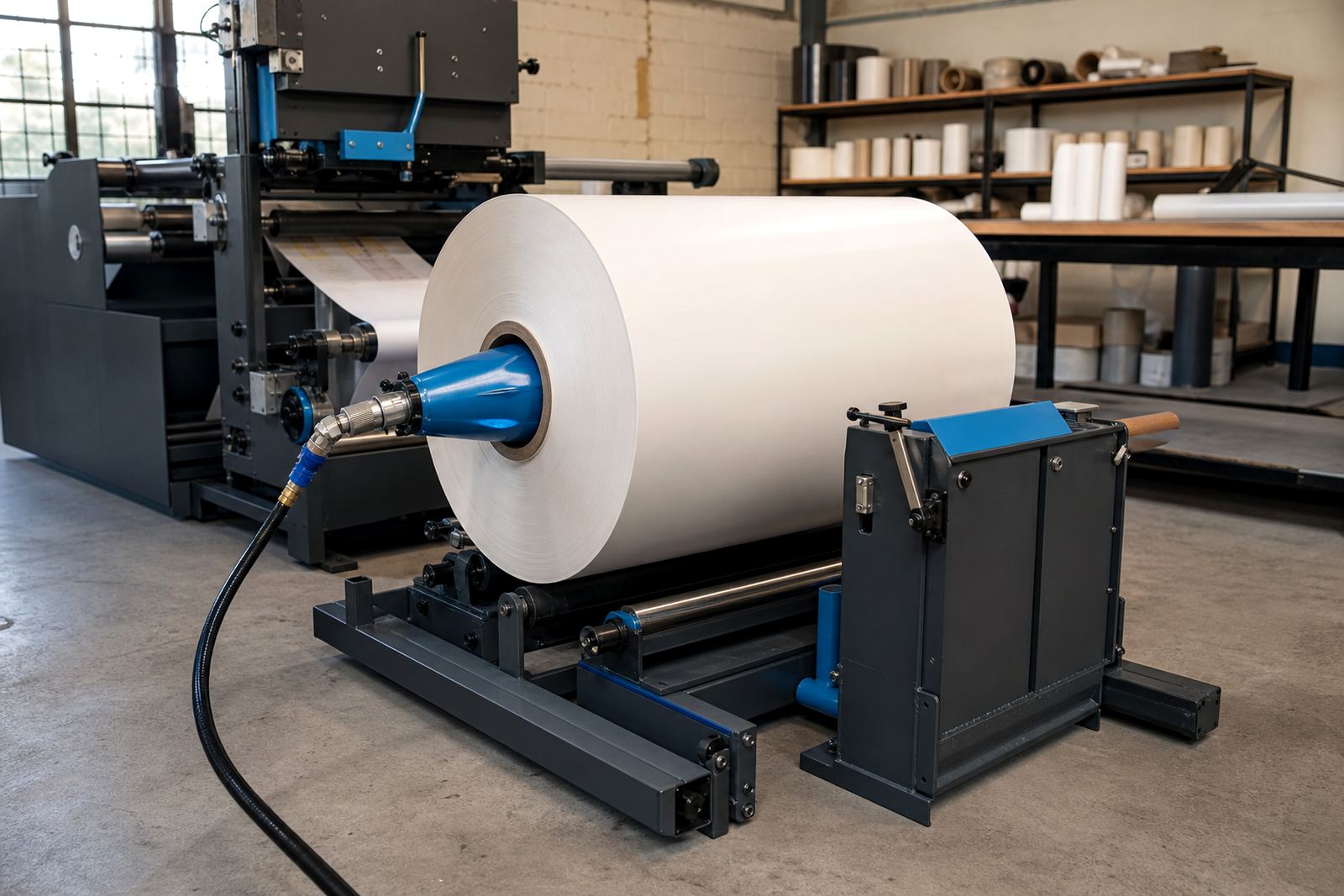
This type of machine is used after printing and finishing, when the material has already been cut, stripped and prepared for rewinding. The unwind side feeds the web in a stable path, then the rewind section builds the new roll to the selected quantity and tension. Good tension control matters on narrow label stock, especially where films, paper facestocks and thin liner combinations behave differently across the roll.
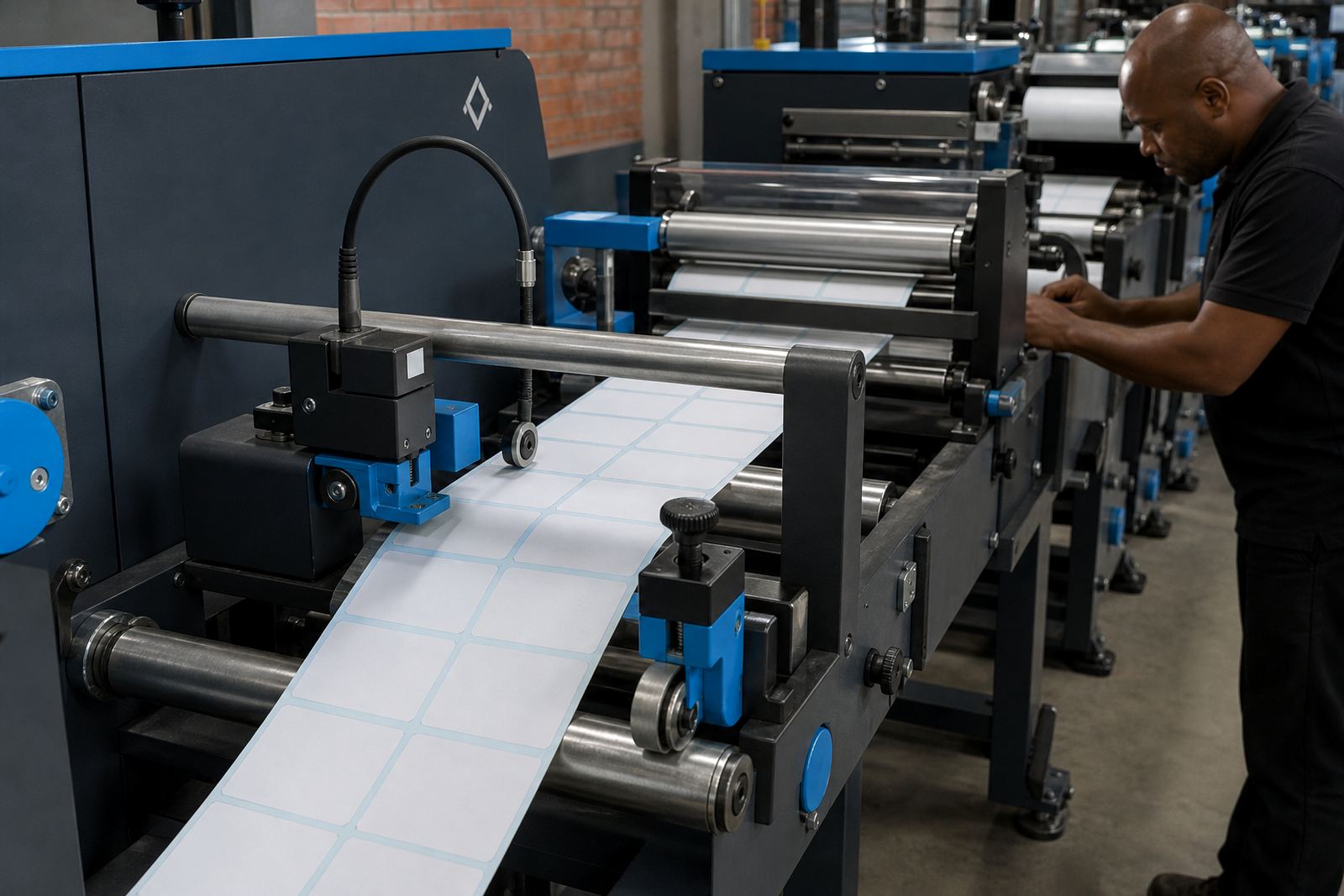
The control system is normally used with registration marks, so the machine can keep count accurately across repeat lengths and stop at the selected batch point. On semi-rotary or laser-finished labels, that is useful where the sheet or roll has been through variable work before it reaches the rewinder. The aim is a tidy roll edge, even build and a count the operator can trust at the packing table.
- Web path set for printed label rolls and converted rolls
- Tension control keeps rolls even from core to outer wrap
- Registration mark sensing supports repeat-based counting
- Suitable for short production runs and larger issue rolls
Roll sizes, widths and rewind options
Label rewinders are specified by the range of web widths, roll diameters and core sizes they need to handle on a daily shift. A compact unit may suit narrowweb labels for cosmetics, pharmaceuticals or food packs, while a wider model is better for packaging producers working with multiple lanes or larger printable webs. Roll size also depends on the finished product, the carton pack count and how the rolls are handled after rewind.
Common options include adjustable guides, selectable core holders, variable rewind direction and counting control that can be matched to the operator workflow. Some lines need a single spindle rewind with manual roll changeover, while others need a higher-duty arrangement for longer runs and heavier reels. The right setup depends on whether the machine sits beside a digital press, a finishing line or a separate inspection and slitting station.
- Web widths for narrow and medium label formats
- Core sizes matched to stock handling needs
- Roll diameter set by batch size and packing method
- Options for manual or assisted roll changeover
Where it fits in a label finishing line
This machine suits printers and converters that already handle die-cutting, stripping and slitting, then need counted reels for the next stage. It works well after semi-rotary die-cutting where flexible dies are in use, and after laser finishing where the label shape is completed without a traditional tool. It also suits lines that laminate first, then apply varnish, cut and strip waste before rewinding the finished rolls.
In a packaging plant, the counter rewinder may be used to separate production into customer packs, internal issue packs or job lots for later packing. In a label print shop, it can keep variable jobs organised when more than one label size runs on the same shift. The machine is also useful where the same artwork has to be split into defined roll counts for warehouse control or dispatch planning.
- Fits after laminate and varnish stations
- Works with matrix stripping and slitting lines
- Useful for internal issue, dispatch and packing control
- Suitable for label printers and packaging producers
Installation, setup and operator training on site
Installation usually involves positioning the machine on a level floor, checking the web path, aligning the guides and setting the tension for the stock in use. If the line includes a rewinder feed from another finishing machine, the handover point is checked so the web enters cleanly without wandering. Power connection, control settings and safety checks are part of the setup, and the operator is shown how to thread the material, set the count and confirm the finished roll.
Our team handles machine installation, line commissioning, operator training, preventive maintenance, breakdown repairs, remote support, spare parts supply, die setup help, registration calibration, rewind setup, slitting setup and production optimisation. From Kya Sand, Randburg, we support label shops and packaging plants across Johannesburg, Pretoria, Durban, Cape Town and Gqeberha. If you need to talk through the line fit, our contact form is the normal starting point for the job details.
- Site setup for stand-alone or inline use
- Training covers threading, counting and roll changeover
- Alignment checks help protect cut edges and roll finish
- Support available for South African production sites
Care, service and the details to confirm first
Routine care keeps a rewinder steady and reduces avoidable roll faults. Operators should keep the web path clean, check the guides for dust or adhesive build-up and watch the tension settings when stock changes from paper to film. On coated or laminated label stock, light contamination can build up on rollers and affect tracking, so regular cleaning matters more than people expect.
When ordering, it helps to confirm the web width, roll diameter, core size, label pitch, rewind direction, count method and whether the machine is feeding from a slitter, a die-cutter or a finishing line. If the labels carry registration marks, that detail should be clear, along with the material type and any varnish or laminate already on the roll. Those points guide the final setup and make sure the machine suits the job it will do every week.
- Confirm web width and maximum roll diameter
- Confirm core size and rewind direction
- State label pitch, count method and registration marks
- Include stock type, laminate and varnish details
Key facts
| Machine type | Label counter rewinder for counted batch rolls |
|---|---|
| Web width | Configured to the label format and line layout |
| Roll diameter | Set to the required batch size and handling method |
| Core size | Matched to the roll format in use |
| Counting method | Digital count control with registration-based setting |
| Typical use | Labels from printing, die-cutting, stripping and slitting lines |