Tracking control where the roll starts to move
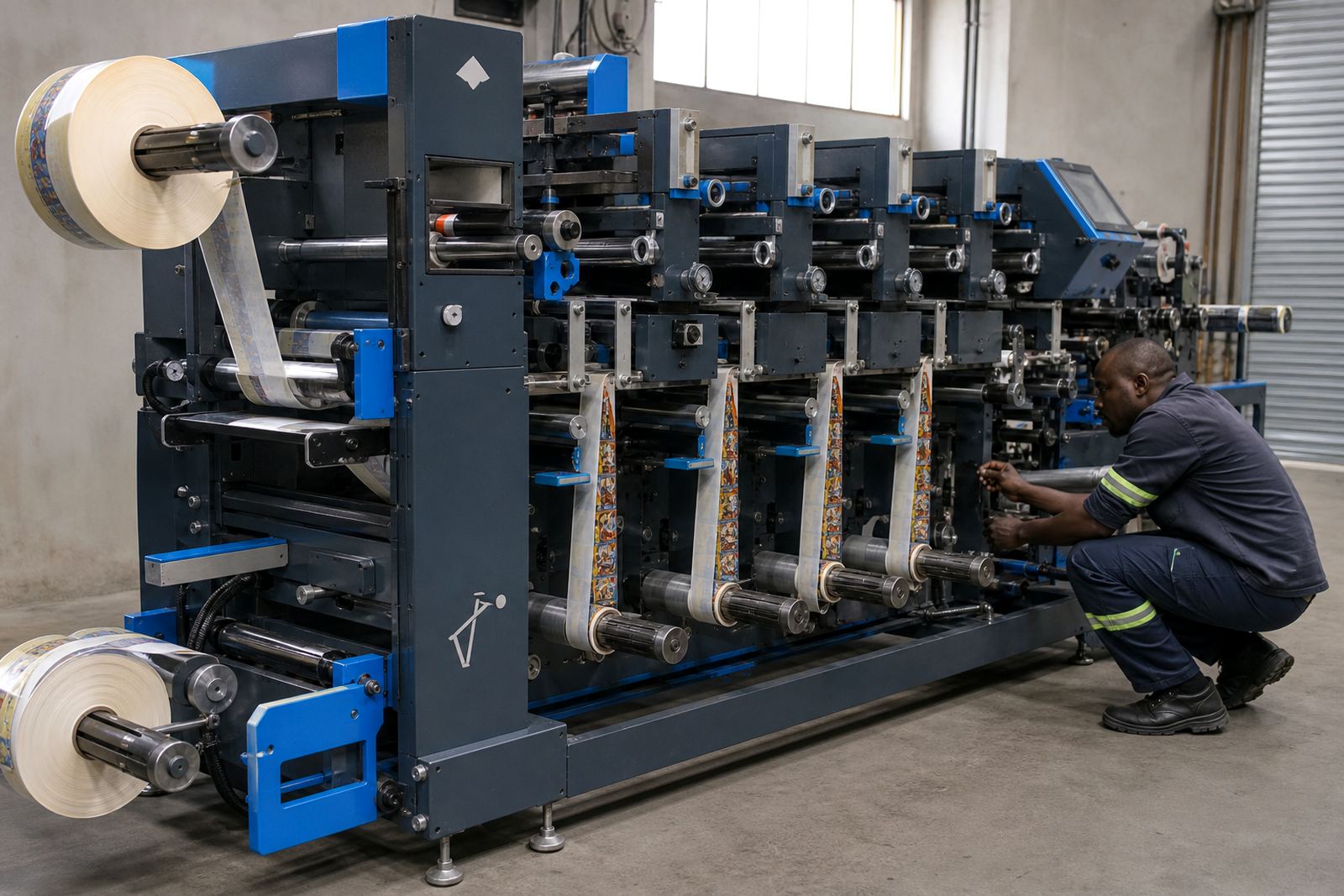
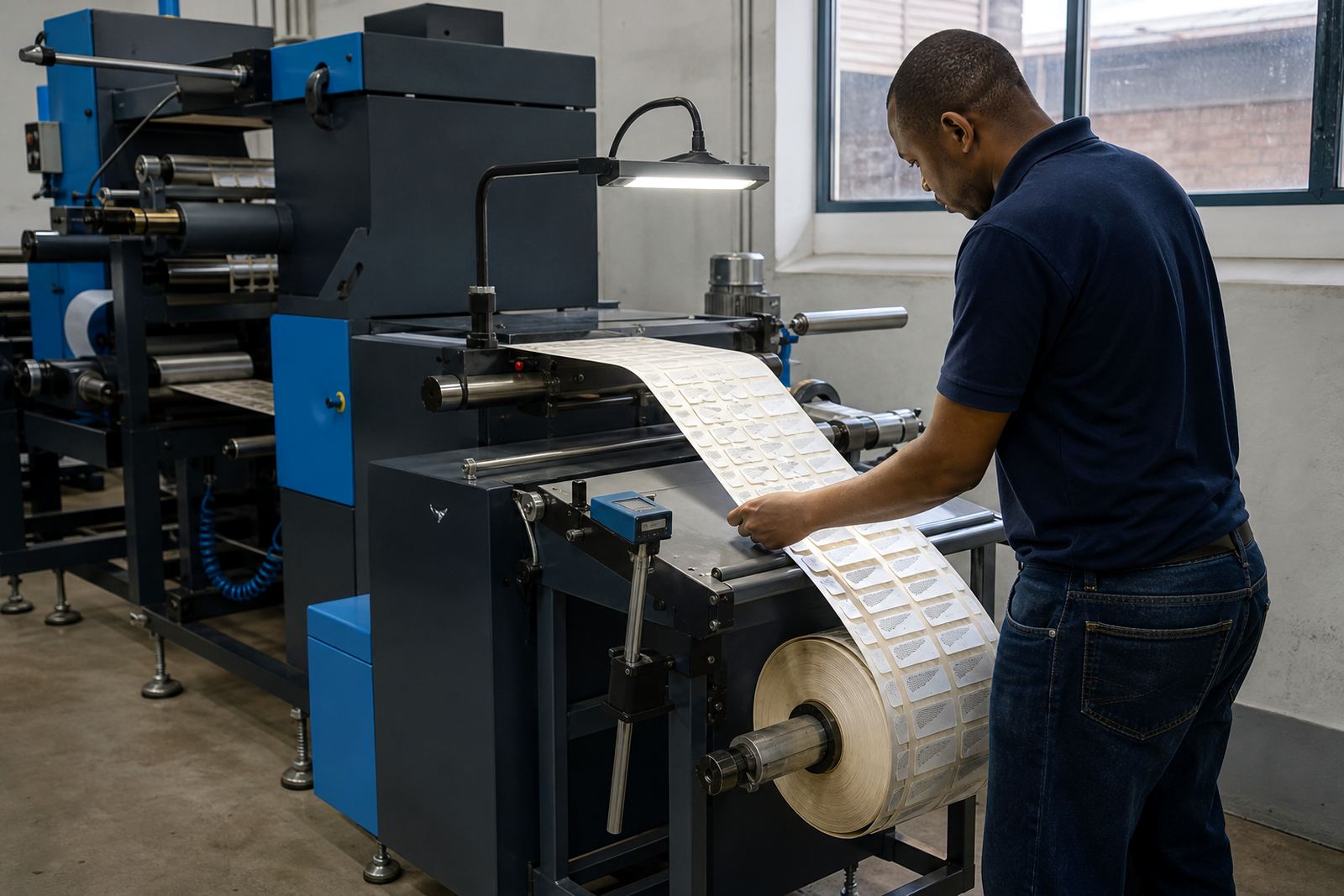
The web guide module is the part of a finishing line that reads the edge or printed line of the moving web and nudges it back into position before the next station takes over. In label work that can mean steadier die-cutting, cleaner matrix stripping, more even slitting and a neater rewind on the finished roll.
It is often fitted ahead of a semi-rotary die station, a laser finishing unit, a laminator or a slitter rewinder. When the web enters the machine square and stays centred, there is less drift at the cut line and less waste from crooked roll build-up.
- Works with printed label webs and laminated webs
- Supports edge guide and line guide control
- Helps maintain registration through finishing stations
- Useful where narrow webs or long runs start to wander
Sizes, sensors and guide options for label plants
Web guide modules are selected to suit the width of the web, the core build and the speed of the finishing line. A compact unit suits narrower self-adhesive label webs, while a wider frame and stronger guide travel suit broader packaging webs or heavier laminate structures.
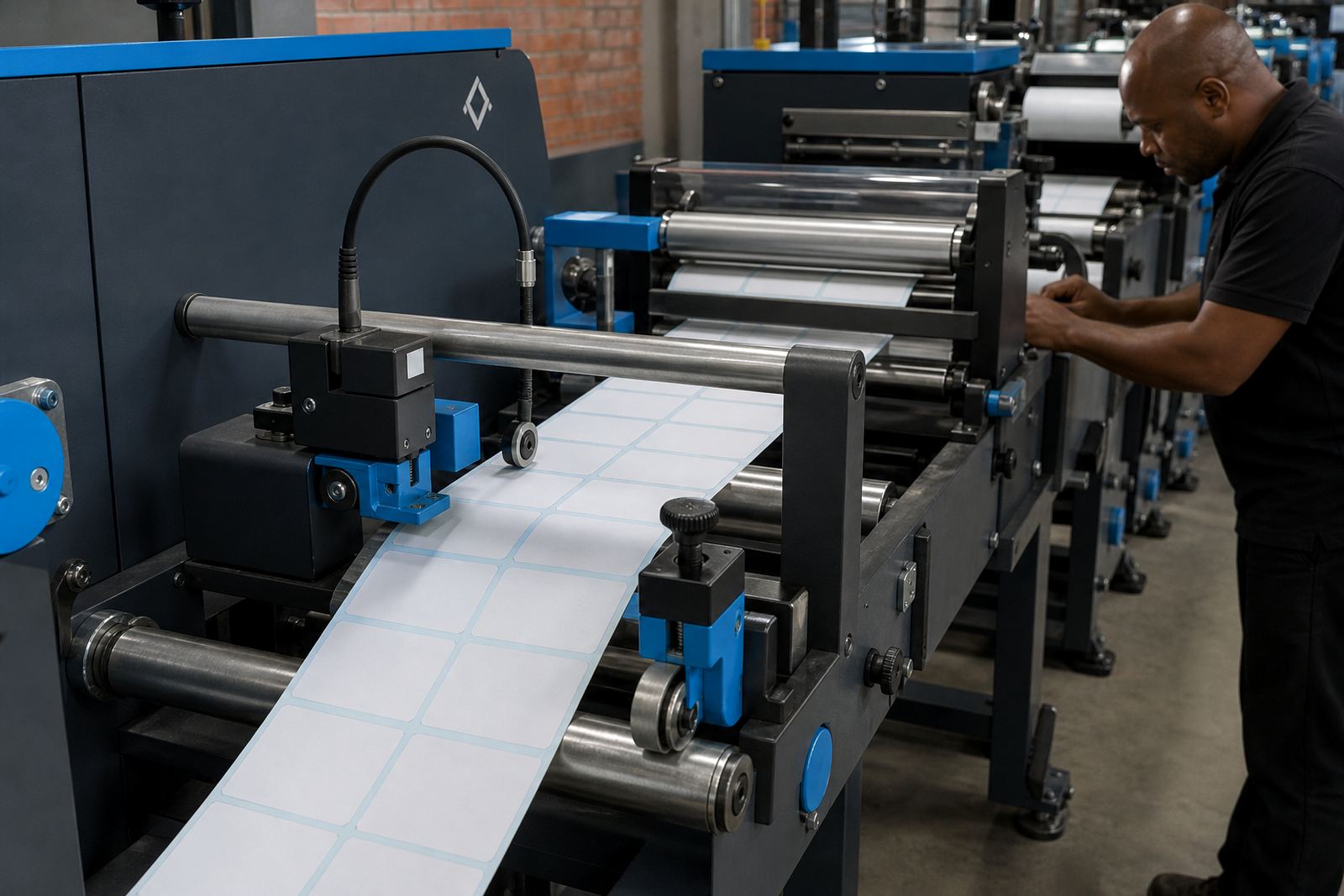
Sensor choice matters as well. Some setups use an edge sensor for a plain web edge, while others read a printed registration mark or contrast line on the face stock. For clear films and many labels, the sensor needs a clean contrast target and a stable path before the die station.
- Typical guide travel: 50 mm to 150 mm
- Web widths commonly range from about 100 mm to 600 mm
- Suited to roll diameters from small label rolls to larger parent rolls
- Control can be manual, semi-automatic or fully automatic
Where it fits in a finishing line
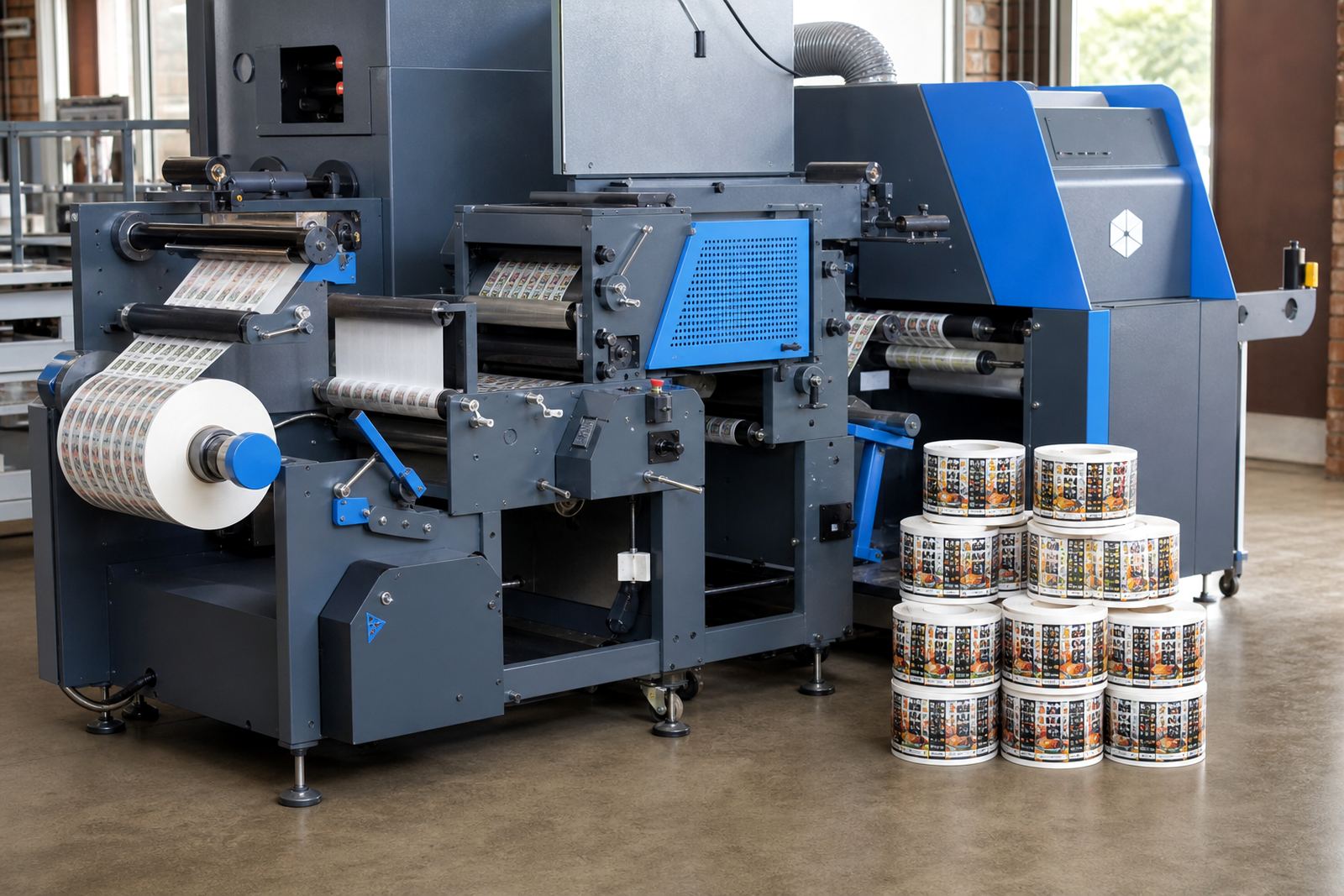
This module suits label printers and packaging producers that run unwind, laminate, die-cut, strip waste, slit and rewind functions in one line or as linked modules. It is used where the web must stay steady through flexible dies, semi-rotary heads, lamination nip points and rewind tension zones.
In practice, it helps where the job changes often, the web is light or stretchy, or the printed marks sit close to the trim line. A stable guide reduces the chance of a wandering cut on short repeat labels, wine labels, food pouches or product wraps that need close control on the edge.
- Label converting lines with multiple finishing stations
- Lines handling clear film, paper or coated label stock
- Plants that need accurate slit positions on narrow rolls
- Operations that carry registration marks through finishing
Fitting details and line integration
Fitting a web guide module means setting the unit into the line at the right point, usually before the process that needs the most accurate alignment. The mounting height, roller path and sensor position all need to match the web path so the guide can correct movement without adding twist or drag.
Installation normally includes electrical connection, setup of the control system and testing with the intended web material. On some lines the guide is paired with registration calibration, rewind setup and slitting setup so the machine can hold position from the first metre to the last.
- Needs a stable frame and level mounting point
- Requires sensor setup for edge or printed mark reading
- Should match the web path before the die, slit or rewind section
- Benefits from line commissioning after installation
Keeping the guide accurate in daily production
A web guide module stays useful when the sensors are clean, the rollers turn freely and the web path is kept clear of dust, adhesive mist and paper lint. In humid coastal conditions, especially on label stock stored near Durban or Gqeberha, the web can shift slightly and the guide needs to be checked against the actual material on the day.
Routine care usually includes sensor cleaning, checking guide travel, confirming roller condition and watching for loose bearings or worn belts in the correction head. If the line starts to drift, a small setting change or a fresh calibration can prevent waste from building up through the next rolls.
- Keep sensors free of dust and adhesive build-up
- Check edge rollers for wear and free movement
- Inspect cable runs and control connections during servicing
- Recheck guide settings after material or job changes
What to confirm before the module is ordered
Before ordering, the key details are the web width, the roll diameter, the sensor type, the line speed and the process the guide must protect. It also helps to know whether the unit will sit on a label finishing line, a laminating station or a slitting and rewinding line, because each one puts different strain on web control.
For installations across Johannesburg, Pretoria, Durban, Cape Town and Gqeberha, the machine layout and available floor space matter too. A straight path into the guide, enough access for operator training and room for maintenance all make day to day running easier.
- Web width and minimum and maximum roll diameter
- Printed mark type or edge guide requirement
- Target line speed and production format
- Machine layout, access space and mounting position
Key facts
| Product type | Web guide module for label finishing lines |
|---|---|
| Function | Corrects web tracking for die-cutting, slitting and rewind consistency |
| Control method | Edge guide or printed mark sensing |
| Typical web width | About 100 mm to 600 mm |
| Guide travel | About 50 mm to 150 mm |
| Fitment | Mounted into unwind, laminate, die-cut or rewind sections |