Built for the weight of real label rolls
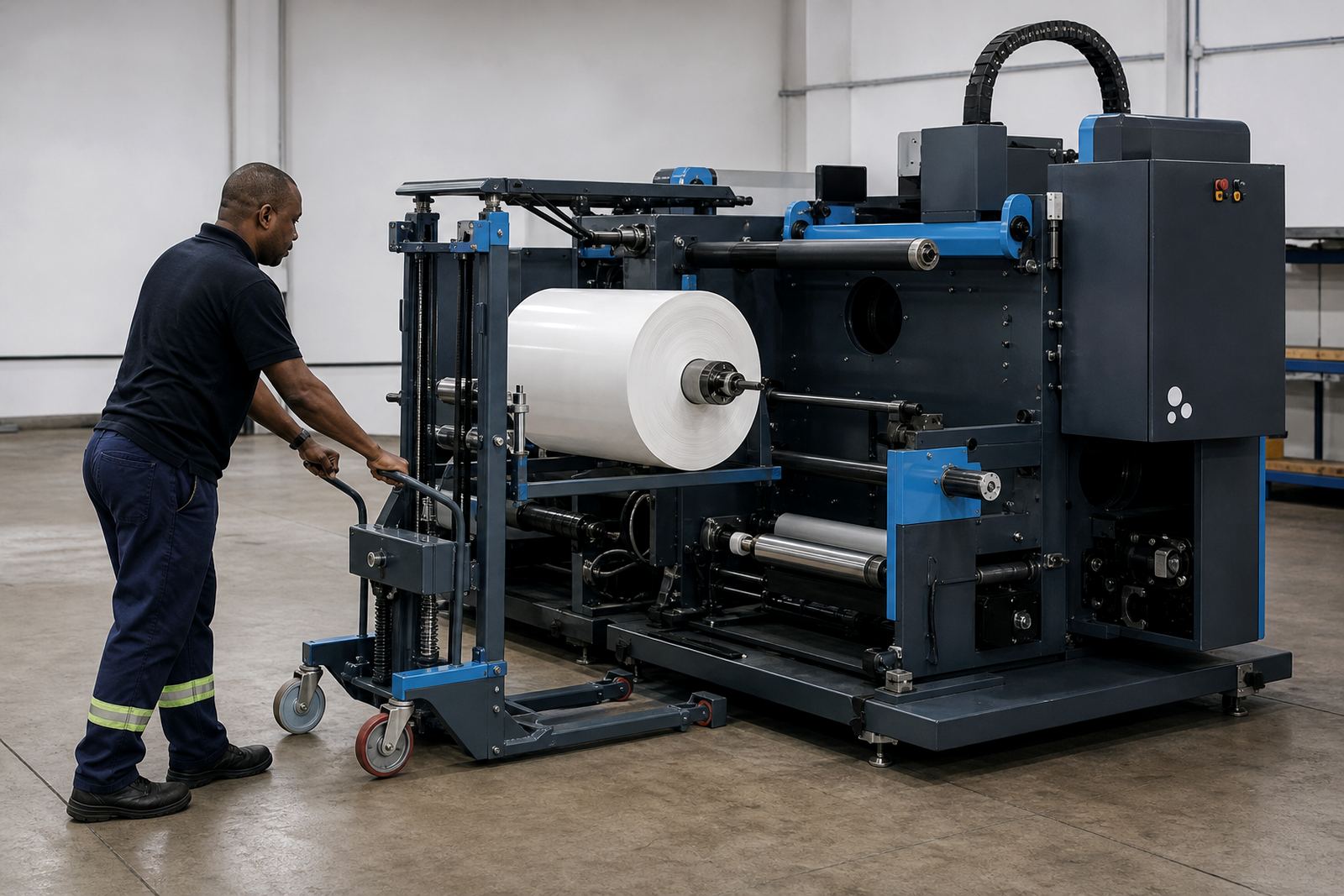
This trolley is a handling aid for rolls that are too heavy or awkward to lift by hand, especially where master rolls, laminated rolls and finished slit rolls move through the same room. The frame is used to pick up, carry and place rolls at machine height or onto pallets, winders and storage racks with less twisting and less chance of edge damage.
In label work, the roll is only part of the task. You also need stable support during changeovers, clean floor movement and enough control to keep the web face and core ends in good condition. A well sized trolley helps with that, particularly where rolls are moved between printing, finishing and dispatch areas.
- Used for master rolls and finished rolls
- Supports manual loading and unloading
- Helps reduce edge knocks and core crush
- Useful on smooth concrete floors common in production rooms
Sizing that matches your roll mix
Roll lifting trolleys are selected around roll diameter, roll width and the weight of the heaviest roll you expect to move. Some shops carry narrow pharmaceutical labels on small cores, while others handle wider self-adhesive stock, carton label reels or laminated rolls with higher mass. The trolley must match the largest practical roll in the room, not only the average roll.
Common options include adjustable saddles, cradle arms, manual lift mechanisms and brake systems for controlled positioning. In some rooms the trolley is used as a transfer aid only, while in others it needs to work alongside a rewinder, slitter or finishing line that runs heavier cores and larger outer diameters.
- Adjustable height for different machine infeed points
- Cradle or saddle support for cylindrical rolls
- Locking wheels for controlled stopping
- Core-safe contact points to limit marking
Where it earns its place on the floor
The trolley suits label printers, converters and packaging producers that move rolls from storage to print, from print to finishing, and from finishing to dispatch. It is especially useful where operators change rolls often, work with narrow gang runs, or need to keep finished reels clean for packing and labelling. In humid coastal areas, stored rolls can gain slight moisture on the outer layers, so careful handling matters when the reel is moved into or out of climate controlled rooms.
It also helps where floor space is tight and pallets are not practical around every machine. A trolley can bridge the gap between a jumbo roll on intake and a smaller finished reel on rewind, with less lifting and fewer handling points.
- Label finishing rooms with frequent roll changeovers
- Packaging lines moving printed reels to slitting and rewind stations
- Stores where rolls are lifted from rack to machine by hand today
- Sites that want cleaner transfer between departments
Fitting, floor movement and practical setup
Most roll lifting trolleys are fitted into an existing production room with no complex installation, but the floor condition matters. Smooth concrete, clean travel paths and enough turning space around the machine or rack make a clear difference to handling. If the trolley has a manual lift or locking mechanism, operators should understand the lift point, wheel lock and roll centring before it goes into daily use.
Where a trolley works near a slitter, rewind station or finishing line, the operator must keep the roll stable while moving it into position. That means checking the trolley height against the machine bed, the core position against the spindle or support, and the travel path between the two points.
- Check clear floor width around the machine line
- Match trolley height to infeed and storage points
- Set wheel locks and lift controls before use
- Train staff on safe transfer, centring and placement
Care that keeps the trolley working straight
Basic care is enough to keep a roll trolley useful for years, but it should be done properly. Wheels need to stay clean, lift points should not seize, and the frame should be checked for dents or bend marks after any knock. In busy label rooms, adhesive dust, trim waste and pallet debris can collect near the wheel path and make movement jerky.
Inspect the contact faces often, especially if rolls are wide or heavy. If a trolley is used in a room with washdown, humidity or fine paper dust, the moving parts need a closer look. A worn wheel or loose fastener can make roll placement harder and increase the chance of a damaged edge.
- Keep wheels free of trim waste and wrap fragments
- Check fasteners, handles and lift points routinely
- Look for frame twist after impact or overload
- Store the trolley where it will not be struck by pallets
Details to confirm before you order
To match the trolley correctly, confirm the widest roll, heaviest roll, core size and the working height of the machine or rack it must serve. It also helps to note whether the rolls are moved by one operator or more than one, and whether the trolley must pass through narrow doors, between finishing stations or over floor joints.
For label and packaging work, it is worth confirming the roll face width, the outer diameter after lamination or varnish, and whether the trolley will be used for master rolls, finished rolls or both. If the handling route includes a slitter, rewind machine or packaging bay, the turning radius and wheel load matter as much as the lift height.
- Roll diameter and roll width
- Heaviest roll weight and core size
- Machine infeed height or storage rack height
- Floor condition, door widths and travel path
Key facts
| Type | Manual roll lifting trolley for label and packaging reels |
|---|---|
| Use | Loading, unloading and transfer of master or finished rolls |
| Typical roll range | Small finished reels up to heavier master rolls, subject to model |
| Support style | Cradle, saddle or adjustable roll support |
| Mobility | Locking caster wheels for controlled positioning |
| Finish | Industrial metal frame with wear-resistant contact points |