Clean lane separation for narrow web work
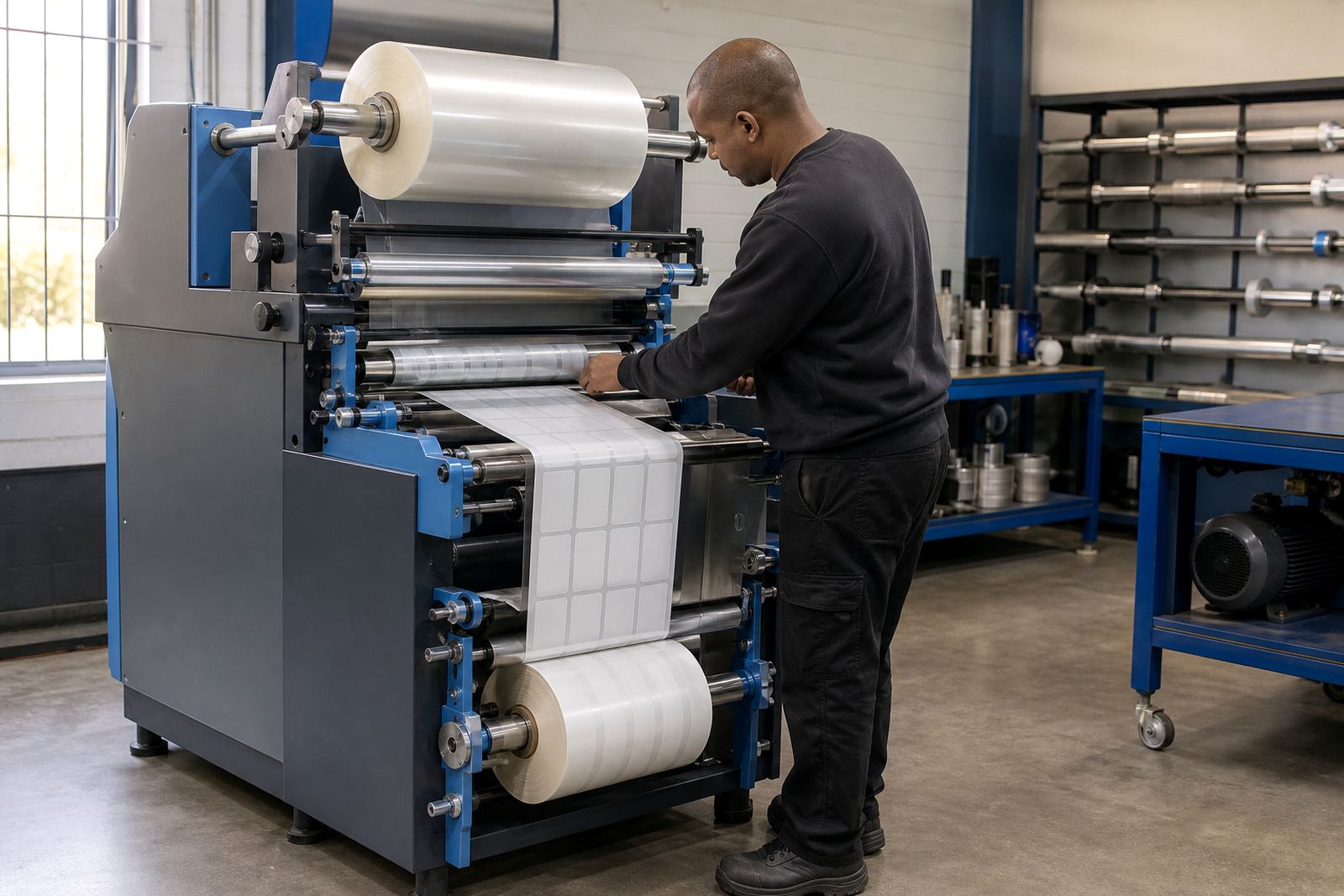
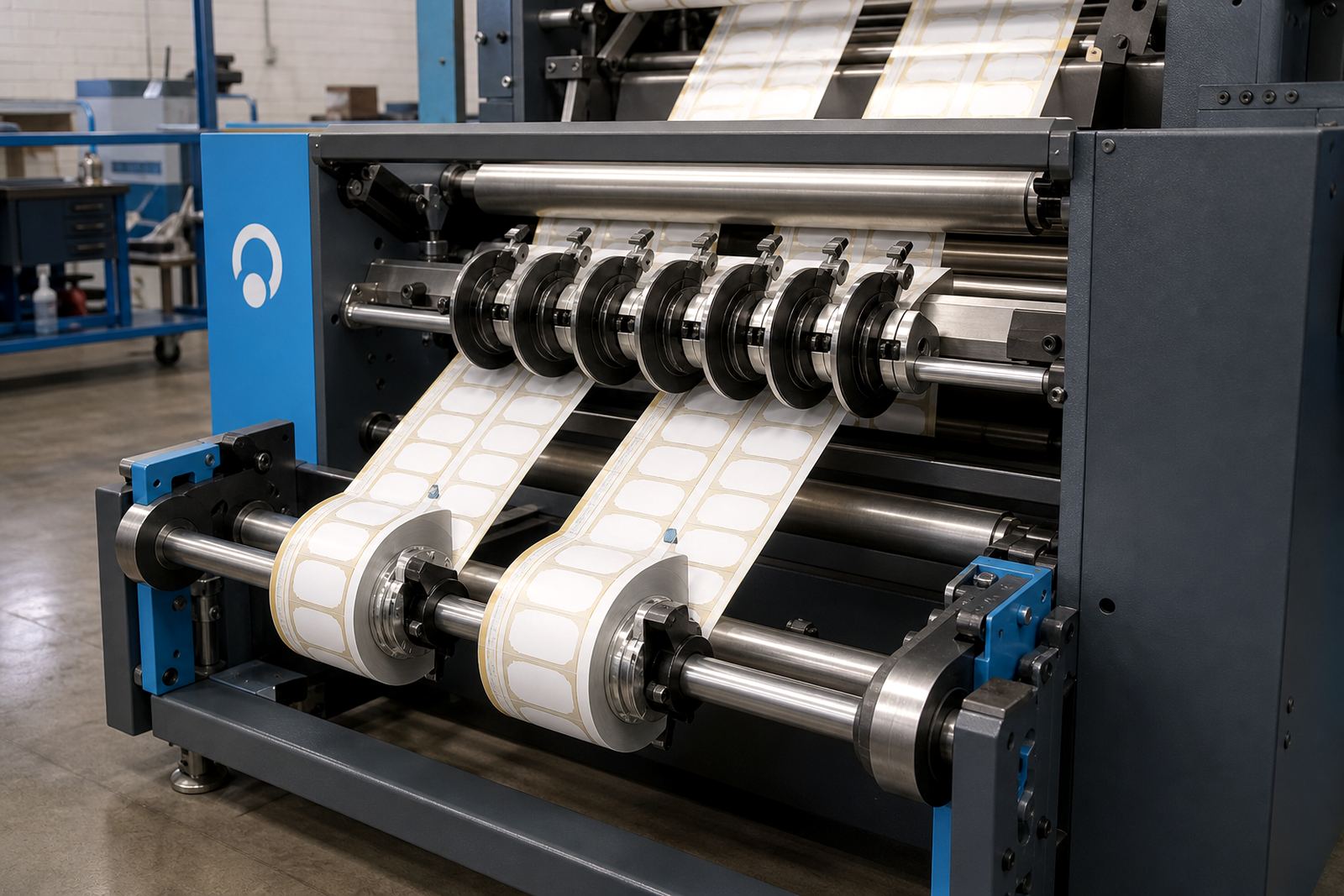
A razor slitting unit is fitted into a digital label finishing line to cut the web into narrower lanes before rewinding. In label production, that step matters when the printed web carries multiple-up artwork, mixed repeat widths or jobs that must leave the press in evenly wound rolls. The blade system is arranged for stable tracking, so the lanes stay true as the web moves through the line and into rewind.
It is used on finishing lines where the printer has already delivered a printed, laminated or varnished web and the last pass is about control rather than heavy cutting. With the right blade spacing and registration set-up, the unit helps reduce ragged edges, wandering lanes and waste build-up at the rewind section. That makes it a useful fit for busy label shops that run short, mixed orders and need tidy roll handling between changeovers.
- Razor slitting for narrow web labels and converted rolls
- Lane separation before rewind on pressure-sensitive stock
- Works with printed, laminated or varnished webs
- Suitable for multi-lane finishing and split roll output
Where the unit earns its place on the line
This section is common in plants that produce self-adhesive labels, packaging sleeves and narrow web jobs with several lanes across the web. It suits work where the printed material needs to be divided into repeatable widths for smaller rolls, or where the customer wants neat separation before die-cut finishing and rewind. On some jobs it is paired with matrix stripping, then the lanes are slit, rewound and packed for dispatch.
Packaging producers also use it when a wide printed web must be broken into more manageable roll widths for downstream converting. The cut quality matters here, because even a small deviation can show up as edge fray, telescoping or poor roll build. For that reason, the slit width, blade alignment and guide condition all need proper attention before production starts.
- Label printers running short to medium repeat jobs
- Converters splitting wide webs into narrower finished rolls
- Lines that feed from unwind through print, coat, cut and rewind
- Jobs needing neat roll edges for packing and application
Build options, roll sizes and web control
Razor slitting units are usually specified around the web width, the number of lanes and the roll diameters the line must handle. Common configurations are set for narrow web label work, but the blade carrier, shaft spacing and rewind layout can be matched to the actual job mix. Some lines run a single slitting station, while others need multiple knives so several lanes can be separated in one pass.
Roll size matters just as much as cut width. A unit must suit the finished roll diameter, core size and unwind tension profile, otherwise the web can wander or tighten unevenly as the roll builds. On coated stock, film labels and heavier laminate constructions, the slitting section also needs clean web transport so the blades do not drag the material sideways. For this reason, guide rollers and brake control are checked with the material sample, not guessed from a drawing.
- Web widths matched to the actual label line
- Multiple knife positions for several lanes
- Finished roll diameter and core size confirmed before supply
- Compatible with laminated, varnished and printed label webs
Installation, fitting and line alignment in the shop
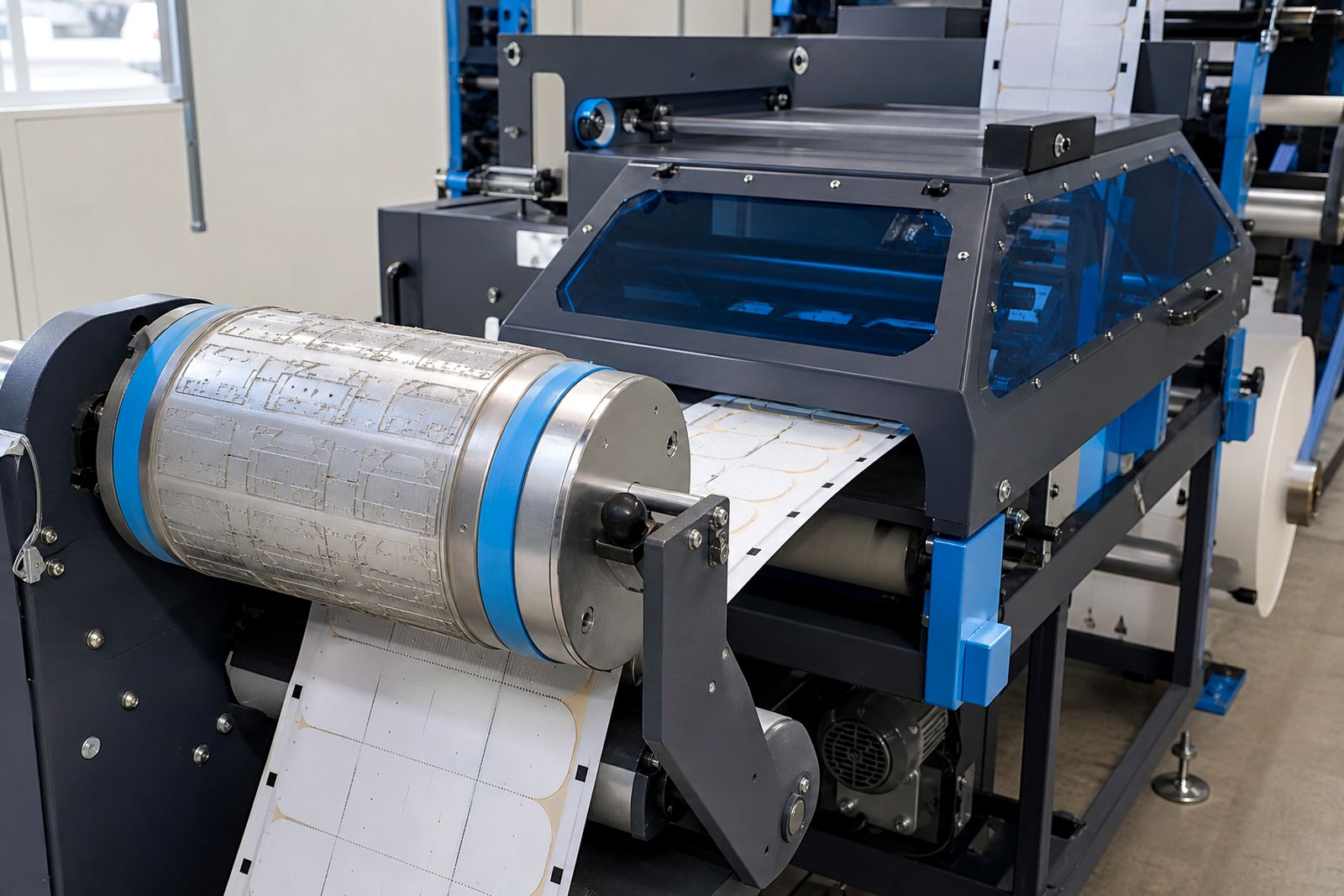
The unit must sit square in the finishing line so the web enters and leaves without skew. Installation normally includes mechanical fitting, lane spacing set-up and alignment with the unwind and rewind stations. Where the line carries registration marks, the slit positions need to hold true to the printed repeat, especially on jobs with variable artwork or multiple labels across the web.
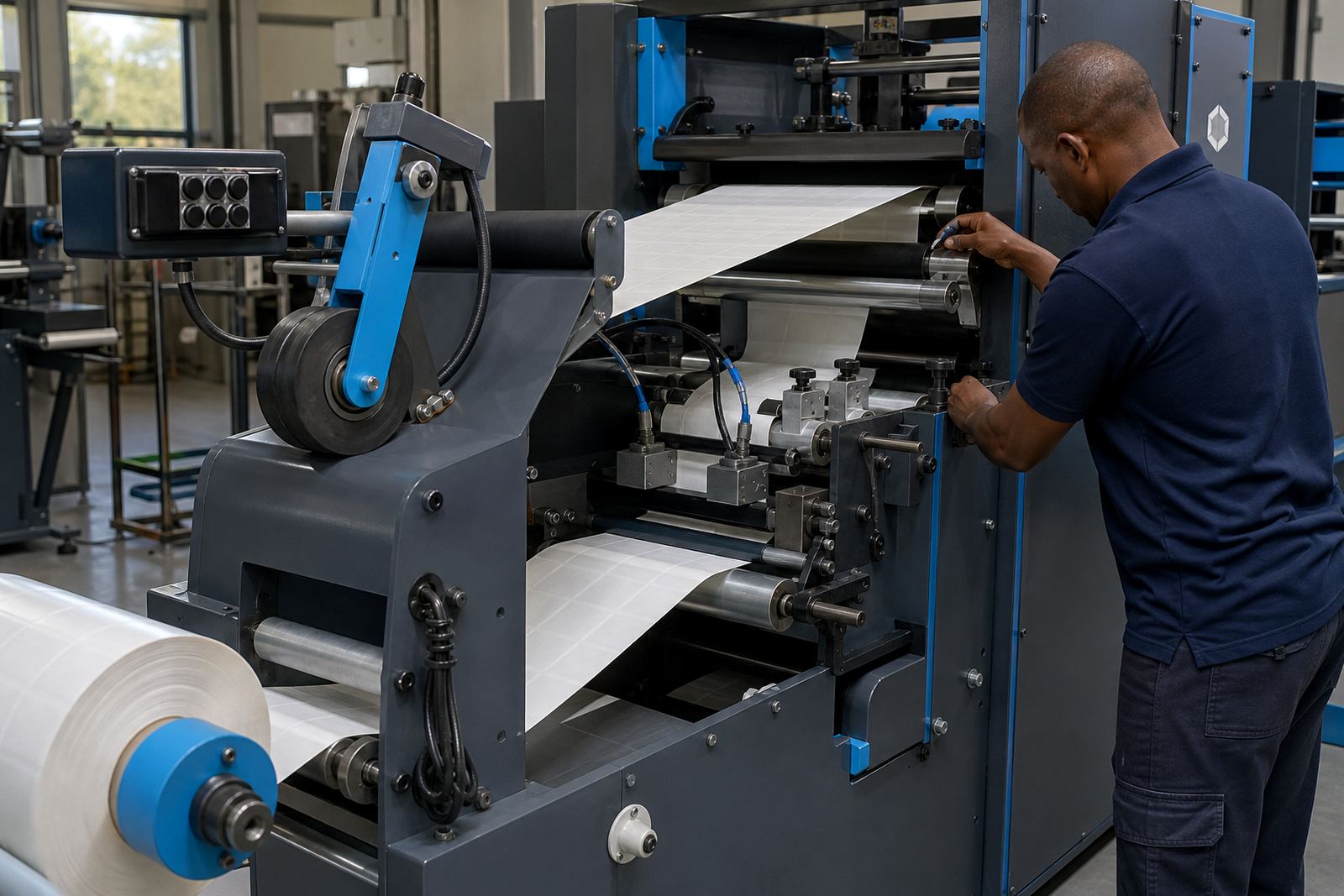
Our technical team works on the practical side of the fit, from mounting and drive checks to blade pressure, web guide position and rewind tension. If the line includes lamination, varnish or matrix stripping before slitting, those sections have to be checked as one working path. A razor slitting unit is only as good as the web path feeding it, so the commissioning work needs to be done with the actual stock on the machine.
- Mechanical mounting and web path alignment
- Blade pressure and slit spacing set on sample stock
- Registration mark position checked against the print repeat
- Rewind tension matched to finished roll build
Care that keeps the blades cutting cleanly
Blade care is part of normal finishing work. In a label shop, razor blades wear at different rates depending on film content, paper dust, adhesive build-up and how often the line runs full shifts. A dull blade can leave feathered edges or put extra drag on the web, so the blades must be inspected and replaced before the cut starts to wander. Dust, liner fragments and adhesive residue should be cleared from the knife area and guide points during routine maintenance.
It also helps to check the rewind build after each run. If the rolls are telescoping, cone shaped or loose in the middle, the issue may be tension, web path or blade alignment rather than the blade alone. A good maintenance routine on this section includes cleaning, inspection, bearing checks and test cuts on the stock that will be used for production. In a humid coastal plant, keeping spare blades and knife holders stored properly matters as much as fitting them correctly.
- Inspect blades for wear, nicks and edge drag
- Remove liner dust and adhesive residue regularly
- Check rewind build for telescoping or loose winding
- Store spare blades and holders in clean conditions
Details to confirm before the order is released
When a razor slitting unit is being specified, the job details need to be clear. The right configuration depends on web width, number of lanes, material type and the diameter of the finished rolls. It also helps to know whether the slitting sits after lamination, varnish, matrix stripping or a separate inspection stage. For registration-driven work, the mark type and repeat length matter, because the blade positions must line up with the print layout.
The team often asks for the core size, unwind direction, rewind direction and the normal production speed on the line. If the job mix includes paper labels, film labels and laminated stock, the pressure settings and blade life will not be the same. Our contact form is the best place to send the line details, stock samples and the finishing sequence so the right build can be matched to the job.
- Web width and number of lanes
- Material type, coating and liner construction
- Finished roll diameter and core size
- Registration mark style and repeat length
- Line sequence, including lamination or matrix stripping
Support for the machine after it is on site
Label-Cutter supports installation, operator training, preventive maintenance and breakdown repairs for finishing lines across South Africa, with support teams in Randburg, Johannesburg, Pretoria, Durban, Cape Town, Gqeberha, Midrand and Kempton Park. The razor slitting unit is part of that service picture because the best results depend on set-up discipline, trained operators and steady maintenance. Once the line is running, the practical details are blade condition, lane accuracy and how the rewind behaves on the shift.
For plants that handle different roll sizes through the week, the slitting section needs to be easy to reset without losing the cut line or changing the finished roll build. That is where proper operator training and a sensible parts plan help, especially when the work mixes narrow labels, coated stocks and longer production runs. A clean slit is not a finishing flourish, it is the part that makes the rewind worth packing.
- Operator training for slit setup and web control
- Preventive maintenance for knives, guides and rewind build
- Breakdown repairs and spare parts supply for line continuity
- Support for label printers and packaging producers nationwide