How the unwind stage keeps the web moving
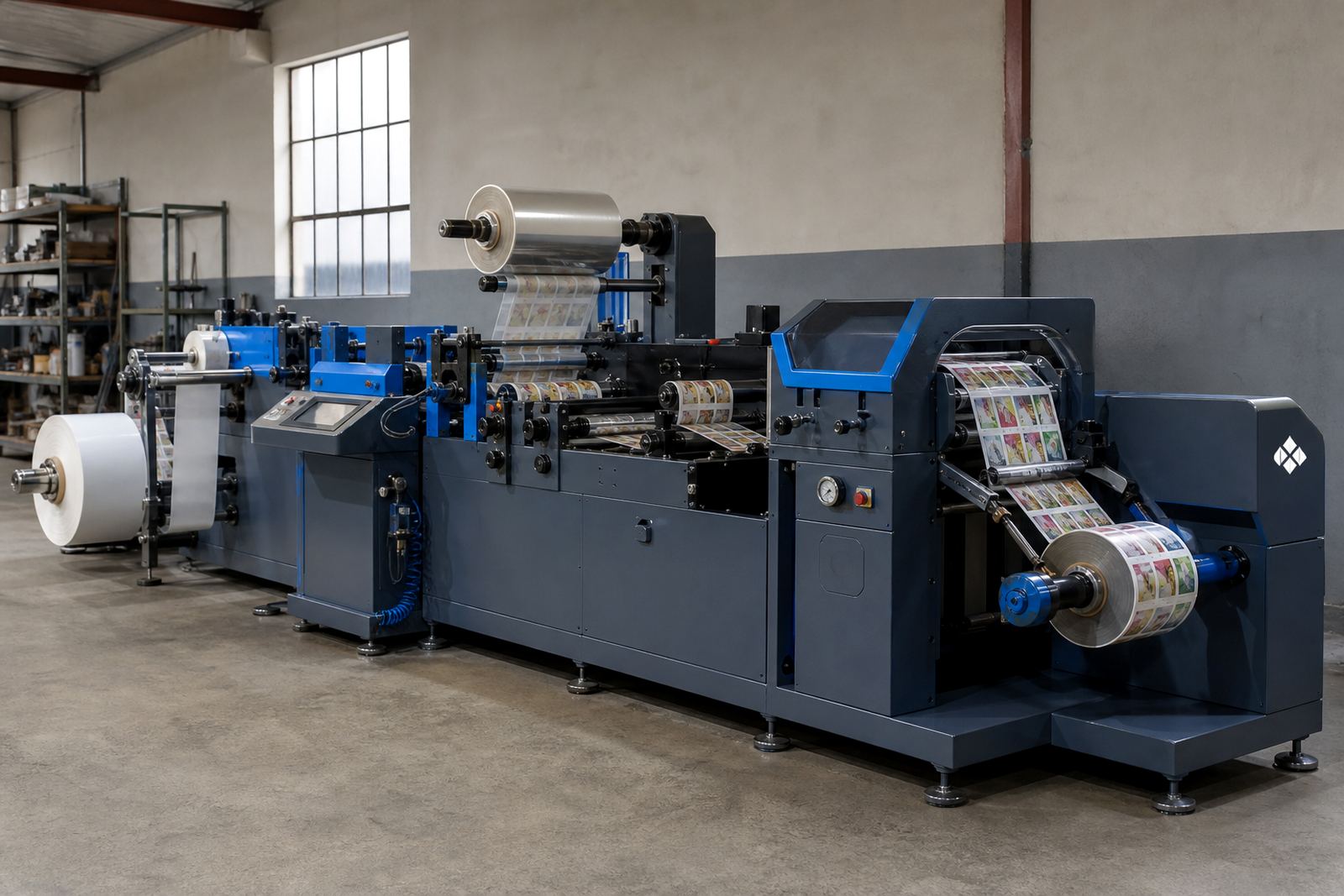
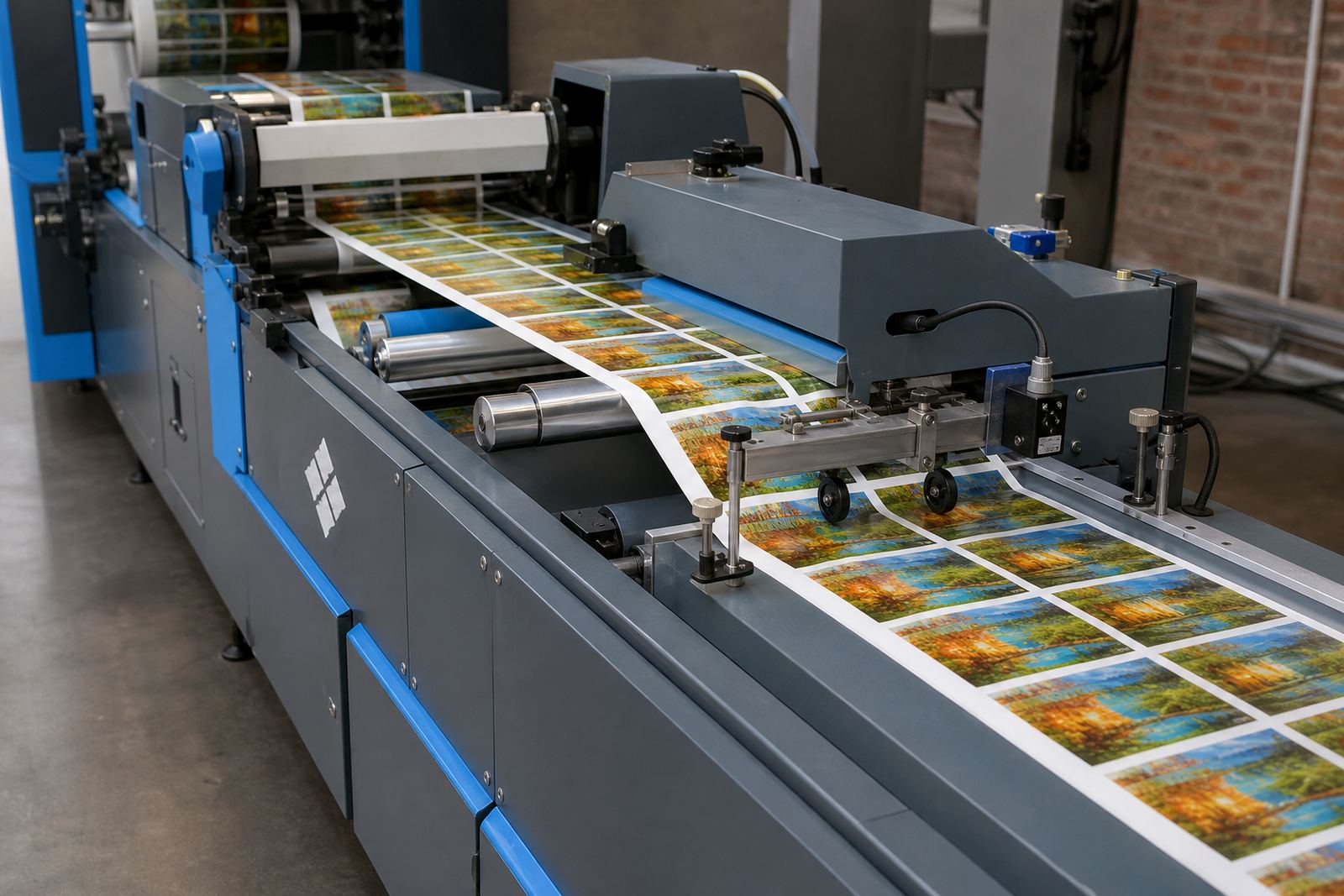
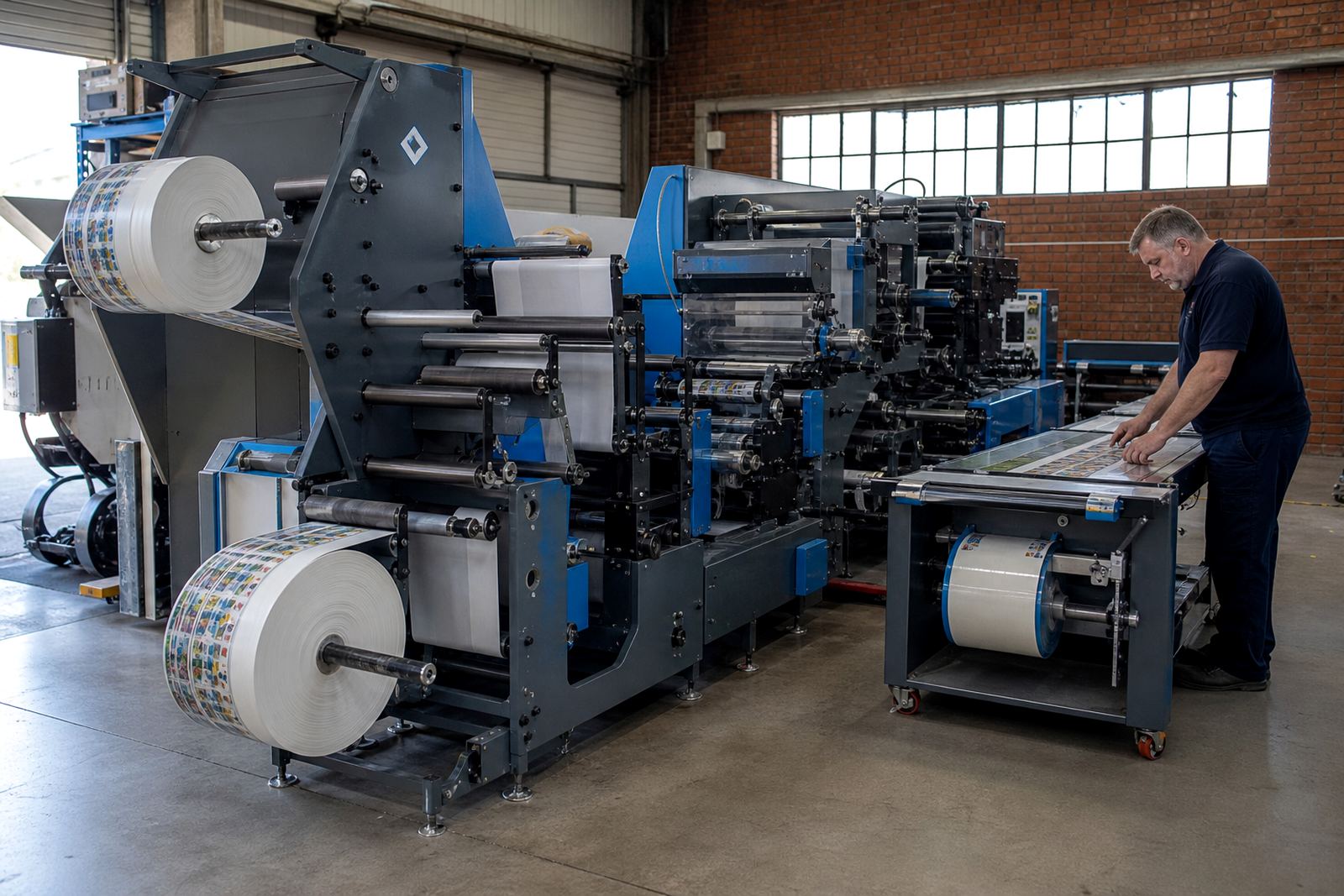
A splicing unwind feeds printed label stock into the rest of the finishing line and keeps tension under control while a fresh roll is prepared. In a practical setup, the web can move from the unwind through lamination, varnish, die-cutting, waste stripping, slitting and rewinding without the operator fighting loose edges or a wandering web.
These units are used on narrow web and mid-web label lines where repeat registration matters. When the incoming roll is handled properly, the printed marks stay readable, the web stays flat, and the rest of the machine can work with less waste at changeover.
- Works with paper, film and coated label stocks
- Suitable for printed webs with registration marks
- Supports cleaner roll changes on continuous finishing lines
- Can be set for manual, assisted or automatic splice handling
Roll sizes, unwind formats and tension control
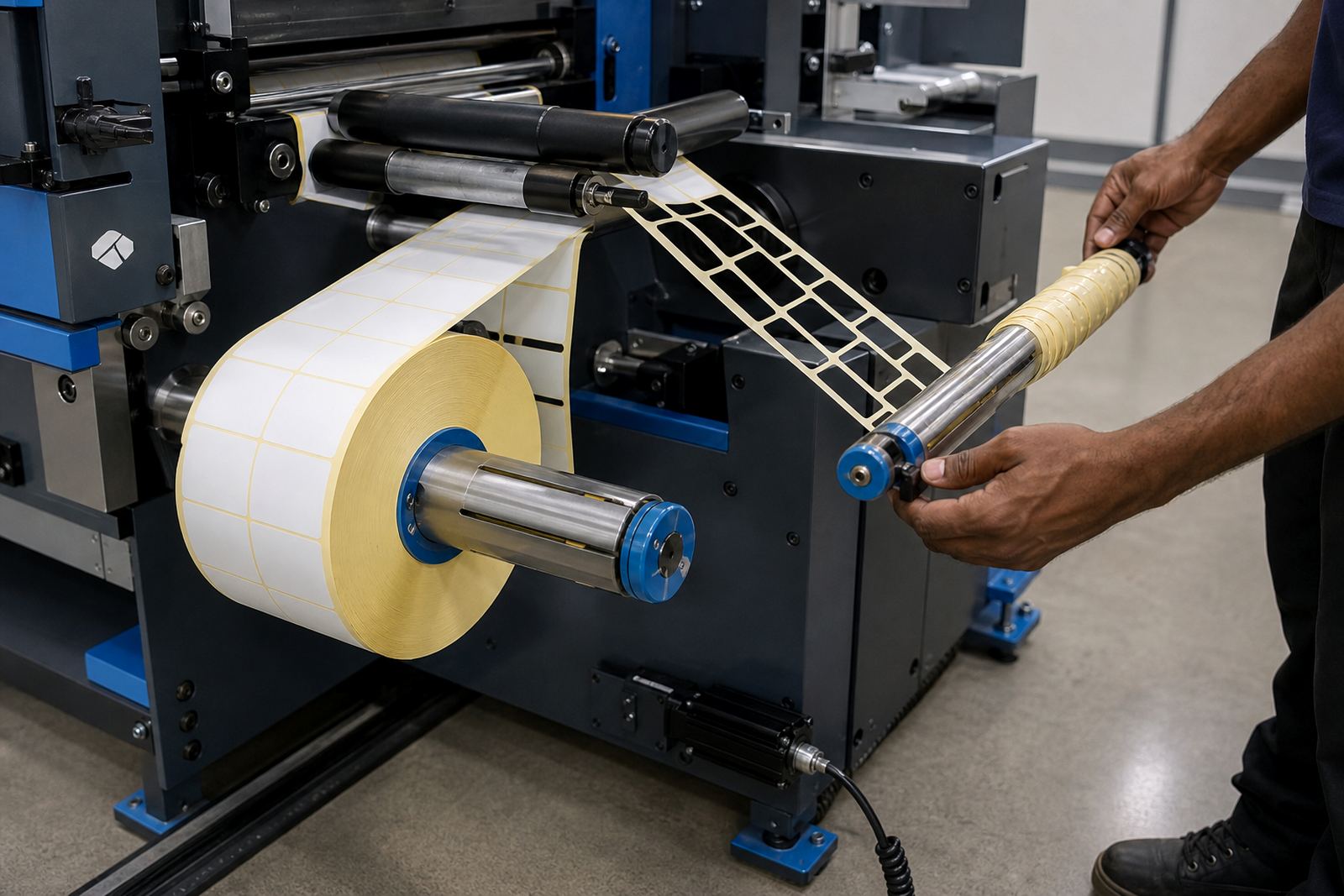
Unwind arrangements are matched to the roll width, roll diameter and core size used in the plant. Common label finishing lines run narrow webs for product labels, but there are also wider rolls for packaging sleeves and larger production runs. The unwind frame, shafting and brake system need to match the stock weight and the line speed, otherwise the web can pull unevenly.
Depending on the line, the unwind may carry a single roll, a turret arrangement, or a splicing table with support for preparing the next roll while the current roll runs. For tighter label work, tension control is important because even small fluctuations show up at the die station and on the rewind.
- Typical widths: 200 mm, 330 mm, 430 mm and 530 mm formats
- Core sizes commonly used: 76 mm and other specified cores
- Roll diameter depends on substrate weight and line capacity
- Brake and dancer settings must suit the printed stock
Where it suits in a South African finishing room
This product fits label printers, packhouses, converters and packaging producers that run repeated jobs through the week. It is useful on lines serving food, beverage, personal care, household, chemical and logistics labels, especially where job changes happen often and the team needs the feed side to behave predictably.
In Kya Sand, Randburg and across Johannesburg, Pretoria, Durban, Cape Town and Gqeberha, we see the unwind used where narrow web stock must stay registered through the full finishing path. It is also a strong fit for converters that handle mixed substrates and short runs with frequent plate or die changes.
- Label printers working with variable job lengths
- Packaging producers running printed roll stock through finishing equipment
- Operations that need controlled roll release before lamination or die-cutting
- Plants that want neater handover between shifts and operators
Installation, alignment and line integration
Fitting the unwind is not just a case of bolting it into place. The frame has to sit square with the rest of the line, the web path must be centred, and the entry guides must line up with the downstream modules. If the line includes lamination, varnish or semi-rotary die-cutting, registration sensors and guide settings also need careful setup.
Our team handles machine installation, line commissioning, operator training and registration calibration so the unwind works as part of the full finishing line. Where a splice prep table, sensor package or brake control needs adjustment, the settings are checked against the stock type and the production layout.
- Level the frame and check shaft alignment
- Set web path, dancer position and edge guidance
- Match braking force to substrate weight and speed
- Confirm splice point, sensor position and roll tracking
Care that keeps the unwind ready for production
Routine care keeps the unwind dependable. Dust, adhesive mist and paper fibre build-up can affect rollers, sensors and guide surfaces, particularly in label rooms that run coated stocks or varnish work. Bearings, brakes and moving arms need inspection, and the splice area should stay clean so the next roll can be prepared without debris entering the web.
Preventive maintenance can include checks on shaft wear, brake pads, air lines where fitted, sensor lenses and the condition of the web guides. If the line starts to pull unevenly or the splice point slips, the fault is often mechanical or set-up related rather than the stock itself.
- Clean rollers and guide faces with suitable materials
- Inspect brake wear and shaft play during service intervals
- Keep the splice area free of loose trim and dust
- Verify tension settings after substrate or job changes
Details to confirm before the unwind is specified
To match the unwind to your line, the main details are the roll width, maximum roll diameter, core size, stock weight and whether the line runs manual or assisted splicing. It also helps to know the substrate mix, the required web speed, the space available on the production floor and the downstream units already in place.
If the unwind must feed into slitting, rewinding, matrix stripping or semi-rotary die-cutting, that affects the tension range and the guide layout. Our contact form can be used to send the line details, and our team can then align the unwind spec with the finishing setup and the service needs that follow.
- Roll width and core size
- Maximum roll diameter and stock type
- Line speed and tension control needs
- Machine footprint and web entry direction
- Downstream modules such as lamination, die-cutting or rewinding
Key facts
| Product type | Splicing unwind for digital label finishing lines |
|---|---|
| Web width range | Typically 200 mm to 530 mm, subject to line setup |
| Core size | Commonly 76 mm, with other cores available on request |
| Roll format | Single roll, turret or splice-prep arrangement |
| Control features | Brake control, web guidance and tension adjustment |
| Applications | Label printing, lamination, die-cutting, slitting and rewinding |