Waste take-up built for label converting lines
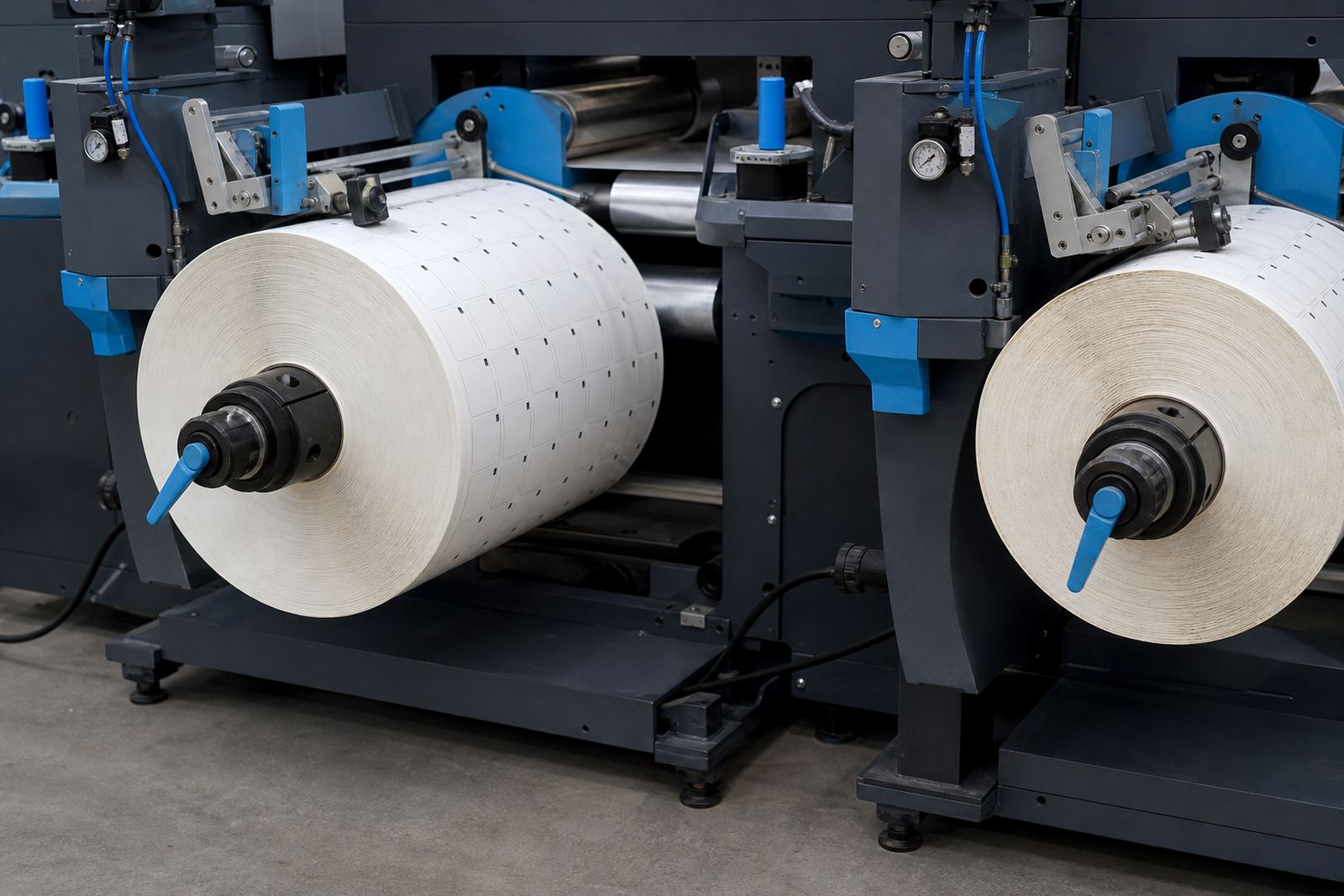
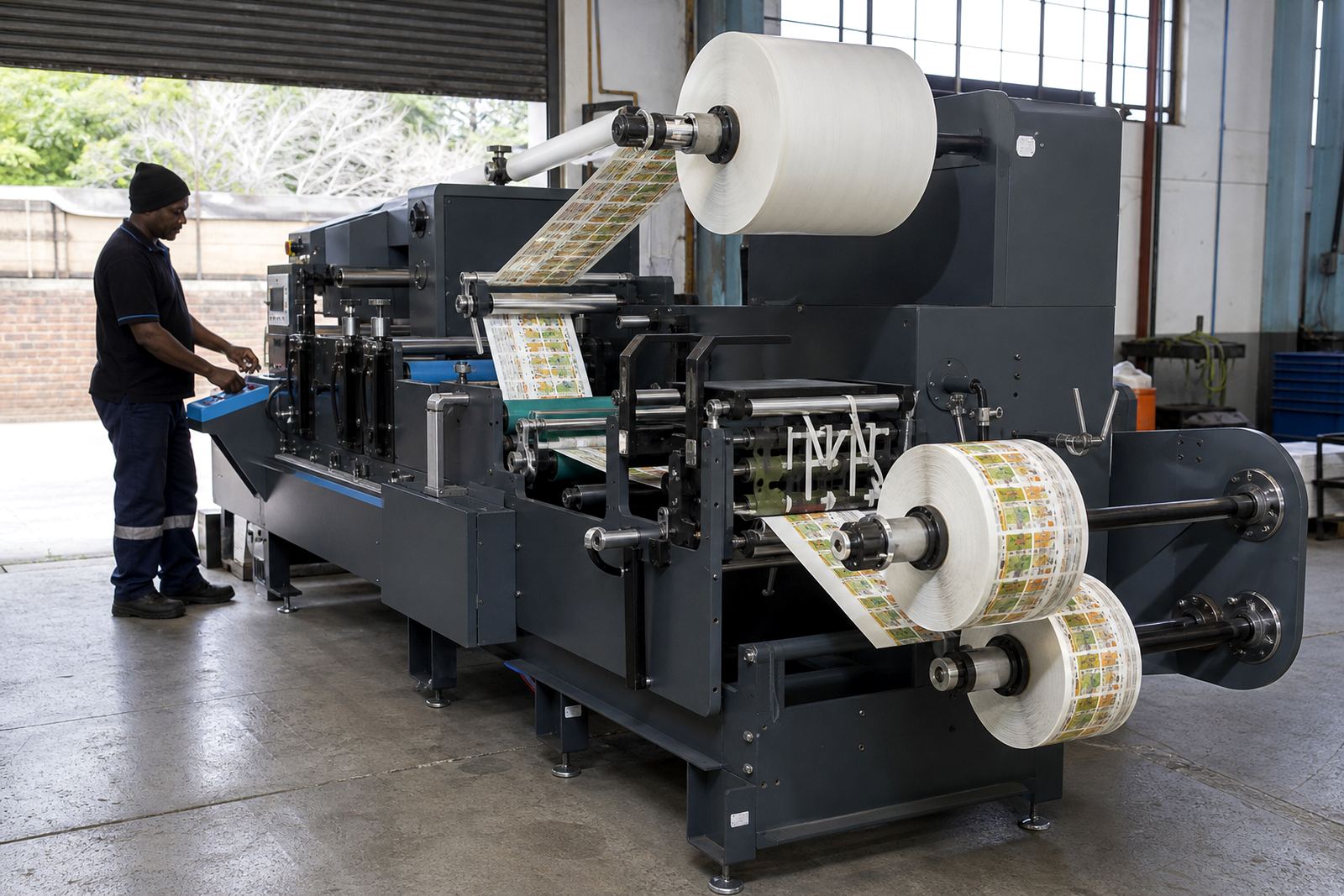
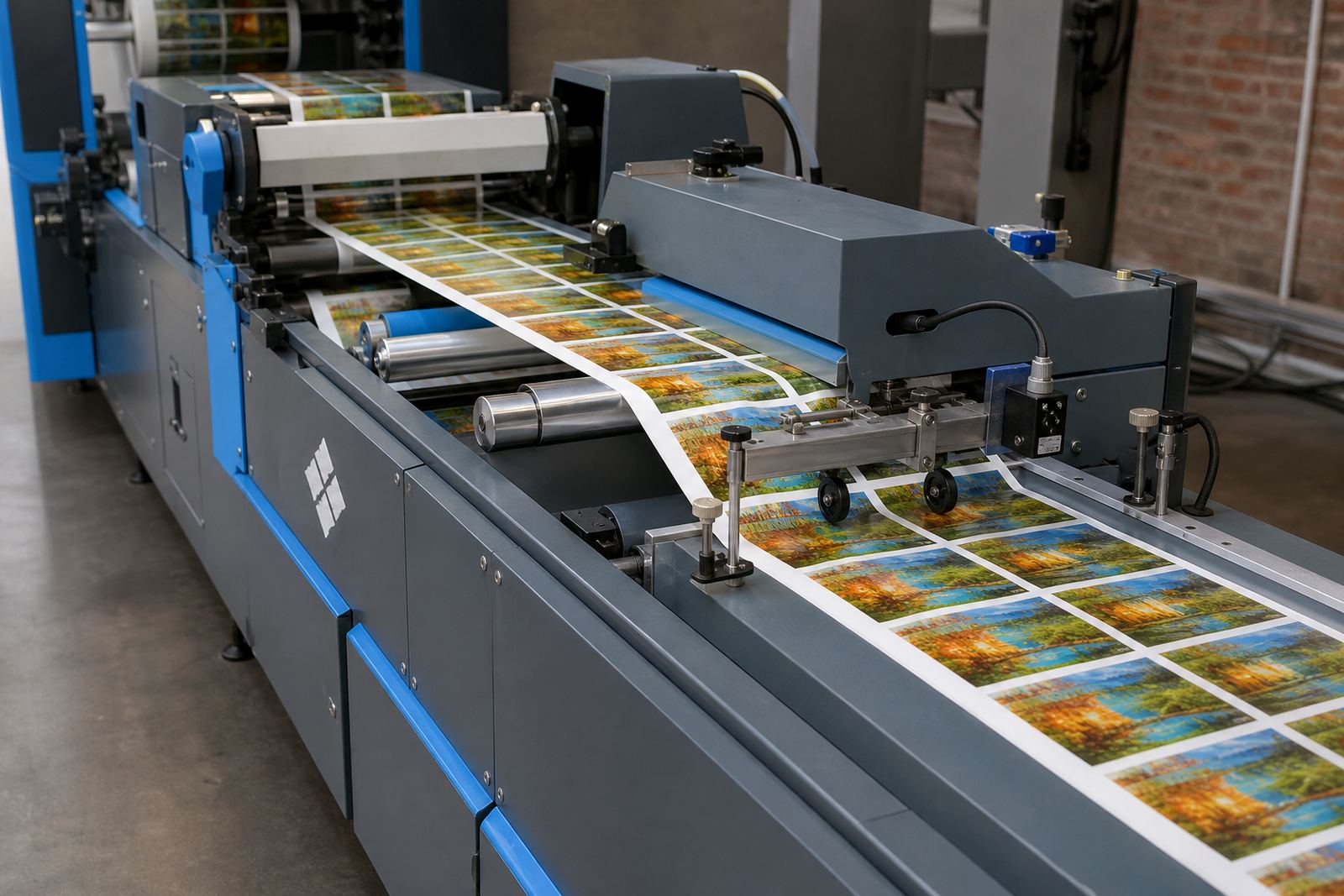
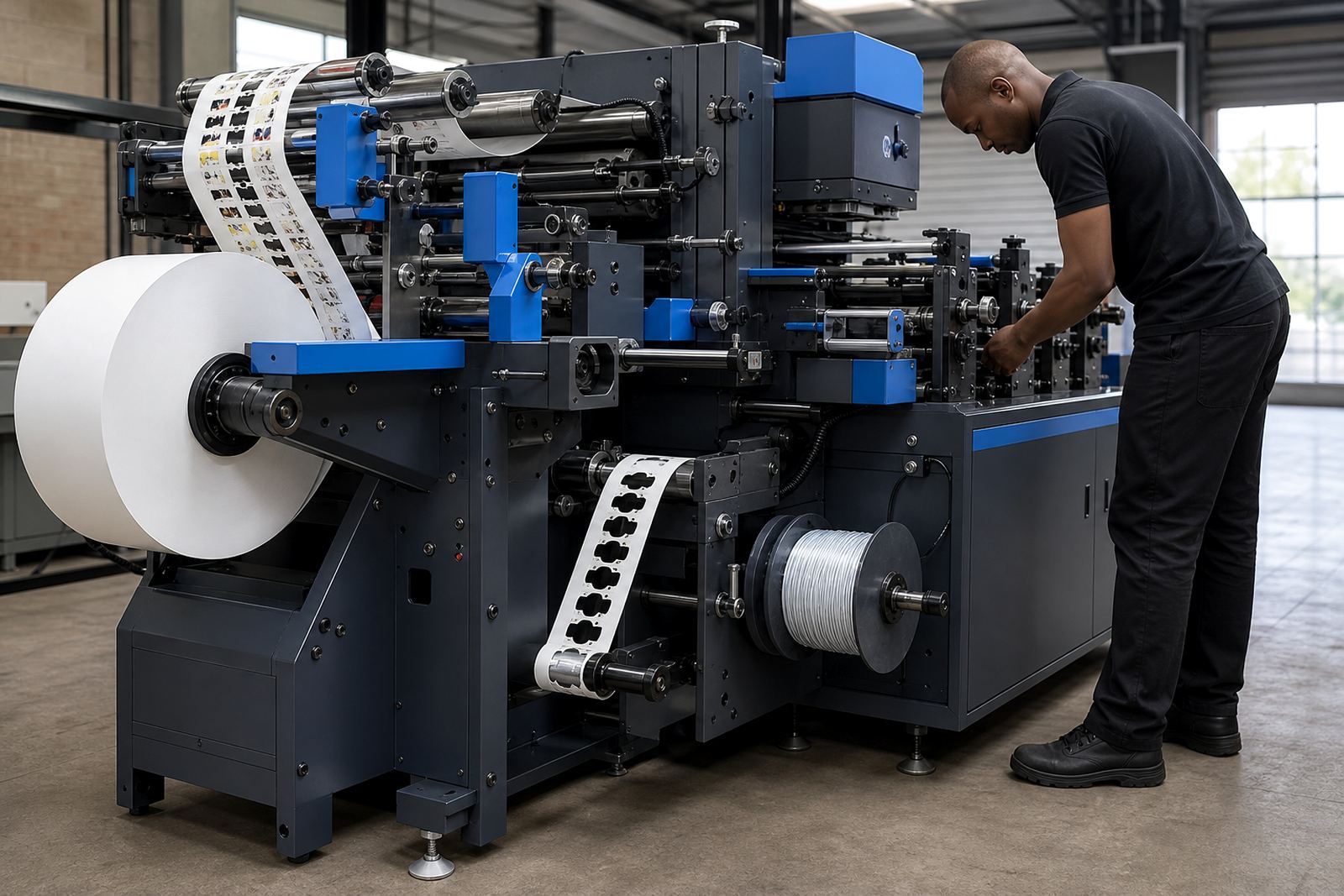
A waste rewind shaft is the take-up point for stripped matrix, side trim, and other light waste produced during label finishing. In a digital label line it normally sits after die-cutting or slitting, where it gathers the waste into a neat roll so the printed face stock can run on to rewind without clutter in the web path.
On label presses and off-line finishing units, this part works with the machine frame, rewind drive, web guides and brake control. The shaft must hold the core square, keep the roll true, and carry the waste roll as it grows. If the rewind is set badly, the matrix can neck in, wander, or split and that is when stoppages start to stack up.
For labels with fine cuts, narrow webs, and dense print coverage, the waste take-up has to stay stable. That matters on filmic stocks, paper labels, clear face material, and varnished webs where the trim can be slippery or uneven.
Shaft formats, core sizes and working widths
Waste rewind shafts are supplied in sizes that match the machine and the width of the material path. The core size is the first point to check, because the shaft must grip the rewind core firmly without crushing it. Common core sizes used in label converting are 3 inch and 6 inch, with other sizes fitted where the line calls for them.
- Core size: 3 inch or 6 inch, depending on the take-up roll format
- Working width: sized to the web width and the trim zone
- Shaft length: matched to the machine frame and mounting points
- Grip method: pneumatic, mechanical, or quick-lock core retention
- Roll capacity: suited to the waste volume and line speed
- Mounting: fixed, removable, or fitted into a rewind station
Some shafts are set up for a single narrow waste band, while others carry a full matrix across the web. On wider label webs, a shaft with good balance and even grip helps prevent roll wander and edge build-up. That is useful where the matrix comes off in one sheet and the waste roll grows fast.
Where this part fits in the line
The waste rewind shaft suits label printers and packaging producers running digital print and finish work. It is used on short runs, mixed SKU work, and longer production batches where matrix stripping and rewind have to stay steady. It also suits lines that combine die-cutting with slitting, over-lamination, varnish, or inspection before final rewind.
In practical terms, the shaft is useful where the line must keep the waste separate from the saleable roll. That includes pressure-sensitive labels, promotional packs, carton labels, wraparound labels and sleeves, depending on the finishing method and the web path. Where registration marks are tight and the cut follows print closely, the waste path must stay reliable from the first metre to the last.
Plants in Johannesburg, Pretoria, Durban, Cape Town and Gqeberha use this type of part where production includes changing widths and repeated setup work. It is just as relevant in a compact finishing room as in a larger converting area with multiple rewind stations.
What to confirm before the shaft is ordered
The right shaft depends on the machine, the waste pattern, and the roll format your team uses. Before ordering, the following details should be checked so the part matches the line without extra alteration.
- Machine make and model, or the exact rewind station layout
- Core size and core style used for the waste roll
- Web width, trim width, and matrix strip layout
- Expected waste volume and typical roll diameter
- Mounting style, shaft length, and centre distance
- Grip method and whether a brake or torque control is fitted
If the shaft is being added to an existing line, the frame clearance matters too. The operator needs enough space to load the core, thread the waste, and remove a full roll without fighting the machine. A compact area around the rewind can slow a clean changeover, especially when the matrix is light and tends to pull off course.
Fitting, setup and operator handling
Fitting a waste rewind shaft is not only a bolt-on job. The shaft has to sit level, line up with the web path, and turn true so the waste roll builds evenly. During installation the take-up tension is adjusted to suit the stock and the stripping pattern, then the operator checks that the waste pulls cleanly from the die station without tearing or slumping.
Where a line uses semi-rotary die-cutting or laser finishing, the waste may come off in a lighter strip and need careful tension control. On heavier matrix, the shaft must hold the roll firmly enough to keep the core from slipping. If the take-up is too tight, the web can distort; if it is too loose, the waste can telescope and foul the station.
Our team handles installation, line commissioning, operator training, preventive maintenance and breakdown repairs for finishing equipment across South Africa. That includes support for rewind setup, slitting setup, registration calibration and production optimisation where the waste path is part of the job.
Keeping the shaft clean, true and ready for the next run
Waste rewind shafts work best when they are kept clean and checked often. Adhesive dust, label liners, tape residue and small paper fibres can build up on the core grippers and bearing points. In humid coastal conditions, a shaft that sits idle too long can also pick up surface corrosion if it is not wiped down and stored properly.
Routine care is straightforward:
- Wipe down the shaft after changeover and remove adhesive build-up
- Check that the core grip opens and closes evenly
- Inspect bearings, bushes and locking points for play
- Keep the shaft square when loading and unloading waste rolls
- Replace worn components before they start marking the core
When the waste roll starts to wind unevenly or the matrix tracks off line, it is usually a sign that the tension, alignment, or core grip needs attention. Small corrections at the shaft can save a lot of waste on the floor and cut down on stoppages later in the shift.
Key facts
| Product | Waste Rewind Shaft |
|---|---|
| Function | Dedicated take-up for matrix and trim waste |
| Core sizes | 3 inch and 6 inch options |
| Use case | Label finishing, die-cutting and slitting lines |
| Mounting | Fixed, removable or station-fitted |
| Application | Roll handling for digital label converting |