Built for short rolls and tighter label runs
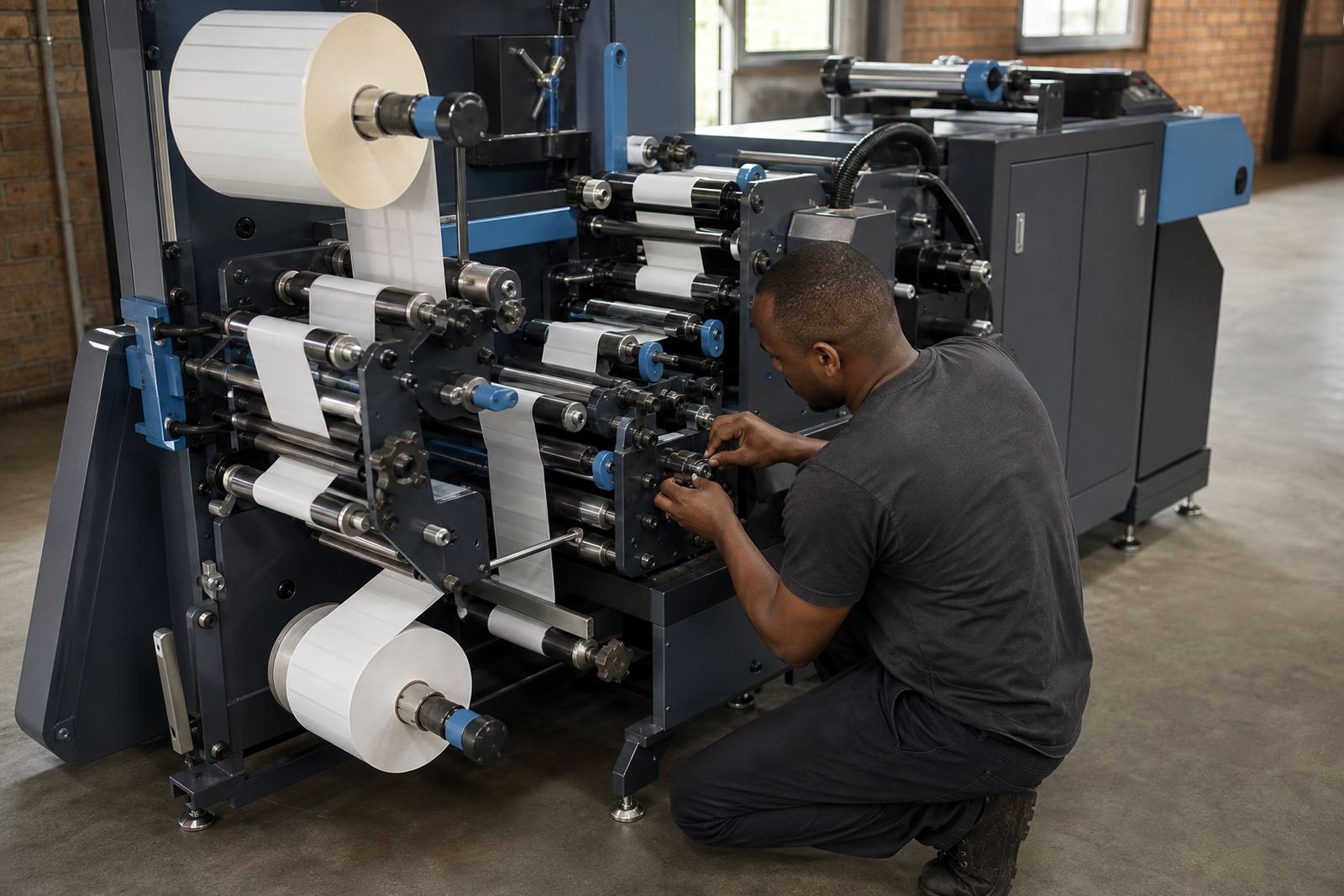
A small roll finisher is used where the printed roll is not built for long, heavy production lengths. It handles short-diameter reels cleanly, keeping web tension steady while the material moves through finishing stages that may include lamination, die-cutting, matrix stripping, slitting and rewinding. In a label plant, that is useful where the work changes often and the reels stay compact.
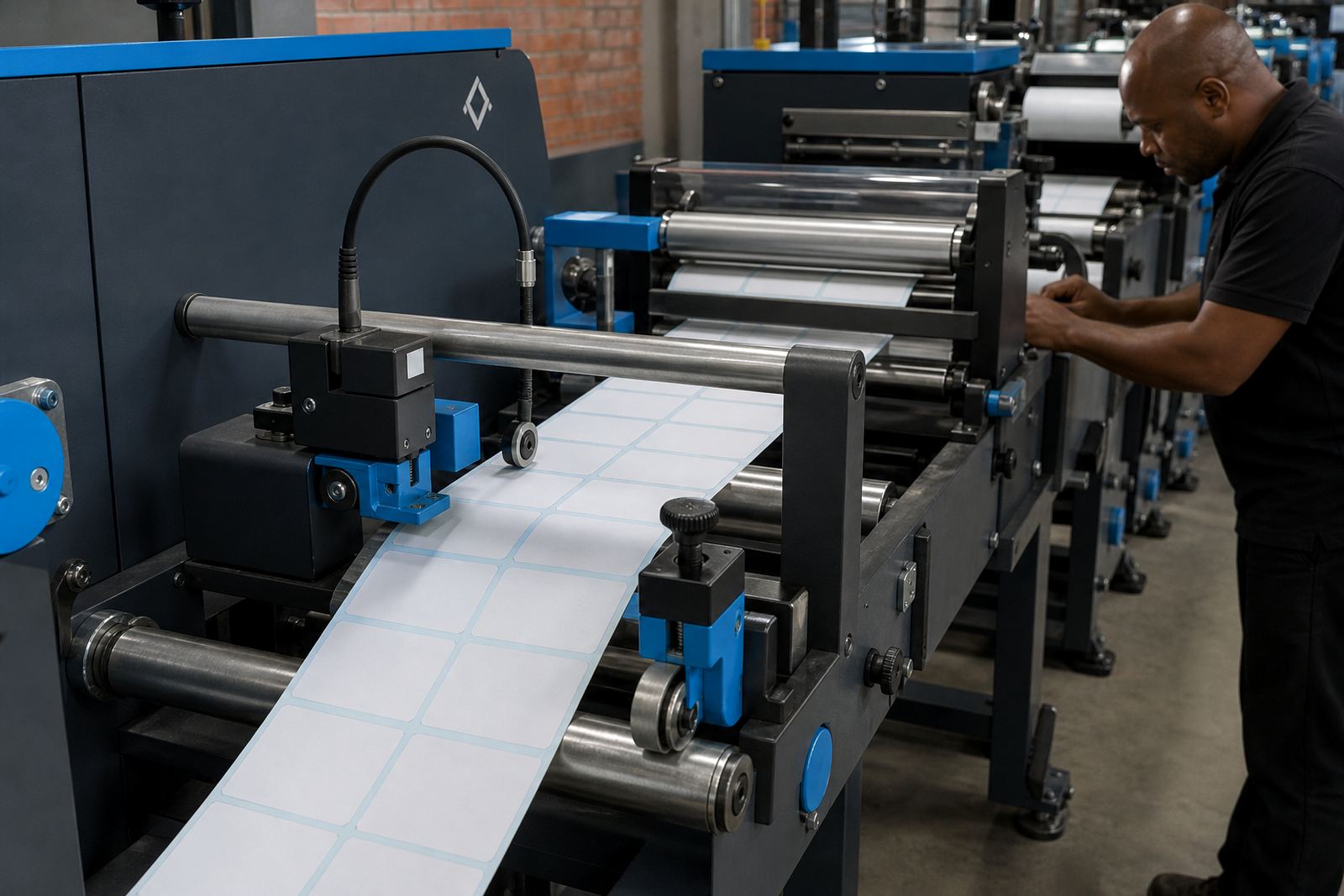
The setup is common on jobs for sample packs, short seasonal batches, test labels, specialist packaging, and narrow web work where roll build quality matters more than raw throughput. Registration marks are used to keep cutting aligned to print, especially where the artwork carries small text, barcodes or fine border lines. A well set small roll finisher helps the operator keep the label shape consistent even when the reels are light and the run length is modest.
For South African print rooms in Johannesburg, Durban, Cape Town and Gqeberha, this kind of finishing line often sits between a digital press and packing bench. It suits converters who want cleaner reels with less manual trimming, and it helps reduce handling marks on delicate face stocks or adhesive materials that can scuff easily.
Sizes and options that match the work on hand
Small roll finishers are usually specified by roll width, roll diameter, core size, and the finishing method required. Typical web widths for compact label work may range from narrow rolls for small-format labels up to wider reels used on short production batches. Core compatibility matters as well, because many short runs are wound on standard cores while some specialty jobs use smaller core diameters for tighter reel build.
- Roll width matched to label format and web path
- Short roll diameter handling for compact reels
- Manual or assisted unwind and rewind stations
- Laminate station for overlamination before cutting
- Die-cut module for flexible dies or semi-rotary cutting
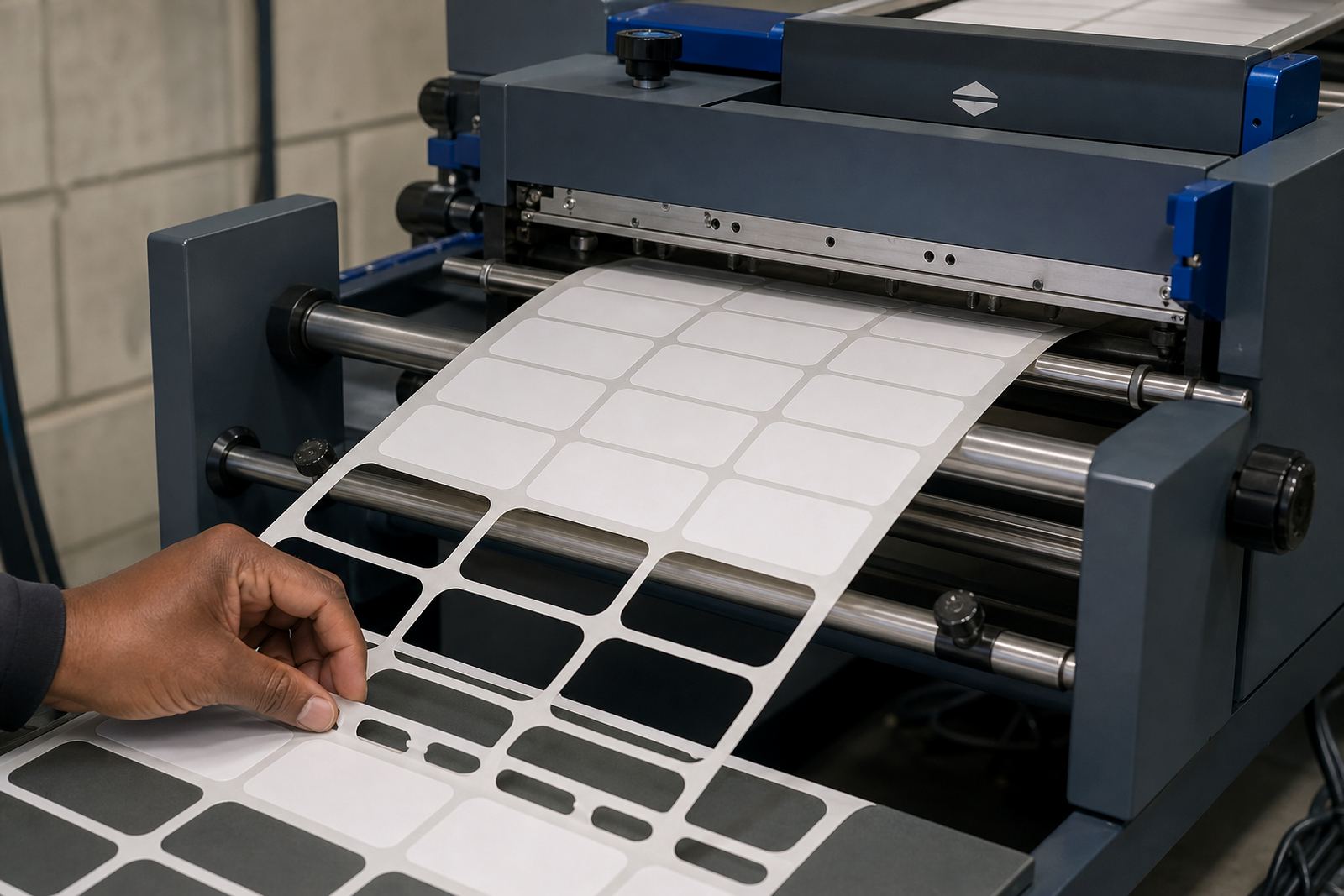
- Matrix stripping section for waste removal after cutting
- Slitting knives for multiple-up output on one web
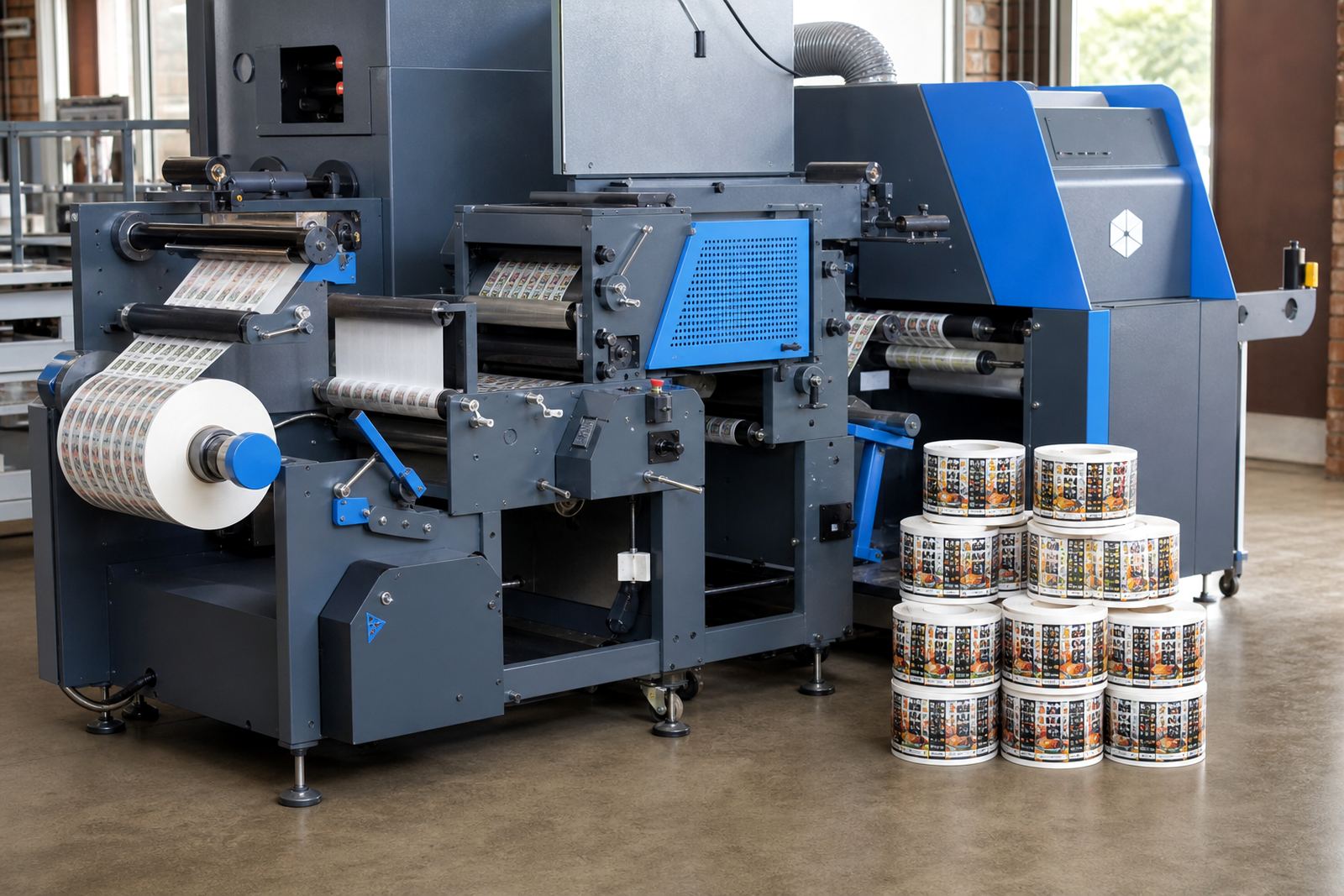
- Rewind control for finished labels in neat, usable rolls
Some users need a basic finishing arrangement for straightforward label shapes, while others want a machine that can take flexibly mounted dies, handle varnish work, or manage more precise registration on detailed designs. The right specification depends on the face stock, adhesive, liner and the way the finished roll must be packed for dispatch.
Where this finisher earns its place on the floor
This product suits label printers, packaging producers, and finishing rooms that regularly work on short runs or changing artwork. It is useful where the press output needs a controlled second stage before cartons, sleeves or wrapped packs go out the door. When the reel is short, the finishing machine must still keep the web flat and the cut line true, especially on gloss stocks, clear films and heavier label papers.
Operators often use a small roll finisher for product launches, variable information labels, compliance labels, promotional sets and sample reels. It can also help where a printer is doing customer approvals and the sample reel must look close to the final production reel. In coastal towns such as Durban and Gqeberha, storage conditions can affect roll handling, so stable winding and clean edge control become more important than they first appear.
- Sample and proof reels for approval work
- Short production batches with frequent artwork changes
- Specialty label stock with tighter handling needs
- Packaging lines that need clean, finished rolls before packing
Where the output is going into bottle labels, pouch labels or carton labels, the small roll finisher keeps the reel readable and ready for packing. It also helps reduce the amount of hand trimming around the edges, which matters when the label face is delicate or the adhesive grabs dust.
Installation, fitting and line checks that keep it honest
Fitting a small roll finisher starts with space, web direction and the type of roll that will feed it. The machine must sit level and stable, with enough clearance for unwind, working stations and finished rewind. If the setup includes lamination, die-cutting or stripping, the web path must be laid out so the material does not twist or drift before the cut reaches the register mark.
Electrical supply is part of the installation on most units, along with control checks for sensors, tension settings and drive functions. Where the machine includes powered unwind or rewind sections, the installer checks the drive response and the web tracking before handing it over for production use. On some jobs the cutter setup needs fine adjustment for the die position, nip pressure and knife spacing, so the first run is not rushed.
- Floor space and aisle access around the machine
- Power point location and control cabinet access
- Core sizes and unwind direction
- Web path for lamination, stripping and rewind
- Registration mark contrast and print repeat length
- Finished roll width and packing method
In Randburg and the wider Gauteng area, many teams want the machine aligned with existing print and finishing equipment rather than treated as a separate island. That means checking how the small roll finisher sits against the press output, and whether the operator can move reels through the line without extra lifting or awkward turns.
Care, cleaning and day-to-day handling
A compact finishing machine lasts better when the web path stays clean and the moving parts are checked often. Dust, adhesive residue and paper lint build up around rollers, blades and stripping sections, and that can change the finish on the next reel. The operator should watch tension, edge guide alignment and cutting depth, because small changes show up fast on short rolls.
Routine care usually includes cleaning rollers, checking knife wear, inspecting flexible dies or cutting heads, and watching for damage on rewind shafts and cores. If the machine is used with laminated stock or varnished labels, residue can collect faster on contact points, so the cleaning schedule should match the materials in use. In humid coastal areas, finished reels should be stored so the adhesive and liner remain stable, and the roll ends should not be crushed during packing.
Preventive maintenance helps keep the machine ready for the next production slot. It also reduces the need for breakdown repairs when a job is already on the floor. Where the team runs a variety of SKUs, the finishing setup should be checked after each changeover so the next reel starts with the same web tracking and cut quality.
Details to confirm before you order the machine
When ordering a small roll finisher, the useful details are the ones that shape the reel and the cut. Web width, roll diameter, core size, label repeat, material type and finishing method all need to be clear. If the job uses registration marks, the print layout and mark position should be shared so the sensor set-up matches the artwork.
It also helps to state whether the machine must handle laminate, varnish, slitting or matrix stripping on the same pass. Some productions need a simpler finish, while others need a full web path with several stations working in sequence. The more exact the brief, the easier it is to match the machine to the reel build and the output format.
- Finished roll width and the largest roll diameter
- Core size and unwind or rewind direction
- Material type, face stock and liner construction
- Whether lamination or varnish is part of the job
- Need for semi-rotary die-cutting or flexible dies
- Slitting count and finished reel packing format
- Registration mark position and repeat length
For teams working across Johannesburg, Pretoria, Durban, Cape Town and Gqeberha, those details help set the machine up for the real job rather than a rough guess. That is especially useful where the same finisher handles both sample reels and short production batches, because the reel build and cut depth can vary from one order to the next.
Support for operators, spares and production changes
A small roll finisher works best when the operator knows how to set the web path, read the print repeat and manage the winding tension on each job. That is where operator training matters, along with practical support on die setup, registration calibration, rewind setup and slitting setup. The machine may look compact, but the finishing decisions still affect how the reel performs once it leaves the bench.
Where a plant changes jobs often, preventive maintenance and spare parts supply become part of the working rhythm. Rollers, sensors, blades, belts and other wearing parts should be monitored before they affect output. A careful set-up also helps the line run better on mixed stock, whether the job is paper labels, film labels or laminated stock with tighter handling needs.
For label printers and packaging producers, the point of a small roll finisher is control. It gives the operator a way to turn printed reels into clean finished rolls without losing the shape, the register or the edge quality that the customer expects.
Key facts
| Machine type | Compact roll finishing system for label conversion |
|---|---|
| Supported processes | Unwind, laminate, die-cut, strip waste, slit and rewind |
| Cutting options | Laser finishing or semi-rotary die-cutting with flexible dies |
| Web handling | Short-diameter rolls with controlled tension and registration alignment |
| Material range | Paper labels, film labels, laminated stock and varnished print |
| Typical outputs | Finished label rolls, slit reels and packed sample batches |