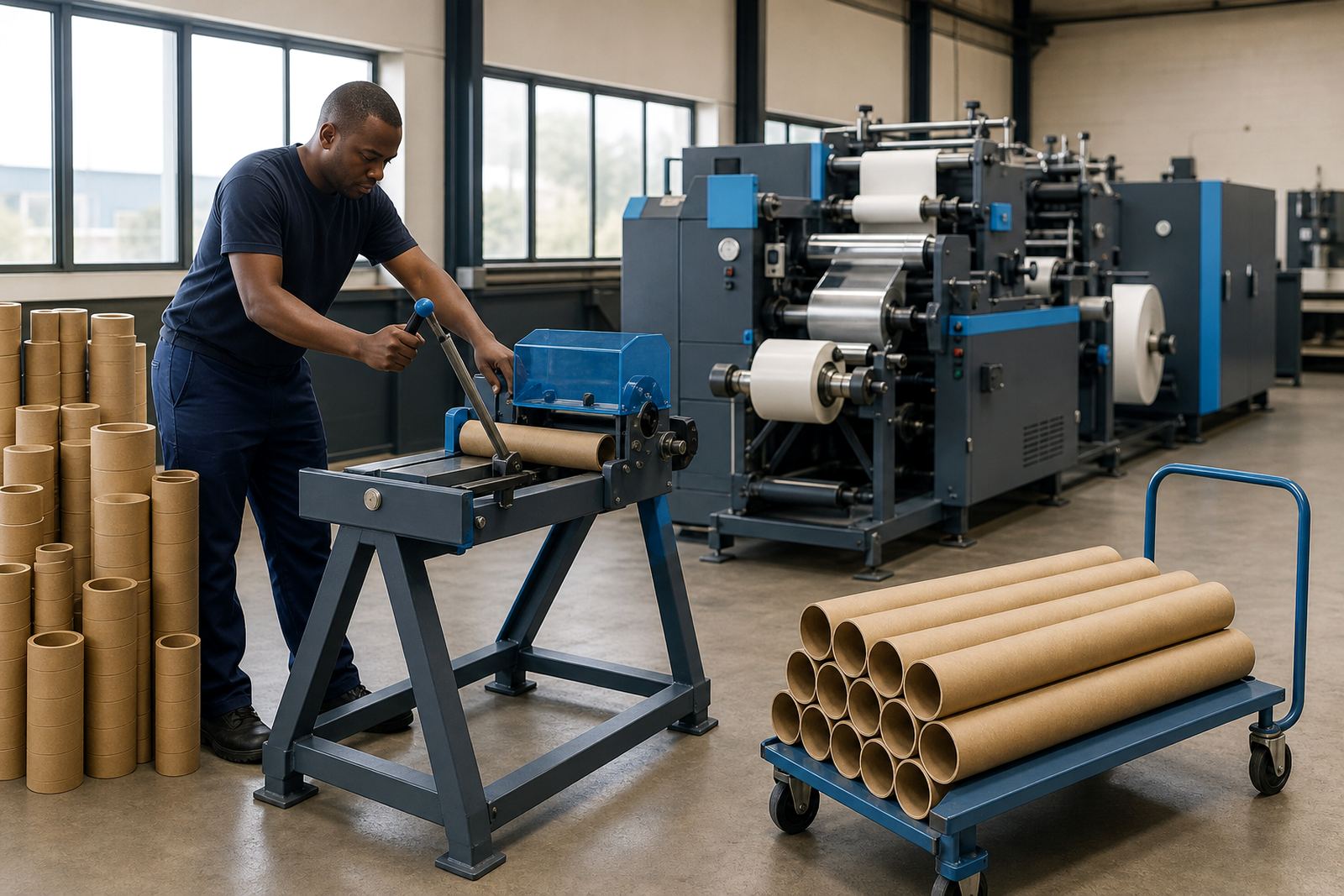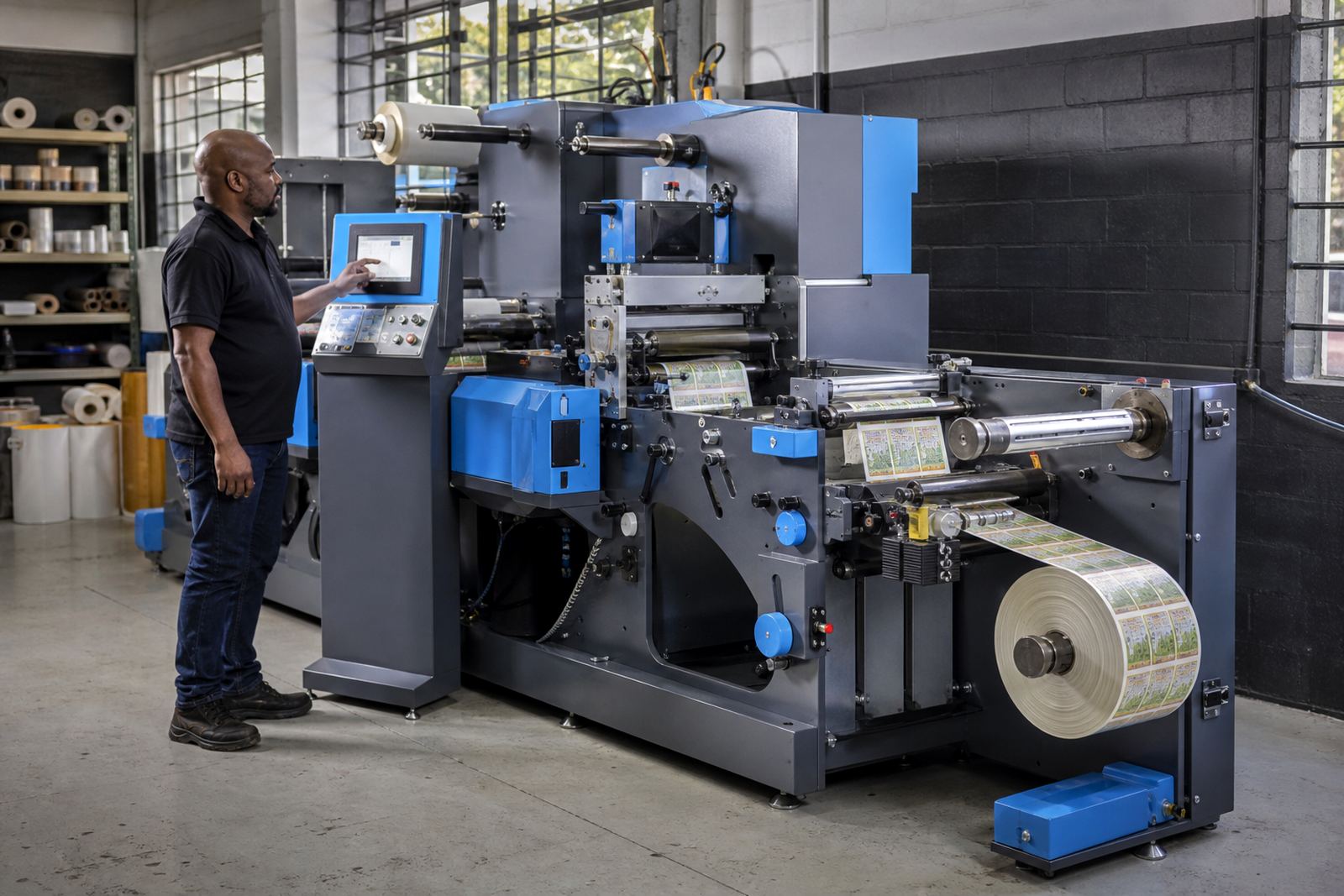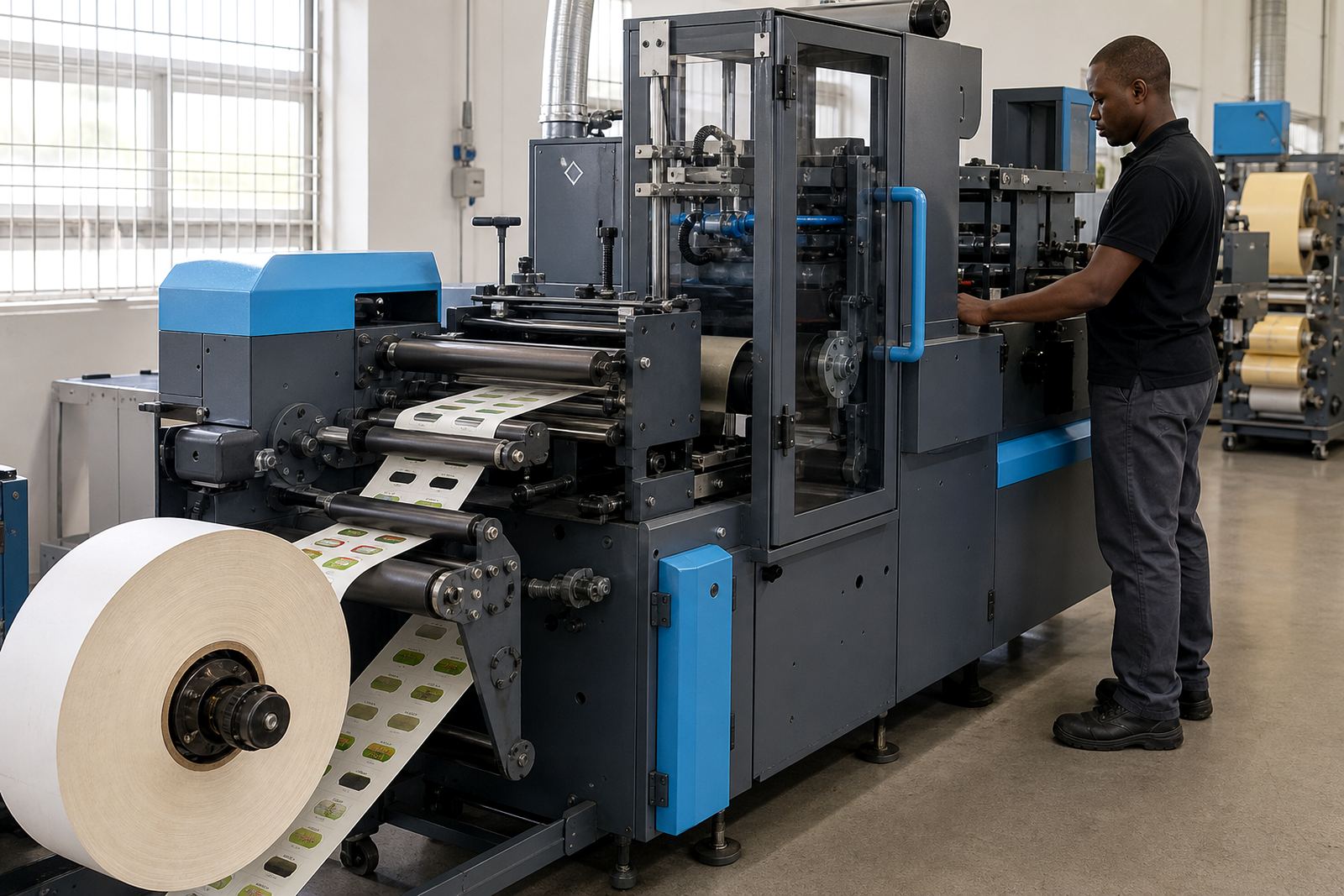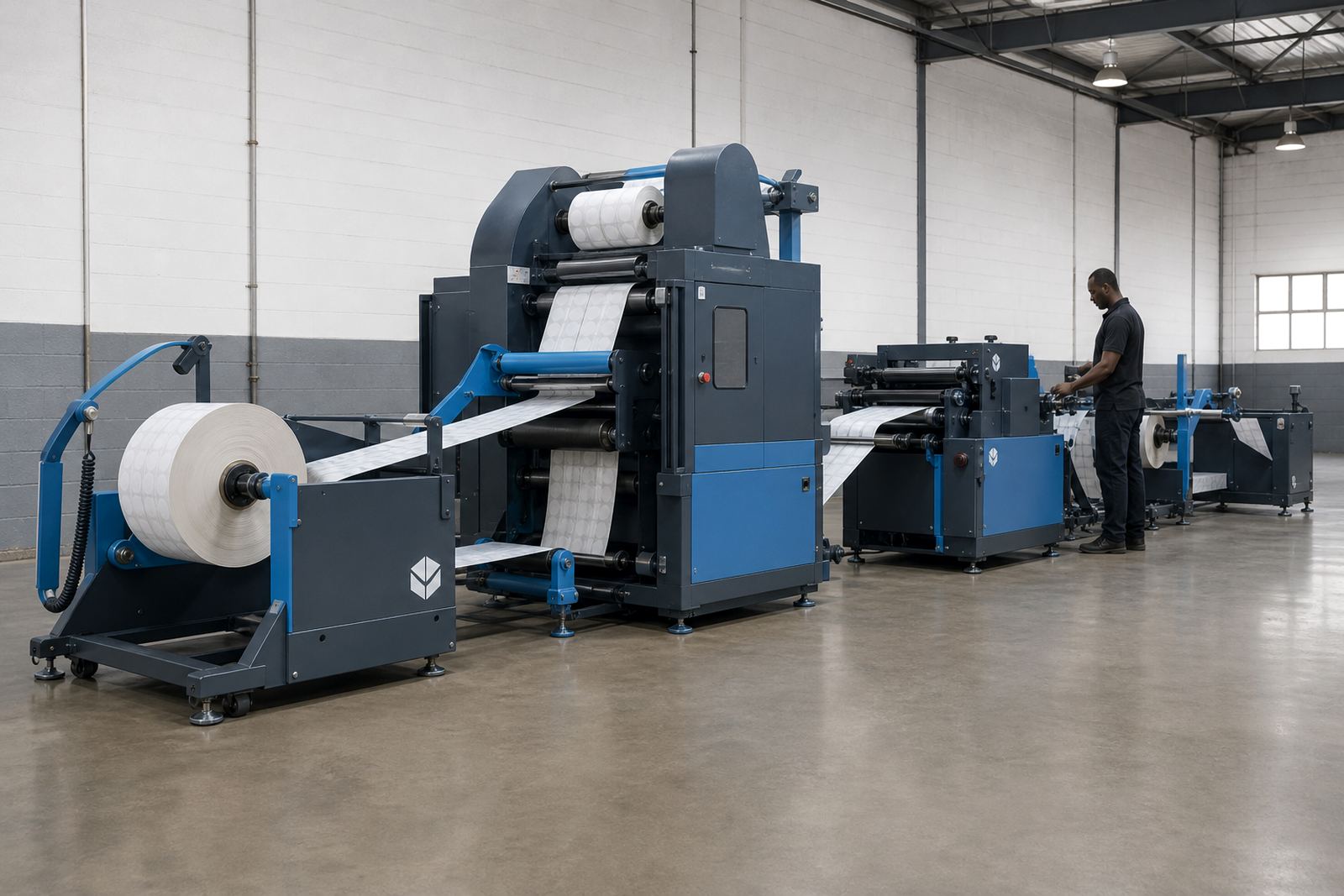
A line built around the work you actually run
A modular finishing line is a grouped set of converting stations that can be arranged to suit current job mix and room at the plant. For label printers and packaging producers in Gauteng, KwaZulu-Natal and the Cape, that usually means an unwind, web guide, laminator, die-cut station, matrix stripping, slitter and rewind section in one controlled flow. Some lines are set up for pressure-sensitive labels only, while others handle varnish, foil-effect work or more complex web paths with inspection and waste removal.
The value is not in adding every station at once. It is in keeping the layout flexible enough to handle pressure-sensitive material, clear film, paper stock and self-adhesive constructions without unnecessary handling between processes. When the web stays true, registration marks are easier to hold and the finish on the reel is cleaner. That matters when labels have fine type, small reverse knocked-out copy or narrow panels that need tight trimming.
For many shops, the line is also about floor control. A straight pass takes less handling than moving rolls between separate machines, and the operator can keep an eye on tension, edge tracking and waste build-up from one side of the line. It makes setup more predictable, though you still need a clear workflow and a steady operator hand.
Station choices and working widths
Most modular finishing lines are selected by web width, roll diameter, tension control and the finishing methods needed on the job. Common working widths range from narrow label webs of about 220 mm to wider industrial formats around 450 mm or more, depending on the make-up of the line. Roll handling can be set for small reel work or heavier parent rolls with larger outer diameters, and the unwind and rewind sections should match the actual reel weight you plan to run.
Station options normally include:
- Unwind with tension control and edge guiding
- Cold or thermal lamination for print protection and gloss effect
- Varnish or coating support where the workflow calls for it
- Laser or semi-rotary die-cutting for short and medium runs
- Flexible die stations for repeat jobs and standard label shapes
- Matrix stripping and waste take-off for clean web separation
- Slitting knives for multi-up output
- Rewind with core control and roll build management
Where label variation is high, a semi-rotary head is often preferred because it can handle changing job lengths without a full fixed die set for every format. Laser cutting suits special shapes and short-run changeovers, while flexible dies still earn their place on repeat work where the same label size returns often. The right combination depends on artwork, substrate and the length of the run, not just on machine size.
Where this line fits on the floor
This kind of line suits converters that need to finish digitally printed labels in-house instead of sending work out for post-print finishing. It is also useful where a packaging team runs more than one label type, because the stations can be arranged to suit changing job orders through the week. Jobs with transparent stock, intricate contours or multiple slits are easier to manage when the line is set up with proper register control and a stable rewind path.
In practical terms, the line suits:
- Label printers handling short runs, version changes and seasonal packs
- Packaging producers finishing pressure-sensitive labels for cartons, bottles and tubs
- Converting rooms that need lamination, die-cutting and slitting in one path
- Plants in Johannesburg, Pretoria, Durban, Cape Town and Gqeberha that work across mixed substrates
Some operations use the line as a finishing centre for a digital press, while others place it after a flexographic press or a varnish station. The sequence matters. If the web leaves the print stage with poor drying or unstable tension, the rest of the line will struggle to hold register. That is why the workflow should be planned around the real material, not only the brochure spec.
Installation, commissioning and operator setup
Fitting a modular finishing line starts with the floor plan, the available power supply and the reel weights you expect to process. The machine footprint needs enough access at the unwind, operator side and rewind side so rolls can be loaded without forcing awkward lifts. Electrical supply, compressed air where required, safety guarding and web path clearances all need to be checked before the line is placed and levelled.
Commissioning normally covers alignment, web threading, registration calibration, tension setting and test runs on the substrates that will be used most often. If the line includes laser cutting, the safety enclosure and extraction arrangement must be in place and the settings checked against the chosen material. For semi-rotary or flexible die setups, the die height, pressure and magnetic mount fitment need careful attention, otherwise the cut will drift or crush the liner.
Training is every bit as important as the machine itself. Operators need to know the setup sequence, how the waste is guided away, where the slit blades sit and how to set rewind tension properly. A line can seem plain enough on paper, yet still cause trouble if the crew is reading register marks by guesswork or feeding the first metres through too quickly. Our installation work is planned around the plant, the substrate and the people who will use the machine each day.
Keeping the line clean, steady and useful
A modular finishing line keeps its value when the web path, cutting edges and rewind sections are looked after properly. Adhesive build-up, dust and trimmed waste can all affect cut quality and edge tracking, particularly on narrow labels or film stock. Regular cleaning of rollers, guides and stripping points helps prevent web marks and uneven rewind profiles.
Maintenance on this type of machine usually includes:
- Checking bearings, belts and drive alignment
- Inspecting knives, anvils, dies and cutting heads
- Testing tension control and registration marks
- Cleaning waste channels and matrix stripping paths
- Reviewing slitter position and rewind core hold
When jobs shift between paper and film, or from short to longer labels, it is worth resetting the line instead of pushing the same settings through every order. Small changes in material thickness can alter cut depth and strip behaviour, especially on detailed shapes. A well-kept line gives cleaner reels, fewer stoppages and less sorting at the end of the shift. That saves time and keeps the production flow less messy.
What to confirm before the order is placed
Before a modular finishing line is specified, the basic job data should be pinned down. You need to know the maximum web width, the minimum label size, expected roll diameter, core size, print repeat length and whether the line must handle lamination, varnish, laser cutting, semi-rotary dies or only slitting and rewind. Registration mark style and substrate type are also important because they affect sensing and cut control.
Useful points to confirm are:
- Printed web width and usable trim allowance
- Material types, adhesive system and liner thickness
- Roll diameter at unwind and rewind
- Required stations, in the correct process order
- Power supply, compressed air and floor space
- Whether the line must handle repeat jobs or frequent changeovers
In Kya Sand, Randburg, our team works with label printers and packaging producers that need the line matched to the real job list, not a generic finish. If you are comparing options, our contact form is the best place to send the job details, substrate list and preferred station layout so the spec can be matched properly.
Key facts
| Product type | Modular digital label finishing line |
|---|---|
| Core functions | Unwind, laminate, die-cut, strip waste, slit and rewind |
| Cutting options | Laser cutting, semi-rotary die-cutting, flexible dies |
| Working width | Typically 220 mm to 450 mm, depending on configuration |
| Roll handling | Small reel to heavier parent roll formats, subject to build |
| Applications | Pressure-sensitive labels, short runs, repeat label formats and mixed web finishing |