Built for the last stage of label finishing
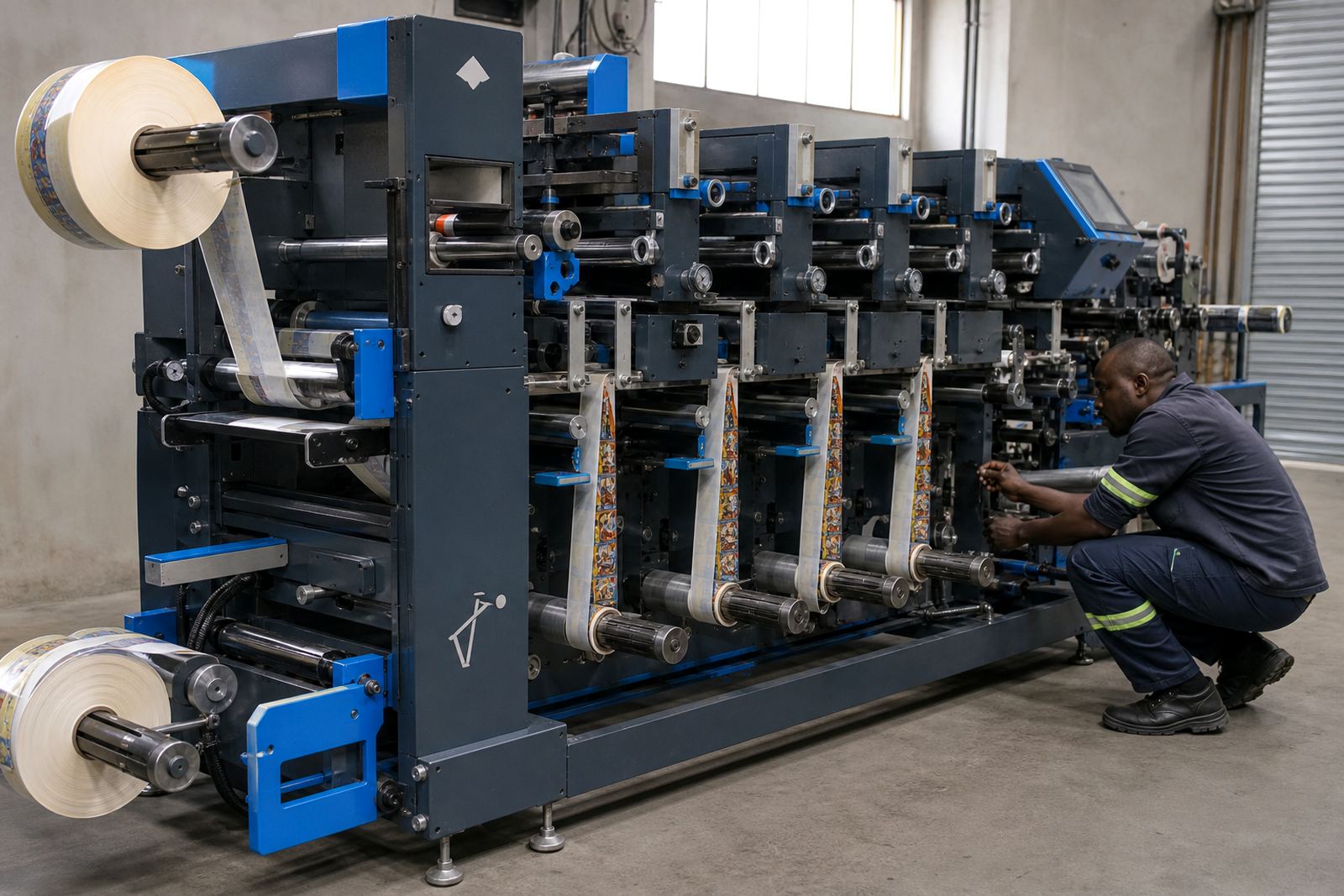
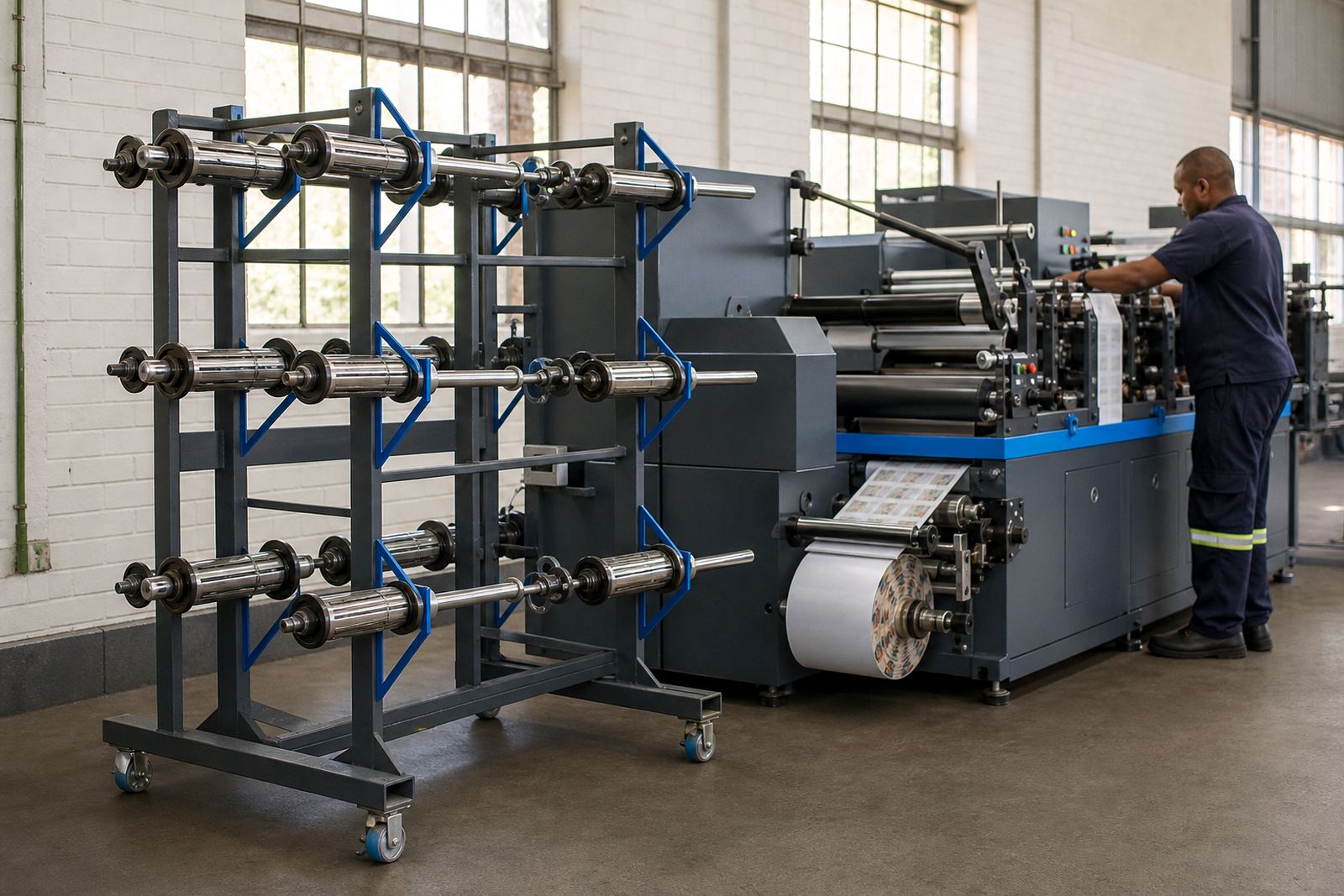
A rewind shaft set is the part that carries the finished roll through the final rewind stage on a label finishing line. It works with chucks or expanding elements to grip the core, keep the roll centred and hold the web under control while the machine builds a clean finished reel. In digital label work that matters, because the roll leaving the line must sit squarely for packing, slitting, inspection and the next run.
For label printers and packaging producers, the right shaft set helps the rewind stage behave properly on narrow work, wider labels and mixed production. A shaft that matches the core and rewind format reduces wobble at the roll edges and keeps the finished pack easier to handle at the bindery or on the packing bench.
- Used on rewind stations after die-cutting, slitting or inspection
- Suitable for short and long production rolls
- Works with core grip systems and expansion chucks
- Common on label finishing machines handling pressure-sensitive stock
Sizes, core formats and rewind pairings
The shaft set has to match the job, not just the machine label on the frame. Core size, rewind width and roll diameter all affect the choice. A narrow pharmaceutical label run does not behave like a broad self-adhesive pack label, and a shaft that suits one format can sit poorly on another.
Most rewind shaft sets are specified by core diameter, shaft length and the way the chucks grip the reel. On label finishing equipment you will usually look at the core size first, then confirm the maximum web width and the heaviest roll the station must carry. If the rewind is feeding into slitting or waste stripping, the shaft also needs enough stiffness to hold tension across the full face width.
- Core sizes commonly matched to 76 mm and other job-specific formats
- Shaft length set to the production width of the line
- High grip options for heavier rolls and tighter rewind tension
- Light handling options for narrow label webs and short runs
Some lines need more than one shaft set if the factory shifts between different reel widths during the week. That keeps changeover cleaner and avoids forcing one set to cover every size in the room.
Where this set fits in real production
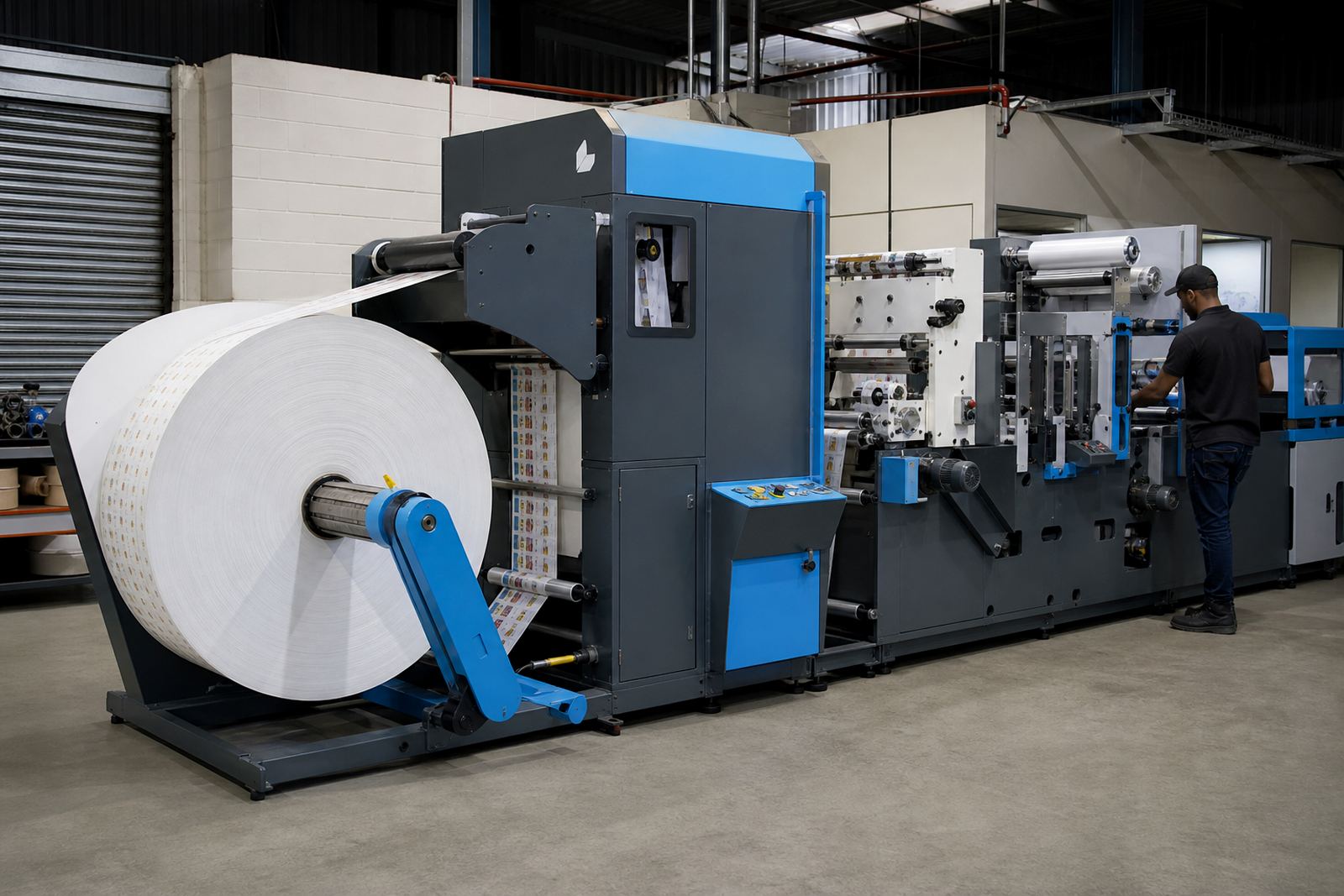
A rewind shaft set suits any finishing line where labels must leave the machine in a neat roll. That includes digital label die-cutting lines, offline finishing units, matrix stripping stations, inspection tables and slitting setups that finish the web into smaller reels. On jobs using flexible dies or semi-rotary tooling, the rewind stage still has to hold tension accurately, especially when the stock carries registration marks and the operator needs the roll to track true.
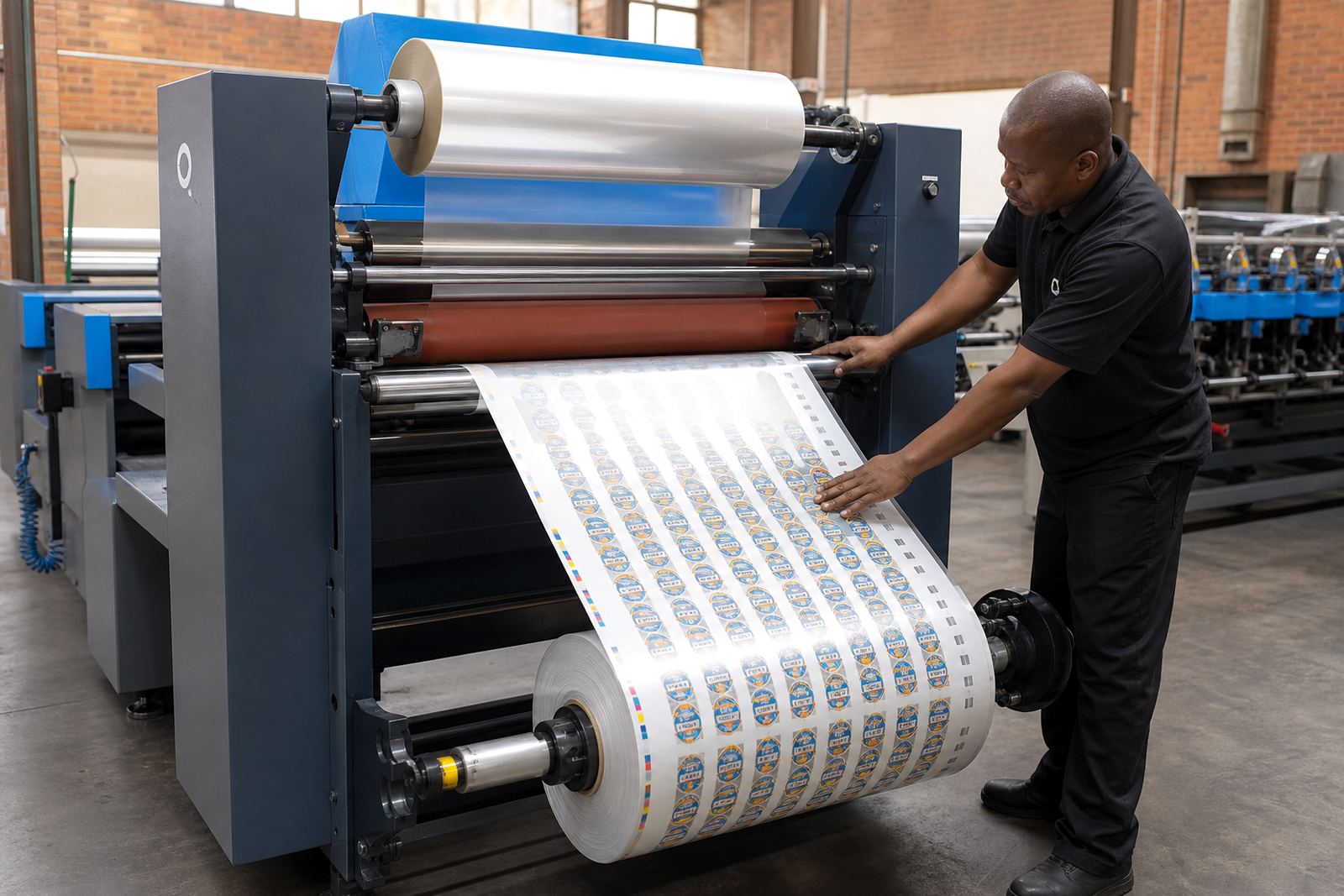
It is also useful where varnish or laminate has been added and the sheet surface is stiffer than plain stock. The rewind must keep the roll firm without crushing the face material or leaving a loose outer wrap. In humid coastal areas, especially around Durban and Gqeberha, clean rewind handling matters because the finished roll sits better when the core and web are aligned from the start.
In practical use, the shaft set suits plants that want tidy roll presentation for dispatch, kitting or further converting. It also helps where a line alternates between smaller wraparound labels and wider packaging labels, since the rewind needs to cope with different tensions without constant adjustment.
Fitting, alignment and service checks
Good fitting starts with the core sitting square on the shaft and the chucks gripping evenly on both sides. If the rewind shaft is not aligned, the roll can telescope, wander or build a loose edge on one side. During installation or line commissioning, the rewind station should be checked against the machine frame, the web path and the slitting knives if those are part of the line.
Operator training usually covers how to load the core, set the rewind tension and confirm that the shaft expands properly before the run starts. On some machines the rewind needs a little more attention after a change in label width or a move from plain stock to laminate. That is where applications support helps, because the right setup depends on the roll weight, the substrate and the final reel size.
- Check core seating before winding starts
- Verify both chucks expand evenly
- Confirm shaft length suits the current web width
- Inspect the rewind surface for wear marks or scoring
- Set tension to suit the stock and reel diameter
Care that keeps the rewind station steady
A rewind shaft set lasts longer when it is kept clean and handled carefully during changeovers. Adhesive dust, paper fibre and small pieces of matrix waste can collect on the shaft or around the chuck area, and that build-up affects grip over time. A regular wipe-down with the correct cleaner helps, but the shaft should also be checked for dents, scoring and uneven wear on the contact faces.
In a busy print room, spare shafts are worth keeping in the parts room if the line runs high volumes. That avoids pushing worn parts through another shift when the roll quality is already slipping. Preventive maintenance should include the rewind station, the bearings and the associated fittings, since the rewind often shows the first signs of misalignment before the rest of the line does.
Where a line runs often with coated stock or heavier lamination, the rewind components need closer attention. The extra stiffness in the finished web can put more load on the shaft and chucks, so small faults become visible sooner.
The details to confirm before you place the order
Before a rewind shaft set is selected, the exact production details should be clear. That keeps the set matched to the machine and avoids a mismatch between the core, the reel width and the handling method used in the room. The more varied the label work, the more important those measurements become.
- Core diameter and core material
- Maximum rewind width and typical job widths
- Maximum roll outside diameter
- Type of rewind station and chuck style
- Whether the line runs slitting, stripping or inspection before rewind
- Any special handling for laminate, varnish or heavier label stock
For installations in Johannesburg, Pretoria, Durban, Cape Town and Gqeberha, the same basic checks apply, but the floor layout and production mix still matter. A shaft set that suits one room may need a different length or grip style in another. Our contact form is the cleanest way to send those measurements through with the rest of the machine detail.
Key facts
| Product | Rewind Shaft Set |
|---|---|
| Function | Holds and carries finished label reels on the rewind station |
| Core sizes | Matched to the core diameter specified for the line |
| Web width | Specified to suit the production width of the machine |
| Compatible use | Die-cutting, slitting, stripping, inspection and rewind |
| Support | Installation, operator training, servicing and parts supply |