Mark reading that keeps the cut on the print
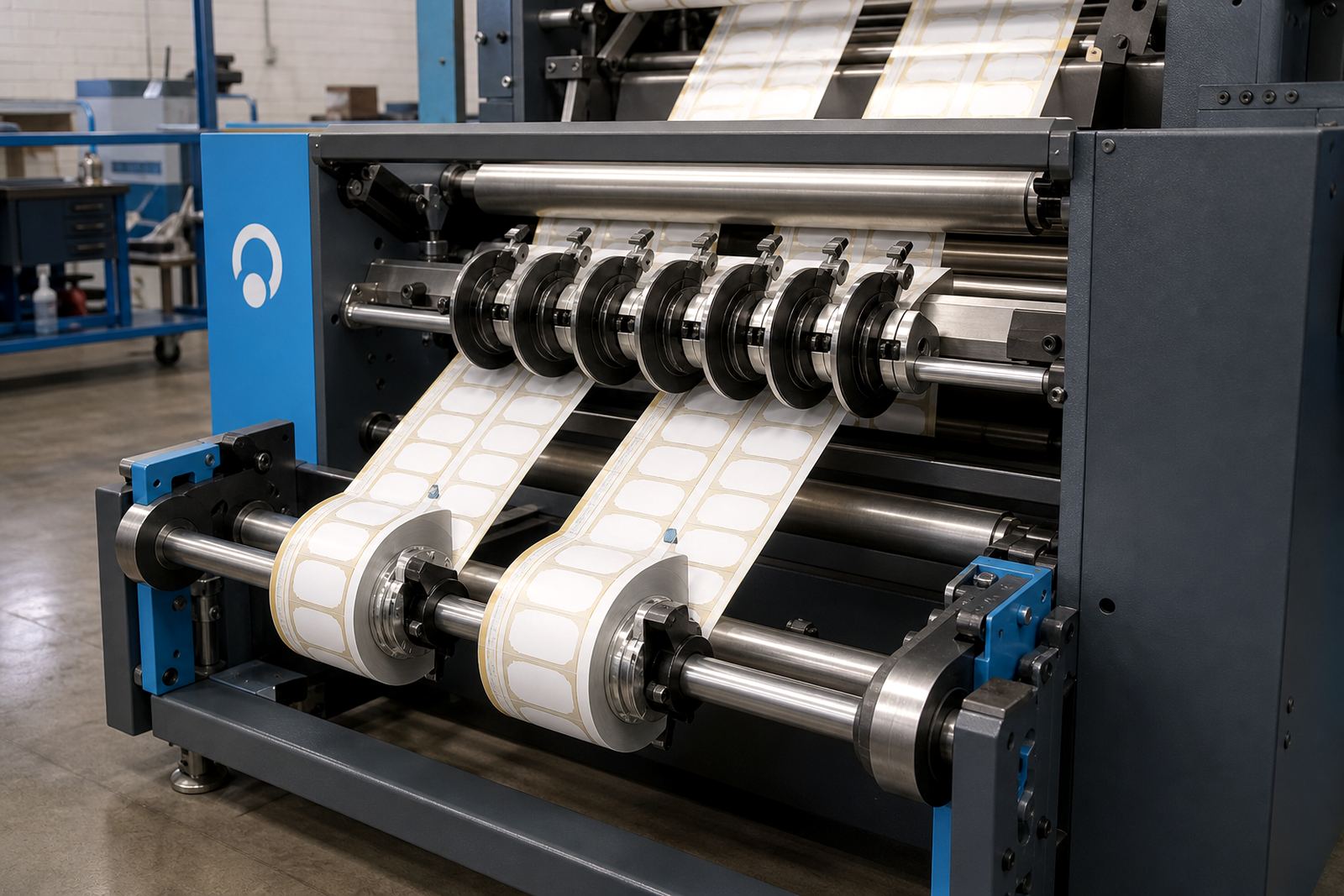
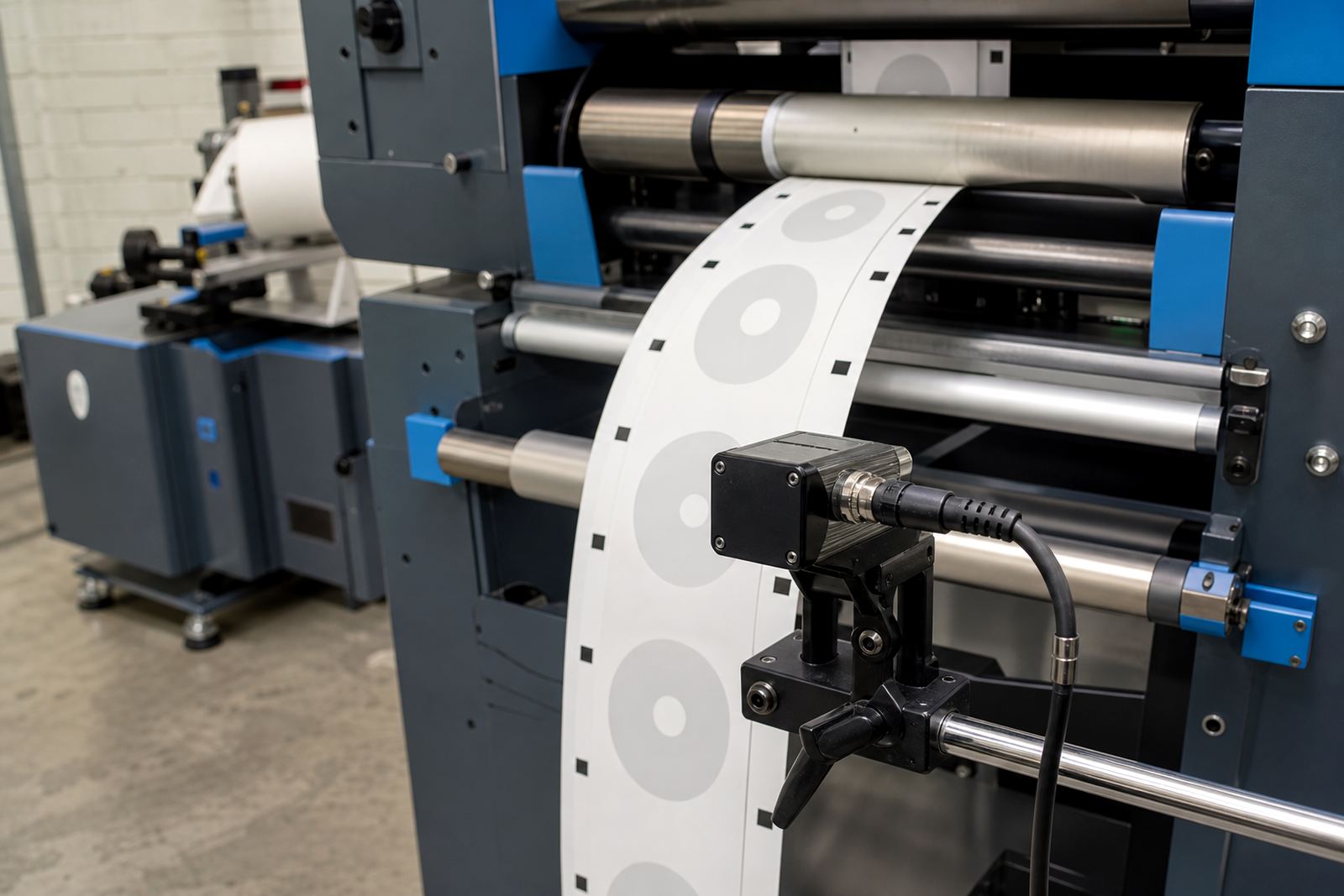
This system watches printed registration marks as the web moves through the line, then adjusts the cut position so the finished label sits where the artwork was laid out. In practical terms, it helps keep the die or laser path lined up with the printed image, even when the substrate changes, the roll diameter drops or the press output varies a little.
On short and medium runs, that control matters on labels with tight borders, clear film, metallic stock, textured paper and other jobs where a small drift shows up fast. The unit can be set up for repeat jobs, step and repeat work, and changeovers where the operator needs a dependable read on every rotation.
- Camera or sensor based reading of printed marks
- Works with semi-rotary and laser finishing lines
- Useful on pressure-sensitive labels and sleeve work before slitting
- Supports accurate repeat length control across a moving web
Line positions where registration control earns its place
Registration control is usually fitted where print accuracy has a direct effect on yield. That includes narrow-web label rooms, packaging conversion lines and finishing areas that handle mixed artwork with changing repeat lengths. It is also useful where a line combines lamination, varnish and die-cutting, because each pass can shift the web slightly if the control is not reading marks properly.
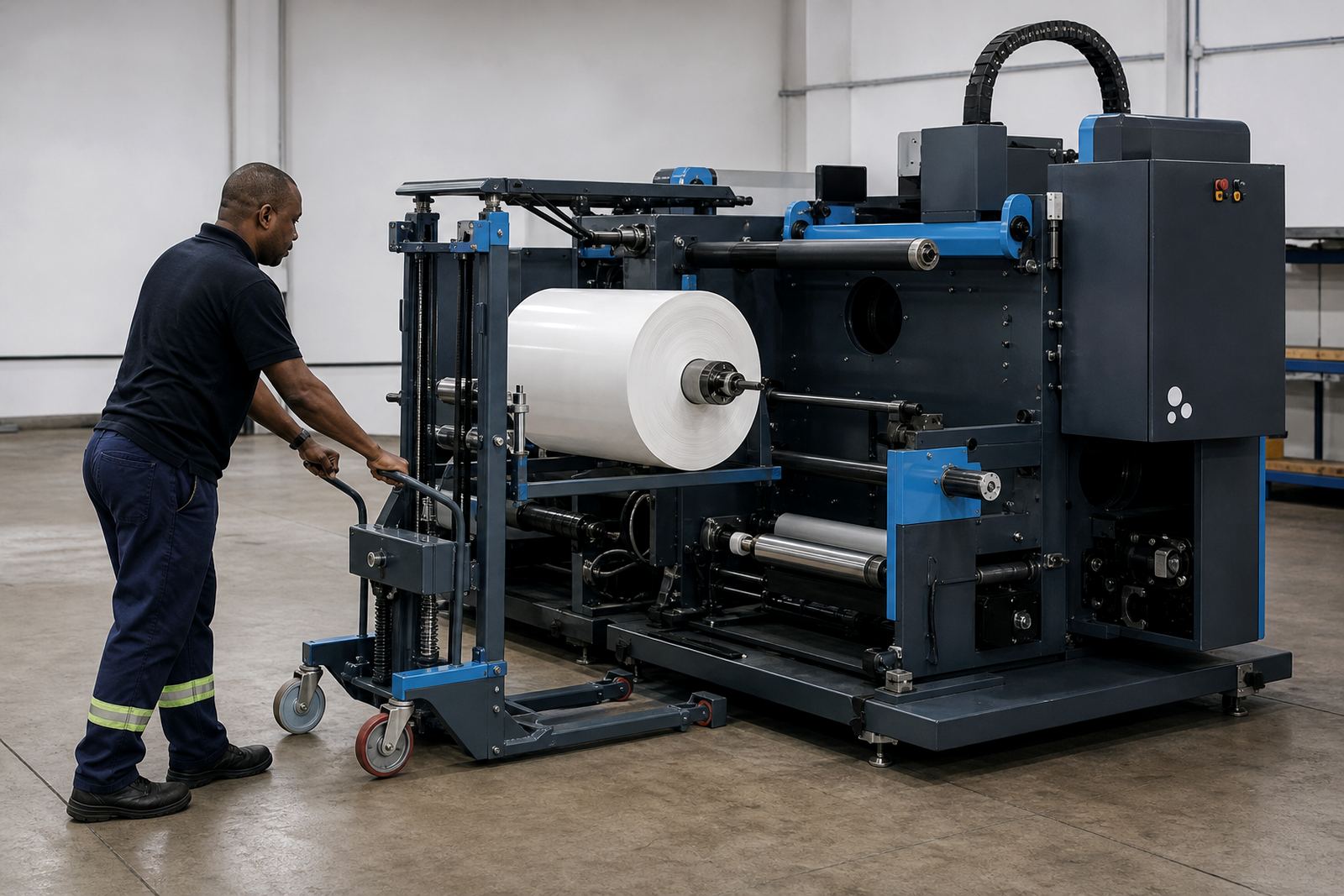
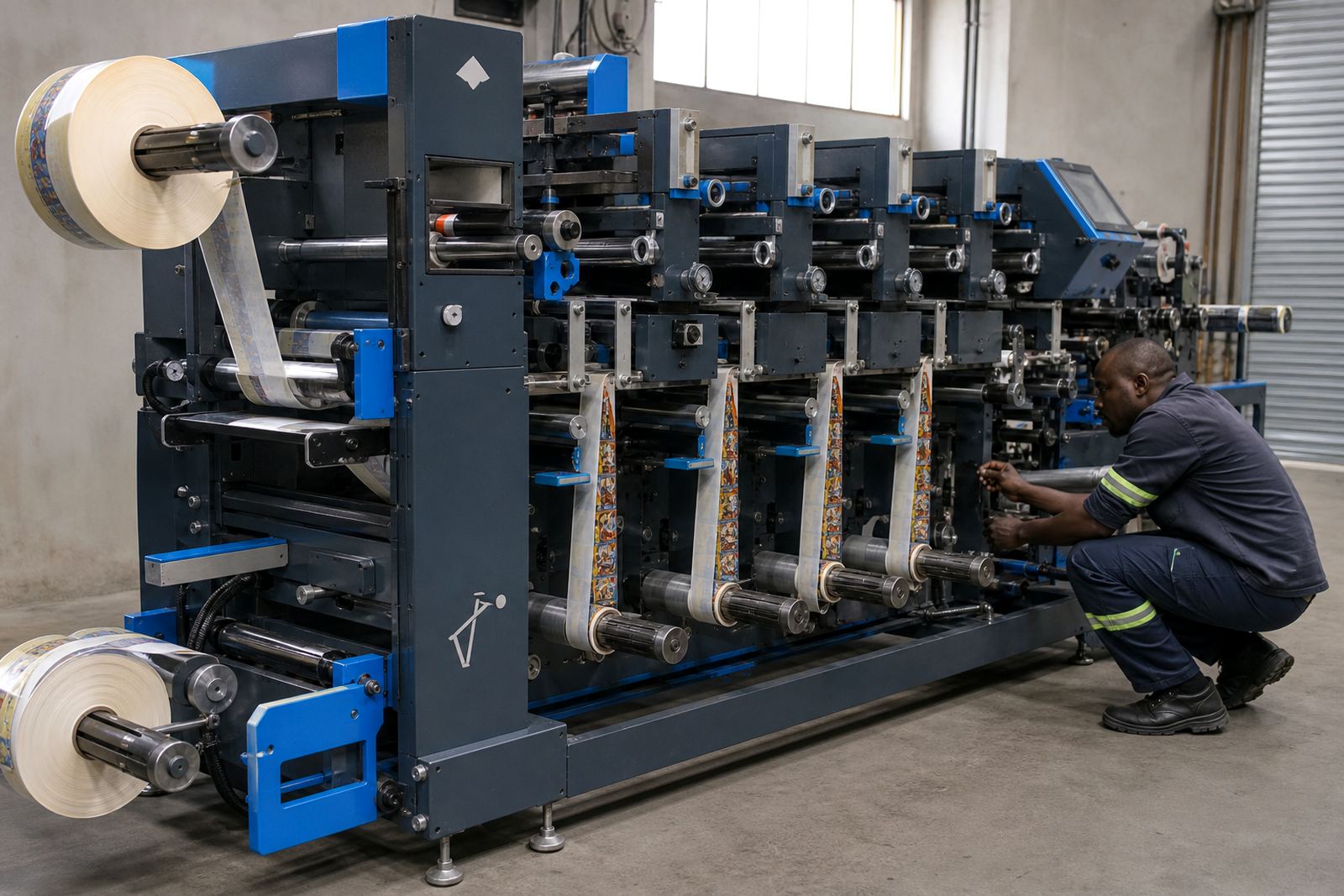
For label printers in Johannesburg, Durban, Cape Town, Pretoria and Gqeberha, the system is commonly paired with unwind and rewind sections so the printed web stays tracked from feed to finished roll. It works well on runs where register marks sit in a fixed position, or where the artwork needs the cut path held close to the image edge.
- Label converting rooms with variable repeat lengths
- Print and finish lines using matrix stripping and slitting
- Jobs where the trim edge must stay close to the artwork
- Packaging producers handling film, paper and laminated stock
Sizes, sensing options and setup choices
The control package is selected to suit the web width, the mark style and the machine layout. Some installations use a compact sensor head for simple black mark reading, while others need a camera-guided unit that can recognise fine contrast on a busy printed panel. The control interface is normally matched to the machine controller so the operator can set sensitivity, mark search position and correction limits without hunting through unrelated screens.
Where the line handles wider rolls, the frame and mounting arrangement must allow enough side clearance for the web path and any guide rollers. For narrow-web work, the sensing head is often placed close to the print track to reduce mark loss during acceleration or splicing. On lines with semi-rotary tooling, the trigger point must be coordinated with cylinder timing and the registration window on the print repeat.
- Web widths commonly used on narrow label lines and wider finishing webs
- Sensor or camera guided mark reading, depending on print contrast
- Adjustable sensitivity for paper, film and varnished stock
- Offset and correction settings for repeat length control
Fitting on a live finishing line
Installation starts with a check of the web path, the mark position and the available mounting space around the unwind, die station and rewind. The fitting must allow the reader to see the mark cleanly, without shadowing from guide bars, dust or lacquer build-up. On some machines the bracket is fixed close to the print side, while on others a longer arm or a guarded mount is needed to keep the optics clear.
The control system is normally commissioned with the machine under production conditions so the operator can see how it behaves at normal speed, low speed and during start-stop movement. We also set the mark search point, the correction range and the alarm behaviour for missing marks. Where the machine is used across more than one stock type, the settings should be recorded for each job family so the line does not need a full reset every time.
- Mounting position checked against the web path and print mark
- Interface set to the machine controller and drive logic
- Mark search point, sensitivity and correction limits adjusted
- Operator trained on setup, fault finding and job changeover
Care that keeps the reader honest
Dust, adhesive mist and varnish overspray can affect mark reading, so the lens or sensor face needs regular cleaning with a suitable non-abrasive cloth. The bracket fixings should be checked for movement, especially on lines that run heavier rolls or work on the outer edge of the web. If the marks are too small, too light or placed too close to the trim, the system has to work harder and the register will suffer.
A sensible maintenance routine includes checking cables, connectors and the alignment of the reader head, plus verifying that the stored job settings still match the current artwork. For sites that run in high humidity, especially coastal operations, the control box and exposed fittings should be inspected for corrosion and moisture ingress. That kind of care helps the machine hold register without the operator chasing it all shift.
- Clean optics and sensor faces with care, not solvent abuse
- Check bracket tightness and cable condition during service visits
- Keep job settings recorded for repeat artwork and stock changes
- Inspect for moisture and corrosion in coastal conditions
What to confirm before a quote or order
To size the system correctly, we need the machine type, the web width, the repeat length and the material mix. It also helps to know whether the line uses semi-rotary cutting, laser cutting, laminate, varnish or matrix stripping, because the registration requirements differ from one process to another. If the printed mark is on the front, back or side of the web, that changes the sensor position and the mounting angle.
Please also confirm the roll outside diameter, core size, minimum gap between marks and the normal running speed range. If the line uses slitting and rewinding in the same pass, the control settings must suit the final roll format and not only the cutting stage. Our contact form can carry the job details, artwork notes and machine layout so the right configuration is matched to the line from the start.
- Machine model and finishing process on the line
- Web width, repeat length and roll outside diameter
- Mark style, mark position and artwork registration tolerance
- Core size, final slit widths and rewind direction
Key facts
| System type | Camera-guided registration control for digital label finishing |
|---|---|
| Reading method | Printed registration mark detection with adjustable sensitivity |
| Compatible processes | Semi-rotary die-cutting, laser die-cutting, lamination, varnish, stripping, slitting and rewinding |
| Web range | Configured to suit narrow-web and wider finishing lines |
| Control functions | Mark search, correction range, offset setting and fault alarm |
| Typical use | Label printers and packaging producers running repeat artwork and tight register jobs |