A second rewind position for busy label runs
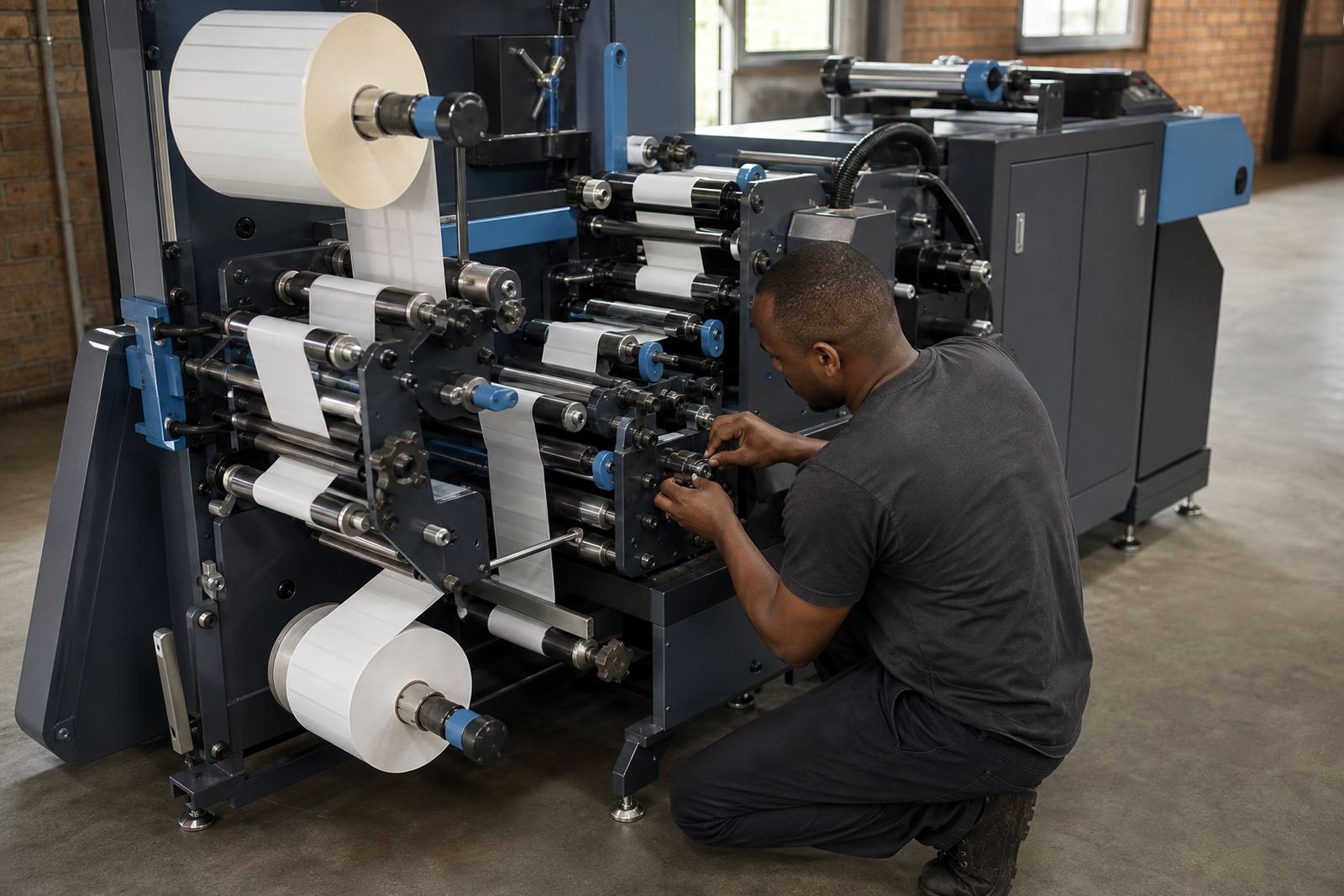
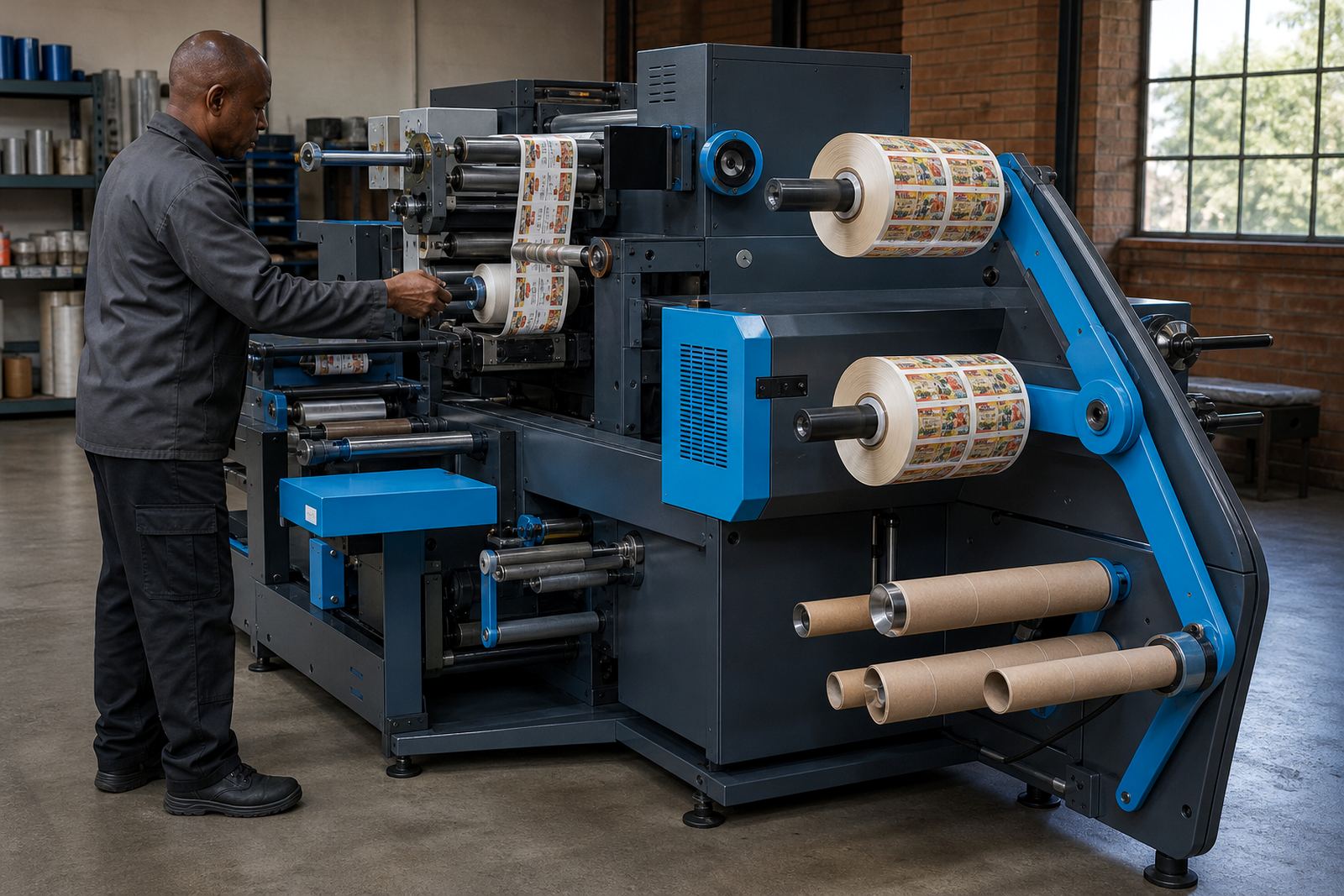
A turret rewind unit adds two rewind mandrels on a rotating head, so one roll can finish while the other starts building. On label lines that run short to medium jobs, that changeover saves time at the exact point where operators normally stop the machine and reset the roll path. It suits digital label work with frequent artwork changes, mixed SKU batches and repeat jobs that leave little room for waste. The unit is used after printing and finishing stages, where the web has already been laminated, varnished or die-cut and needs to be wound neatly for dispatch or further converting.
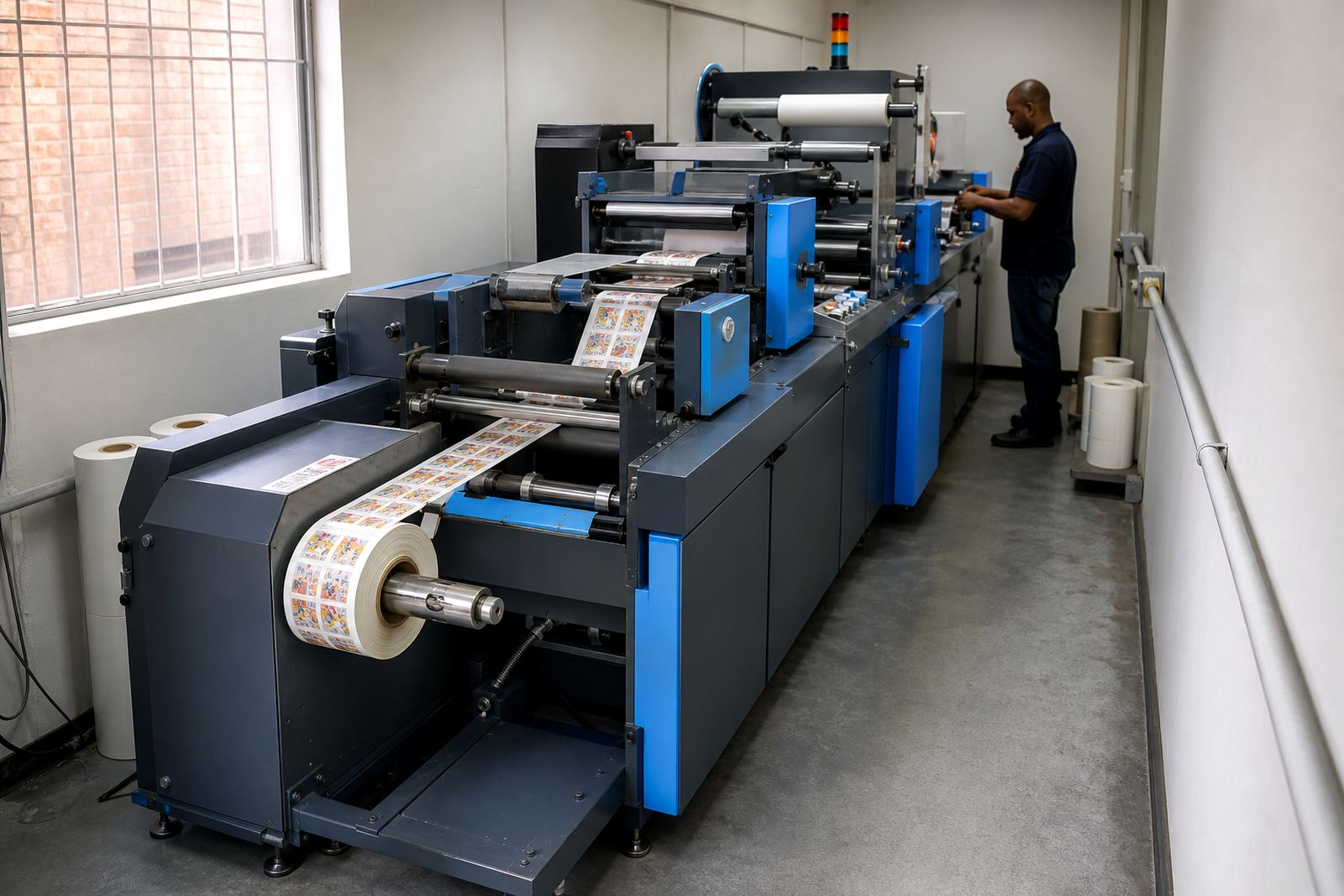
On a complete line, the turret works with unwind, registration control, die-cutting, matrix stripping, slitting and rewind. Some setups use a semi-rotary or laser die-cutting stage ahead of it, while others run flexible dies on a web-fed system. The point is the same, keep the web tension steady and avoid a full stop each time a roll reaches its target length. That matters on narrow labels, short repeat work and jobs that leave operators swapping finished rolls more often than they would like.
How the unit is built for label web handling
Most turret rewind units are specified around label web width, core size and finished roll diameter. Common web widths on label converting lines sit around 200 mm to 520 mm, though wider builds can be arranged for larger packaging work. Core sizes are usually 25 mm, 40 mm, 76 mm or other sizes to match the customer’s rewind cores and delivery format. Finished roll diameter is selected to suit the press room, inspection table or packing method, with many lines set up for rolls that must remain tight and square for the next stage.
- Turret head with two rewind positions for alternate roll build
- Adjustable web guides to keep the edge stable through the rewind path
- Independent tension control for clean winding on light or heavier label stock
- Core chucks or expandable shafts matched to the core size in use
- Web counters or length controls for repeatable roll lengths
- Integrated slitting knives on some systems, when narrower lanes are needed
Where labels carry fine text or tight die-cuts, the rewind must hold register and avoid telescoping. On glossy face stock, cast or coated materials can slide more easily, so the setup needs proper nip, braking and alignment. That is where the unit’s mechanical condition matters just as much as its size.
Where a turret rewind earns its keep
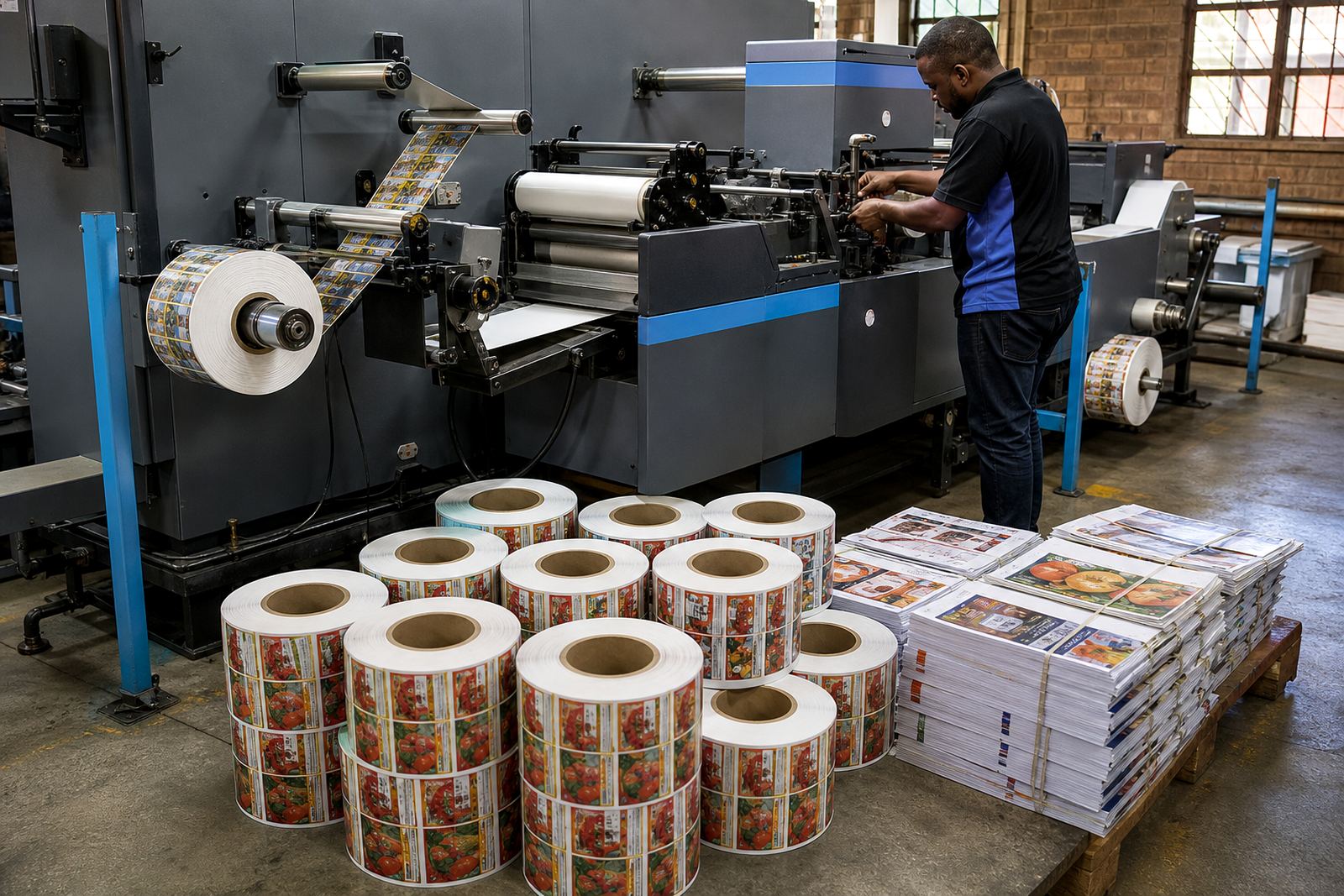
This configuration suits label printers and packaging producers that work in batches rather than huge uninterrupted runs. It is a practical fit for bottle labels, carton labels, chemical labels, food packs and industrial identification jobs where finished rolls are counted, boxed and moved quickly to the next station. Plants in Johannesburg, Pretoria, Durban, Cape Town and Gqeberha often use turret rewind units where the work mix changes across the week and roll swaps become a constant interruption.
It is also useful where a line feeds into inspection, over-labelling or hand application. If a customer wants neat finished rolls for manual packing, the turret helps keep the roll build tidy and easier to handle. In humid coastal conditions, especially near Durban or Gqeberha, the rewind setting and storage practice matter because label stock can pick up moisture and relax on the roll. If the labels are too loose, the finished stack can shift and mark more easily during handling.
- Short runs with frequent roll changeover
- Multiple SKUs in one shift
- Roll-fed label finishing after die-cutting or varnishing
- Work that needs tidy finished reels for packing or dispatch
- Lines where stopping the web wastes production time
Installation, fitting and line integration details
Fitting a turret rewind unit is not just a bolt-on exercise. The web path must line up with the finishing stages before it, and the rewind station must match machine width, floor space and operator access. During installation, our team checks web direction, shaft position, dance roll behaviour, brake response and the way the unit sits relative to the die-cutting section. If a line already carries laminate or varnish, the rewind has to cope with the extra surface finish and the final web stiffness.
Electrical supply needs to suit the drive motors, controls and any web sensing equipment on the unit. In most cases the rewind is part of a powered finishing line and must be commissioned with the rest of the machine so that speed, tension and rotation stay in step. Where slitting is part of the process, knife position and lane spacing must be set with care or the finished reels will not track cleanly. Registration marks, sensor placement and web guide calibration all affect how smoothly the turret picks up the next roll.
- Machine installation and line commissioning
- Registration calibration for mark sensing and web tracking
- Rewind setup to suit target roll diameter and core size
- Slitting setup where multiple lanes are required
- Operator training on changeover and tension control
Keeping the rewind steady over long shifts
A turret rewind unit needs regular cleaning, inspection and adjustment if it is to hold repeat performance. Paper dust, adhesive residue and trimmed matrix can build up around guides, knives and shafts. Roll build should be checked for edge evenness, core grip and tension balance, especially after long runs or when switching between lightweight labels and heavier packaging stock. If the rewind drifts out of alignment, the finished roll can telescope or lean, and that creates handling trouble further down the job.
Preventive maintenance normally includes bearing checks, brake inspection, sensor cleaning, shaft wear checks and control panel review. For sites that run often, spare parts and consumables should be planned in advance, including knives, belts, bearings and core components where applicable. When a fault shows up, a unit that has been maintained properly is easier to restore because the problem is usually localised to a guide, drive, sensor or tension setting rather than the full rewind assembly.
What to confirm before a turret rewind is specified
The right specification depends on the material, the roll format and the way the line is used. A narrow label operation does not need the same rewind arrangement as a packaging producer running heavier films or varnished stock. We normally check the roll width, core diameter, maximum roll diameter, web direction, finish type and the number of roll changes expected in a shift. If the line includes laser die-cutting, semi-rotary die-cutting or flexible dies, we also check how the rewind will sit after the finishing stage and whether matrix stripping or slitting needs to happen before the turret.
- Web width and the actual working width on the line
- Core size, roll diameter and weight of the finished roll
- Material type, including paper, film or laminated stock
- Whether the line includes slitting, stripping or inline inspection
- Power requirements for the drive and control system
- Floor layout, access side and operator position
Those details help avoid mismatched shafts, poor roll build and changeover problems. They also guide the setup for registration marks, rewind torque and the way the machine is loaded into the rest of the finishing line.
Key facts
| Product type | Turret rewind unit for label finishing lines |
|---|---|
| Typical web width | 200 mm to 520 mm, wider by specification |
| Core sizes | 25 mm, 40 mm, 76 mm and matched special cores |
| Finished roll diameter | Set to job requirement and roll handling format |
| Main functions | Alternate rewind, tension control, web guidance, roll changeover |
| Integration | Works with die-cutting, slitting, matrix stripping, lamination and inspection lines |