Chilled bottles ask more from the converting line
Beverage work is less forgiving than many label runs. Cold rooms, condensation, handling at speed and repeated carton contact can expose weak adhesive choice, poor slit edges or a finish that lifts at the corners. On glass, PET and cans, the label still has to read sharply after handling and moisture exposure, so the converting line needs stable registration and a predictable nip through every pass.
For printers in Johannesburg, Durban or Cape Town, beverage briefs often swing between premium short runs and longer supermarket orders. That mix means the finishing line has to switch without a lot of wasted roll and without drifting out on the printed mark. A machine set for accurate unwind, controlled tension and careful rewind helps keep the web flat as it moves through lamination, die-cutting, waste removal and slitting.
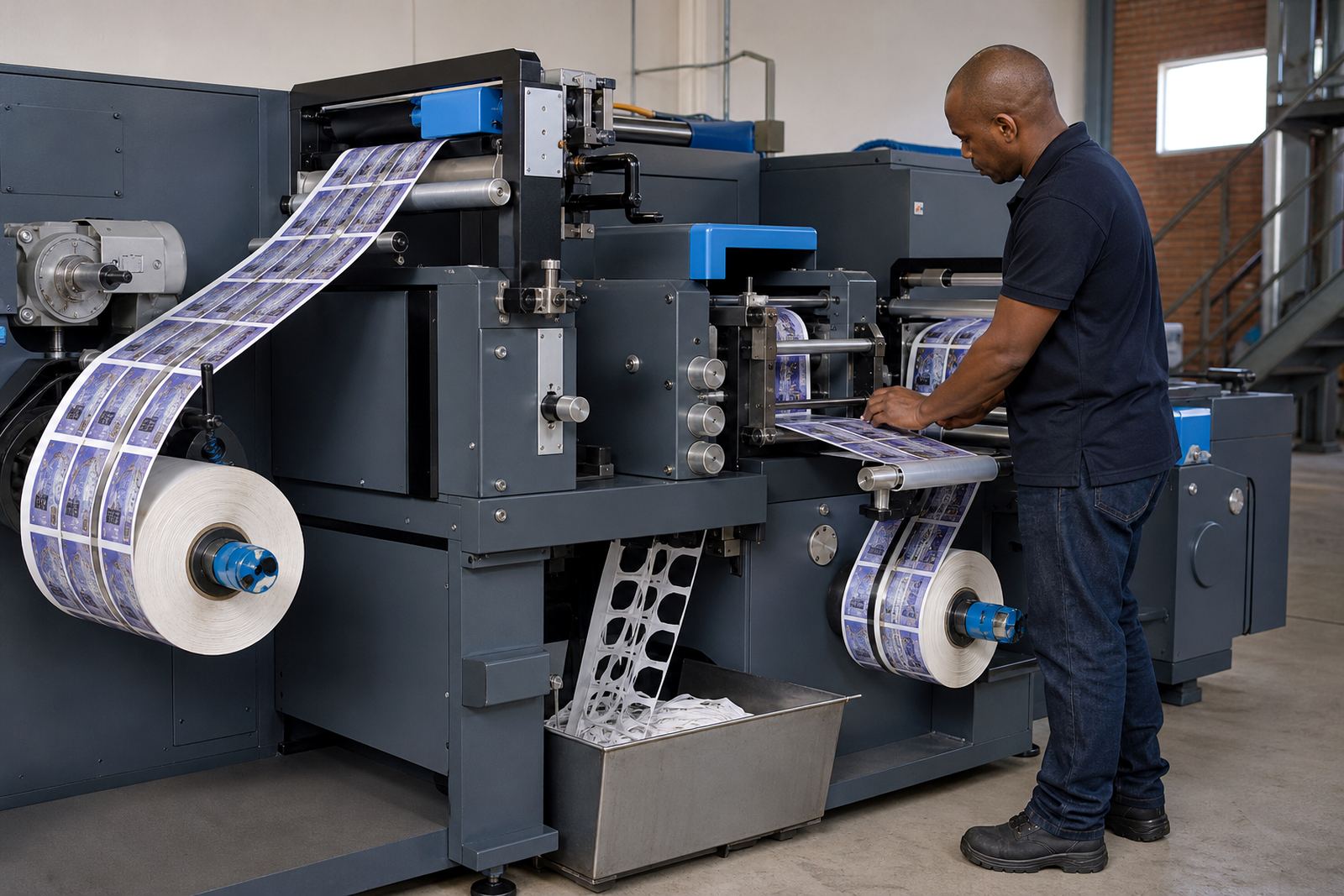
Where the label carries a varnish or a laminated face, the process has to protect the printed image and still cut cleanly through the face stock without tearing the liner. Beverage work also brings more pressure on edge finish because bottles sit in ice buckets, fridges and export cartons, and that is where a rough trim or mis-set matrix strip shows up fast.
The usual machine line for beverage label work
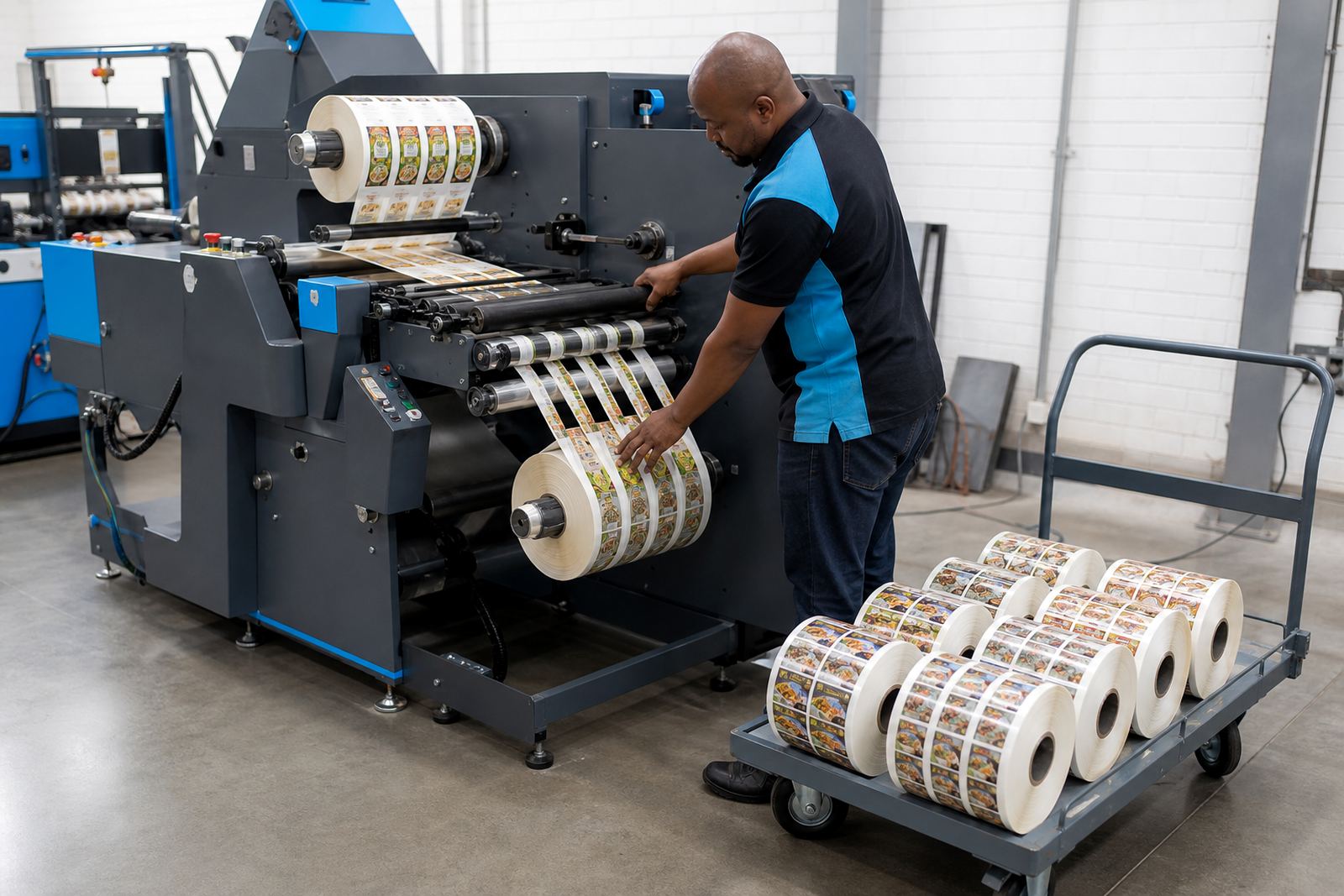
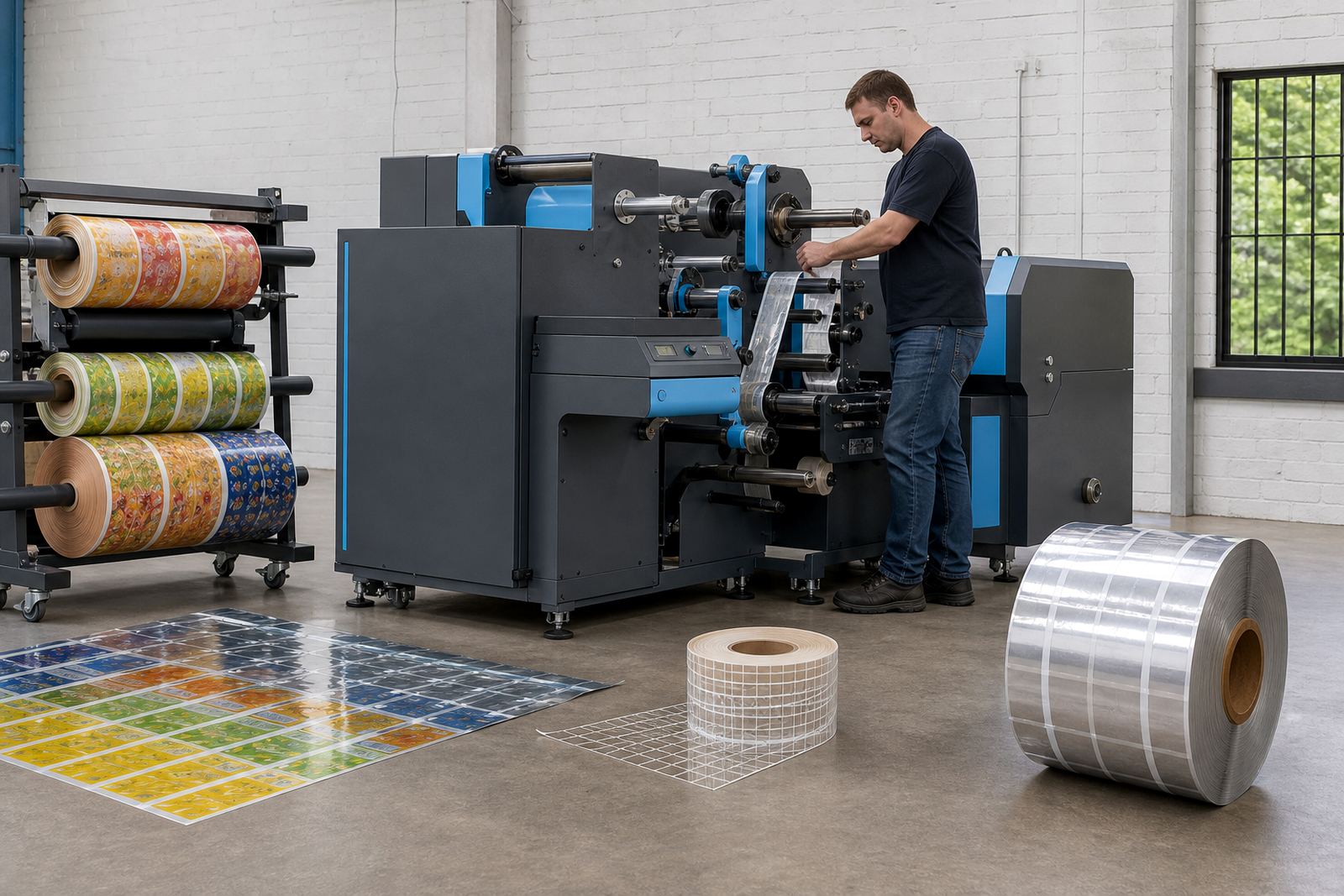
The exact layout depends on label format, roll width and the amount of finishing in house, but a practical beverage line usually includes unwind, web guiding, lamination, die-cutting and rewinding. Some operations add slitting for narrower SKUs and matrix stripping for high-waste shapes. Where designs need more flexibility, semi-rotary die-cutting is useful for varied repeats, while laser cutting suits intricate shapes and no-tool change work on shorter runs.
- Unwind with stable tension control for coated papers, films and clear facestocks
- Lamination station for gloss, matt or protective film layers
- Laser or semi-rotary die-cutting, depending on artwork and run mix
- Matrix stripping to remove the waste cleanly without pulling the label edge
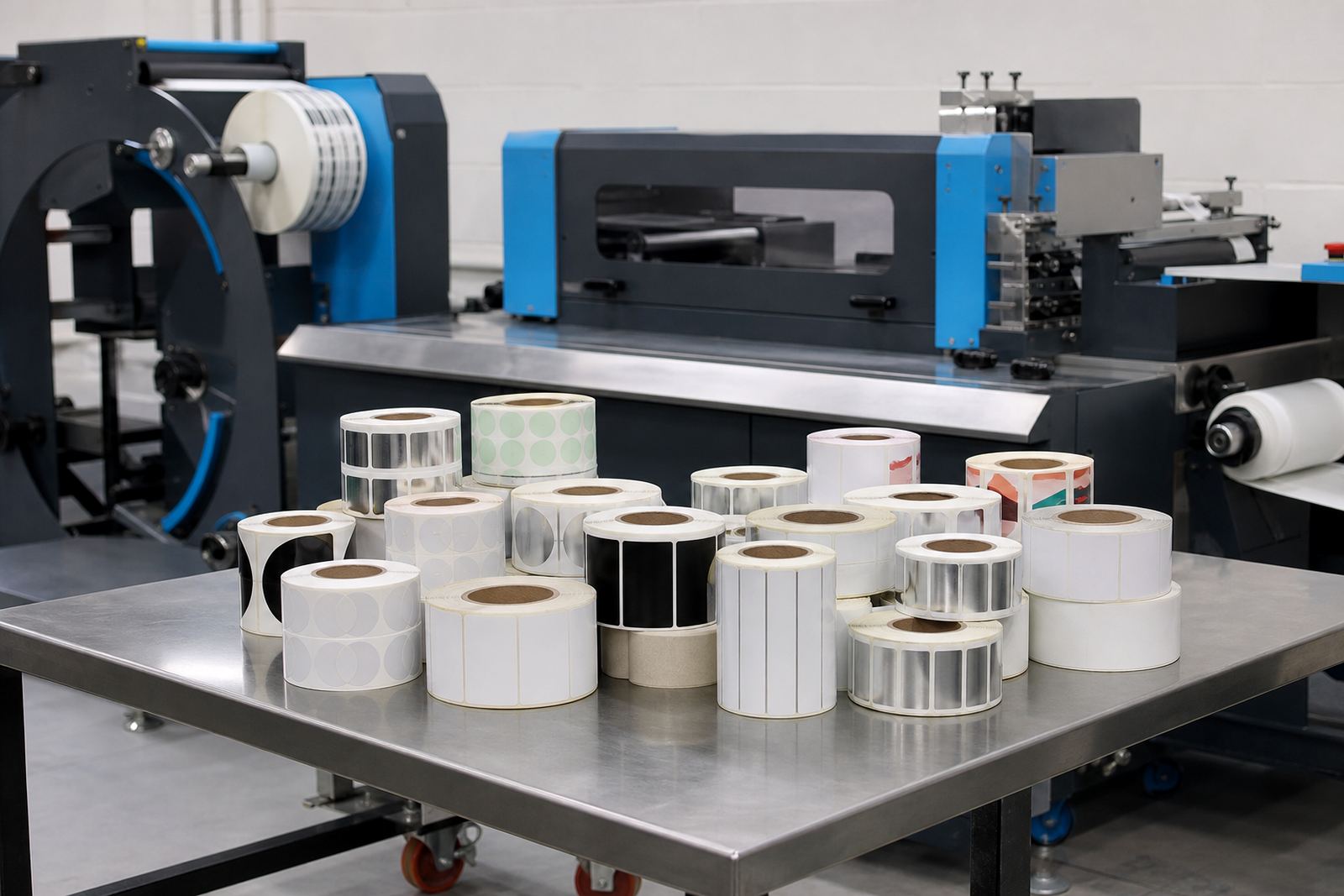
- Slitting for multi-up rolls and smaller applicator widths
- Rewind with even build to protect roundness on the finished roll
- Registration sensing for printed marks and consistent cut position
When the labels are going onto automatic applicators, the rewind build matters more than people expect. A tight cone, telescoping roll or loose winding pattern can create jams and sensor faults on the packing line. The line should leave a tidy roll face and keep the wound pack consistent from core to outer diameter.
Planning for size changes, roll diameter and wet handling
Beverage producers often carry a lot of label variants in one month. Different bottle formats, multipacks, seasonal graphics and flavour changes all push the finishing team to move quickly without losing control of register. That makes it worth planning around repeat length, core size, finished roll diameter and the path the web takes after slitting. If the roll is going to sit in a cool store or move into humid coastal conditions, the rewind needs to stay tight enough to keep the outer edge neat but not so tight that the liner starts to distort.
It helps to map the full job before the machine is selected. A 330 ml can label, a slim glass bottle wrap and a premium neck label may all need different cut depths, different strip behaviour and a different unwind brake. Lamination and varnish also affect how the waste strips away. If the cutter is too aggressive, the liner can scar; too light, and the waste may not release properly from small shape details.
- Confirm the printed register marks and how close they sit to the artwork
- Match the machine width to the widest roll you expect to run
- Allow for short runs with frequent art changes and smaller batch sizes
- Check whether the labels need lamination, varnish or both
- Plan the rewind size for the applicator, hand pack or case pack stage
Common mistakes that show up on beverage jobs
One of the usual mistakes is treating beverage labels like any other paper label. Moisture changes the job. A paper face that looks fine in the packing room may curl in cold storage, and a weak waste strip can collapse when the line speed changes. Another issue is cutting too deep, which can score the liner and create breaks on the rewind. The machine may appear to run well for a few metres, then the roll starts showing rough edges or stop-start waste tears.
Registration drift is another one that catches teams out. If the print mark is inconsistent or the sensor is not set to the actual artwork, the die cut lands off centre and the label edge starts to wander. That becomes a bigger issue on curved bottles, where a small misalignment is easy to spot. Operators also sometimes overlook web path layout and end up with too many turns before rewind, which adds friction and makes the line harder to keep steady.
Preventive checks on bearings, belts, guides and sensors matter on this kind of work. Beverage production tends to run repeated families of labels, so a small fault can repeat across every roll before anyone notices. That is where servicing and training support pay for themselves in fewer rejected rolls and fewer call-backs to the press room.
Budget ranges that make sense in Rand
Budgets for beverage label finishing machines vary with width, automation, cutting method and whether the system is meant for light finishing or full converting. A compact line for smaller digital label work can sit in a different bracket from a higher-throughput machine with semi-rotary tooling, web inspection support and multiple stations. In Rand terms, planning usually starts with the machine core, then adds installation, operator training, tooling, commissioning and any extra setup for slitting or rewind control.
For a beverage operation with changing SKUs, the real cost is not only the machine itself. There is also the setup time on each job, the waste created during adjustment and the level of intervention needed from the operator. A line that is easier to set for short runs can save material where artwork changes often. A more advanced setup may suit a producer with longer runs and a stricter finish requirement on premium labels.
For South African label printers and packaging producers, the best budget is usually the one that fits the actual work on the floor, not the glossiest specification sheet. The comparison that counts is how the line manages wet stock, narrow rolls, registered cuts and recurring production without disturbing the rewind or the edge finish.