When the label must show a breach
Tamper evident labels are used where the seal itself carries the message. A carton closure, bottle neck, pharma carton, seal flap or security strip needs to part cleanly if it is lifted, yet still run neatly through the finishing line before it reaches the packer. That means the material, adhesive and release layer all matter, and the die cut or laser path has to land exactly where it should.
In practice, these jobs often include clear films, destructible face stocks, thin paper webs, or layered structures with varnish and lamination. The cutting stage must follow registration marks without drifting, and the rewind has to keep tension steady so the finished roll stays tight and square. If the matrix is too soft or the slit width is not set properly, the roll can telescope or the labels can lift at the edge.
Equipment sets that suit tamper evident work
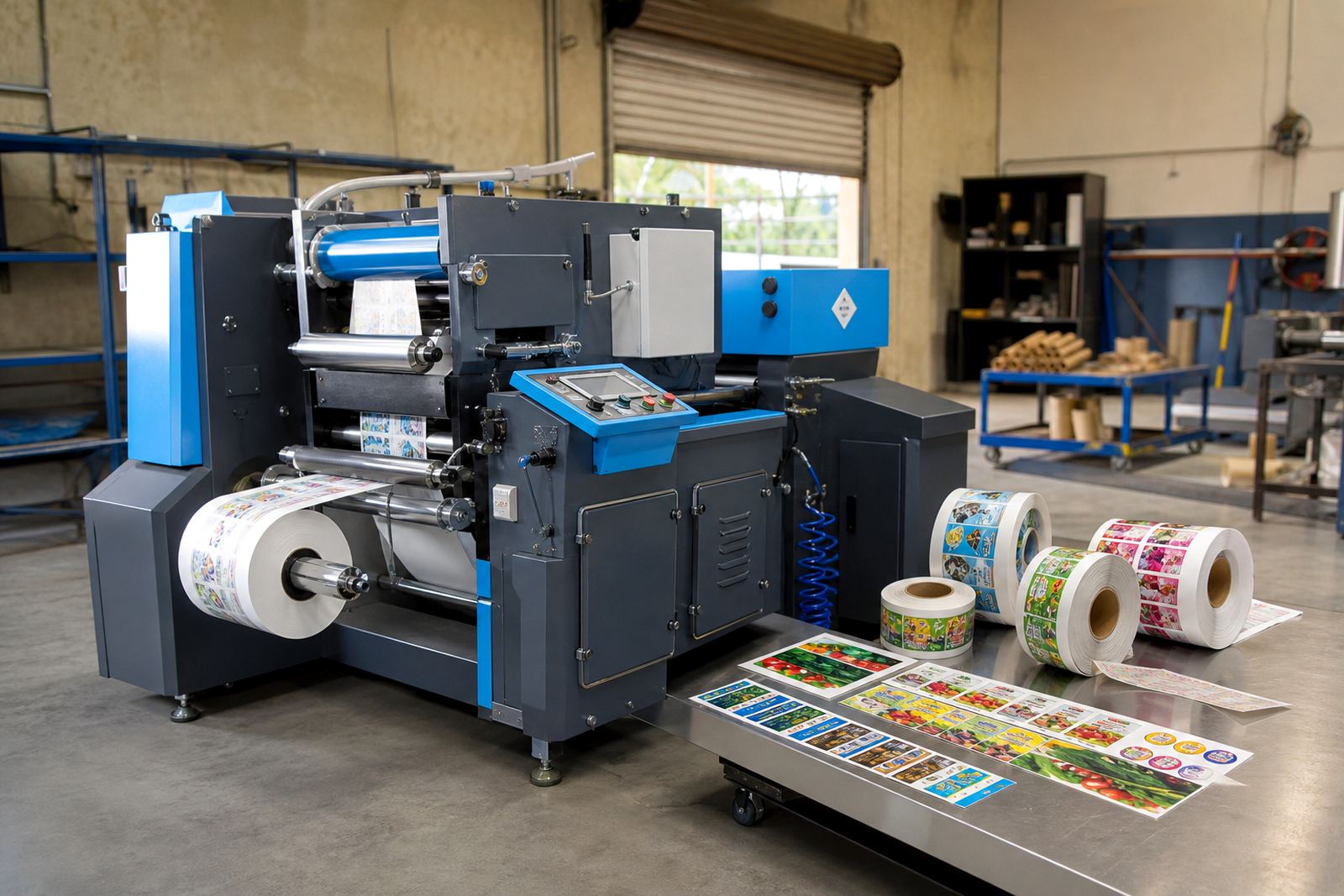
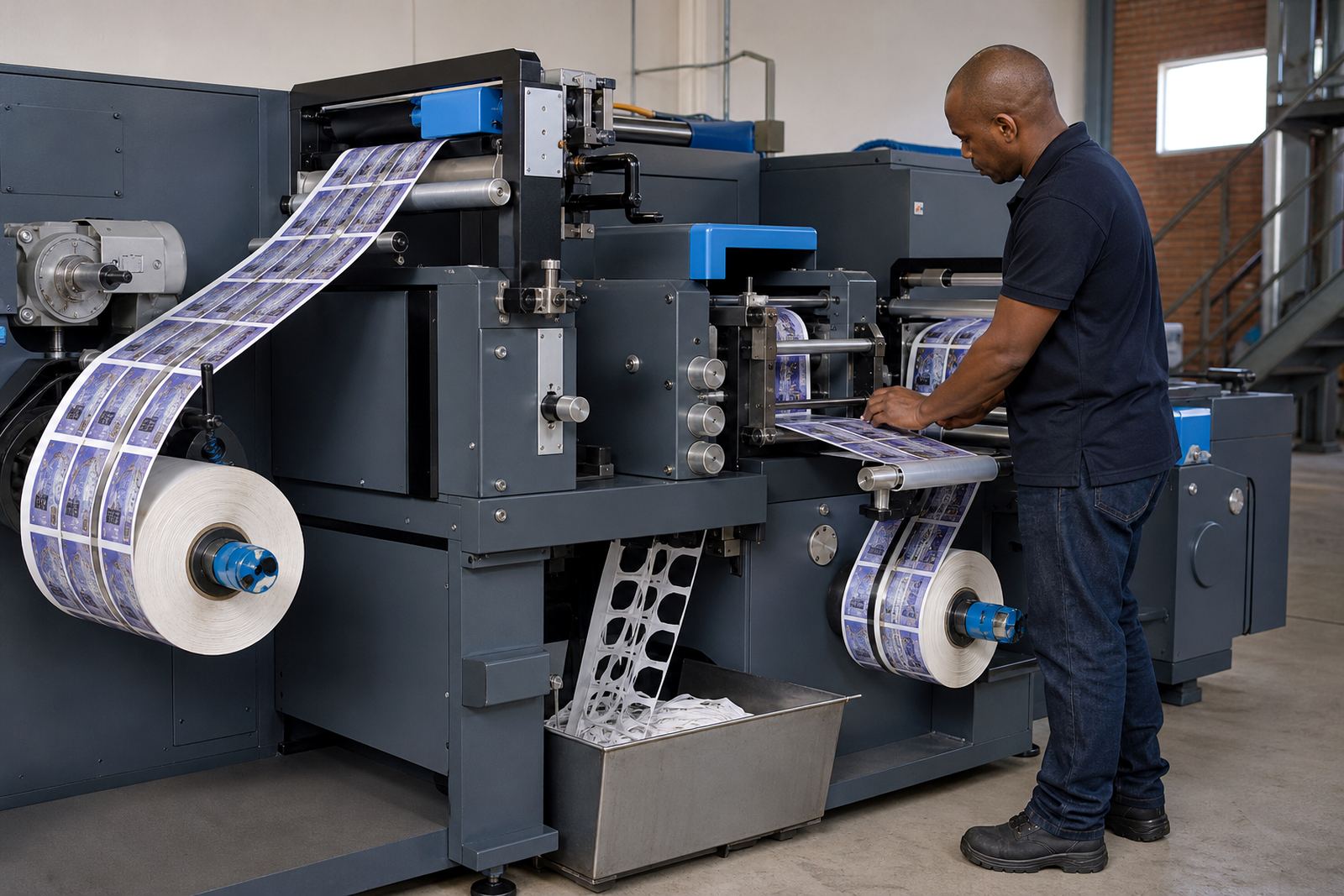
Most tamper evident jobs run better on a finishing line that can unwind, laminate, cut, strip waste, slit and rewind in one pass. For some products a semi-rotary die cutter gives enough control for short to medium runs, while laser cutting suits repeat work where knife changeovers would slow the flow. Flexible dies are still useful when the label shape is fixed and the artwork repeats across production.
Registration control is central. The machine must read marks cleanly and hold position through the entire run, even when the web includes clear patches or high gloss varnish. On certain jobs a lamination station is added before cutting, especially where the tamper layer needs a tougher face or a cleaner finish around the edges.
- Unwind control for light or heavy rolls without web wander
- Lamination for added surface protection or altered finish
- Die cutting or laser cutting for the seal outline and tear path
- Matrix stripping to remove waste without pulling at fine details
- Slitting and rewinding for smaller rolls or multiple-up output
How the line needs to be laid out
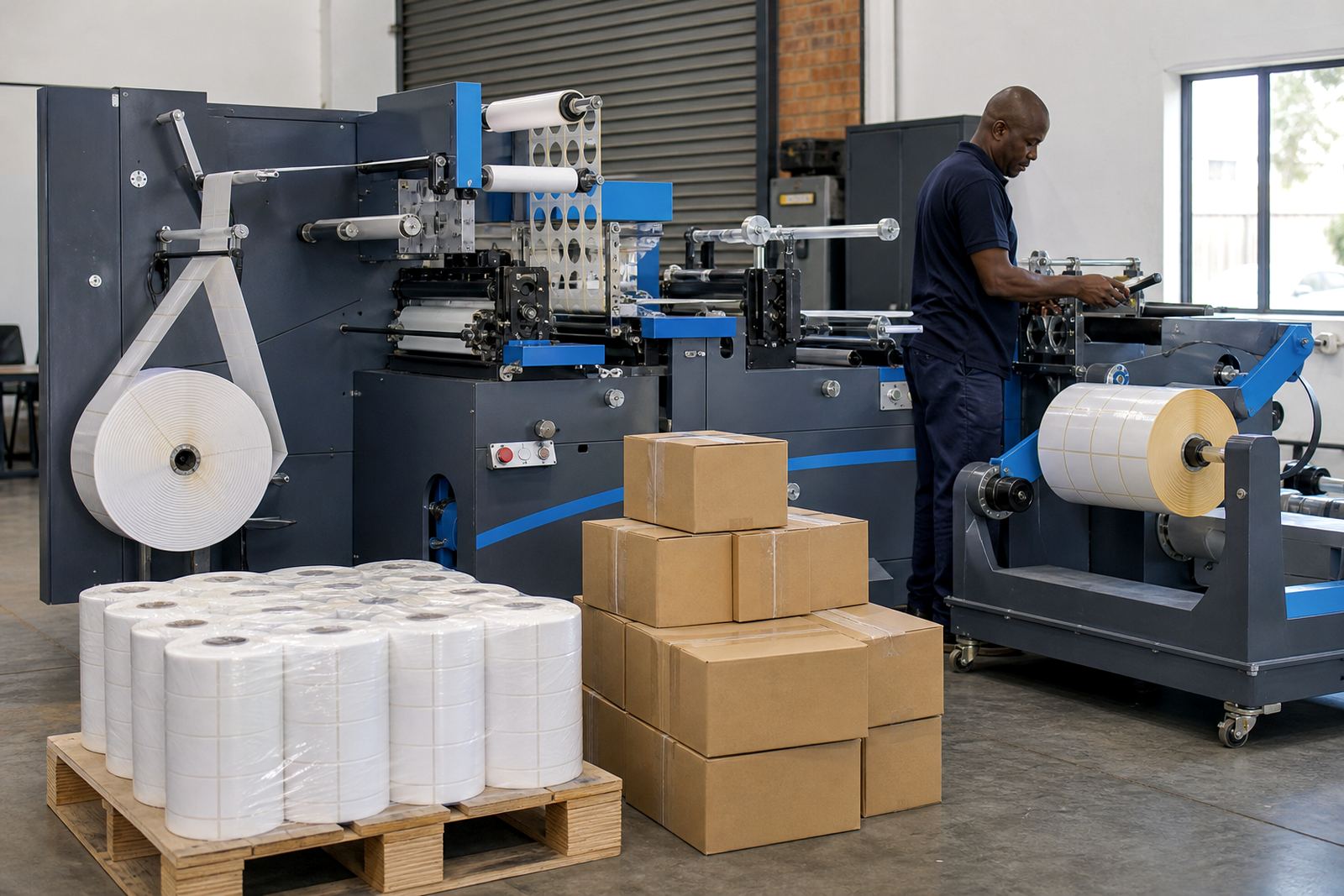
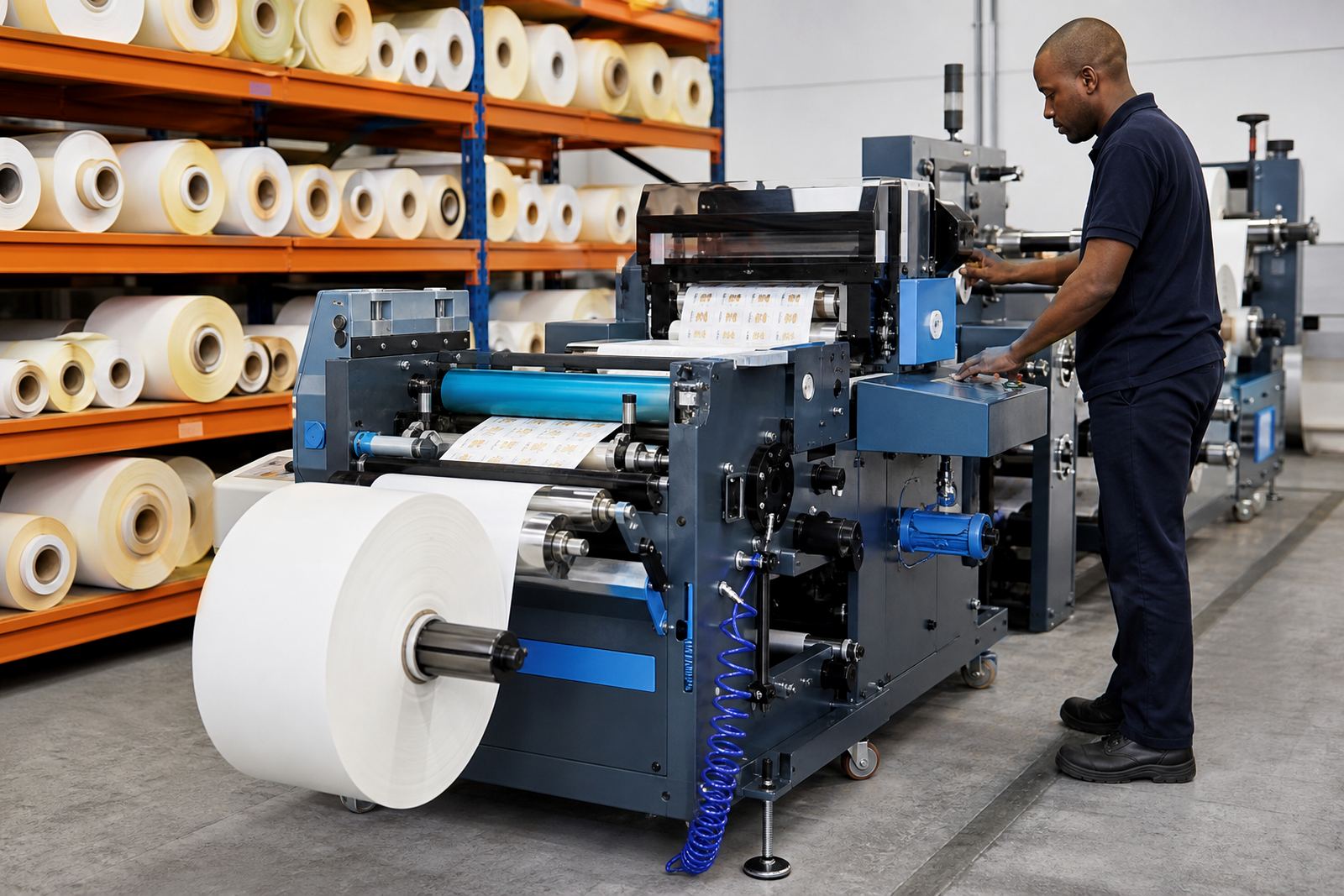
A tamper evident label job asks for straight web movement and enough room for inspection. The operator needs access to the unwind, the stripping point and the rewind, with clear sight of the registration sensors and any web guides. If the roll path is cramped, the web can twist and a tiny error becomes a bigger one by the time the labels reach the rewind.
For customers in Johannesburg, Pretoria, Durban, Cape Town and Gqeberha, we normally look at roll width, core size, label pitch, print repeat and finished roll count before the machine is set down on the floor. A good layout also keeps spare dies, blades, sleeves and adhesive clean-up tools close to the line. On these jobs, a neat setup saves more time than people expect because the material is unforgiving once it starts moving.
- Allow space for loading rolls and checking web alignment
- Keep the stripping path open so waste lifts cleanly
- Place the rewind where the operator can inspect the finish
- Plan for small test runs before full production starts
Where tamper evident jobs go wrong
The common mistakes are easy to recognise. Cutting too deep can mark the liner and make the strip stage messy. Cutting too shallow leaves hanging fibres or incomplete shapes. If tension is set badly, the face stock can stretch and the mark registration shifts from one repeat to the next. Some jobs also suffer when the adhesive grabs too early and the web refuses to release from the waste matrix.
Another fault is treating every security label like a normal prime label. Tamper evident constructions may need slower web speeds, lighter pressure, or a different cutting method altogether. Clear film can hide the marks, metallised areas can confuse the sensor, and a varnished surface may need calibration before the run starts. Those details are small but they shape the whole roll.
- Incorrect cut depth that damages the liner
- Poor tension control during unwind or rewind
- Sensor settings that miss the registration marks
- Waste stripping that pulls at fine edges or corners
- Wrong slitting width for the packing line that follows
Budget bands that make sense in rand
Budget depends on run length, material type and the amount of finishing built into the line. A simpler setup for basic die cutting and rewinding sits in a different band from a line that also handles lamination, matrix stripping, slitting and tight registration control. Semi-rotary machines, laser systems and fully integrated finishing lines each land in their own price range.
As a working guide, smaller finishing systems for tamper evident labels often start from the lower hundreds of thousands of Rand, while more capable lines with wider webs, extra stations and better control usually move into the higher hundreds of thousands. Full production lines for demanding label work can go beyond that, especially when the job calls for precise web handling, stable tension and multiple finishing stages in one pass. Installation, operator training and servicing are normally planned separately, along with spare parts and die setup support.
The real budget should be built around the product, not only the machine. A seal label for retail packs may look simple, but if the liner is thin or the adhesive is aggressive, the line has to be set with more care. That is where the practical value sits.
Support that keeps the finishing line honest
Label-Cutter works with label printers and packaging producers who need finishing equipment that can handle specialist constructions without guessing. Our team in Kya Sand, Randburg covers installation, line commissioning, operator training, preventive maintenance, breakdown repairs, remote support, spare parts supply, die setup help, registration calibration, rewind setup, slitting setup and production optimisation. The work is built around the job on the floor, not around generic machine talk.
For tamper evident labels, the useful support is often in the setup details. A machine can be mechanically sound and still perform badly if the registration is off or the stripping path is not tuned. With the right calibration, the line holds the shape, keeps the rolls neat and leaves the finished output ready for packing without extra handling.
Clients send enquiries through our contact form. We use it for machine planning, spare parts, setup questions and service bookings across South Africa.