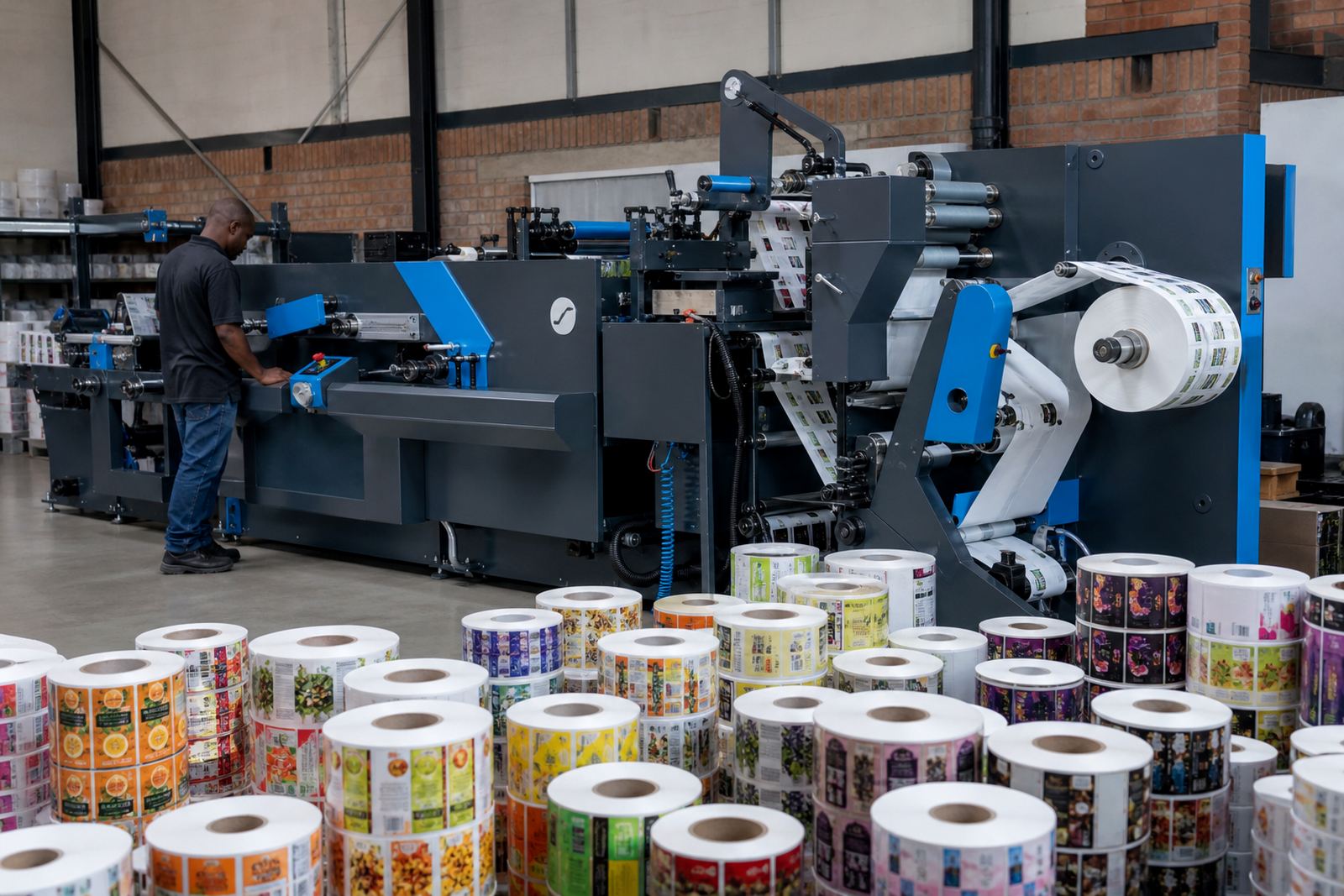
When the label run is short, every minute at setup matters
Short run labels are common when a customer wants smaller batches, seasonal artwork, pilot packs or several versions of the same pack. A printer may only need a few hundred metres on one job, then switch to another stock, another shape or another varnish finish before the shift ends. That is where digital label finishing earns its keep, because the workflow is built for frequent changeovers and accurate repeat control.
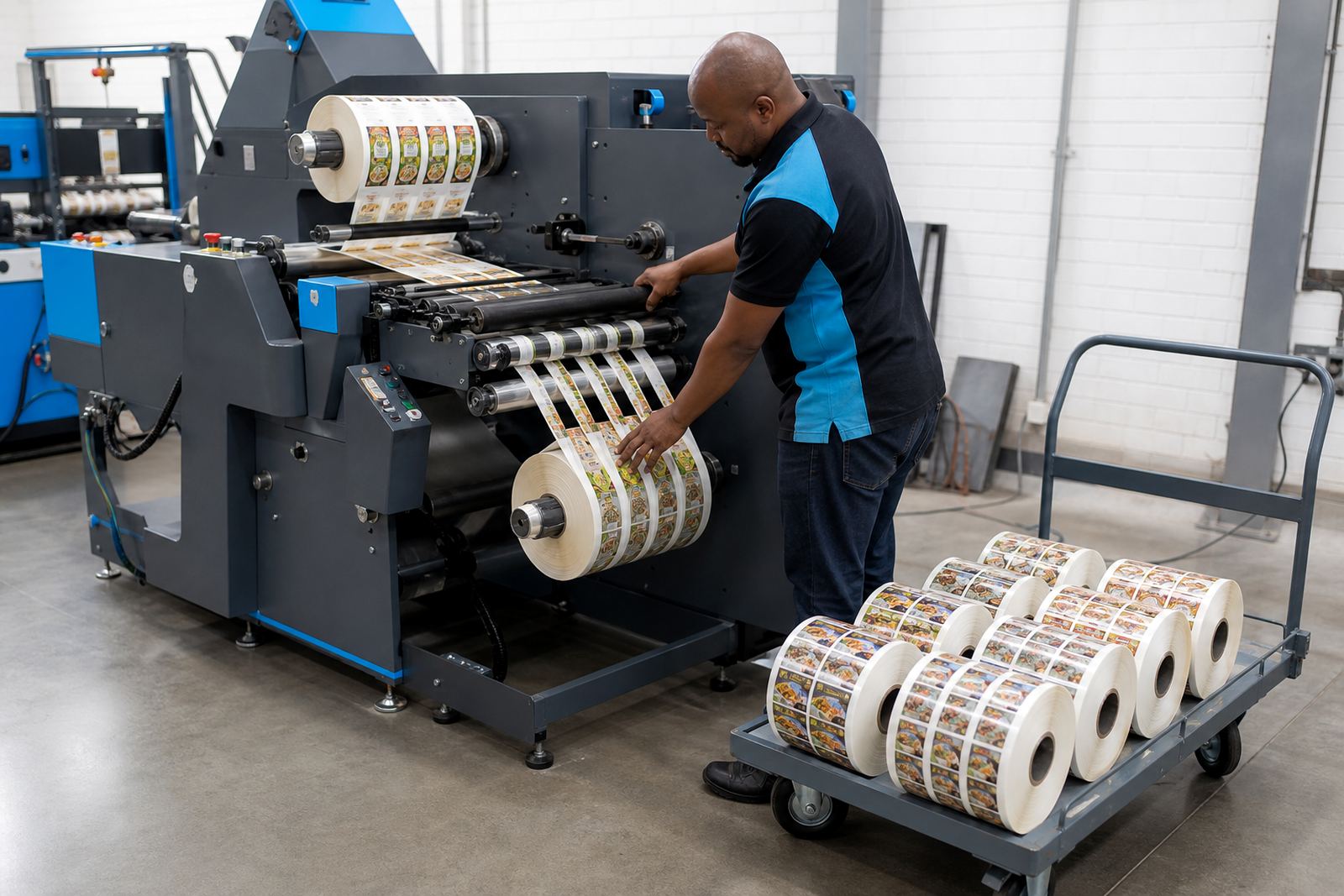
In these jobs, the finishing line usually needs to handle registration marks, unwind tension, coating or lamination where required, then cut the shape cleanly without tearing the liner. If the labels are being supplied on rolls, the line must also strip matrix waste neatly, slit the web to width and rewind to the size the client asked for. For short runs, a clean start and a tidy roll at the end matter as much as cutting speed.
The finishing set-up that suits repeat changes and mixed artwork
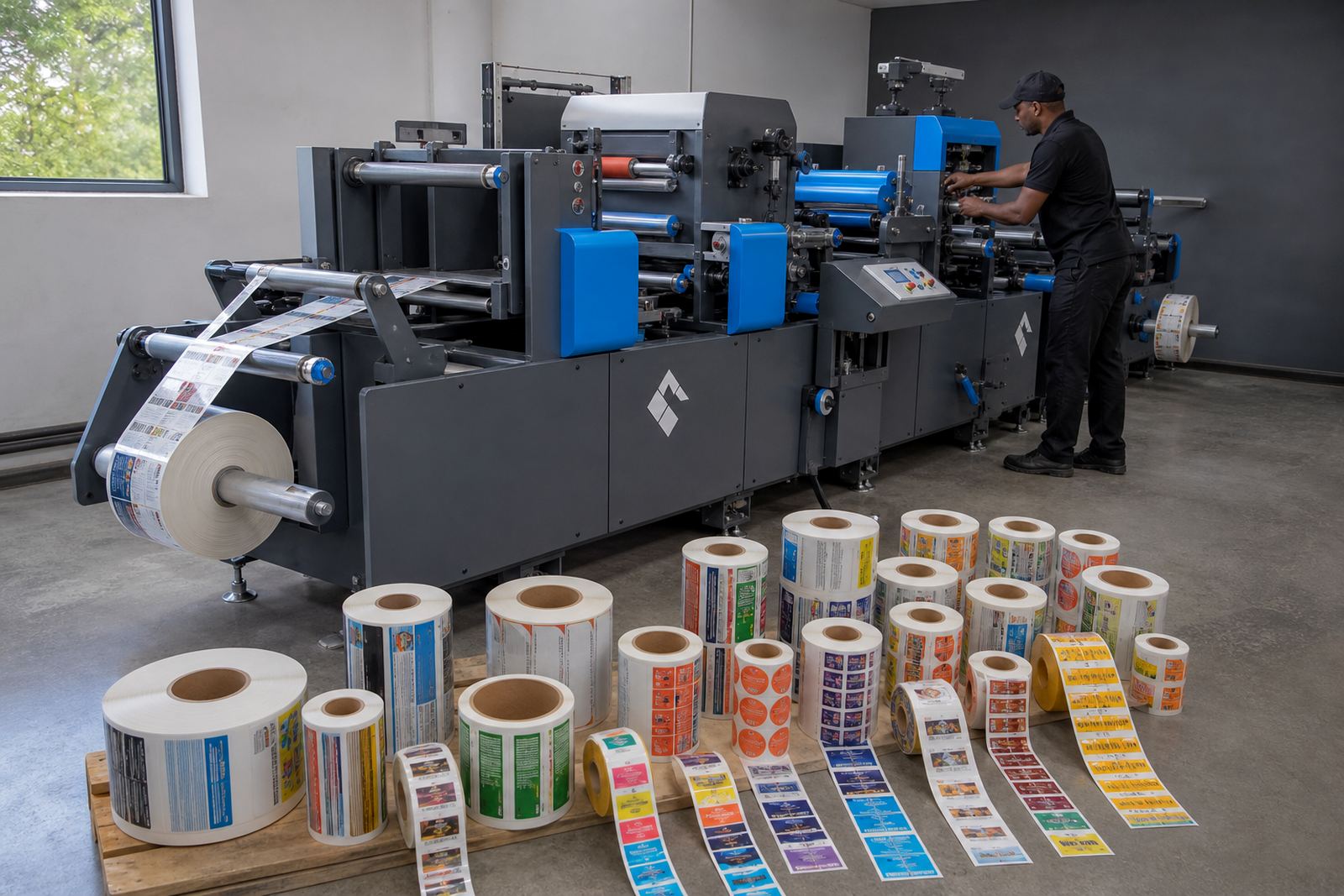
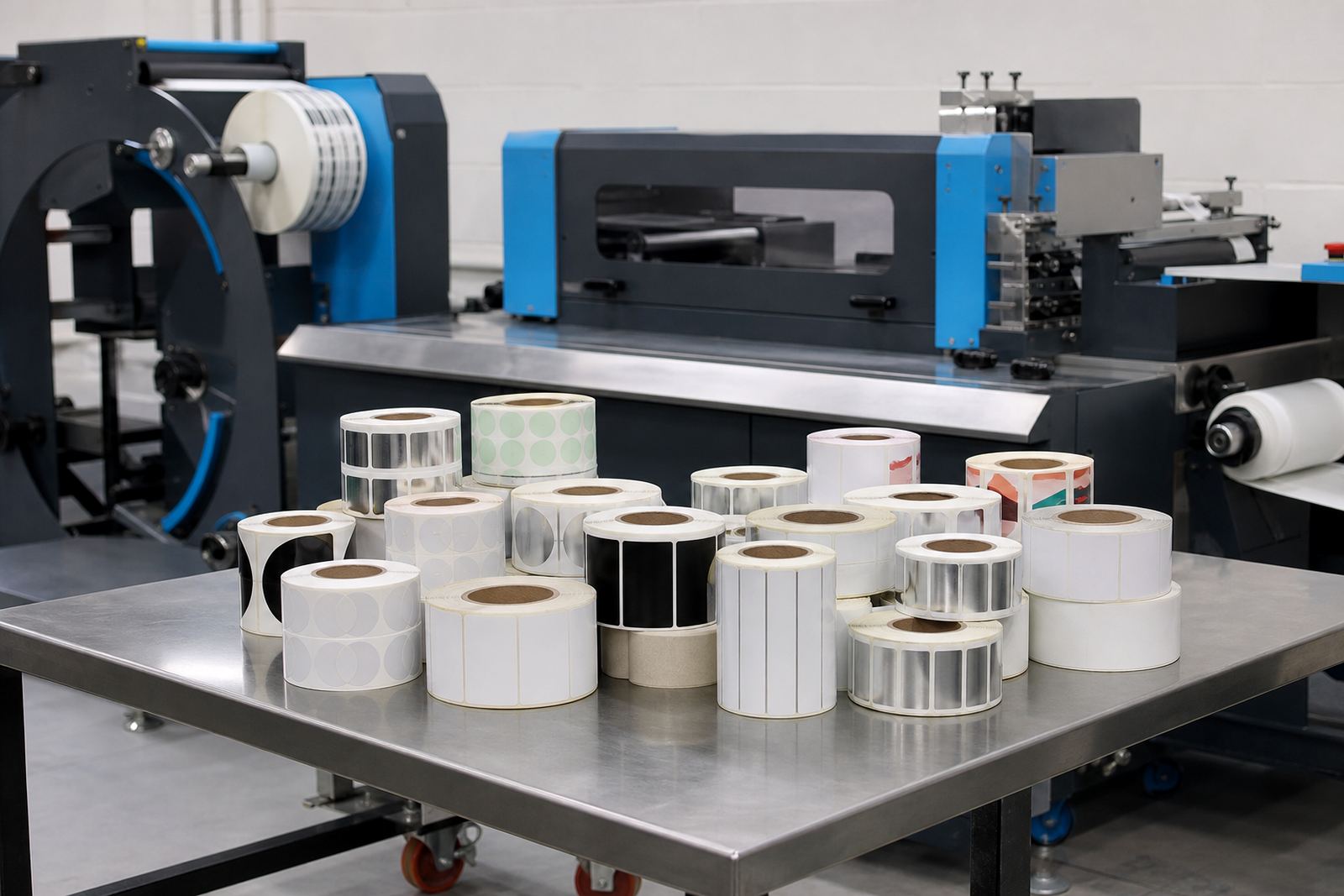
A practical short run line is often built around digital print output, then a finishing section that can manage a mix of shapes and finishes. Depending on the label spec, the set-up may include unwind, laminating, semi-rotary die-cutting or laser die-cutting, matrix stripping, slitting and rewind stations. Flexible dies are still useful where a shape is repeated often enough to justify them, while laser or semi-rotary cutting suits jobs that change from order to order.
- Unwind control for small and medium roll sizes
- Lamination for extra surface protection or a premium look
- Registration calibration for clean cut position on printed marks
- Matrix stripping for waste removal without lifting the label edge
- Slitting for multiple rolls from one parent web
- Rewind control for neat rolls that run well on applicators
Short runs also benefit from good web handling, because even a small tension issue can show up as drifting cuts, edge curl or poor rewind. A machine that is set for label work, not general converting, usually gives the cleaner result.
How to plan the line around your most common label orders
Layout planning starts with the label size, substrate and final roll format. If most orders are small carton labels or narrow bottle labels, the line should be set for stable tension at lower web widths. If the work includes wider wrap labels or multiple-up impositions, then slit positions, rewind shaft spacing and roll diameter limits need to be checked before the machine is installed.
On short run work, the operator should be able to load stock, read the registration marks, set the die or laser path, and move from one job to the next without unnecessary strip-down. In a busy label shop, that also means leaving sensible access at the unwind and rewind ends, room for cores and finished rolls, and enough floor space for inspection before packing. In Kya Sand, many production teams prefer to keep the finishing line close to print output so the web is not carried across the shop floor more than necessary.
A careful plan also considers the handling of varnish or laminate layers. Some short run labels need a gloss top finish for moisture resistance, others only need protection on the face stock. If the finishing section is over-specified for a small repeat range, it may slow production more than it helps.
Mistakes that show up fast on short repeat label work
Short runs expose weak setup habits quickly. If registration marks are not printed with enough contrast, the cutter may drift. If the web tension is too high, narrow labels can stretch and the cut becomes uneven. If matrix waste is not stripped cleanly, the liner edge lifts and the roll will not feed properly later on. Frequent artwork changes also bring poor file discipline into view, especially where die paths, overprint marks or slit positions are copied from the wrong version.
- Using one tension setting for every substrate
- Ignoring registration mark placement on small labels
- Leaving no margin for matrix stripping on fine shapes
- Mixing roll widths without checking rewind limits
- Running lamination or varnish without checking drying or cure condition
Another common issue is treating the finishing machine like a fixed line rather than a flexible one. On a short run job, a small change in label length or adhesive type can affect everything from slit quality to final roll tightness. That is why operator training and setup discipline matter just as much as the machine itself.
Budget ranges for a short run finishing room in Rand
The budget for short run labels depends on whether the shop needs a compact finishing unit, a semi-rotary system, laser cutting, or a fuller line with lamination and slitting included. In Rand terms, a basic setup for simple finishing and rewind control will sit far below a multi-station system with precise registration and waste stripping. As the line gains more functions, the budget rises with the number of stations, the control system and the level of automation.
As a working guide, many label printers start by budgeting for the machine itself, then add installation, operator training, commissioning, and spare parts for common wear items. If the shop expects frequent artwork changes, it is worth allowing for registration calibration tools, die setup support and preventative maintenance in the first year of use. That usually keeps the line steadier when order sizes are small and the schedule changes often.
For packaging producers moving into short run label work, the spend often makes more sense when the machine is matched to current demand rather than projected volume. A line that is too large can be costly to run and awkward to justify, while a line that is too small will struggle with narrow labels, laminated jobs or the rewind quality needed for downstream application.
Support that keeps short run production moving without guesswork
Short run labels are unforgiving when the line is out of calibration. Installation, line commissioning, preventive maintenance and breakdown repairs all matter when the business depends on quick switches between one artwork and the next. Remote support can help with setup checks, while spare parts supply and die setup help are important when a job has to move from test rolls to production rolls without wasting material.
Label-Cutter works with label printers and packaging producers across South Africa, including Johannesburg, Pretoria, Durban, Cape Town and Gqeberha. Our team in Kya Sand, Randburg handles machine installation, operator training, registration calibration, rewind setup, slitting setup and production optimisation for digital label finishing rooms that need cleaner short run output.
When short runs are the norm, the finishing line has to stay ready for the next artwork change, not just the current one. That means practical machine choice, sensible layout and support that understands the way label work really moves through a plant.