Food packs punish sloppy finishing fast
Food labels often run in short, mixed batches, and the print can change from one SKU to the next without much warning. That means the finishing line has to hold registration, keep the cut true to print and leave the roll neat enough for packing and dispatch. A rough edge or a wandering slit shows up quickly on jars, sleeves, pouches and trays.
On chilled products, condensation and soft adhesives can make the web behave differently from a dry label run, so the finishing path needs careful tension control and a clean take-up. In kitchens, packing rooms and cold stores, dust and humidity can also work into the edges of the web, which makes matrix stripping and rewind control even more important.
- Glass jars and bottles need consistent cut depth and stable rewind tension.
- Flexible packs need labels that peel cleanly without lifting at the corners.
- Short runs need fast changeover between shapes and panel sizes.
- Batch coding areas must stay clear during die-cutting and stripping.
The machine set that suits mixed food label work
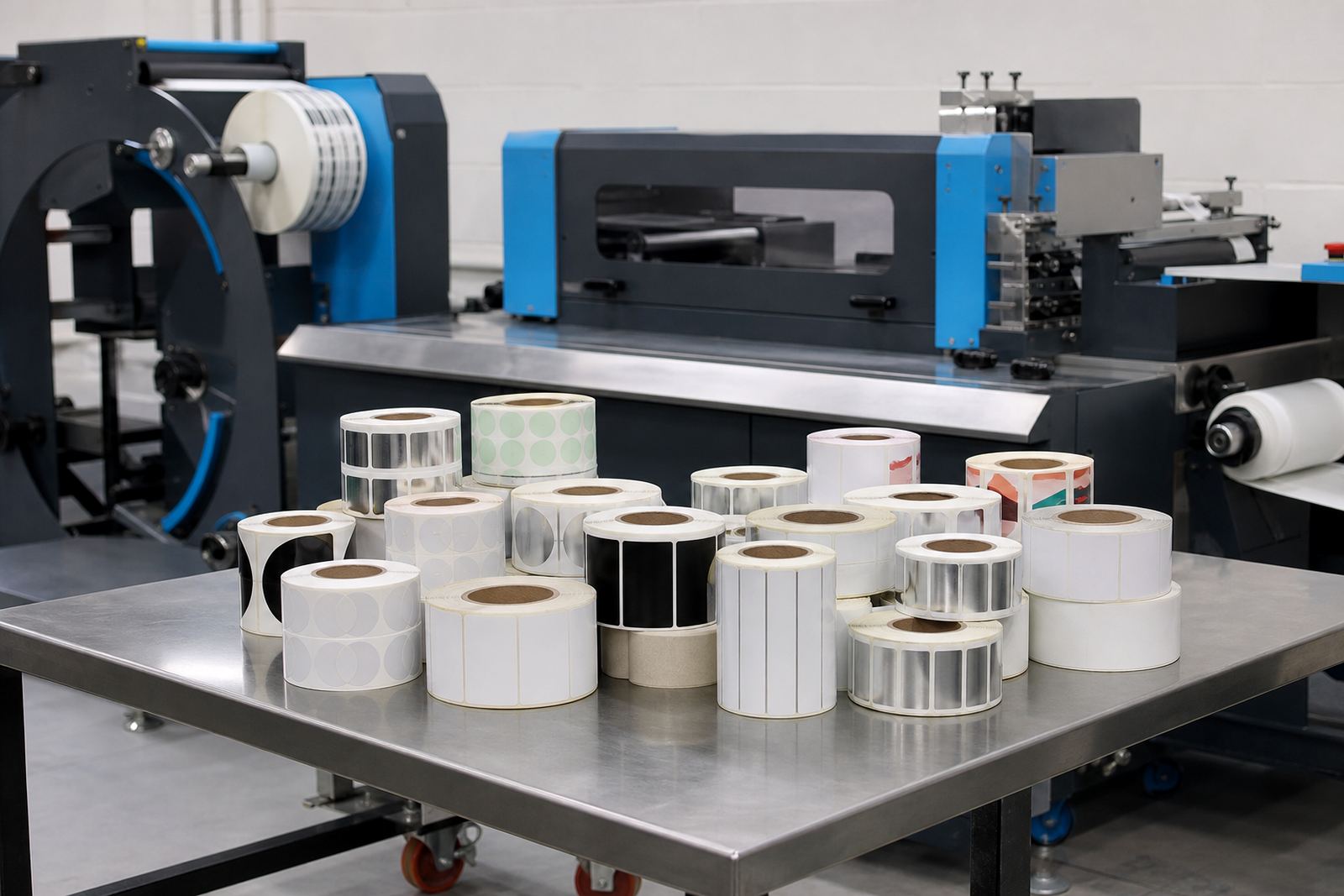
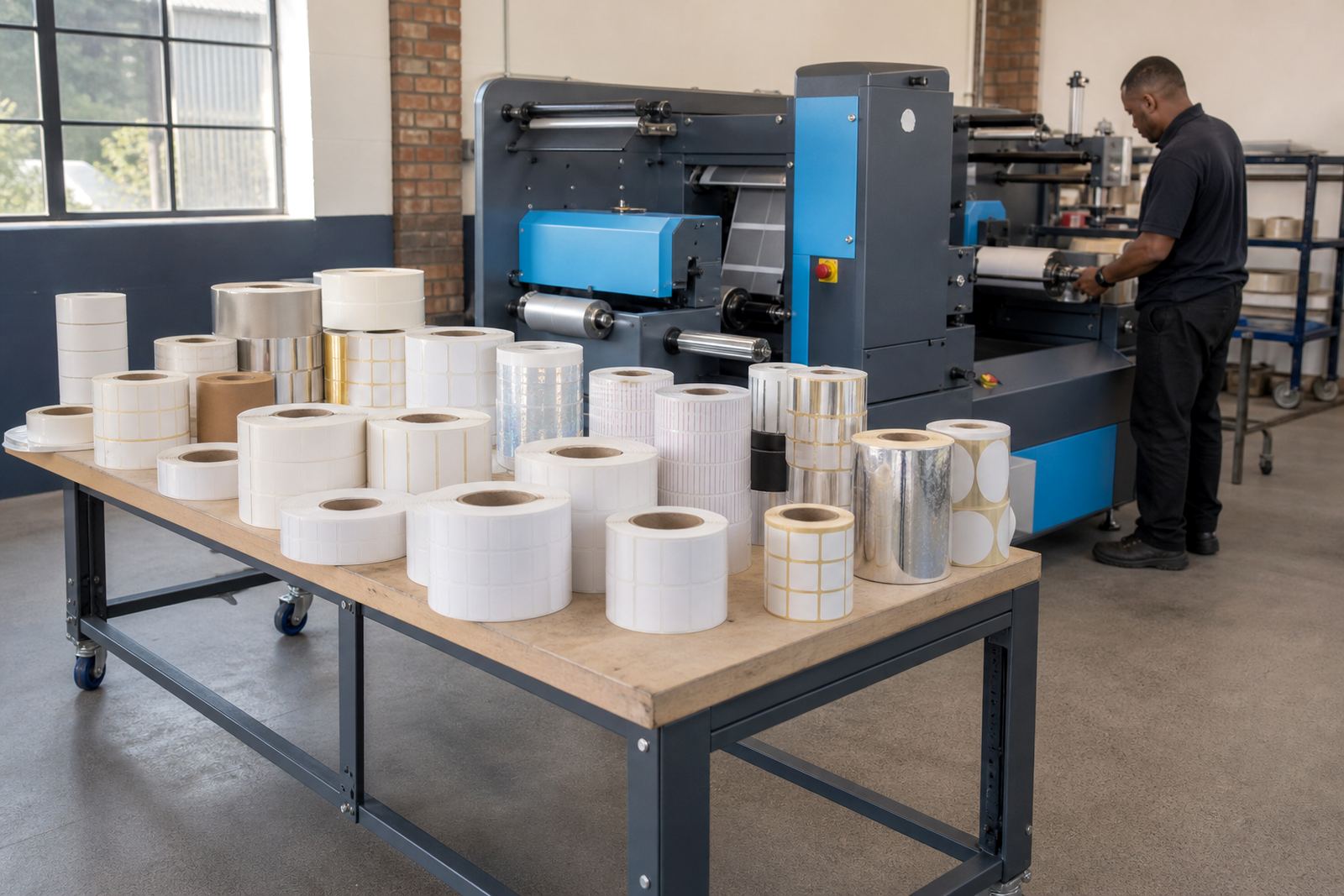
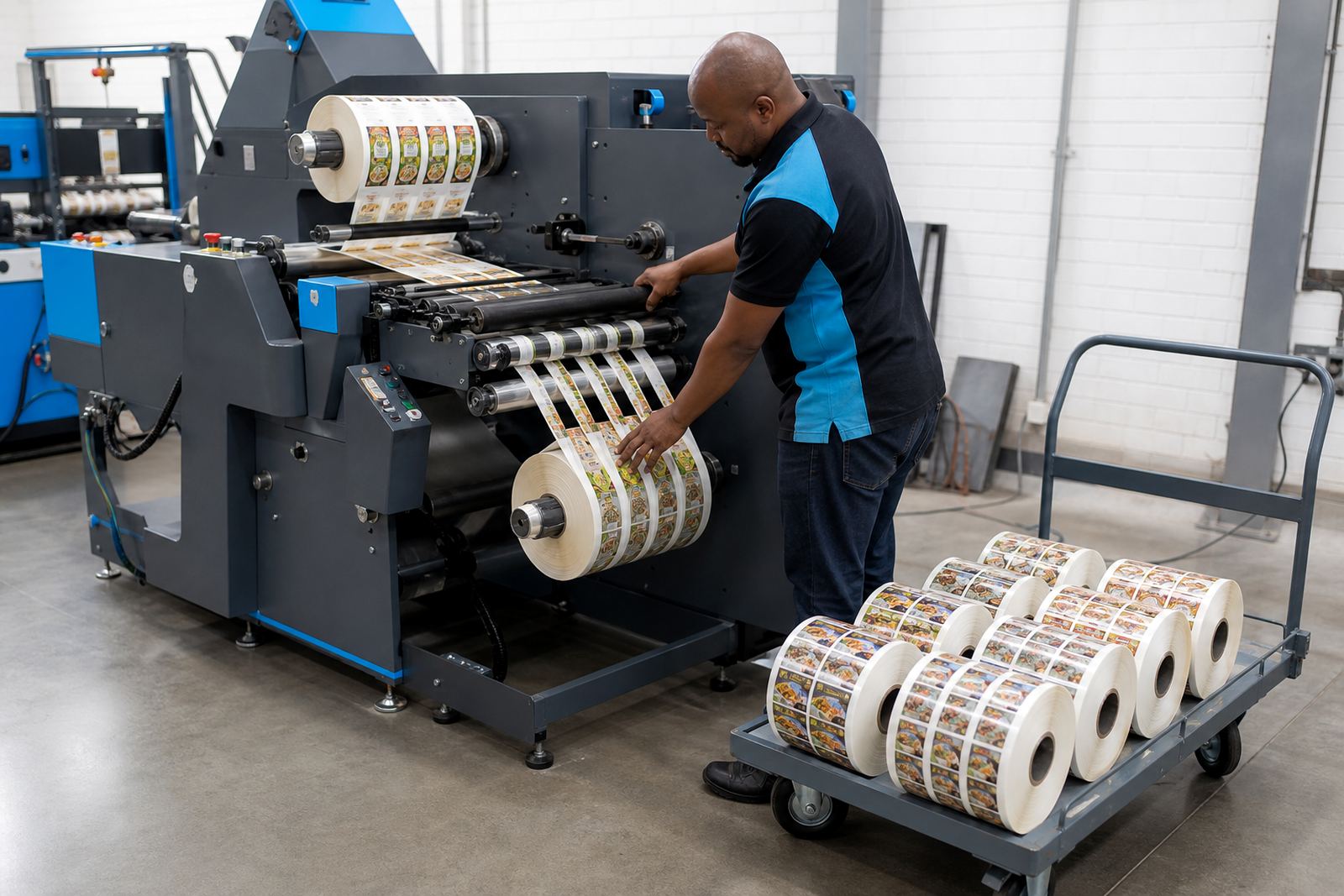
A food label finishing line usually starts with an unwind unit, then moves through lamination, die-cutting, matrix stripping, slitting and rewinding. Some printers prefer laser die-cutting for flexible shape changes and smaller tooling needs, while others use semi-rotary die-cutting with flexible dies for repeat production and sharper throughput on familiar jobs. Both can work well when the substrate and artwork are matched properly.
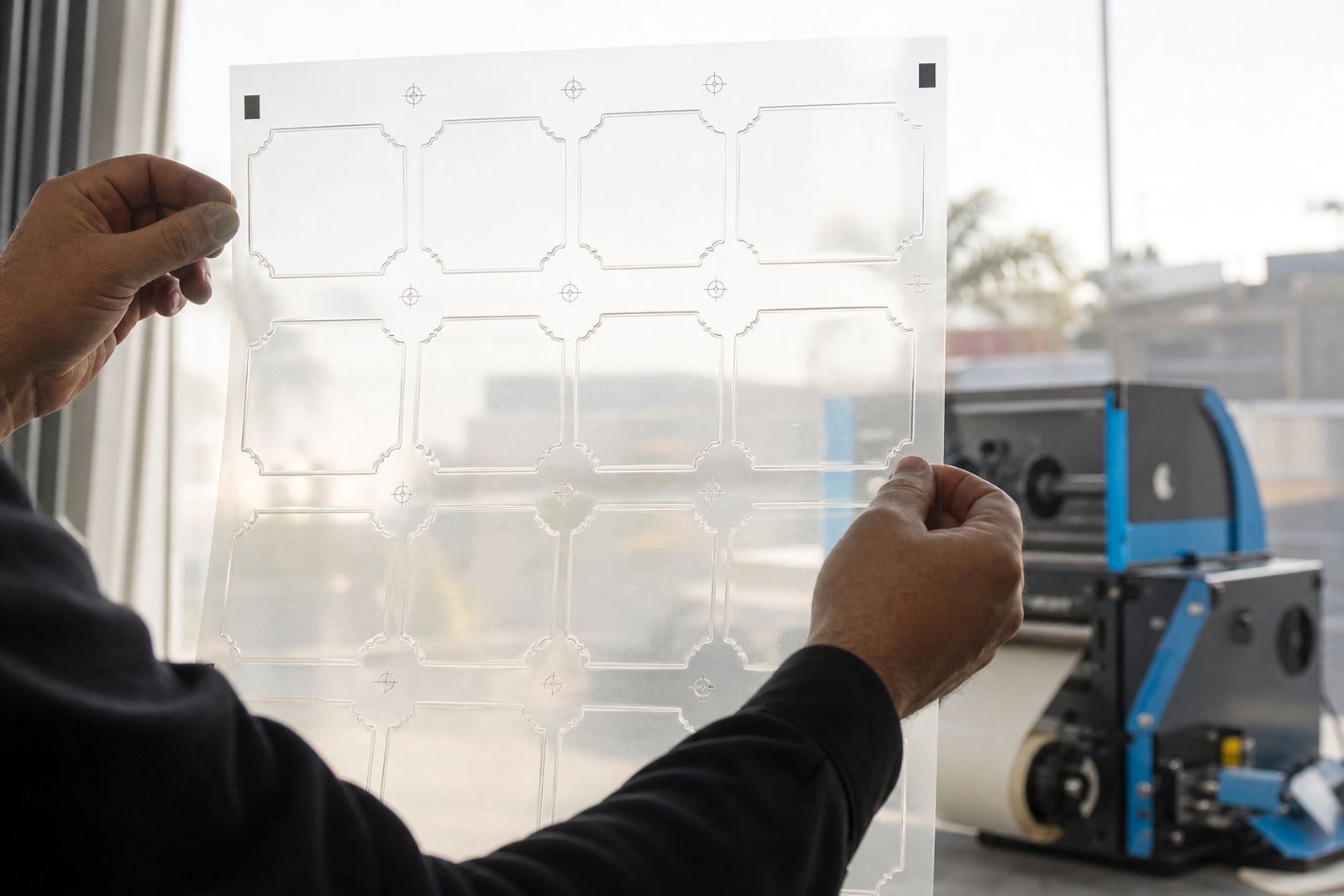
For varnished or laminated work, the web has to stay flat and guided through the line without losing register marks. That matters when the label includes small icons, nutrition panels or curved cut lines around clear areas. If the job includes narrow strips for sachets or multi-up label webs, the slitting section must hold a clean line without fraying the edge.
- Laser die-cutting suits changing shapes and smaller batch variation.
- Semi-rotary systems suit steady label repeats and flexible die use.
- Matrix stripping helps remove waste cleanly before rewind.
- Rewind units keep finished rolls tight and evenly wound.
Planning the line around food-grade production flow
The room layout should let the operator feed material, inspect register marks and remove finished rolls without crowding the machine. Around Randburg, Midrand and Kempton Park, many label rooms work in tight spaces, so the route from print to finishing to packing needs to be practical. A machine that is too long for the room creates awkward handling, and that usually slows the job more than anyone expects.
It helps to map the largest roll width, the heaviest label stock and the most common label shape before the line is ordered or installed. Roll diameters matter too, because a food label run for supermarkets may need smaller rolls for hand application while a contract packer may want larger rolls for automated label heads. If the work includes cold-chain packs or glossy film labels, lamination and registration calibration should be part of the plan from the start.
- Allow space for roll loading and offloading at both ends of the line.
- Check the minimum and maximum web widths for your common jobs.
- Match the rewind shaft setup to the roll counts you need per shift.
- Keep access clear for blade changes, die setup and web threading.
Common mistakes that show up on food label jobs
One common mistake is underestimating how much waste the matrix creates on narrow labels. If the stripping path is not set correctly, the waste can tear and leave fibres on the edge of the label, which is a problem on clear film and gloss stocks. Another issue is cutting too close to artwork that sits near the edge of the label, because a slight shift can nick the print or leave uneven margins.
Some food packers also forget that roll build matters as much as cut quality. A roll that is too loose can telescope, while one wound too tight can create edge crush and feed problems later on the line. On labels for chilled products, poor tension can also make the adhesive behave badly during storage and application.
Operator training makes a real difference here. A trained operator knows when to adjust slit guides, when to slow the web for a tricky registration mark and when to stop before the waste path starts to pull unevenly. Preventive maintenance, especially on rollers, sensors and cutting paths, keeps those small faults from turning into bad batches.
What the budget usually needs to cover in Rand
Food label finishing budgets depend on web width, die technology, speed, automation level and the amount of setup support needed. A compact finishing unit for short runs and basic matrix stripping will sit in a different range from a broader line with lamination, slitting, rewind control and finer registration handling. Installation and commissioning also form part of the real project cost, along with parts support and servicing after the line is running.
As a broad working guide, smaller finishing setups can start in the lower hundreds of thousands of Rand, while more capable lines for busy print rooms can move into the mid-hundreds of thousands or beyond. High-spec systems with wider webs, more control points and tighter finishing tolerances can sit higher again. The real figure depends on what the label room has to produce each week, not just on the machine nameplate.
- Machine price changes with width, speed and the finishing modules fitted.
- Installation costs depend on access, space and commissioning work.
- Training and setup support matter when the artwork mix changes often.
- Maintenance plans help protect uptime on steady food label production.
How our team supports food label finishing work
Label-Cutter works with label printers and packaging producers across Johannesburg, Pretoria, Durban, Cape Town and Gqeberha from Kya Sand, Randburg. Our team includes installation, technical, training and parts support, so the finishing line can be set up with the practical details in mind. That includes registration calibration, die setup help, rewind setup, slitting setup and production optimisation.
Food label work often needs a careful balance between speed and control, especially where roll counts must stay dependable and the finish has to look clean on the shelf. Some jobs call for laser cutting, some for semi-rotary die-cutting and some for a mix of lamination and varnish with neat waste removal. With the right setup, the line can handle those shifts without making the operator fight the machine every shift.
Clients reach us through our contact form when they want to discuss a new food label line or review an existing one. The practical details help here: web width, roll size, stock type, matrix pattern and the kind of labels that need to leave the finishing room looking ready for packing.