Chemical label work starts with the surface, not the artwork
Chemical product labels are often handled with gloves, wiped down, packed close to drums and bottles, then stored in humid rooms or hot dispatch areas. That puts pressure on the label face stock, the adhesive and the finish all at once. If the stock moves, curls or lifts, the print can still look good on press but fail later on the shelf or in the plant.
For this use case, most label printers look at a finishing line that can unwind steadily, hold tight registration marks, apply a protective laminate or varnish, then die-cut, strip waste, slit and rewind without damaging the web. Semi-rotary die-cutting suits many label runs where repeat length changes often. Laser cutting can suit certain short-run or special-shape labels, while flexible dies still make sense when the label repeat stays consistent and output volumes are steady.
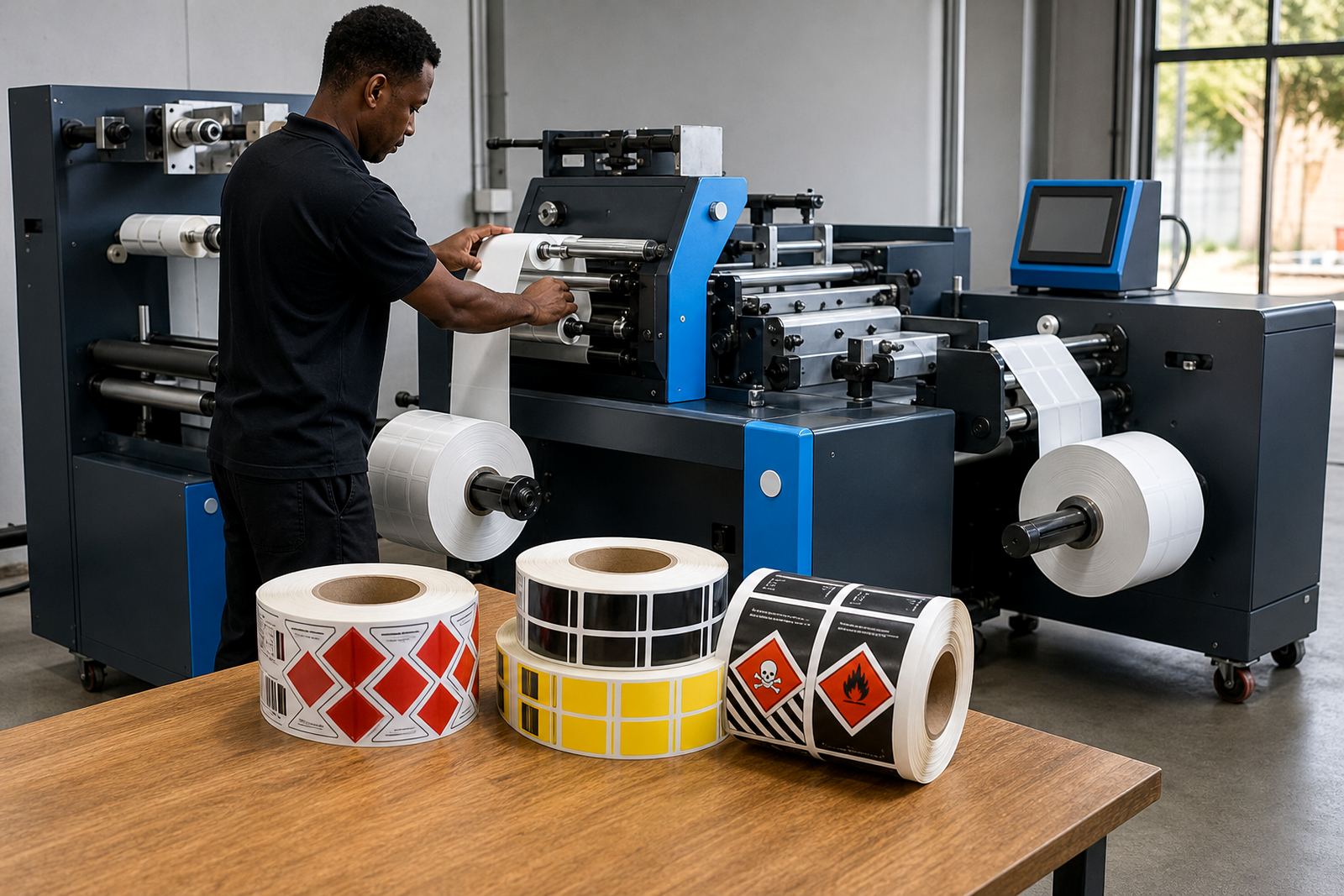
The real job is to keep the label geometry clean while the liner stays intact. Chemical labels often need narrow necks, small warning panels or crisp corners, so the cut path must be accurate and the matrix removal must not disturb the edge. A line that cannot hold registration will waste material fast, especially on small rolls with tighter artwork placement.
A line set-up that handles overlaminate and tight registers
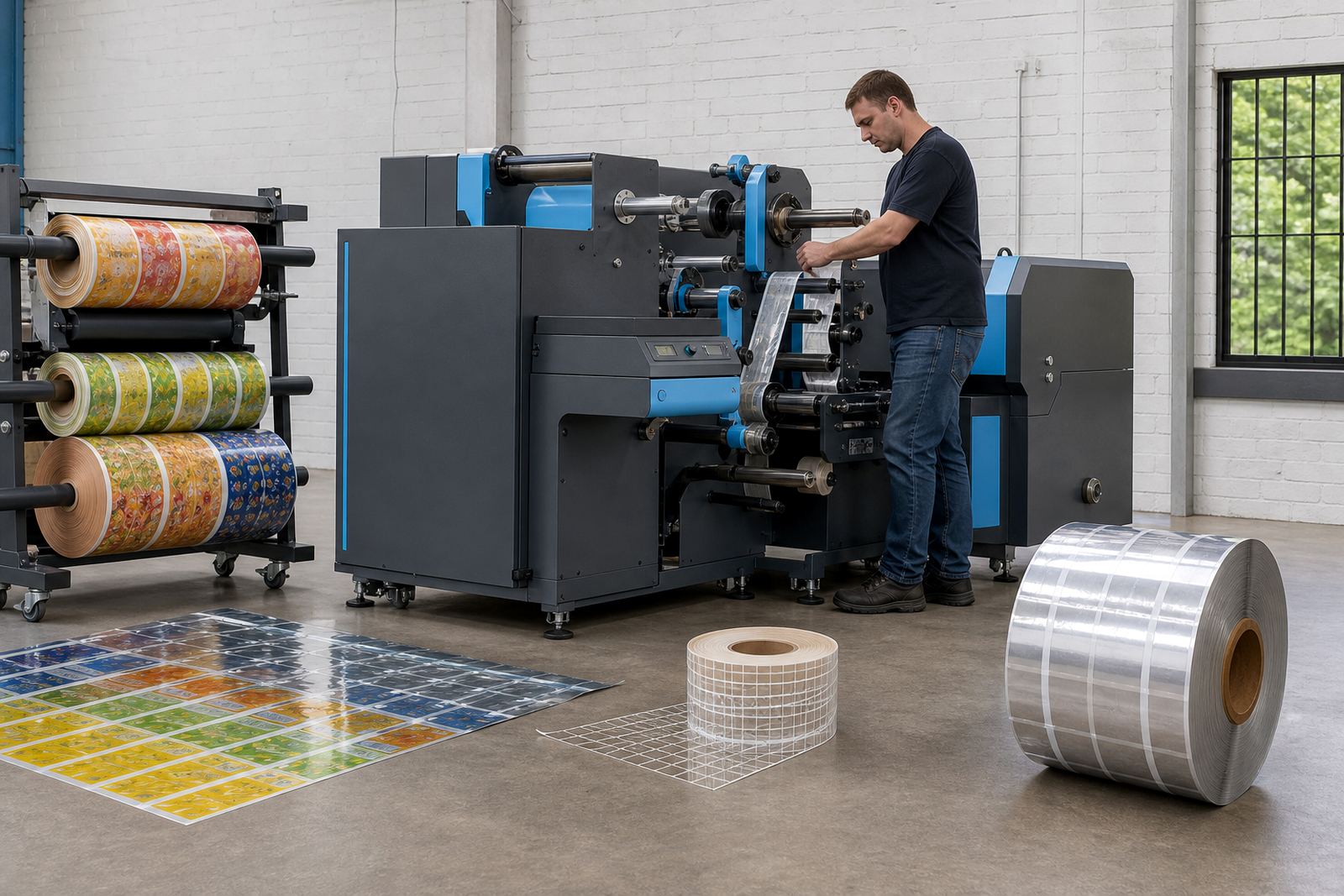
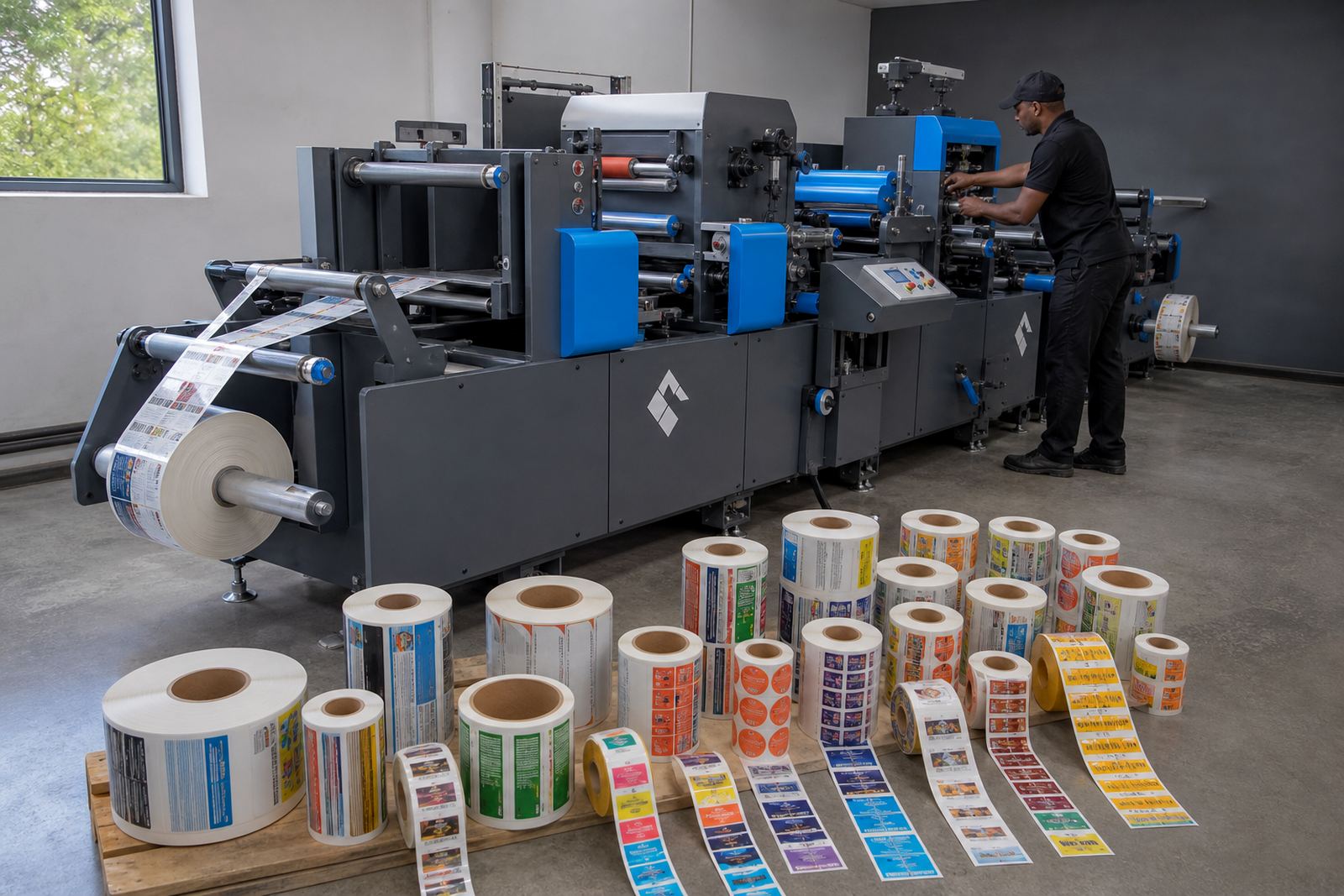
For chemical labels, the usual machine set includes an unwind, a laminating station, a die-cutting station, matrix stripping, slitting and rewinding. Some plants add cold foil, varnish or inspection functions where the artwork needs extra protection or a premium finish, but the core flow stays the same. The key is matching the machine width and roll diameter to the printer output and the label shape.
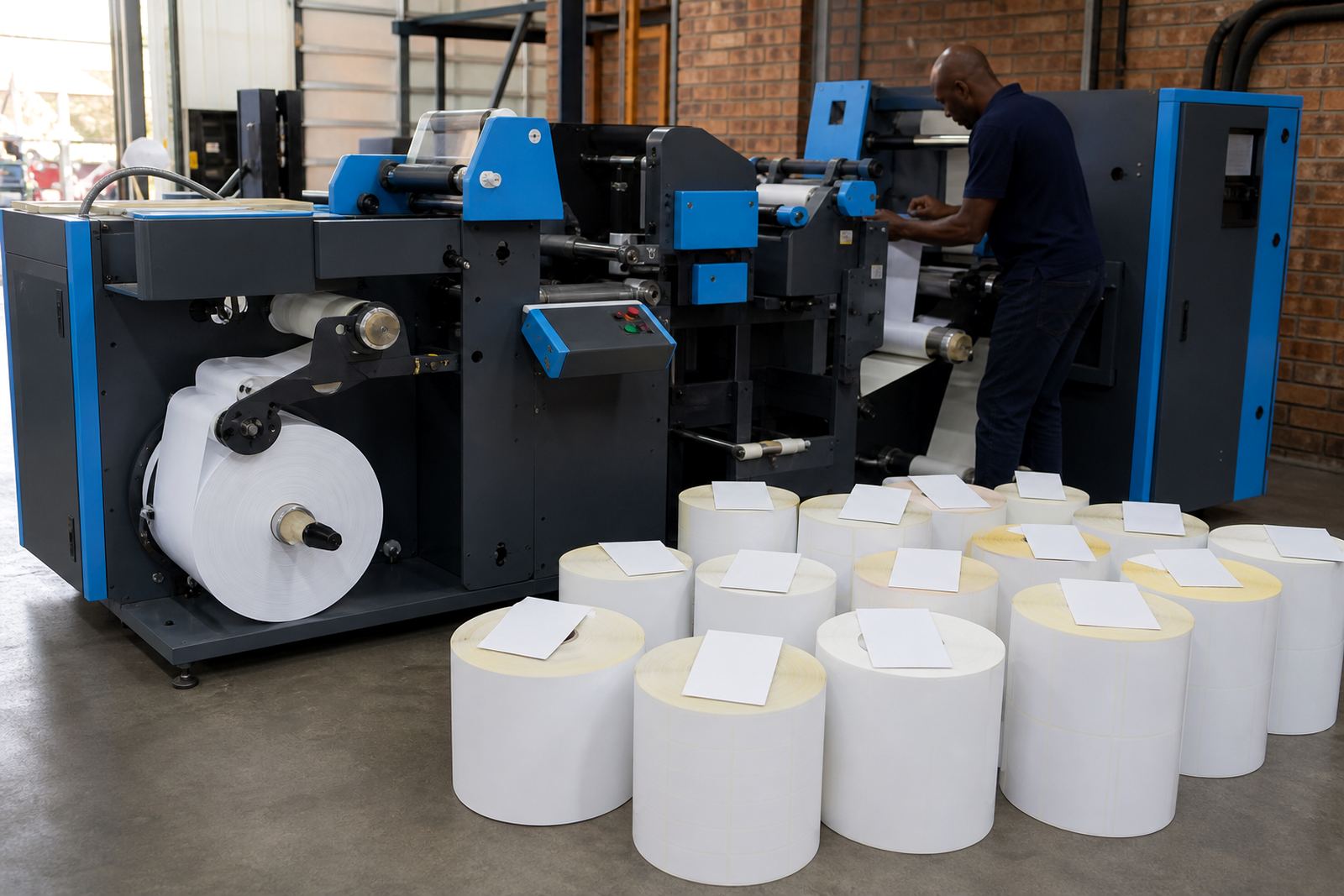
Small roll work for laboratory bottles behaves differently from larger industrial container labels. A narrow web may need fine web control and precise rewind tension. Wider webs for cleaning agents, solvents or bulk packaging need stable tracking so the outer layers do not telescope or mark. On coated films and synthetic label stocks, the laminate choice matters too, because a poor overlaminate can lift at the edges once the roll is slit.
- Check web width against the widest label and the waste margins.
- Match rewind diameter to the carton packing or applicator handling method.
- Allow for clear registration marks that the finishing system can read reliably.
- Plan for enough web path to support lamination, cutting and slitting in one pass.
- Keep tension control steady for filmic stocks that stretch or relax.
When a chemical label line is planned properly, the same machine can handle warning labels, ingredient labels, batch labels and secondary packs without constant rework. That reduces setup drift and makes the shift easier for the operator team.
Layout decisions that save waste on the shop floor
The layout should support the way labels move from print to finish to pack-out. If the roll path is cramped, operators end up making small adjustments that cost time and create variation. A cleaner layout gives space for tension correction, waste removal and inspection, which matters when adhesive is sticky and the web carries fine text or hazard symbols.
In a chemical label room, humidity and temperature swings can change how the adhesive behaves, especially on linered stock and films with stronger tack. Rolls should be stored flat and away from direct heat where possible, and the finishing line should be placed so the operator can load, inspect and rewind without awkward handling. If the customer has multiple label sizes, it helps to plan a line with easy changeovers and sensible access to knives, shafts and waste collection points.
For plants in Johannesburg, Pretoria, Durban, Cape Town and Gqeberha, the local conditions differ a little. Coastal air can affect roll storage and adhesive feel, while inland dust can build up around guides and sensors. None of that is dramatic on its own, but together they change how often a line needs cleaning, calibration and die setup checks.
The common mistakes that show up on chemical label jobs
The usual problems are practical ones, not mysterious ones. Operators may set the web too tight and distort the laminate, or too loose and let the register drift. Some jobs are run with a die that is not suited to the stock thickness, which leaves poor cut depth, liner damage or waste that tears before it strips cleanly.
Another common issue is underestimating how much the matrix stripping stage matters. On chemical labels, especially smaller formats, the waste can cling and pull at corners. If the strip path is poorly planned, the final roll may look acceptable until the labels are used in packing or applied to curved containers.
- Wrong cut pressure for the substrate and adhesive build-up.
- Laminate selected without checking edge hold and scuff resistance.
- Registration marks placed too close to artwork or die lines.
- Rewind tension set unevenly across the roll width.
- Slitting knives not aligned for the finished roll size.
Training matters because these faults often start as small setup choices. A machine can be mechanically sound and still produce waste if the operator has to guess at the settings for a new chemical label format.
Budget ranges for finishing chemical labels in Rand
Budgets vary mainly by web width, level of automation, whether the line uses laser or semi-rotary die-cutting, and how many finishing stages run in one pass. For smaller converting rooms handling short runs and mixed SKUs, a lighter machine set can sit in the lower end of the market. For higher output producers that need stable lamination, tighter register control and stronger rewind handling, the spend moves up quickly.
As a rough planning guide, entry-level digital finishing setups may start from around R650 000 to R1,2 million, depending on capability and width. Mid-range lines with better tension control, faster changeover and more consistent matrix stripping often sit between R1,2 million and R3 million. Larger production systems with more automation, wider webs, advanced inspection options or higher throughput can run from about R3 million to R6 million or more.
Installation, operator training, line commissioning, preventive maintenance and spare parts planning should be allowed for as part of the full project budget. Chemical label customers often save money by getting the finishing line matched properly at the start, rather than trying to force one machine to cover every label type in the plant.
Support around the machine once the rolls start moving
A chemical label line is only useful if the team can keep it producing repeatably. That means practical support on die setup help, registration calibration, rewind setup, slitting setup and production optimisation. When a line is used for different label families, small changes in adhesive, liner or laminate can affect the finished roll, so the setup notes need to be clear and workable.
Label-Cutter works from Kya Sand, Randburg and supports label printers and packaging producers across South Africa. The team includes Thabo Mdlalose, Karen Naidoo, Pieter Pienaar, Lerato Bhengu, Musa Wessels and Ayesha Shezi, with support across Randburg, Johannesburg, Pretoria, Durban, Cape Town, Gqeberha, Midrand and Kempton Park. Clients reach us through our contact form, and the work covers machine installation, line commissioning, operator training, preventive maintenance, breakdown repairs, remote support and spare parts supply.
For chemical labels, the most useful support is often the kind that keeps the finishing line predictable. A steady machine, a sensible setup and the right laminate or varnish choice are usually what protect the label from the converting room all the way to the container.