Retail labels that change before the week settles
Price label work is rarely steady for long. A pack size shifts, a special offer lands, or a supermarket group wants the same artwork on a different face size for another aisle. That means the finishing line must handle small batches, repeated artwork changes and clean roll control without wasting material.
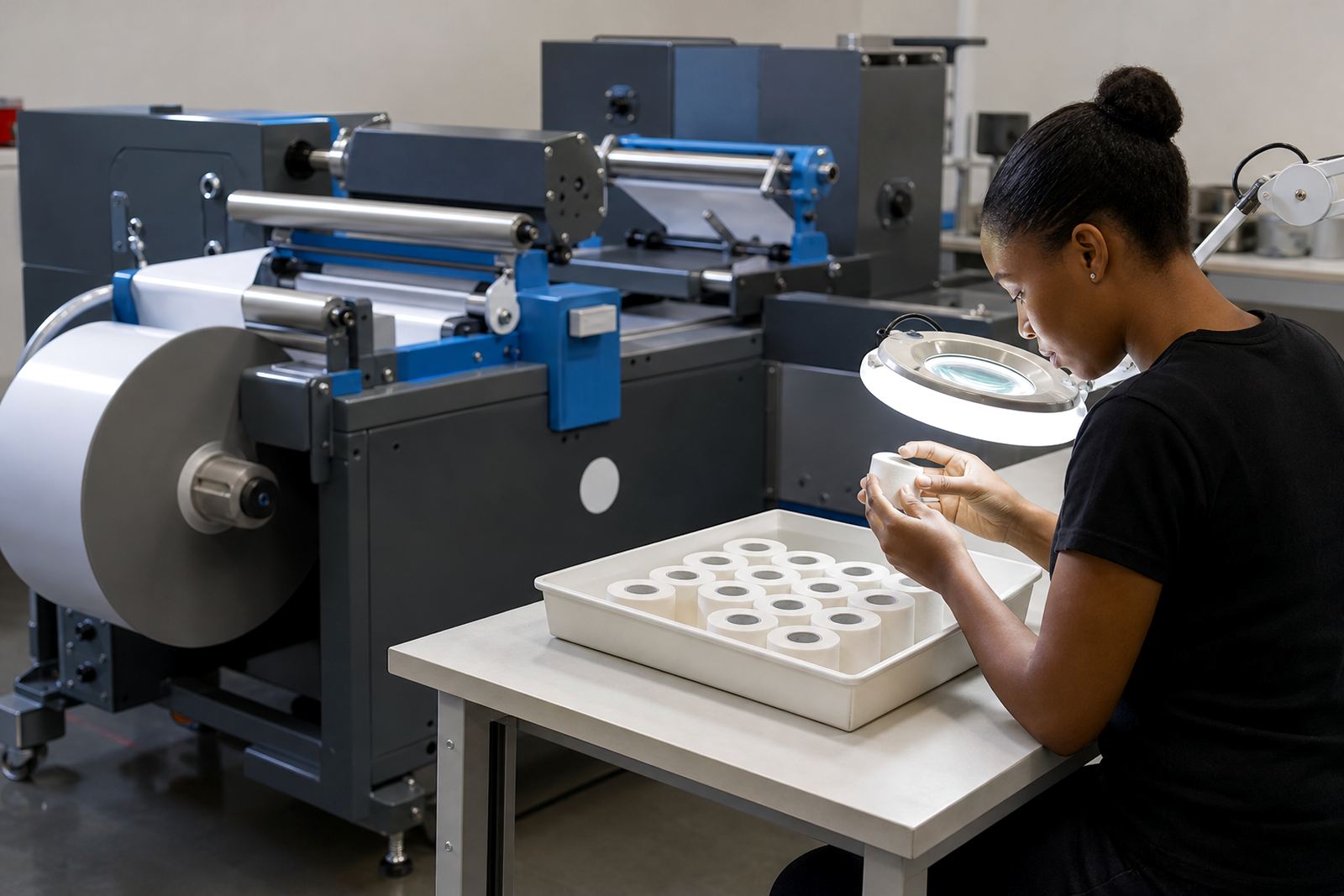
In retail, the label is often read at arm’s length under store lights, so cut quality and roll consistency matter just as much as print quality. Edges must be clean, backing matrix removed properly and finished rolls tight enough for applicators, hand application or packing into cartons for dispatch.
For stores, franchise groups and packaging teams in Johannesburg, Pretoria, Durban, Cape Town and Gqeberha, the main pressure is flexibility. A machine set for retail labels should cope with different widths, frequent changeovers and variable repeat lengths without turning every adjustment into a fresh problem.
A practical machine set for price label work
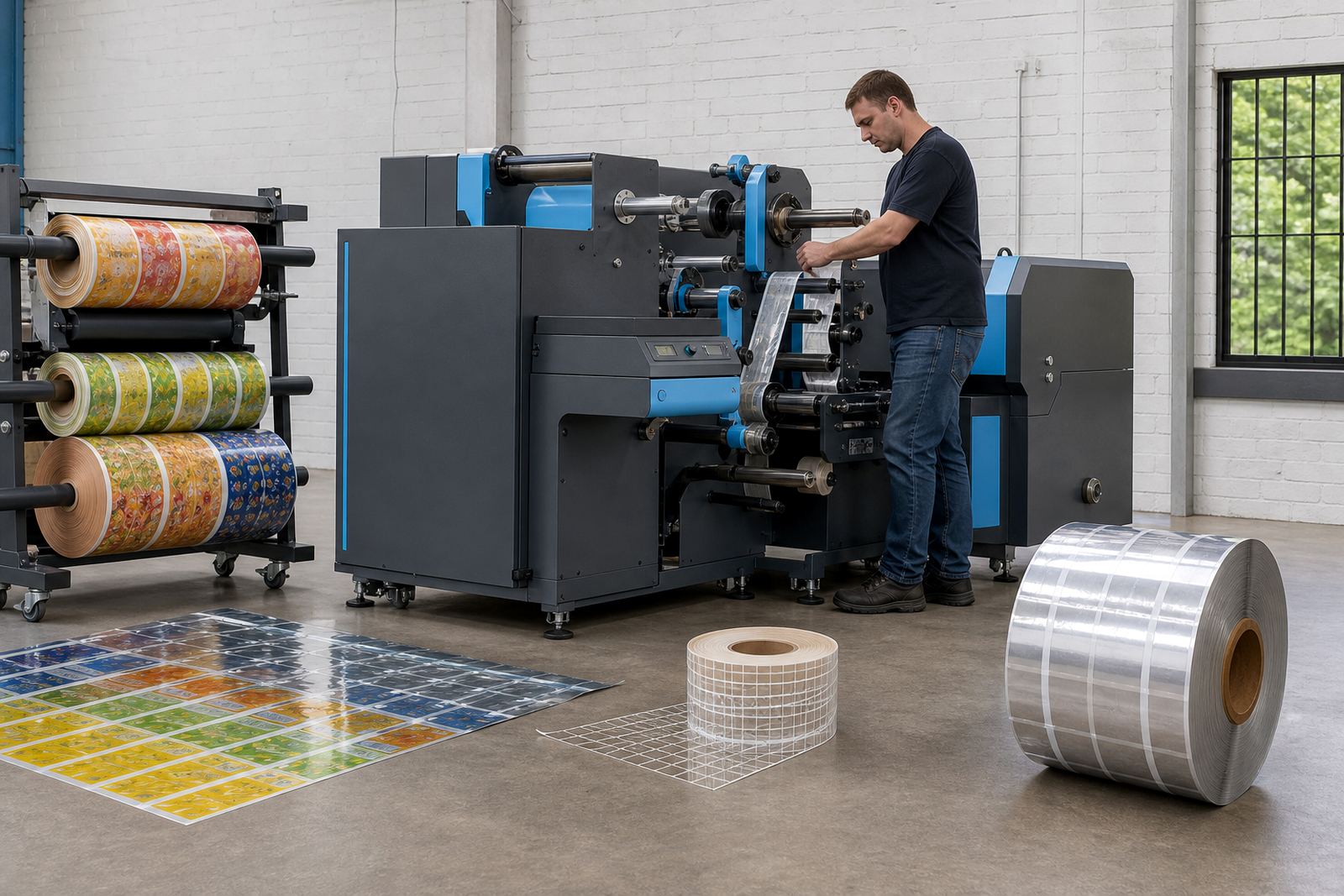
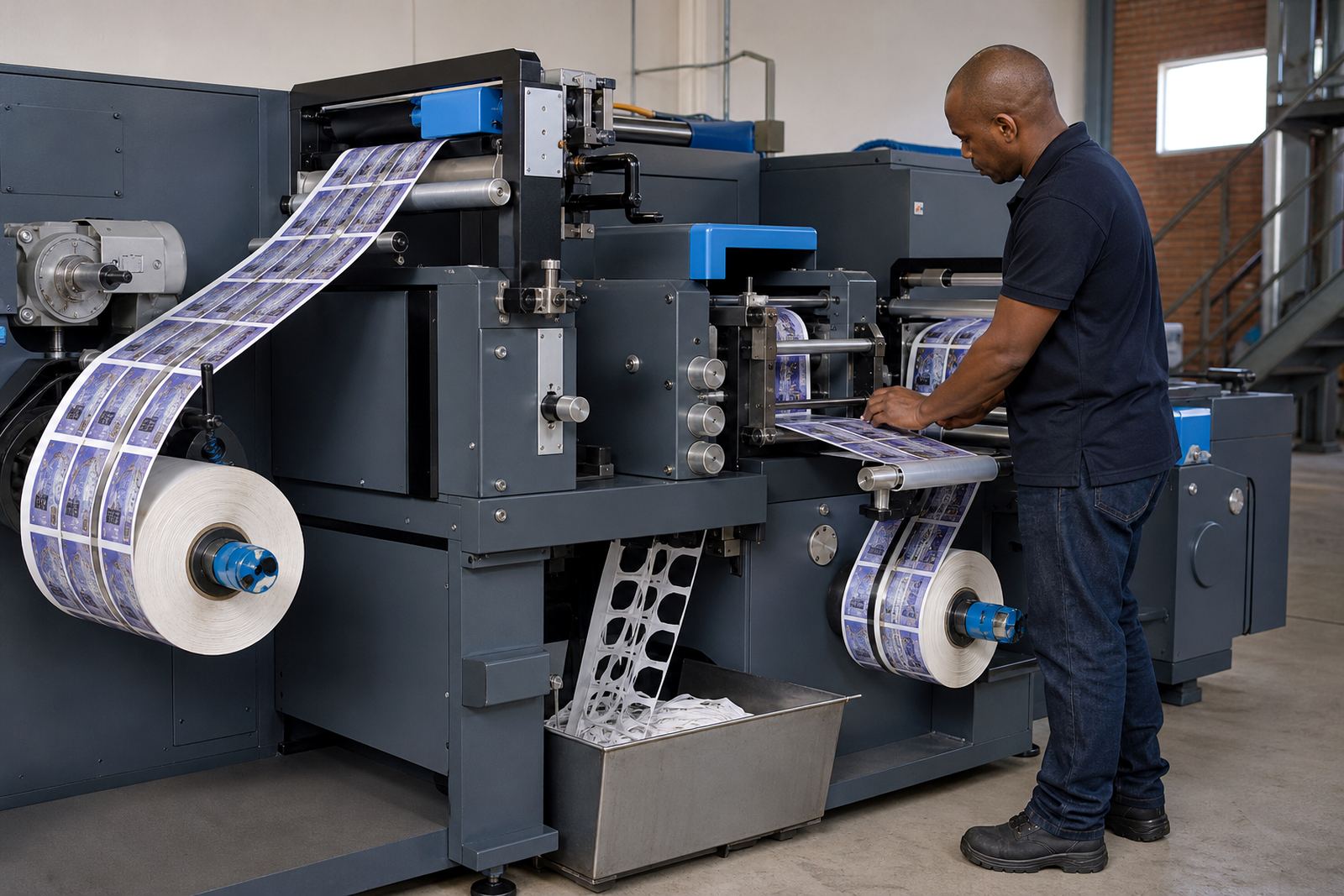
Retail price labels normally suit a finishing line with unwind, lamination where needed, die-cutting, matrix stripping, slitting and rewinding. Some jobs also need varnish handling, especially where the printed surface needs added protection or a different look before the labels are cut and rewound.
- Unwind control for narrow and wide label webs
- Lamination for protection, handling and shelf wear
- Laser or semi-rotary die-cutting for short and mixed runs
- Flexible dies for repeat jobs with stable cut depth
- Registration mark reading for accurate cut position
- Matrix stripping to remove waste neatly
- Slitting for multiple rolls from one web
- Rewinding for tidy final rolls and easy dispatch
Retail teams often handle many SKUs from one print run, so the line should be able to break a broad web into usable narrower rolls without tearing the web or leaving uneven edges. That is where registration control and consistent tension become important, especially when the job includes smaller labels for shelf edges or product packs.
Width changes, roll sizes and the floor layout
Retail label jobs are full of size changes. One order may call for slim pricing labels on a narrow roll, while the next needs wider labels for promotional panels or product bundles. The machine layout should make roll loading, waste removal and finished roll handling easy in the available floor space.
A well-planned line also needs enough room for changeover work. Operators must get to the unwind, slitting section and rewind positions without climbing around the machine. If a team handles several label sizes in a day, the layout should reduce walking and reduce the chance of mixing up rolls or cores.
In smaller production rooms, it helps to keep consumables, spare cores and tooling close to the line, but not in the operator path. Coastal humidity in Durban or Gqeberha can affect stored rolls and adhesive behaviour, so clean storage and sensible room control should be part of the plan too.
Where retail jobs go wrong on the finishing side
Most retail label problems do not begin at print. They show up when the roll is finished badly, the die is out of registration, or the matrix is stripped too aggressively and the web starts tracking badly. Once that happens, operators spend time correcting the roll instead of moving the job through the line.
- Cut depth set too deep and damaging the liner
- Registration marks not read cleanly after print changes
- Waste matrix not stripping evenly across the web
- Slitting set without checking final roll width
- Rewind tension too loose for hand or machine use
- Mixed core sizes causing packing and dispatch trouble
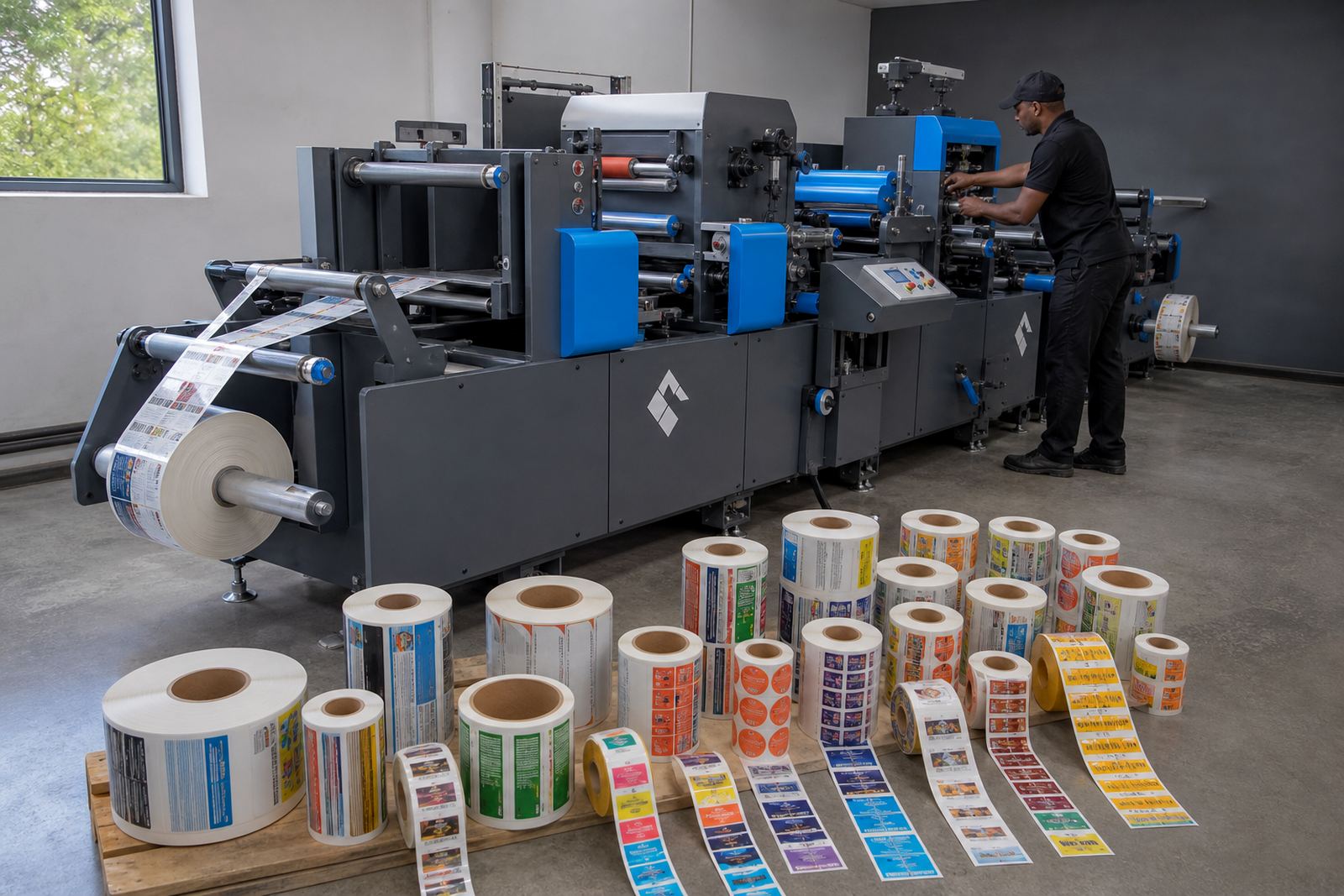
Retail customers often want labels supplied in neat, usable rolls, but the final shape of the roll needs to match how the labels will be used. A shelf label roll is not packed the same way as a short promotional run, and a retail line should be set with that in mind.
Budget bands for a retail label finishing line
Budget depends on whether the work is mostly short-run retail labels, mixed promotional runs, or higher-volume packaging labels with more finishing steps. A basic setup with unwind, die-cutting, stripping and rewinding sits in a lower band than a fuller line that includes lamination, slitting and tighter registration control.
For South African buyers, it helps to think in bands rather than one fixed figure. Entry-level finishing can sit in the lower hundreds of thousands of rand, while more complete systems for regular production may move into the higher hundreds of thousands or beyond, depending on width, automation and tooling. Installation, operator training and servicing should be part of the working budget, not treated as afterthoughts.
If the line must handle more than one product family, allow for future tooling, spare parts and setup accessories. That keeps the machine useful when retail packs change, rather than forcing a second purchase sooner than planned.
Training that matches real retail production
A retail label line only works properly when the operator understands the print marks, the web path and the finishing sequence. Training should cover loading rolls, reading registration, setting slitting widths, checking rewind tension and spotting when the matrix is not clearing cleanly.
Label-Cutter supports machine installation, line commissioning, operator training, preventive maintenance, breakdown repairs, remote support, spare parts supply, die setup help, registration calibration, rewind setup, slitting setup and production optimisation. That support matters where staff changes often or where the same machine must handle many short retail runs in a single shift.
For teams in Randburg, Midrand, Kempton Park and the other major centres, the best results usually come from a line that is matched to the label sizes, the print method and the final roll format from the start. That keeps retail label work organised, even when the order book changes fast.